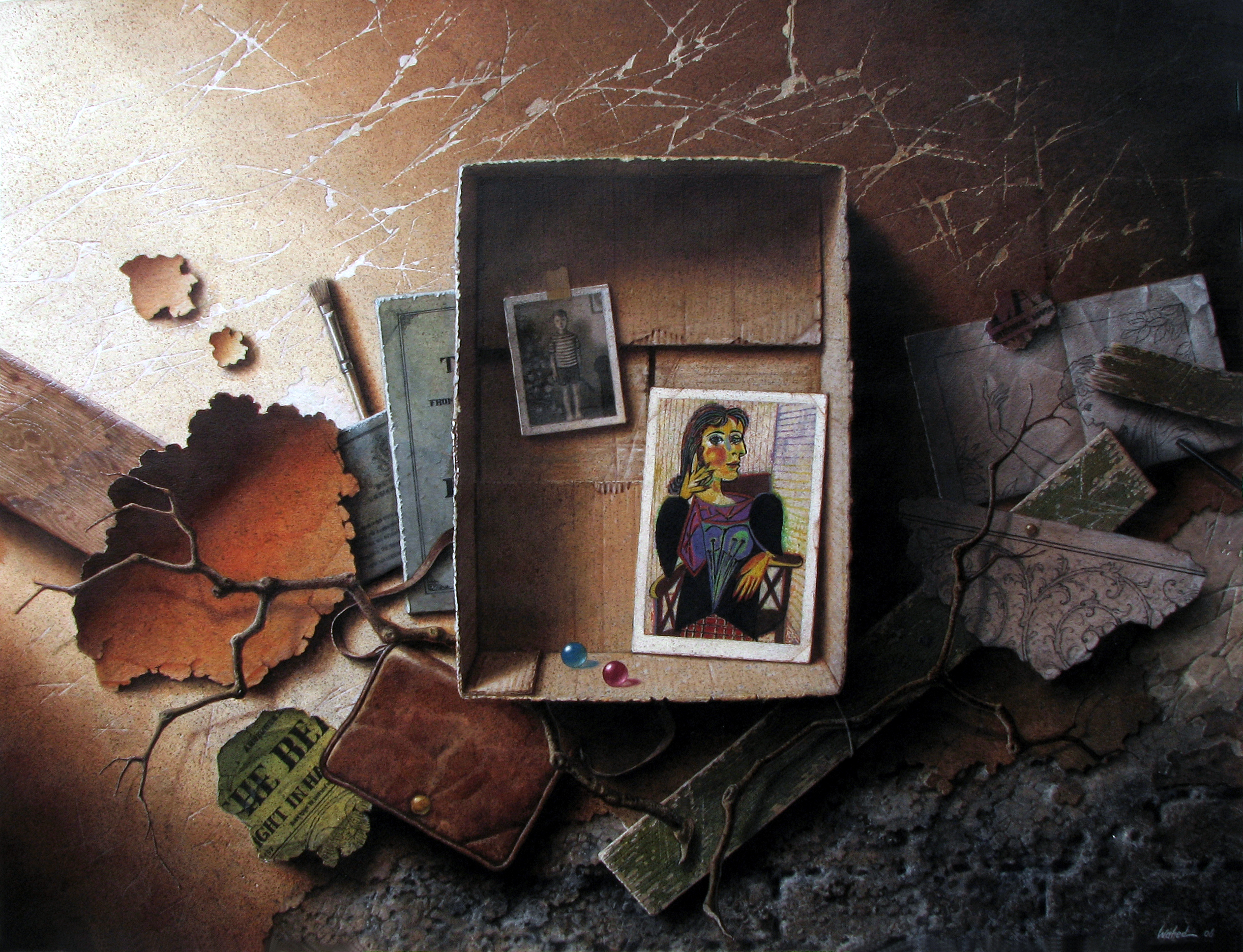
Farairan Choice Vahed Khakdan (Wahed Khakdan)
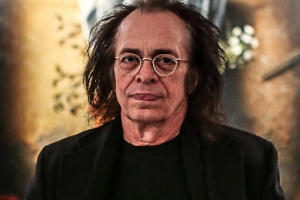
Wahed Khakdan
Born in 1950
Education:
School of Fine Arts 1968-1971
Faculty of Decorative Arts
BA in Interior Architecture 1971-1976
Solo Exhibitions:
1974 Seyhoun Gallery- Tehran1975 Ghandriz Gallery- Tehran
1976 Talar-e Iran Gallery- Tehran
1979 Seyhoun Gallery- Tehran
1981 The Museum of Contemporary Arts Tehran
1985 Burg Vondern- Oberhausen Cultural Center- Germany
1986 Galerie Conen- Oberhausen- Germany
1987 Kultur Zentrum K14- Oberhausen- Germany
1988 Kultur Werkstatt Arka- Essen- Germany
1988 Galerie Im Burgermeisterhaus Werden- Essen- Germany
1989 Stadtische Galerie Schloss – Oberhausen-Germany
1990 Galerie Ardrea Krieger- Dortmond- Germany
1991 Galerie E.P.-Dusseldorf- Germany
1992 Galerie kunstform Weiden- Koln- Germany
1995 Galeria Im Stadtsparkasse- Oberhausen- Germany
1995 Galerie Poly Print- Wuppertal- Germany
1996 Tifra Art Gallery- Maastricht-Holand
1998 VHS- Essen- Germany
1999 Galerie Im Tzu- Oberhausen- Germany
2001 Galerie E.P.- Dusseldorf- Germany
2002 Galerie Sindelgrube- Munchen- Germany
2004 Galerie E.P.- Dusseldorf- Germany
2005 Art Print via Sindelgrube Gallery, Munchen in Vienna- Austria
2007 Galerie Kunstler Inetiative Ruhgebiet- Oberhausen- Germany
2008 Special Pavilion in an exhibition of the artists of “Rein und Ruhe”
Area, Ludwing Galerie Schloss- Oberhausen- Germany
2008 Homa Gallery- Tehran
2009 Seyhoun Gallery- Tehran
2010 Naar Gallery- Tehran
2018 Mah Art Gallery – Tehran
2016 Iranshahr Art Gallery – Book Launch: ” A Day in Heaven”
& a Retrospective of artist’s artworks – Tehran
2012 Mah art Gallery – Tehran
Selected Group Exhibitions:
1974 International Artfair-Tehran with Cooperation of Le Saion d’Automme- Paris
1975 Contemporary Art of Iran- Persepolis Governmental Gallery
1976 Art Basel- Switzerland
1977 Iranian Contemporary Art-Apadana Gorememental Gallery- Tehran
1978 Portrait of Iranian Contemporary Art- seyhoun Gallery- Tehran
1981 The Museum of Contemporary Art- Tehran
1986 Stadtische Galerie Schloss- Oberhausen- Germany
1988 Stadtische Galerie Schloss- Oberhausen- Germany
1989 Kunstverein OB, Ludwig Galene- Oberhausen- Germany
1991 Galerie E.P. Dusseldorf-Germany
1991 Stadtische Galerie Schloss- Oberhausen- Germany
1992 Art Expo-LA.U.S.A
1993 Kunsthaus-Haven- Oberhausen- Germany
1993 Speing Fair International- Birmangham
1993 (Art Prints), Art Expo, New York, USA
1994 (Art Prints), Ambiente International- Frankfurt- Germany
1995 Galerie sabine Lulie- Wuppertal- Germany
1997 Kunstmeile- Oberhausen- Germany
2000 Kunstmeile- Oberhausen- Germany
2001 Ludwig Governmental Galerie Schloss- Oberhausen- Germany
2002 Art House Pavilion- Amdiente International- Frankfurt- Germany (Art Prints)
2003 The Museum of Contemporary Arts- Tehran
2004 Ludwing Governmental galerie Schloss – Oberhausen- Germany
2005 The 4th International Painting Biennial of the Islamic World- SabaMuseum-Tehran
2006 Iranian Art in 60s and 70s- The University of Fine Arts (Negarkhane-ye Tehran)
2007 The 7th Painting Tehran Biennial- Painting in 60s and 70s- Saba Museum- Tehran
2007 Niavaran Cultural centre “Haft-Negaaj”
2008 Royal Mirage- Bonhams- Dubai
2009 Mah-e-mehr Gallery- Tehran
2009 Homa Gallery- Tehran
2009 Homa Gallery- Tehran
2009 Bonhams- dubai
2009 Bonhams- Dubai
2009 Christis- Dubai
2009 Ludwig Museum Gallery- Oberhausen- Germany
2020 Aria Art Gallery – Silkscreen Prints – Tehran
2019 White Line Gallery – Tehran
2019 Mah Art Gallery – Summer Group Exhibition – Tehran
2019 Hoor Art Gallery – Silkscreen Prints – Tehran
2018 Mah Art Gallery – Summer Group Exhibition- Tehran
2018 Imam Ali Museum – 2 Centuries of the Art of Drawing in Iran – Tehran
2017 White Line Art Gallery – Tehran
2017 Seyhoun Art Gallery – 50 years Seyhoun Gallery- Tehran
2017 Tehran Museum of Contemporary Art-The Fadjr International Festival of Visual Arts 2017 Shokouh Art Gallery – Tehran
2017 Mah Art Gallery -Drawing Group Exhibition – Tehran
2017 Mah Art Gallery – Summer Group Exhibition -Tehran
2016 White Line Art Gallery- Tehran 2016 Niavaran Cultural Center – Haft Negah -Tehran 2016 Iranshahr Art Gallery -Home -Tehran
2016 Mah Art Gallery – Iranian Contemporary Artists – Summertime – Tehran
2015 San Giorgio Maggiore – Luciano Benetton Collection – Venice – Italy
2015 Iranian Artist Forum – Annual Exhibition / Association of Iranian Painters- Tehran
2015 Homa Art Gallery – Iranian Contemporary Drawing – Tehran
2014 Iranian Artists Forum -Annual Exhibition / Association of Iranian Painters – Tehran 2014 Sam Art Gallery “Pejman Collection” – Tehran
2014 Mah art Gallery – Iranian Contemporary Artists – Summertime – Tehran
2013 Shirin Art Gallery & Homa Art Gallery – Tehran
2013 IBS Project – London “Auction “- London – UK
2013 Mah Art Gallery – Summer Group Exhibition – Tehran
2013 Etemad Art Gallery – in memory of Lucien Frruend – Tehran
2012 Shokouh Art Gallery – Wonderland – Tehran
2012 Niavaran Cultural Center -Haft Negah – Tehran
2012 Ferya Art Gallery Tehran
2012 2nd Tehran Auction – Modern and Contemporary Irainian Art -Tehran
2012 Rira Art Gallery – Dubai
2012 The 8th Iranian National Biennial of Painting – Saba Museum – Tehran
2011 Shirin Art Gallery – Tehran (1st Modern and Contemporary Visual Art’s Auction )
2011 Seyhoun Gallery(Project Seven) – Tehran
2011 Saba Museum of Tehran- Collection of Tehran School of Fine Arts -Tehran
2011 Shirin Art Gallery (Doll) – Tehran 2010 Sin Art Gallery – Tehran
2010 Faravahar Gallery – Iranian Contemporary Artists – Tehran
2010 Preussen Museum – Wesel – Germany
2010 Gallery in Burgermeisterhaus – Werden , Essen -Germany
2010 Ludwig Gallery -schloss Oberhausen (Oberhausen Palace) Germany
2010 Naar Art Gallery – Tehran
Other Artistic Activities:
1981 Puppet design for the “Magic bean” puppet, theater directed by Ardeshir Keshavarz (Teater-e- shahr)
1982 Stage, Costume and Mask design for Greeny, Childrens Friend, Dierected by Reza Jiyan (Teater-e-shahr)
1988 Stage and puppet design for the tele-theater the “CaterpillarStory”, directed by Ardeshir Keshavarz in
Cooperation’s with IRIB, theaters for children and teenagers
1983-2010 Illustrating more than 40 children and teenager books and cooperating with more than 10 publishing companies in Iran, Germany, Switzerland and Austria. Creating more than 80 Art prints, limited edition.
Born in 1950 in Tehran Vahed Khakdan began painting in childhood. “The walls of my kindergarten were always covered with my drawings and everyday the children of our neighborhood, carrying coal and plaster, knocked at our door, calling me outside to begin covering the asphalt pavement with strange animals and figurines… And in high school, I won three drawing medals from the erstwhile Ministry of Culture,” recounts Khakdan in his interview with Shafaq Sa’ad (Farairan Art Quarterly, No.3-4, 2000).
His father was a forerunner of theater and cinema stage design in Iran: “I often accompanied my father when he went to work in movie studios and theaters, watching him create the various scenes he had designed. I also spent a great part of my childhood in my father’s library, which was filled with art books. For this reason, I never lacked materials and, most importantly, my father, who was my first art teacher, taught me many techniques concerning the use of art materials. Traces of my father’s stage design skills are still perceptible in my present-day works, particularly in paintings in which I depict. Generally speaking, theatrical stage design is always visible in my works.”
His mother – in love with sculptures – was the person who encouraged him to paint. In his own words: “My mother and father were both keenly interested in art. In addition to books, my father voraciously collected engravings of famous Baroque and Renaissance painters and 19th century and early 20th century realists. My mother was deeply in love with sculpture and she had a small collection of brass and porcelain statues, and she could never part with old familial objects. In our house, there was a room cluttered with old objects, including our grandfathers’ and grandmothers’ suitcases.”
This must be where the cluttered air of old antique shops of a great number of his paintings come from which for Iranians can bring to mind one of the main heroes of Sadeq Hedayat’s Blind Owl – pirmard khenzerpenzeri, or the tattered old man. And it must be the Baroque and Renaissance air of his paintings (not excluding their surrealistic realism) which speaks to Europeans in a familiar language.
After graduation from Fine Arts High School, he studied interior architecture and obtained his bachelor degree in this field. In his own word: “From 1976 to 1983, besides continuous activities in plastic arts, I was busy in other domains, such as interior design, stage and costume design for theater, cinema, television and illustration of children’s books. Among my famous works of this period, I can cite the design of the puppets, costumes and book layout for Ardeshir Keshavarzi’s Magic Bean, the stage, costumes and masks design of Reza Zhian’s Sabzeh, the Children’s Friend, and the stage and puppets design of Ardeshir Keshavarzi’s Story of the Firefly,for television.”
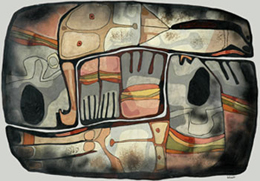
His 2 years military service which gave him a direct experience of the hardship and poverty, the deprived rural people were struggling with became a turning point in Khakdan’s subjectivity. While up to this point he painted in Abstract Expressionist and later Surrealist way, he was henceforth drawn to Realism.
In an interview with Mohammadreza Shahrokhinezhad, Khakdan says: “I have always worked in the Western School of Painting, with all its traditional themes and also its realist method and although I have distanced myself from analytical painting, but it is still Western.… My horror was to turn into those who only imitate them. This is what I did in my first exhibition (1973). Imitating Picasso will not get anywhere. But if one does not discover one’s essence one falls a victim of depression. I was in search of something to follow and continue it lovingly.”
“Yet, at the same time, I felt the absence of a cultural identity of our own in my works, and the integration of these two discordant worlds, which often puts many of our young artists in a mental quandary, absorbed a great deal of my energy.”
The second turning point in his life was the revolution (1978) followed by war with Iraq which brought about major changes in his way of thinking. Now human beings step on the stage of his paintings as well, workers, deprived classes, loneliness, death, torture, social and cultural antagonisms carefully depicted in brown colors shinning with a light associating Rembrandt and other 18th and 19th centuries European painters while the same ambivalence and equivocal surrealist air still dominated them. Elements of the past like cloud, ambiguous backgrounds, vast planes and lack of time-space too could still be seen in this prolific period of his creativity.
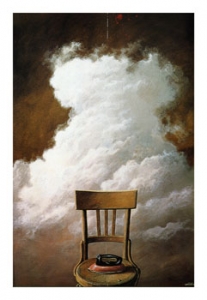
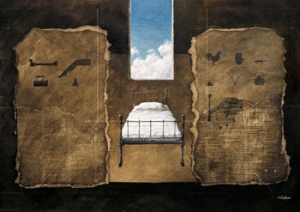
In 1983 he travels to Germany to eventually visit his sister in Canada, but it happens that he stays there. The story is that he paints a small painting for his German neighbor to show his gratitude for her kindnesses and when he gives it to her, she is surprised and thinks Vahed wants money in return. When she is assured that it is a gift, she returns in an hour later telling him that she had shown his painting to the owner of an art gallery who likes to meet him. And this is how Khakdan joins the art scene in Germany.
“My first contact with the artistic scene of Germany at the time was tainted with a great doubt. The most current painting style in those days was that of the Neuen Wilden (The New Wild Ones), which was a kind of expressionism with harsh characteristics that was considered a reply to the dark blind alley reigning over the avant-garde painting of the time.
“I understood nothing of the artworks of that time. It took me a long time to understand them and I didn’t want to imitate them. I could become a part of The New Wild Ones, but there were layers of mysticism in me which was at the same time realistic. That’s why I couldn’t accept them. The mentality of the painters of that time of Germany was different. Artist becomes the founder of a way of thinking, while he/she is the product of an economic, social and political system. No matter how much he/she claims that he does not defend any political systems or is a religious person or an atheist, he/she is still the product of a society. The behavior of an artist is even dependent on ecosystem. Germans ask me where does this light in your paintings come from and I have always told them from Iran. There are many things that leave their impressions on painters and paintings.”
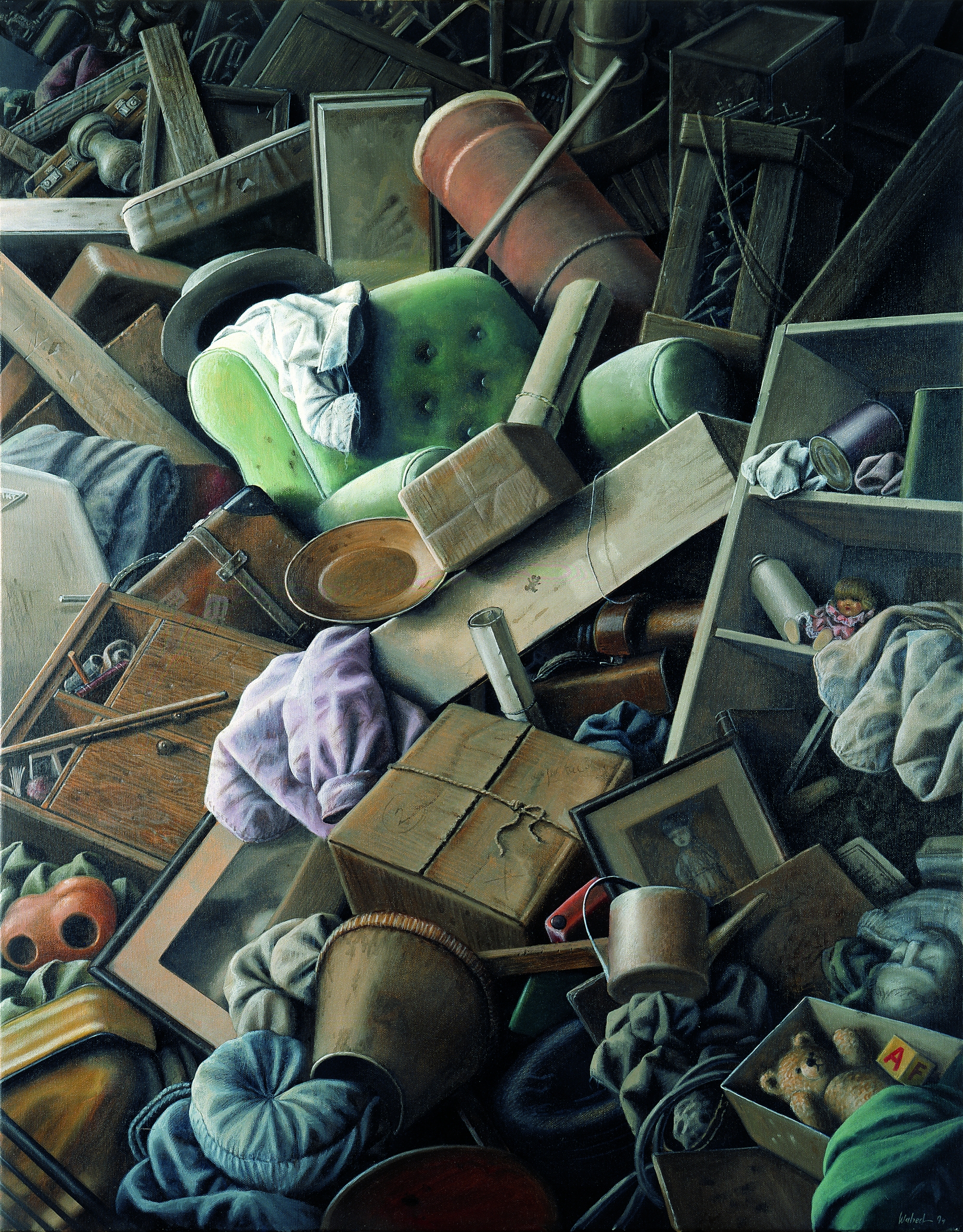
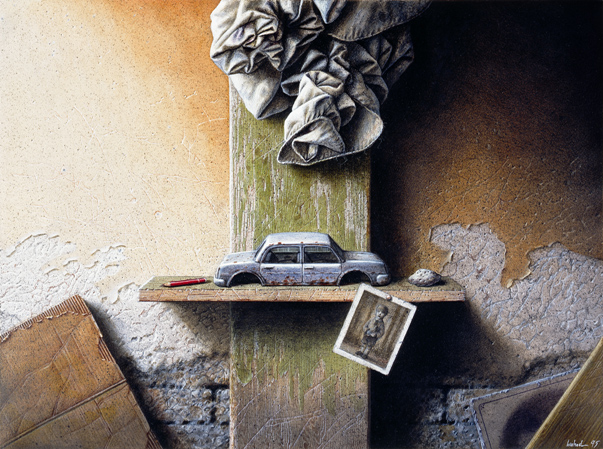
His still life-s attracts interest in Germany; childhood, the evanescence of time, the ephemeral nature of objects and men, abandoned places and objects, and, most importantly, the play with the history of art… are the main characteristics of these still life-s. Some of his works of this time are printed by prestigious German publishers in high quality, numbered, signed and sold. He also gets involved in book-illustration: ”About a year after my settlement in Germany, I came to know a famous German author who wrote books for children. When he saw my works, he proposed to illustrate one of his stories. This was the beginning of my activity in this field and after working with several great German publishers, I became also known as children and young adults book—illustrator and book—cover designer. But this was really like a second profession. I also worked in stage and costume design as I believe that one should use one’s artistic talents and abilities in any art-fields when is one gifted with them.”
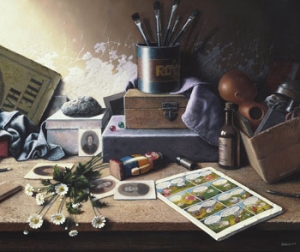
But painting remains Khakdan’s main preoccupation. “In 1993 I was awarded a scholarship to use the Kunsthaus Haven governmental workshop from the city of Oberhausen and worked in that workshop until 1996.
“The upshot of my work in that period was displayed in several individual exhibitions the most important of which was an exhibition in one of the most famous art galleries in Düsseldorf and another was in Maastricht, Netherlands.
”In my works, I anticipate everything beforehand. There are times when I ascertain the place of all the components, which is usually when a certain atmosphere, person or a painting inspires a new idea and motif in me. Often I begin without having any specific idea in mind; I sit in front of a brown, beige or café au-lait canvas and begin to draw with a thin brush dipped in diluted oil. It usually begins with an exact composition carried out with simple lines. Then I pick up a wider brush and begin to put paint blots on it. By looking at these blots, the outlines of objects come to life and then I begin to work on details. It takes about a month and a half to finish a 120 x 150 cm work.
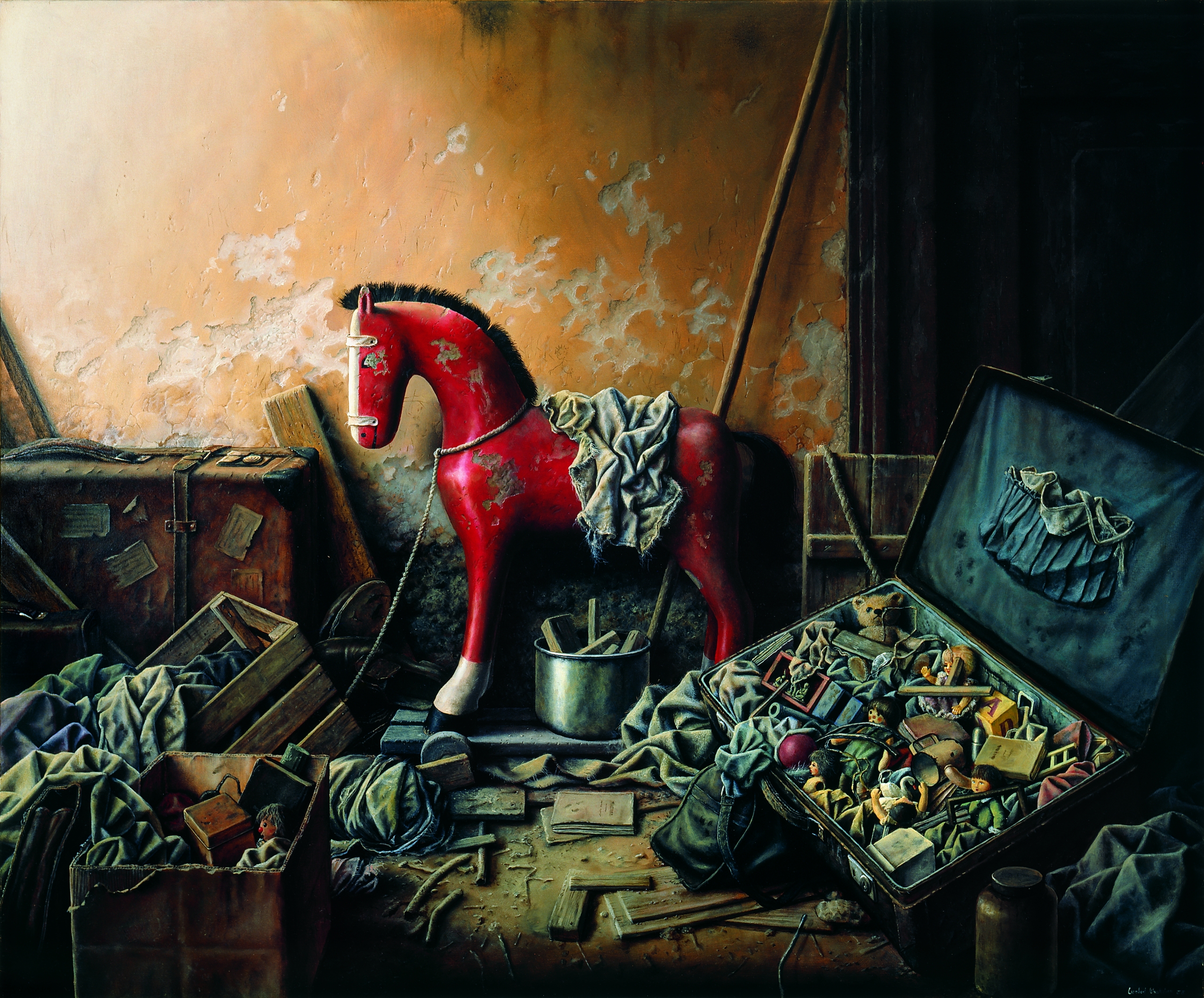
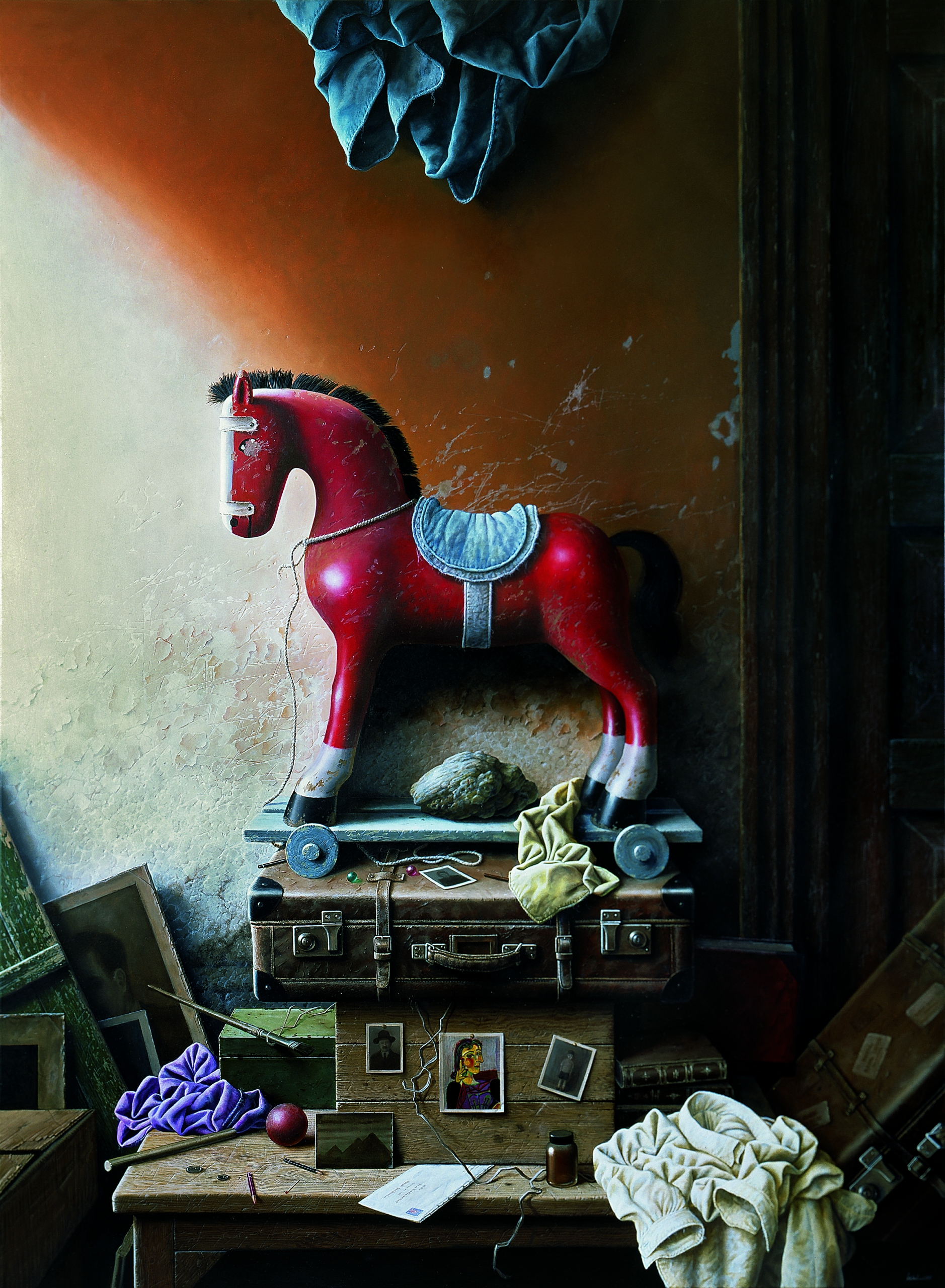
“In fact, nearly 80 percent of what you see in my paintings is mental. I always run a contest with my power of imagination and try to draw objects mentally. When facing obstacles then I use a photograph or the real object. Many objects of my works come from the past. Like the red horse of my early childhood which I often have reproduced.”
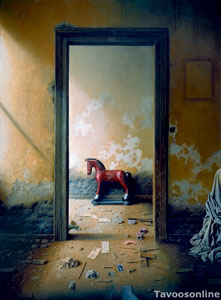
“And I am not afraid of incorporating elements from the works of great painters into my works. On the contrary, I utilize them as the alphabet of my own paintings and as my working instruments. I am certainly inclined to leave my works as ambiguous dilemmas. For this reason, I deliberately conceal temporal and spatial identity in many of my works.
Objects seen in my works have gradually turned into words. A poet composes and writes copiously at the beginning in order to convey his mind to others. This is also true in painting. What I mean is that there is a time when the idea of immigration is conveyed by showing many people standing with hundred suitcases. Other times a single open suitcase can convey the same idea.”
Actually, it is this absence of Time-Space and reaching a kind of painting alphabet by virtue of his deep knowledge of eastern and western cultures since childhood that makes Khakhdan a painter with a universal language.
Sources:
Interview with Shafaq Sa’d, Farairan Art Quarterly, No. 3 & 4, 2000
Interview with Mohammadreza Shahrokhinezhad, www.dlisland.com/4536
Interview with Hassan Murizinezhad and Vahid Sharifian,Tandis, Biweekly Visual Arts Magazine, no. 73, 2006
-
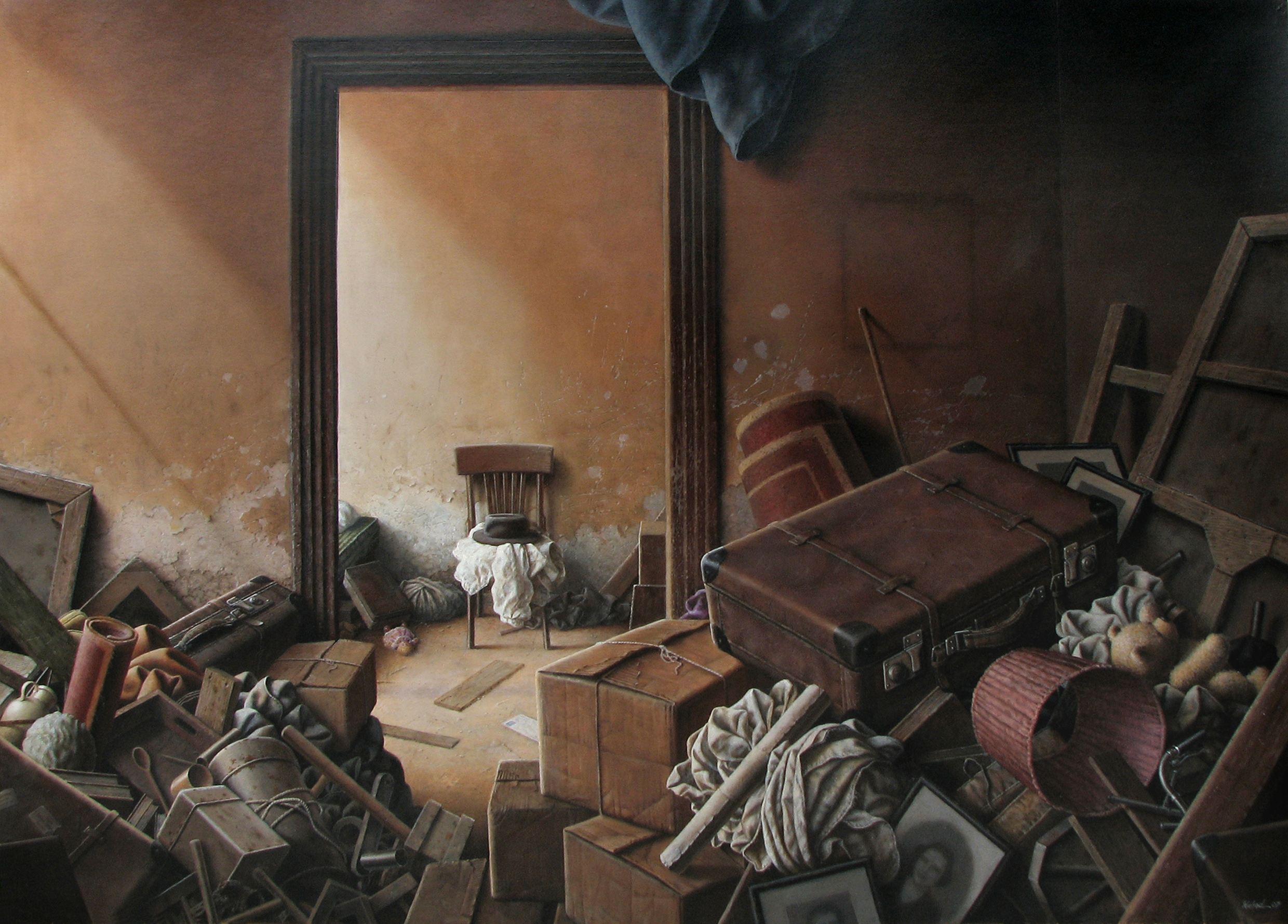
- 2007 – Oil on Card board , 96 x 68 cm
-
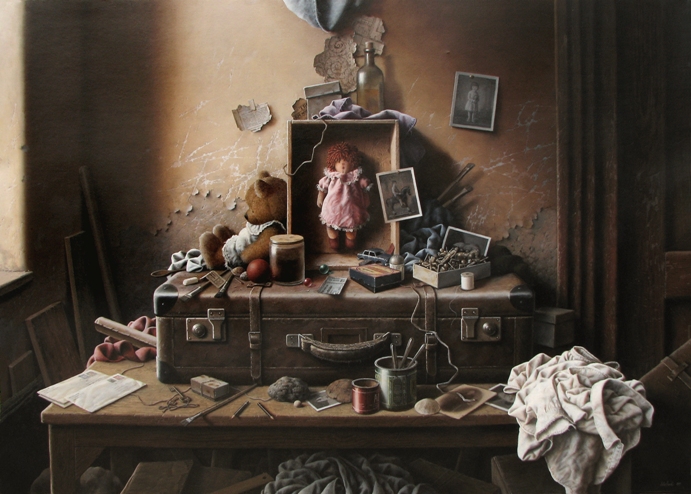
- 2007- Oil on Card board , 96 x 68 cm
-
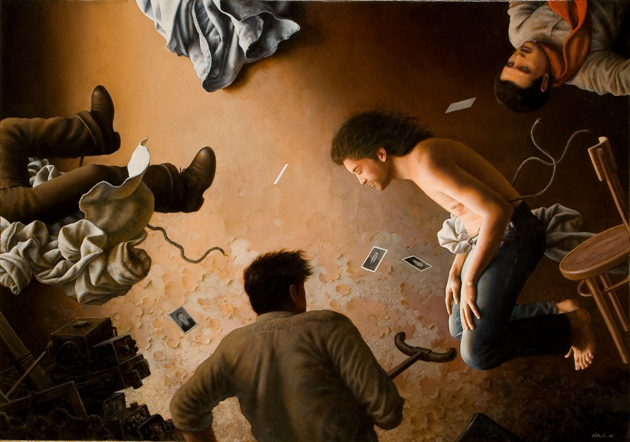
- 2008- Merry-Go-Round- Oil on canvas- 72×101 cm
-
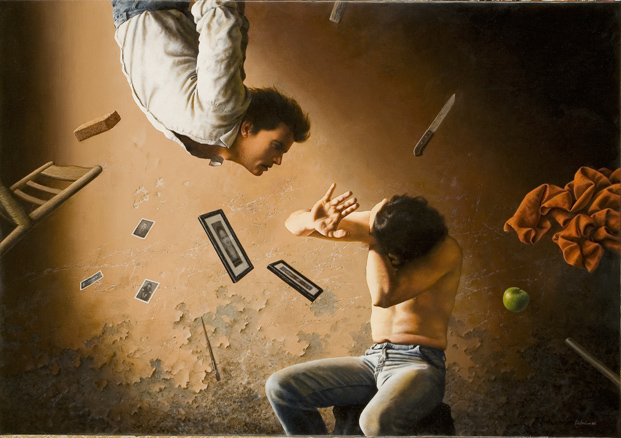
- 2008- Return of Klint- Oil on canvas- 72×101 cm
-
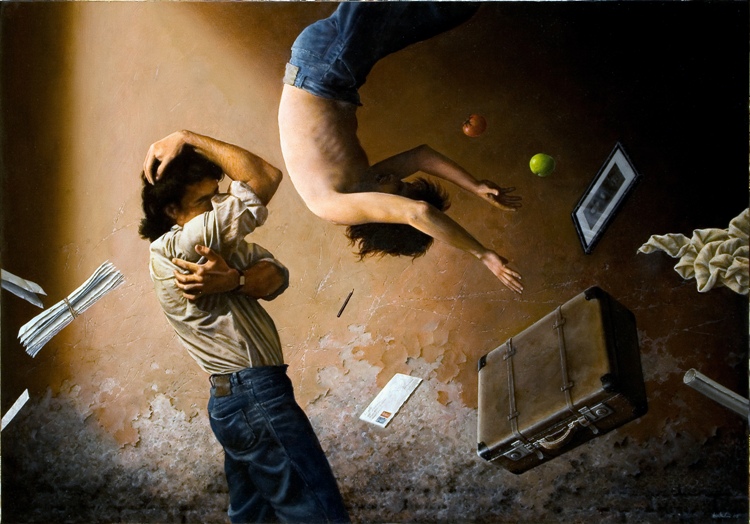
- 2008- Two Brothers- Oil on canvas- 72×101 cm
-
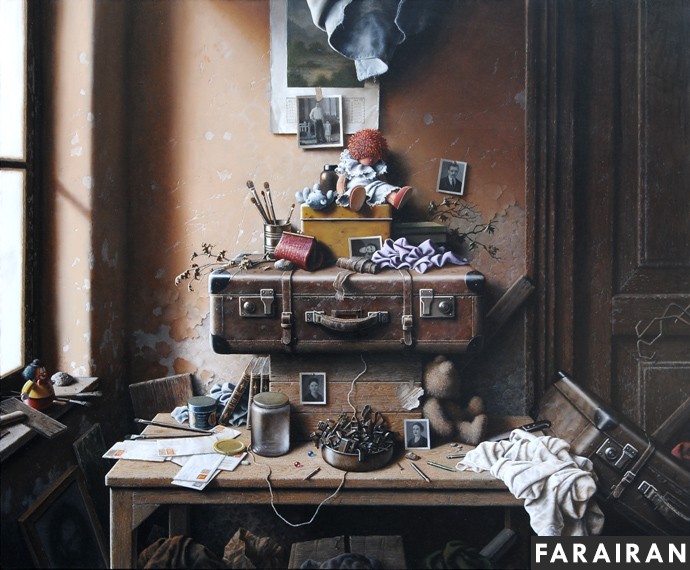
- 2009- Susie On The Suitcase- Oil on canvas- 90×120 cm
-
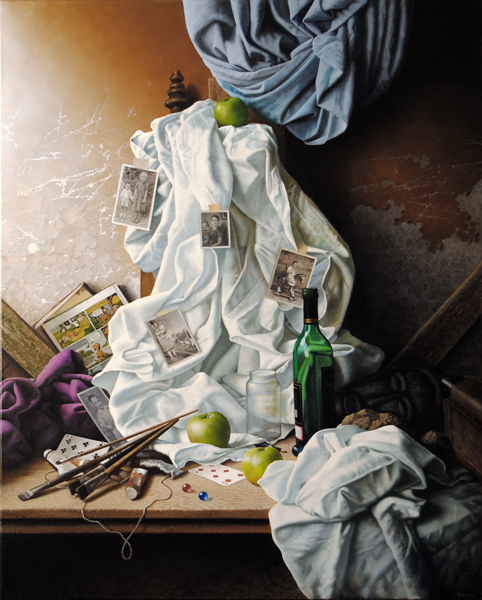
- 2009- The Big Ghost- Oil on canvas- 90×80 cm
-
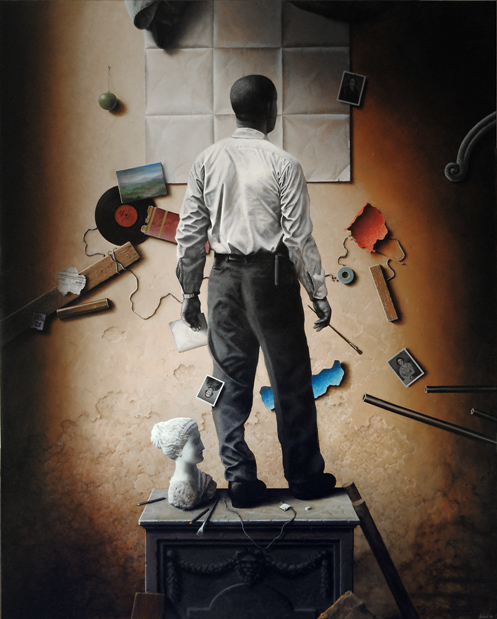
- 2010- Black Riddle- Oil on canvas- 150×120 cm
-
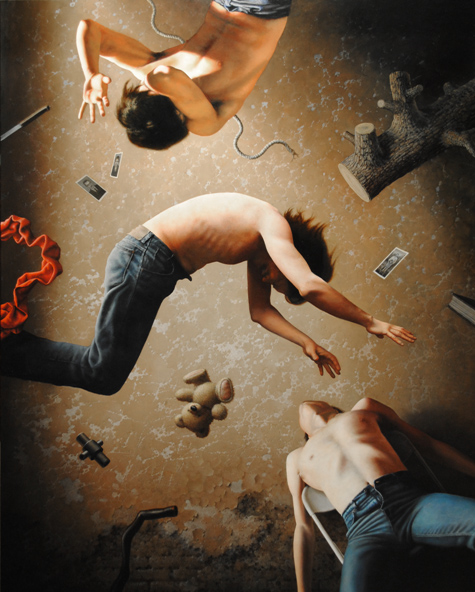
- 2010- The Fall No. 4- Oil on canvas- 150×120 cm
-
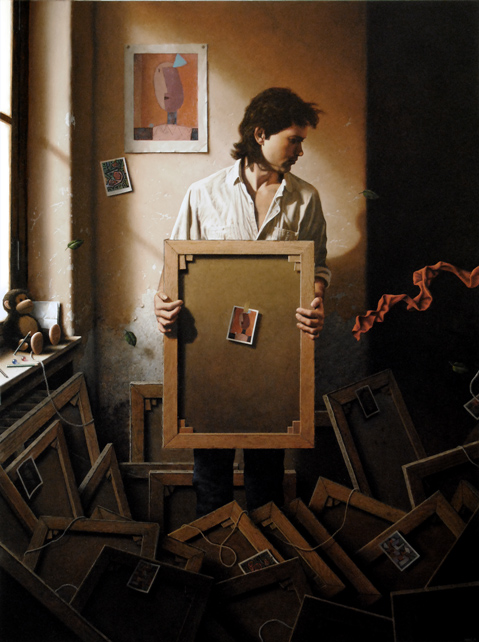
- 2010- The Lost Secret (Paul Klee)- Oil on canvas- 160×120 cm
-
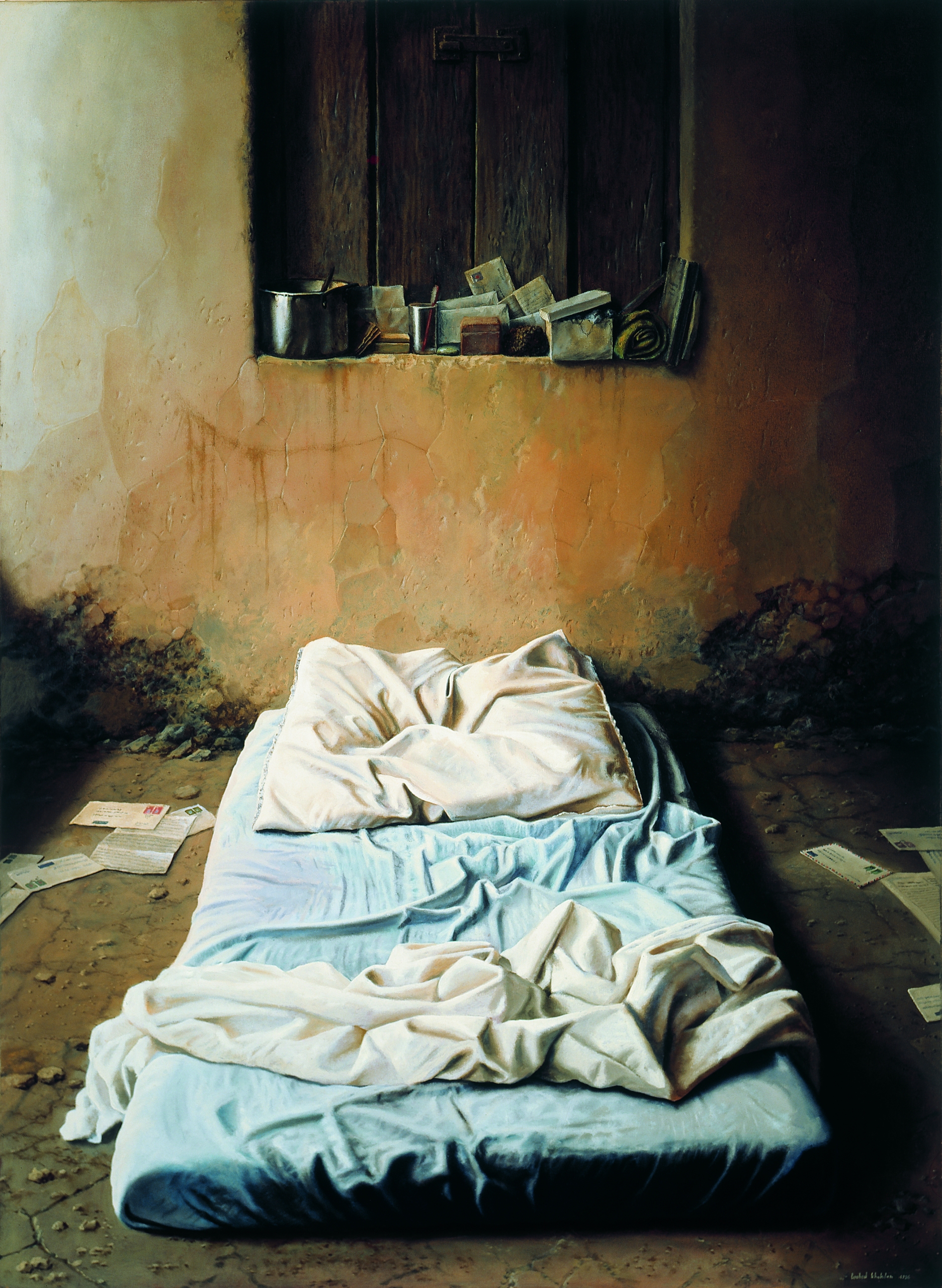
- 1986- The Letters (1)- Oil on canvas- 120×90 cm
-
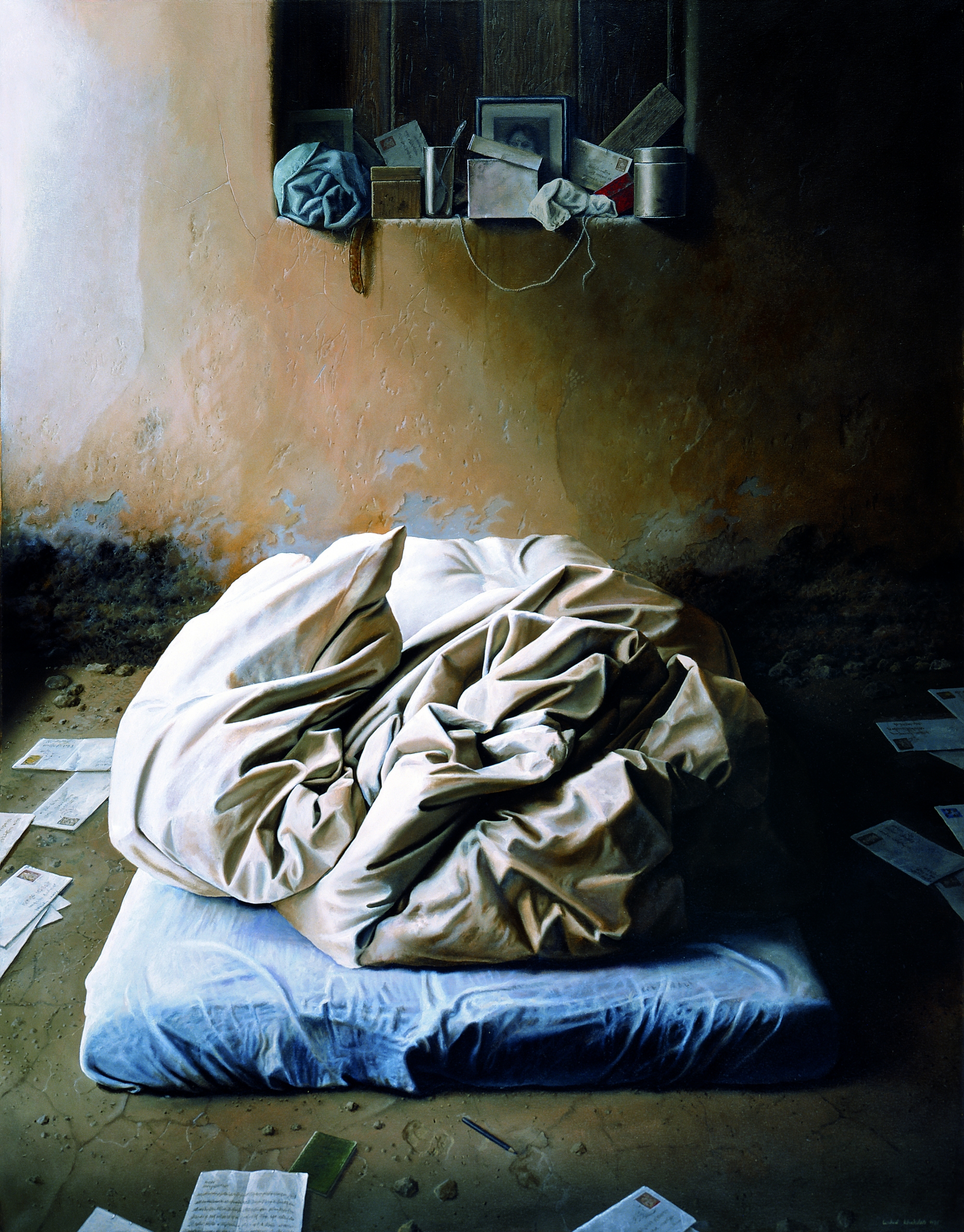
- 1986- The Letters (2)- Oil on canvas- 150×120 cm
-
- 1987- Hamid, Three Times- Oil on canvas- Triptych, each panel 120×90 cm 2
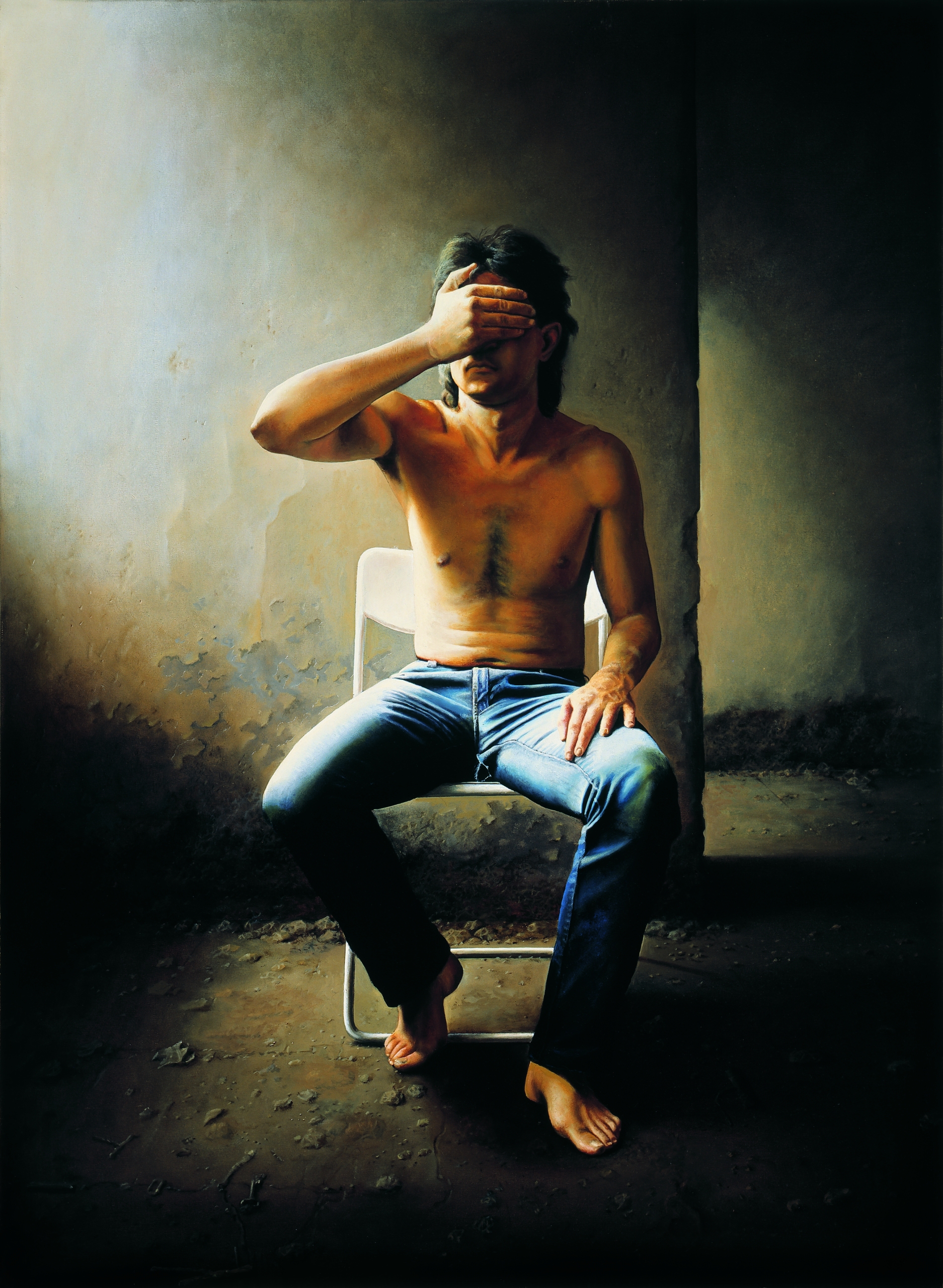
-
- 1987- Hamid, Three Times- Oil on canvas- Triptych, each panel 120×90 cm 3
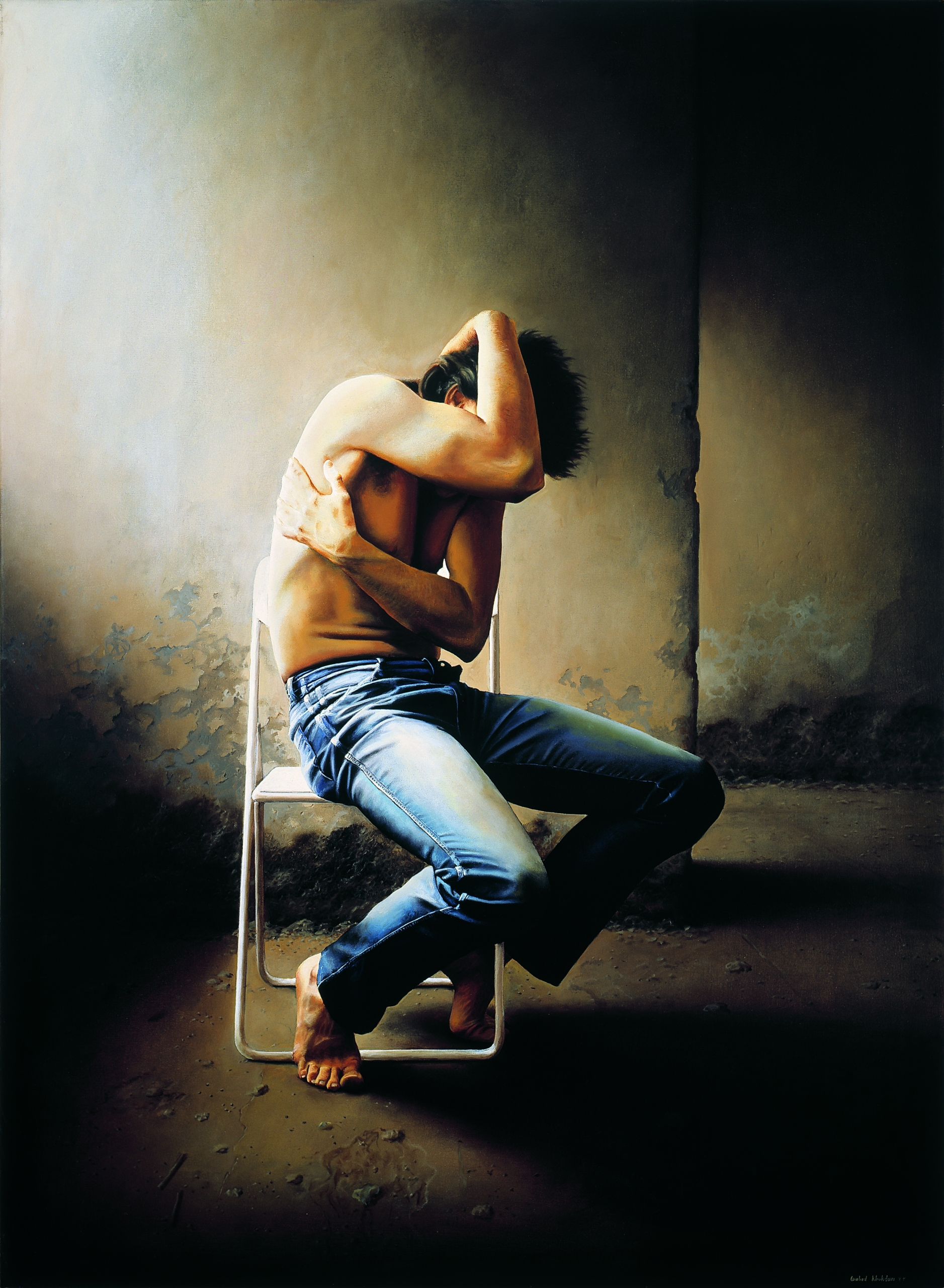
-
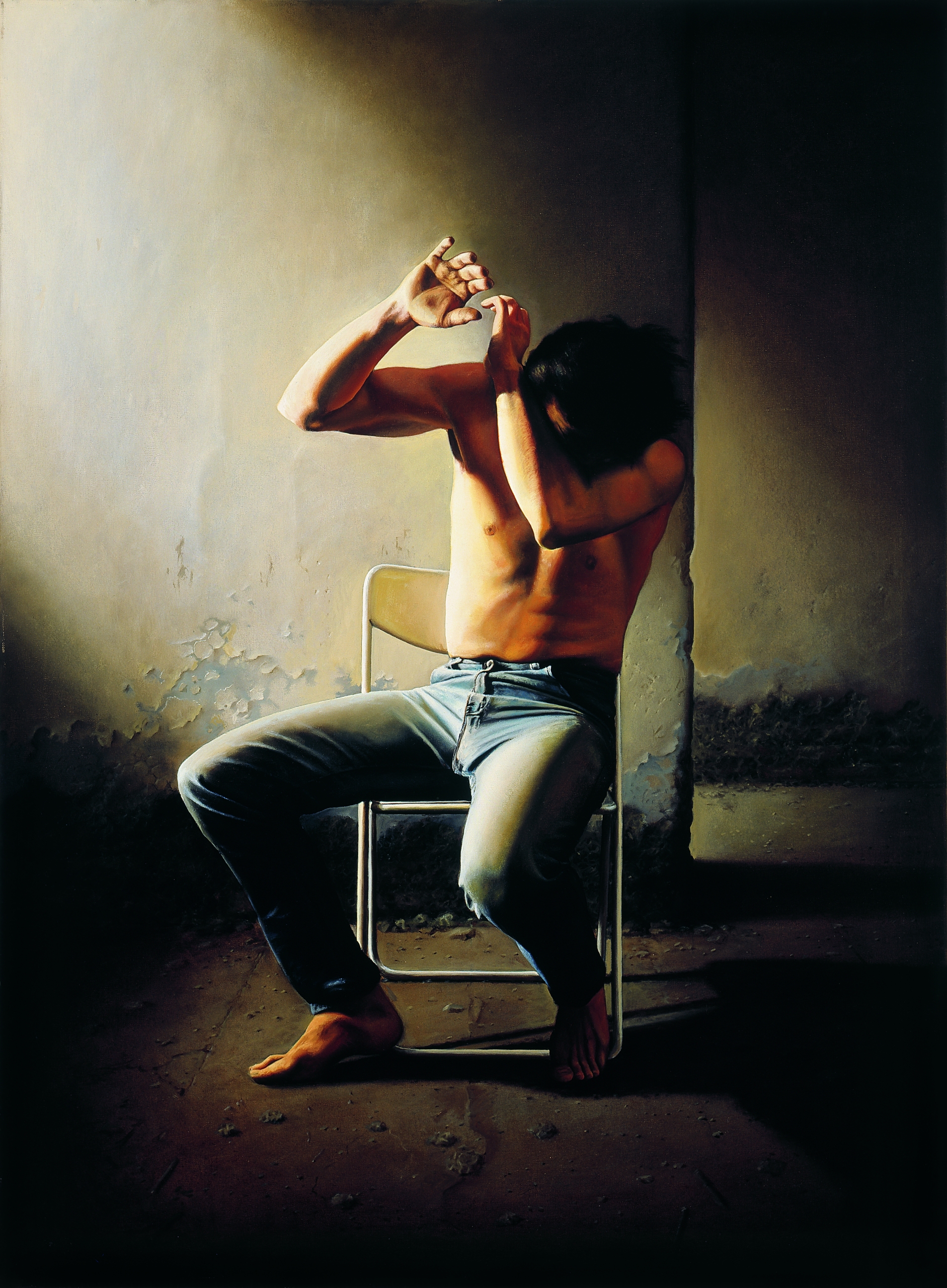
- 1987- Hamid, Three Times- Oil on canvas- Triptych, each panel 120×90 cm
-
- 1988- Smell of Childhood ( Red Horse)- oil on canvas- 100×120 cm
-
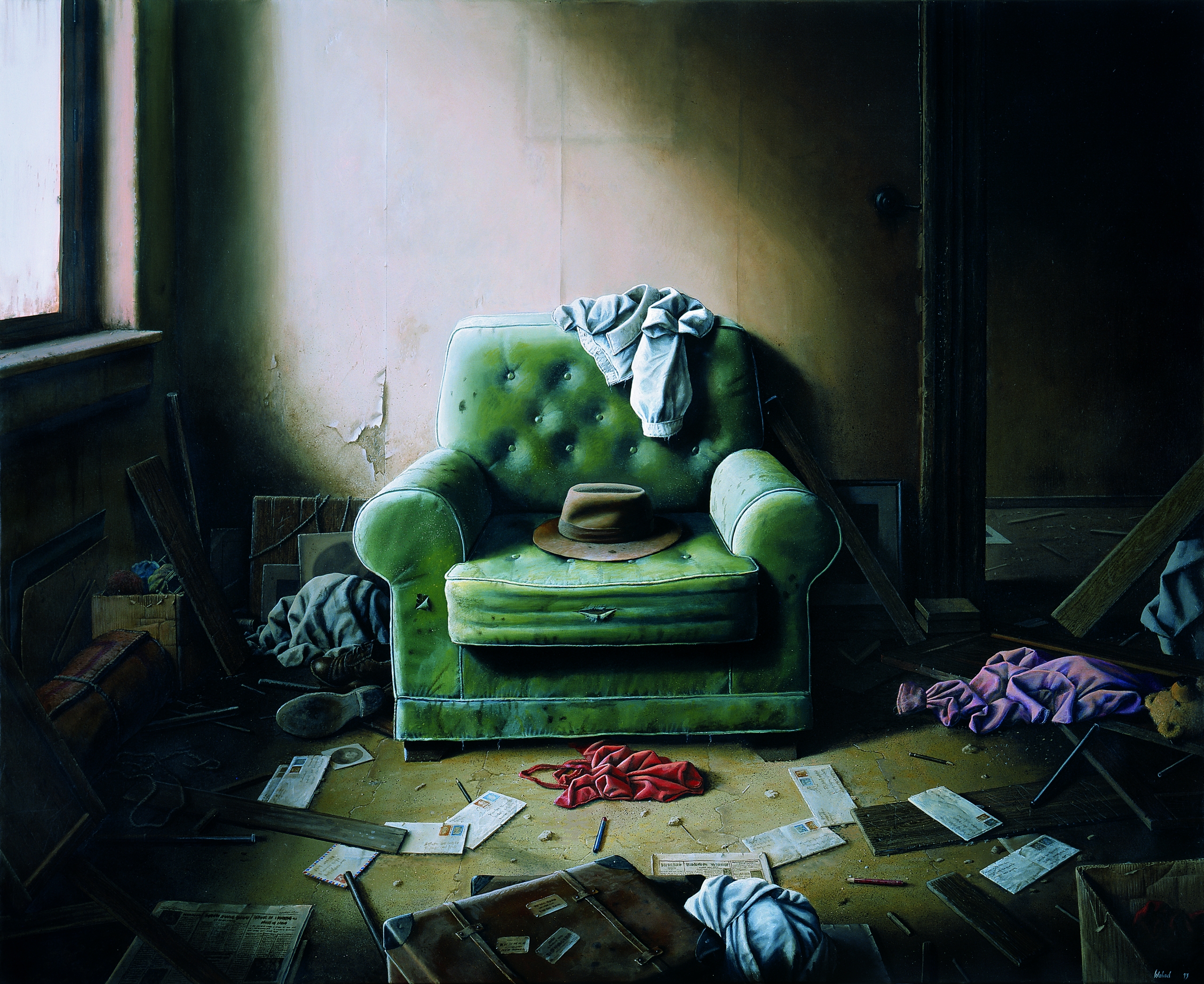
- 1993- The Green Armcher- Oil on canvas- 120×150 cm
-
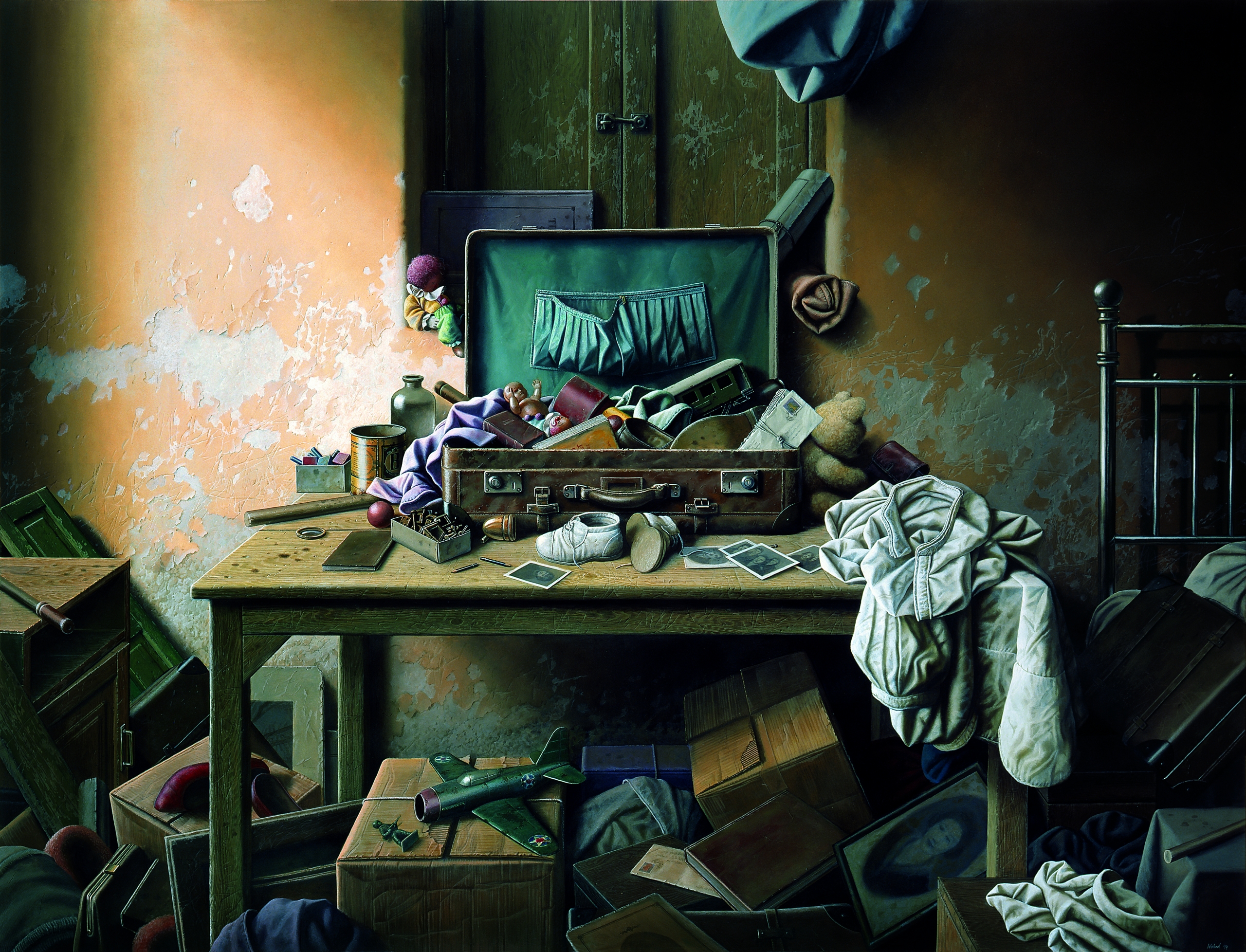
- 1994- The Final Flight- Oil on canvas- 150×200 cm
-
- 1994- The Large Sloughterhouse- Oil on canvas- 90×80 cm
-
- 1995- Blue Mercedes- Mixed media on opaper- 32×44 cm
-
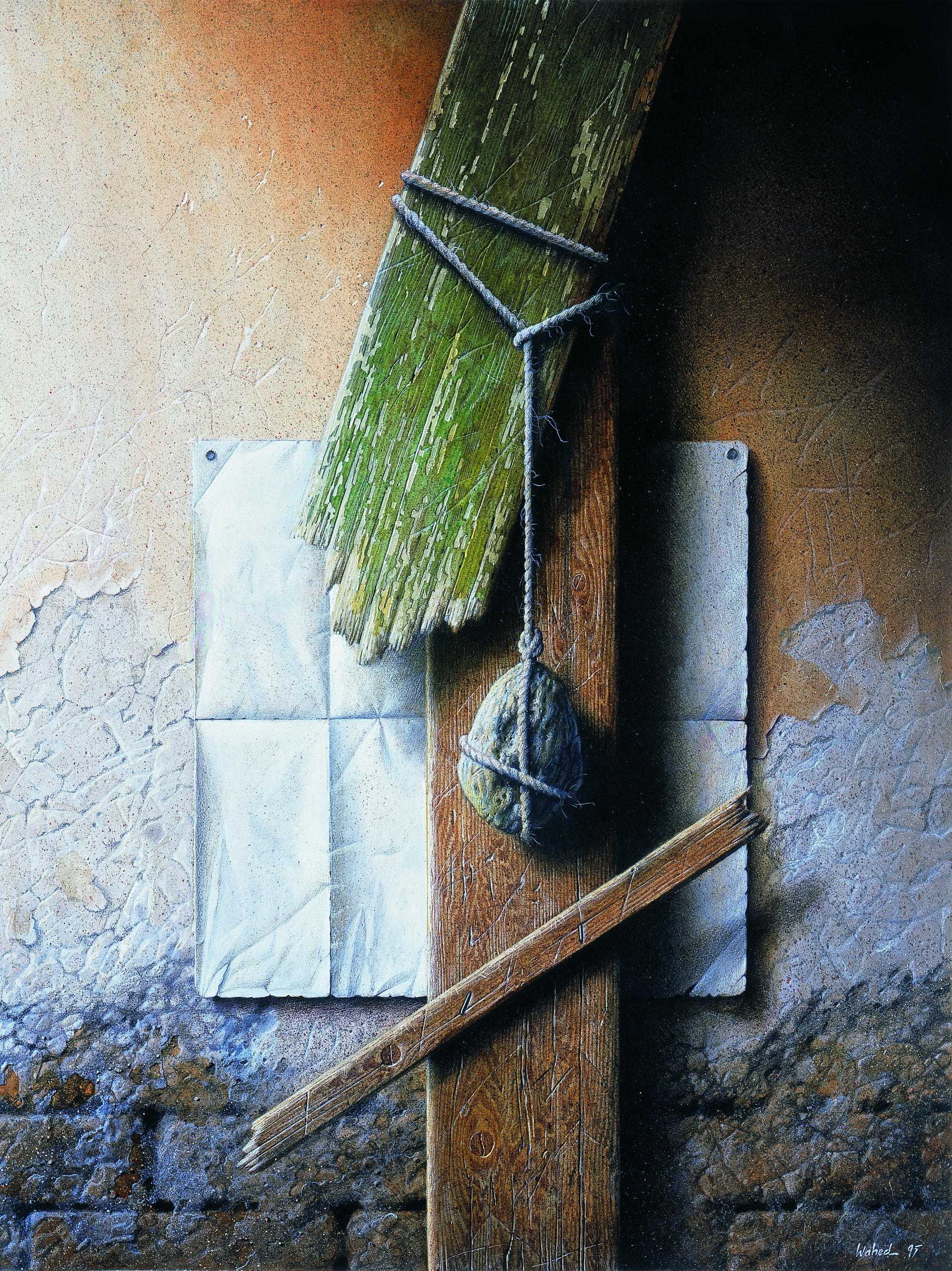
- 1995- Blue Stone- Mixed media on paper- 60×46 cm
-
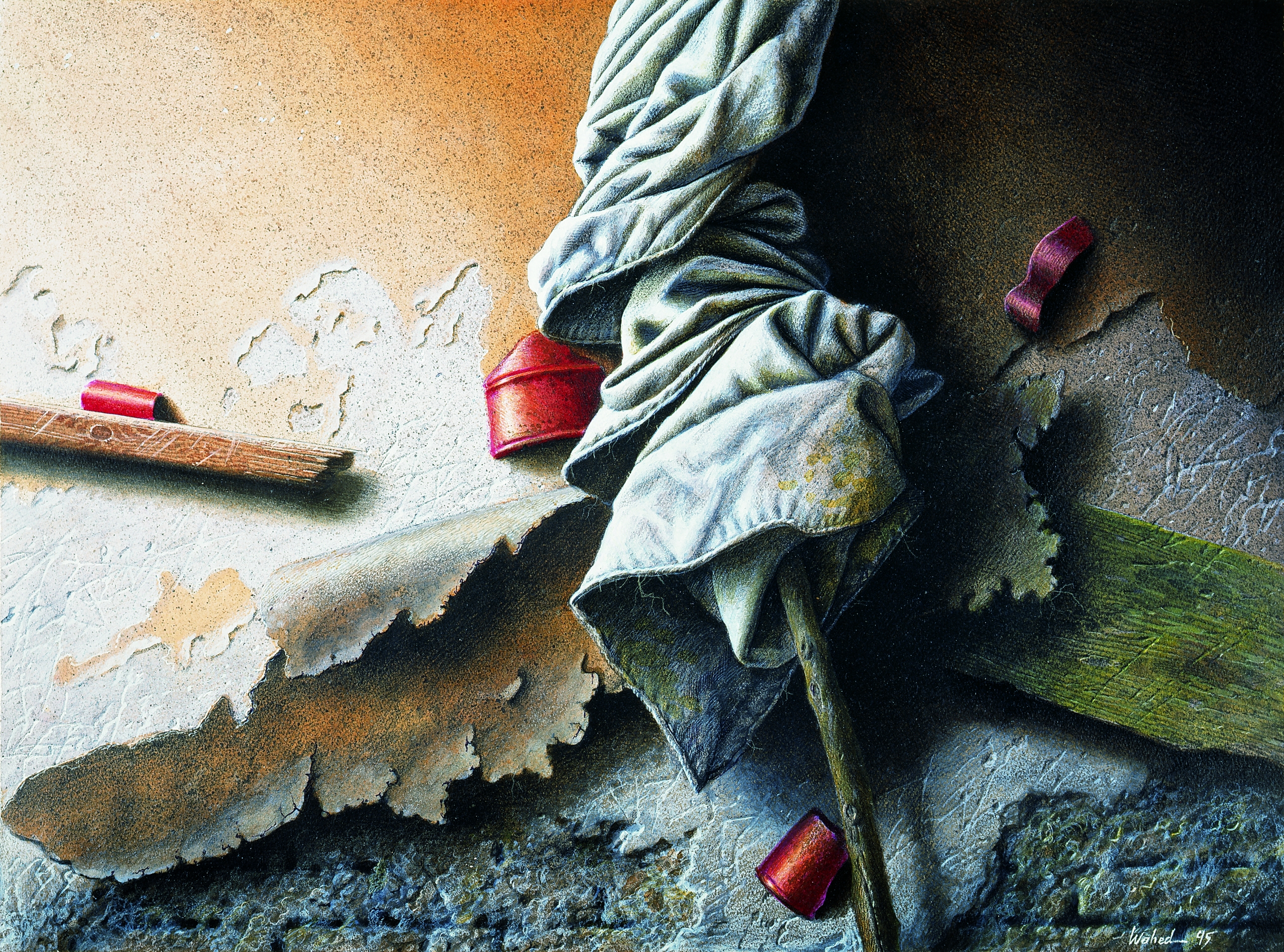
- 1995- Plastic Explosion- Mixed media on paper- 32×44 cm
-
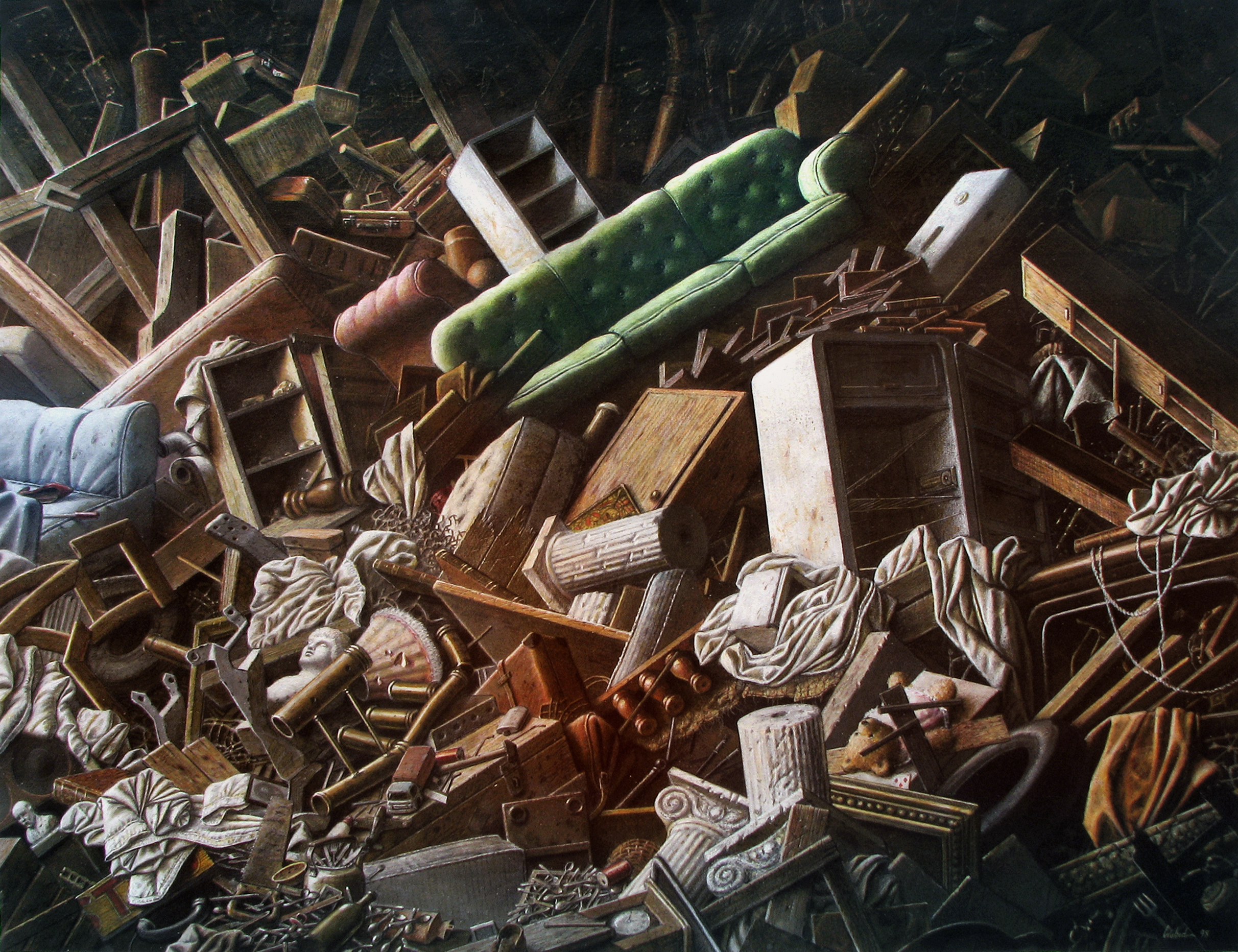
- 1998 -The Small Slaughterhourse- Mix media on Paper, 50 x 64 cm
-
- 1999- Dora And The Red Horse- Oil on canvas- 160×120 cm
-
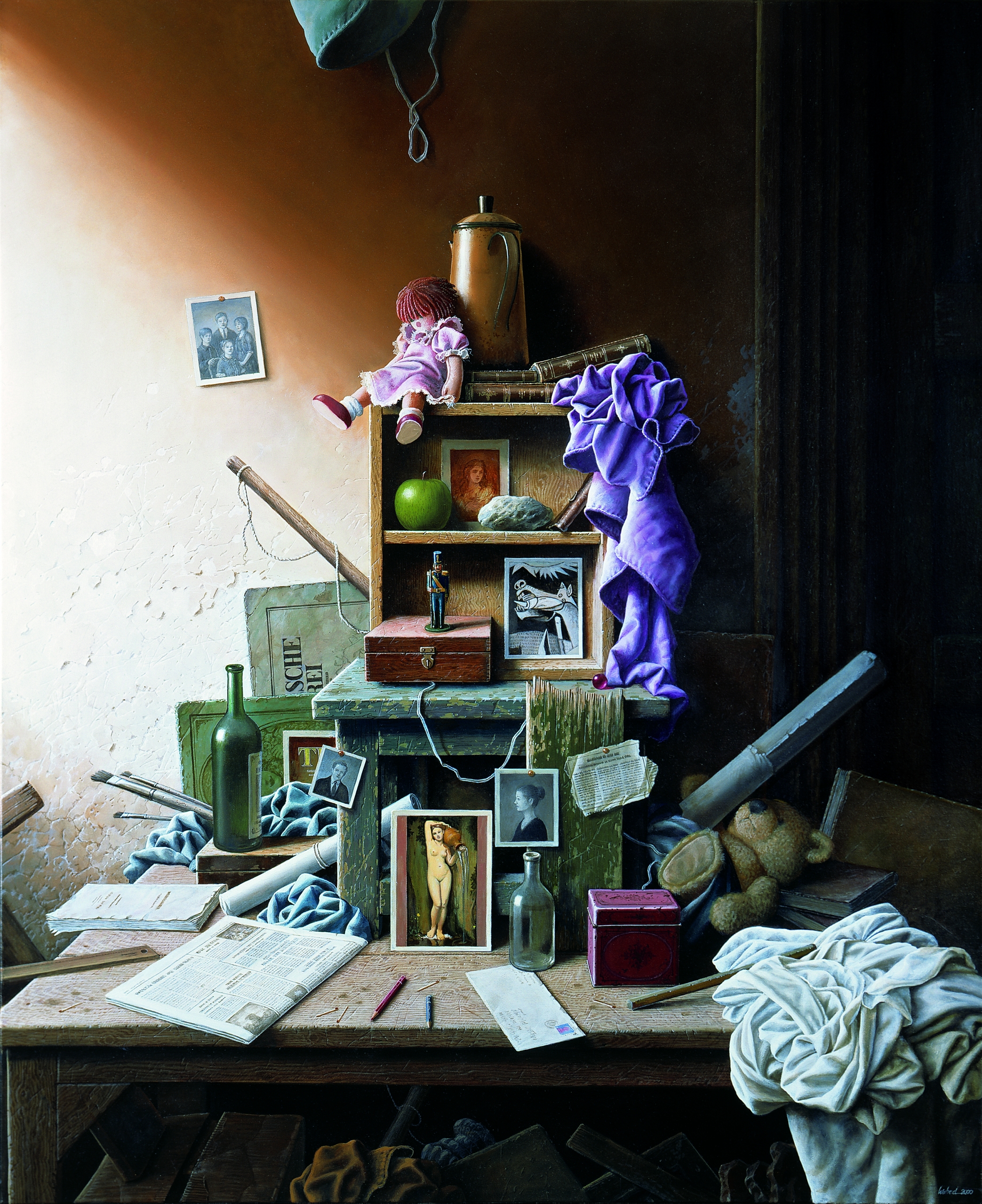
- 2000- On The Top of The Tower- Oil on canvas- 120×100 cm
-
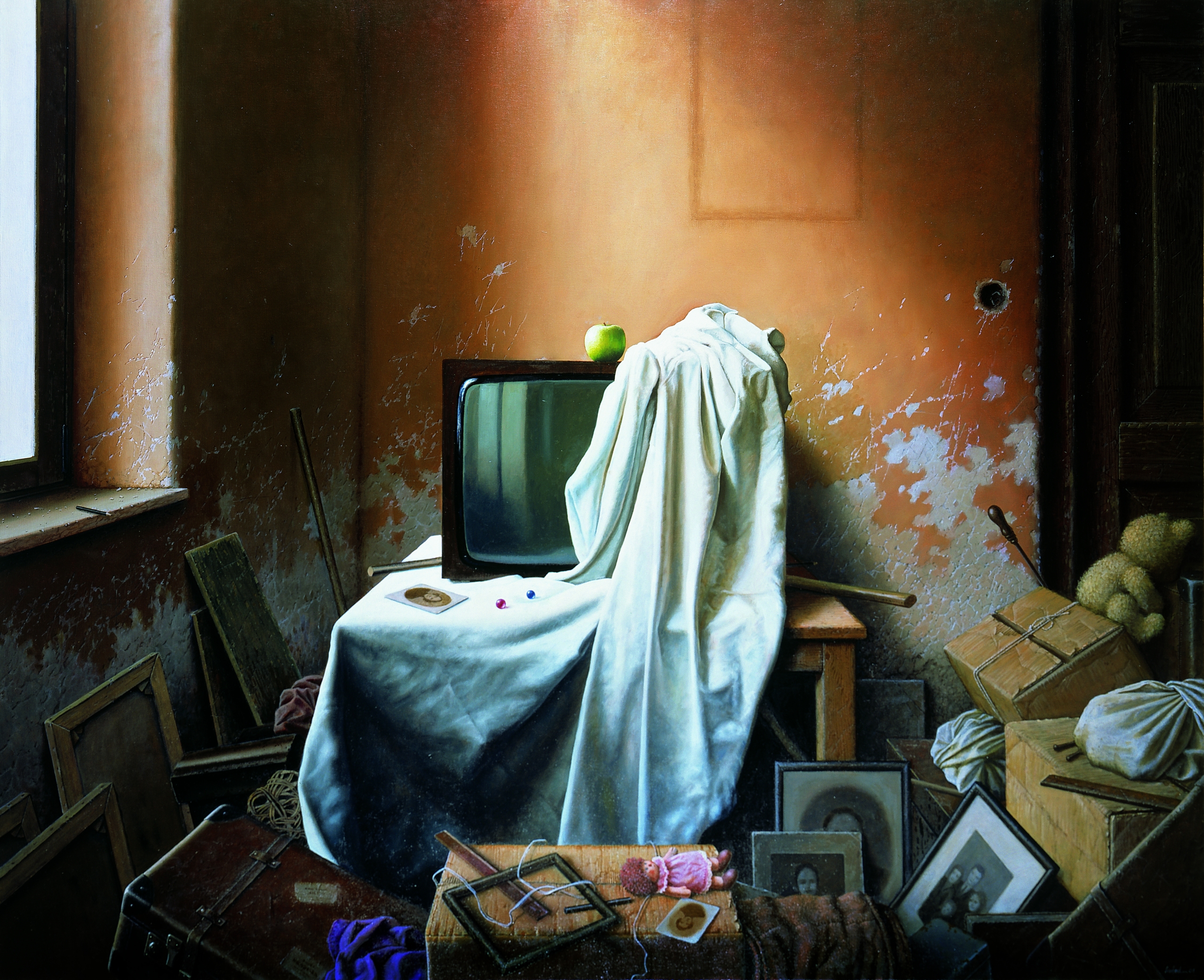
- 2001- Somewhere In Nohl St.- Oil on canvas- 120×150 cm
-
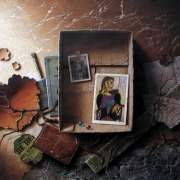
- 2006 – Mix media on Paper, 50 x 64 cm