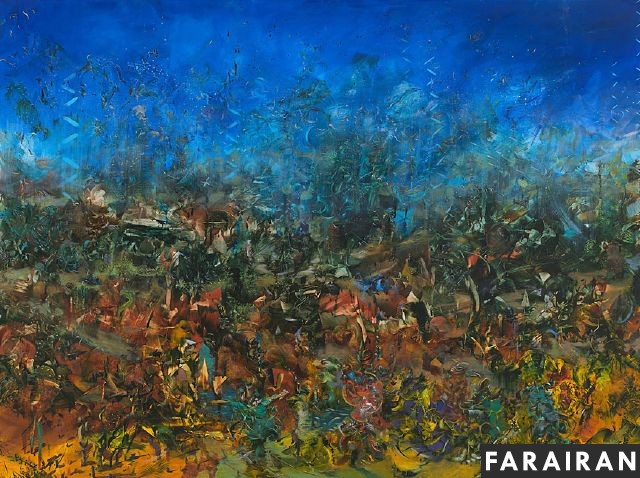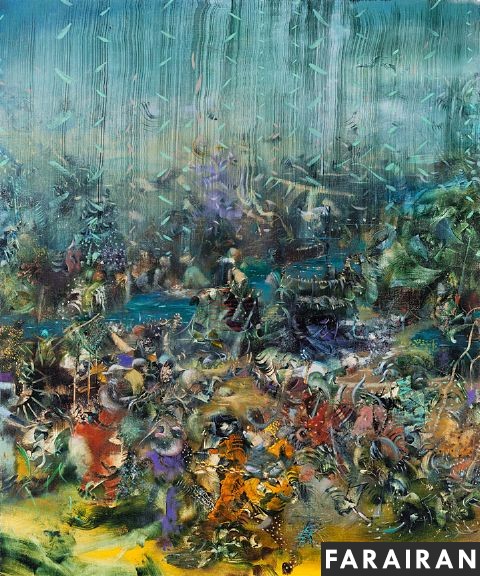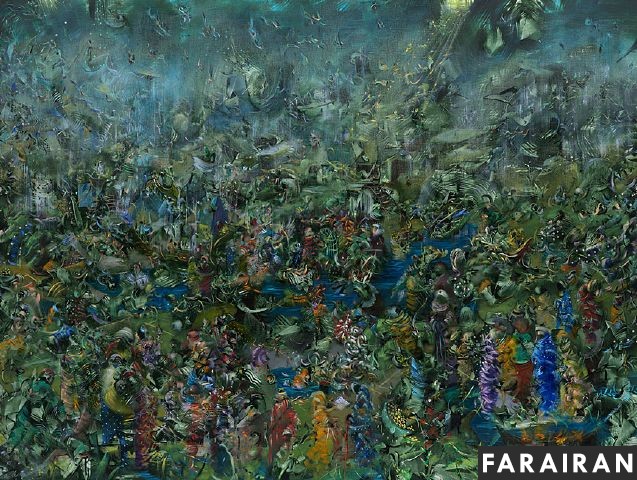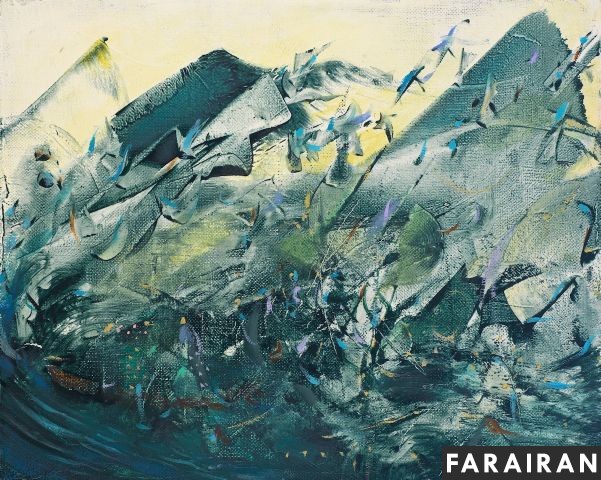
Golnaz Fathi

Featured Artist Golnaz Fathi
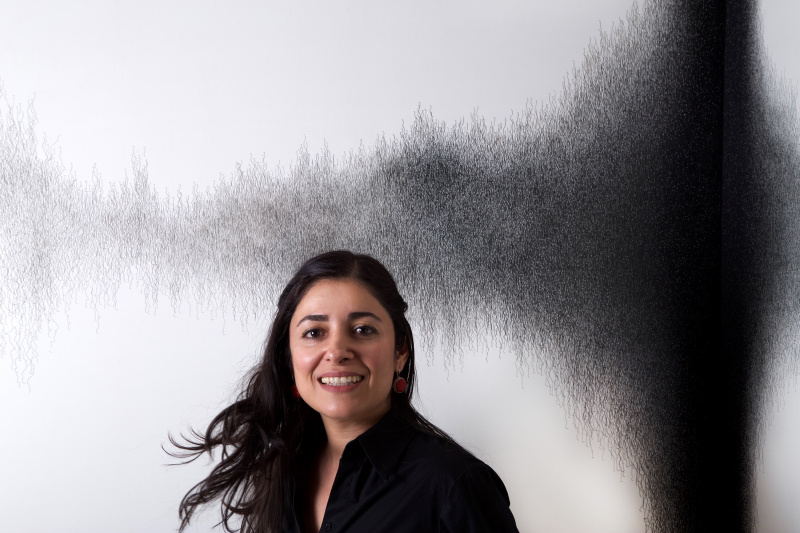
Golnaz Fathi

Born in 1972, Tehran, Iran
Education:

1996 Diploma of Iranian Calligraphy, Iranian Society of Calligraphy, Tehran, Iran
1995 Bachelors of Art in Graphics, Azad Art University, Tehran, Iran
1990 Secondary Studies Degree, Tehran, Iran
Solo Exhibitions:

2010 Liminal-Subliminal,October gallery,London,UK
2010 Controlled Chaos, The Third line,Dubai,UA
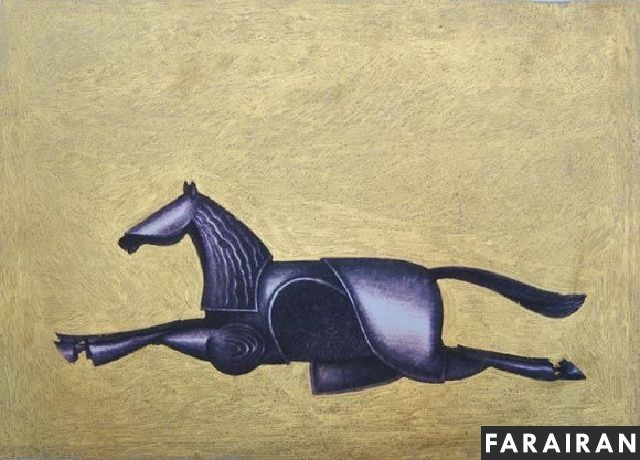
2010 Ride Like the Wind, Sultan Gallery, Kuwait
009 Doha series, The Third Line, Doha, Qatar
2008 My Freedom, Xerxes Gallery, London, UK
2008 Sleepless Nights, The Third Line, Dubai, UAE
2007 Beyond Words, La Fontaine Centre of Contemporary Art, Bahrain
2006 Golnaz Fathi, The Third Line, Dubai, UAE
2005 Solo Exhibition, Space SD, Beirut, Lebanon
2005 Un-Written, The Third Line, Dubai, UAE
2005 Virtual Painting Exhibition, ArtəEast, http://www.arteeast.org/
2005 Solo Exhibition, Espace SD, Beirut, Lebanon
2005 Solo Exhibition, Maison des Jeunes et de la Culture de Neuilly, Neuilly-sur-Seine, France
2004 Solo Exhibition, Agence Le Carré Bleu, Paris, France
2004 Solo Exhibition, Galerie L’oeil du Huit, Paris, France
2004 Solo Exhibition, Golestan Gallery, Tehran, Iran
2002 Solo Exhibition, Golestan Gallery, Tehran, Iran
2000 Solo Exhibition, Golestan Gallery, Tehran, Iran
2000 Solo Exhibition, Shahr-e-Ketab Bookstore of Niavaran, Tehran, Iran
1999 Solo Exhibition, Seyhoon Gallery, Tehran, Iran
1998 Solo Exhibition, Seyhoon Gallery, Tehran, Iran
Group Exhibitions:

2012 “ The elephant in the dark”, at the Devi Art Foundation, New Delhi, india
2011 written images: contemporary calligraphy from middle east, sundaram tagore
gallery, New York, USA
2011 The Art of Writing, Art Forum of Wiesbaden, Germany
2011 “Transvangarde” contemporary art from around the world, October gallery, London
2010 “Iran inside out” Farjam Collection, Dubai,UAE
2009 International Woman Artists’ Biennial, South Korea
2009 Iran Inside Out, Chelsea Art Museum, New York, USA
2009 Selseleh/Zelseleh: Movers & Shakers in Contemporary Iranian Art, Curated by Dr. Layla Diba, Leila
ghinia-Milani Heller Gallery, New York, USA
2008 Look what love has done to us, Cramer Gallery, Geneva, Switzerland
2008 Word into Art: Artists of the Modern Middle East, British Museum at DIFC, Curated by Venetia Porter, Dubai, UAE
2007 Cutting Edge: Spotlight on the avant-garde of emerging countries, Artcurial, Paris, France
2007 Collected Memories, ArtSpace Gallery, London, UK
2007 Within and Without, Nomoregrey Gallery, London, UK
2007 Group exhibition, Mah Gallery, Tehran, Iran
2007 Group exhibition, Unnamed Gallery, Amman, Jordan
2007 Wishes and Dreams, Meridian International Centre, Washington DC, USA
2007 ARTPARIS 07, Grand Palais, Paris, France
2007 Group exhibition, Niavaran Artistic Creation Foundation, Tehran, Iran
2006 Transit, Istanbul Improvisation Days, Istanbul, Turkey
2006 Group Exhibition, Don O’Melveny Gallery, Los Angles, USA
2006 Word into Art: Artists of the Modern Middle East, The British Museum, London, UK
2006 9th International Open Exhibition, Woman Made Gallery, Chicago, USA
2005 Group Exhibition, Espace SD, Beirut, Lebanon
2005 Group Exhibition, Mah Gallery, Tehran, Iran
2005 Group Exhibition, Italian School of Tehran, Tehran, Iran
2004 Group Exhibition, Depot Square Gallery, Boston, USA
2004 Group Exhibition, Elga Wimmer Gallery, New York City, USA
2004 Group Exhibition, Fatima Gallery, Tehran, Iran
2004 Group Exhibition, Italian School of Tehran, Tehran, Iran
2004 Group Exhibition, Royal Mirage Hotel, Dubai, UAE
2003 Group Exhibition, Williams Tower Gallery, Houston, USA
2003 6th Tehran Contemporary Painting Biennial, Museum of Contemporary Art, Tehran, Iran
2003 Group Exhibition, Italian School of Tehran, Tehran, Iran
2003 Group Exhibition, The National Arts Club, New York, USA
2003 Group Exhibition, Lo Sguardo Di Luce, Padova, Italy
2003 New Art from Iran, Art Centre of Plano, Plano, Texas, USA
2003 New Art from Iran, Museum of Arts and Science, Daytona Beach, Florida, USA
2002 Group Exhibition, Golestan Gallery, Tehran, Iran
2002 Group Exhibition, Don O’Melveny Gallery, Los Angles, USA
2002 New Art from Iran, Art Museum of Southeast Texas, Beaumont, Texas, USA
2002 New Art from Iran, Queen Library Gallery, Jamaica, New York, USA
2001 Group Exhibition, La Maison du Livre, Brussels, Belgium
2001 Group Exhibition, Hôtel de Ville de Saint-Gilles, Saint-Gilles, Belgium
2001 Group Exhibition, Golestan Gallery, Tehran, Iran
2001 Group Exhibition, Courtyard Gallery, Dubai, UAE
2001 Group Exhibition, Meridian International Centre, Washington DC, USA
2000 Group Exhibition, Azteca Gallery, Madrid, Spain
2000 Group Exhibition, Seyhoon Gallery, Tehran, Iran
1998 Group Exhibition, Seyhoon Gallery, Tehran, Iran
1997 1st Islamic World Calligraphy Festival, Museum of Contemporary art, Tehran, Iran
1997 Group Exhibition, Seyhoon Gallery, Tehran, Iran
1996 Calligraphy Exhibition, Reza Abbassi Museum, Tehran, Iran
1996 Calligraphy Exhibition, Seyhoon Gallery, Tehran, Iran
1995 Exhibition of Art University Students, Museum of Contemporary Art, Tehran, Iran
1994 Exhibition for Iranian Women Painters, Turkey
1993 2nd Painting and Miniature Exhibition, Tehran Exhibition Centre, Tehran, Iran
1993 2nd Tehran Contemporary Painting Biennial, Museum of Contemporary Art, Tehran, Iran
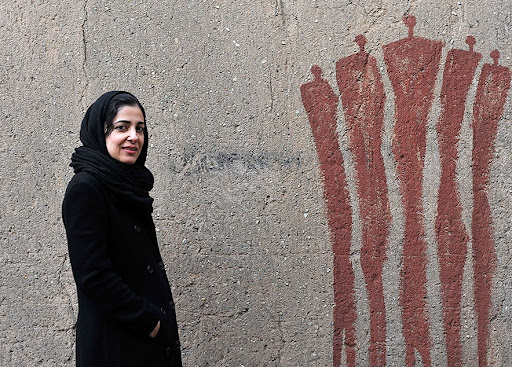
Golnaz Fathi گلناز فتحی

Grants and Awards:

2011 CHOSEN AS A YOUNG GLOBAL LEADER – ECONOMIC FORUM
2010 Sharjah Calligraphy Biennal, UAE,- selection Committee
2007 Residence scholarship, Fabrica, Treviso, Italy
2004 Residence Scholarship, Cité Internationale des Arts, Paris, France
2003 Residence Scholarship, Cité Internationale des Arts, Paris, France
1995 Best Woman Calligraphist in Ketabat style, Iranian Society of Calligraphy, Tehran, Iran
1993 Diploma of Honour in Graphics and Painting, Museum of Contemporary Art, Tehran, Iran

Works at Musuems and Collections:
Brighton & Hove Museum, England
Carnegie Mellon University in Doha, Qatar
slamic Art Museum, Malaysia
Asian Civilization’s Museum, Singapore
The British Museum, London
Devi art foundation, New Delhi,India
Farjam collection,Dubai

Name mentioned in Publications:

Heinz Kroehl, The Art of Writing, Bilder Werden Geschrieben, Germany
Iann Robertson, A New Art from Emerging Artists, United kingdom, 2011
Saeb Agner, Art oof the Midddle East, London, 2010
Contemporaryy Art in the Middle East, Art World, London, 2009
Different Sames, New Perspectives in Contemporary Iranian Art, London, 2009
Graphic Design from the Arab World and Persia, Berlin, 2008
Venetia Porter, Word into Art, Artists of the Modern Middle East, British Museum, London 2006

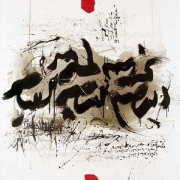
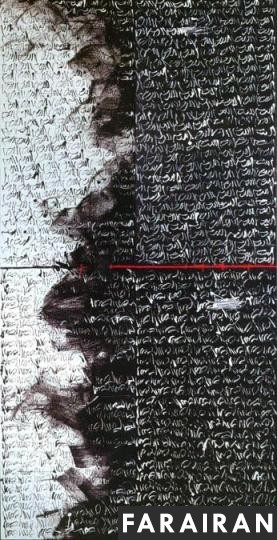
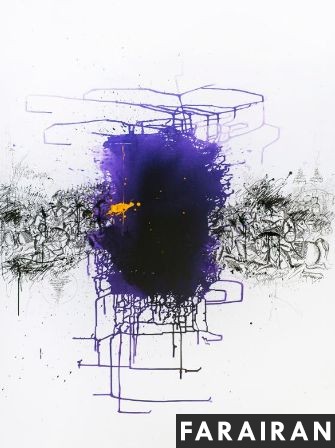
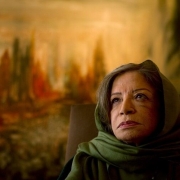
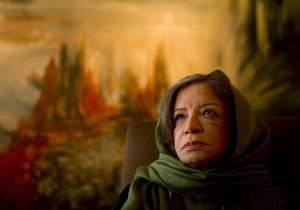
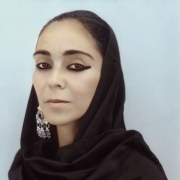
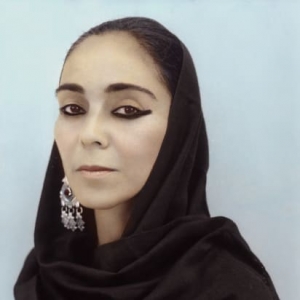
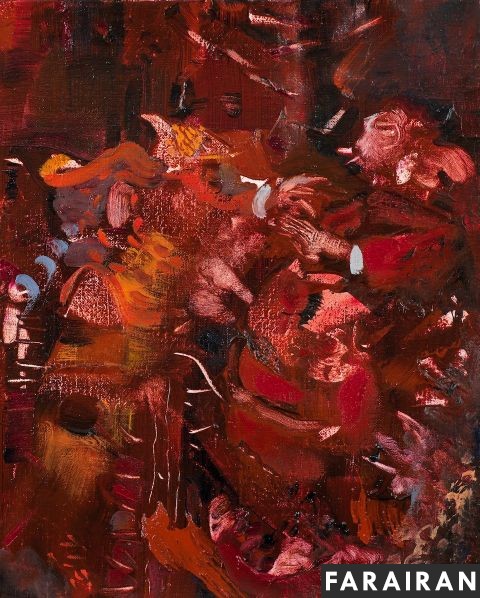
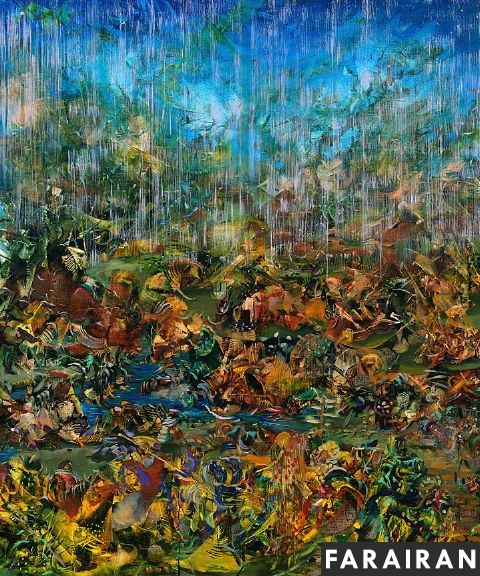
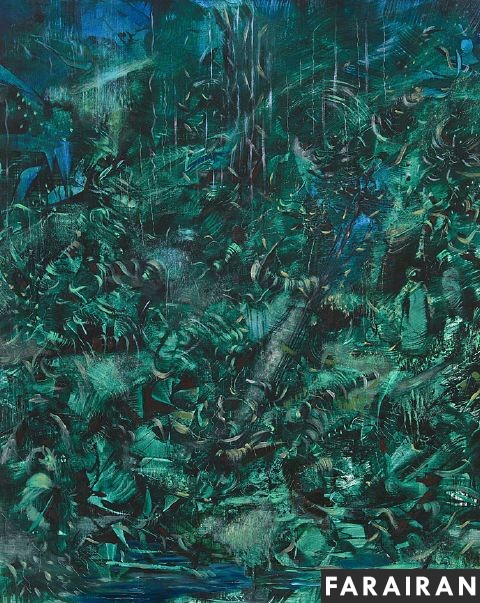
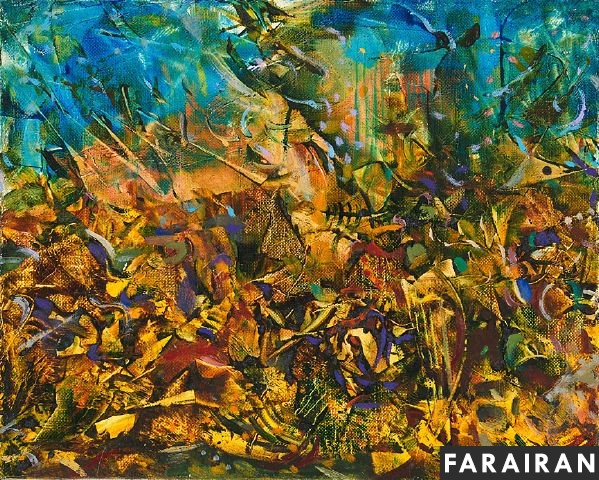
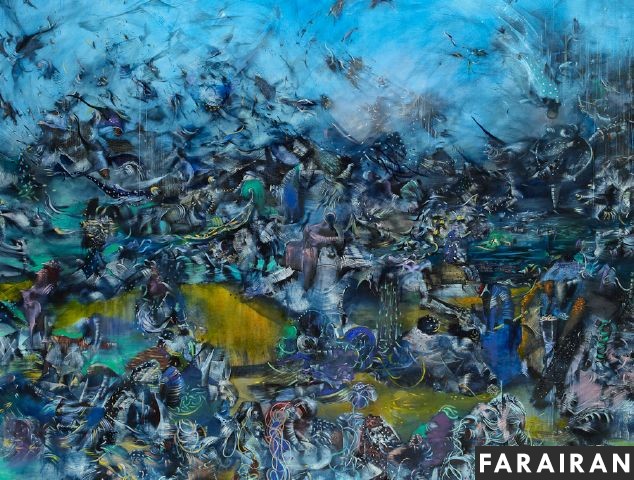
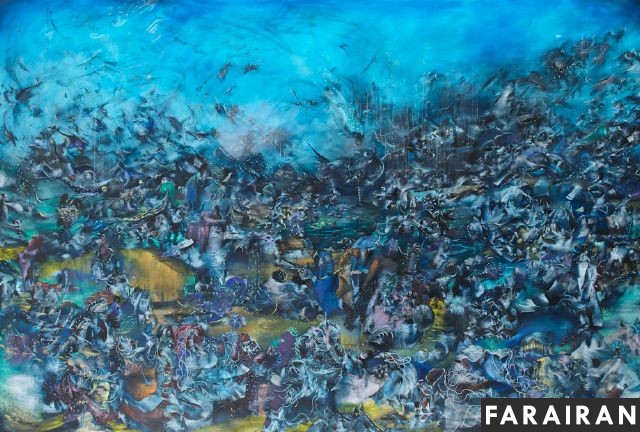
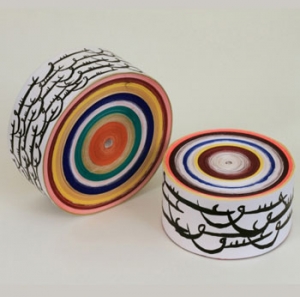
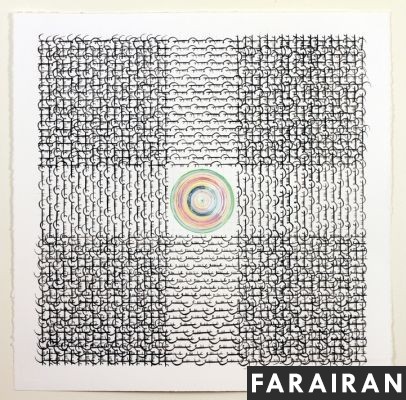
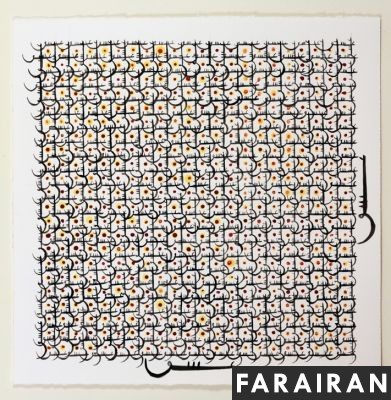
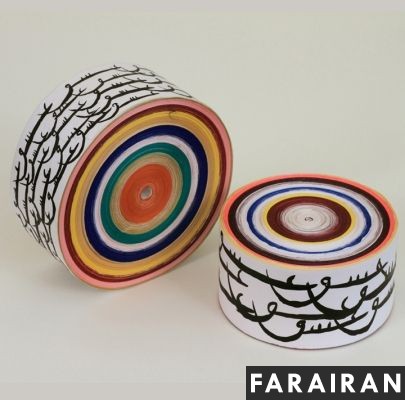
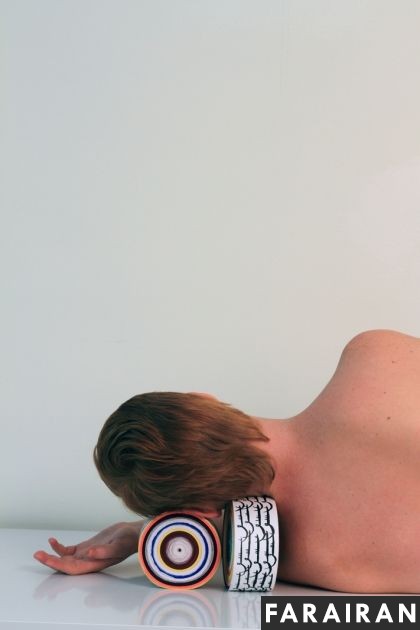
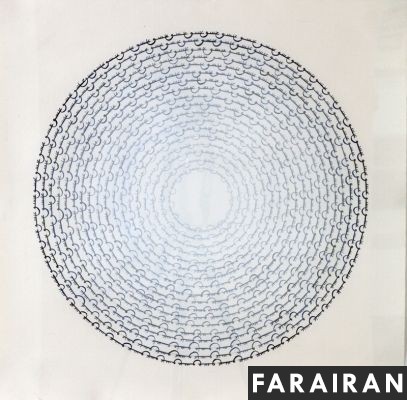
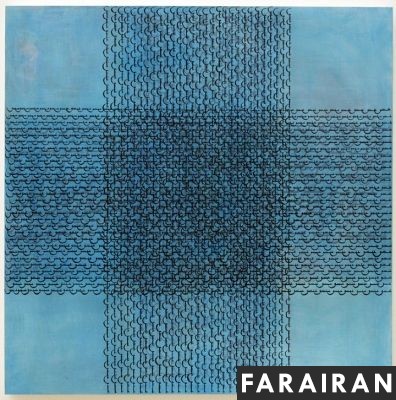
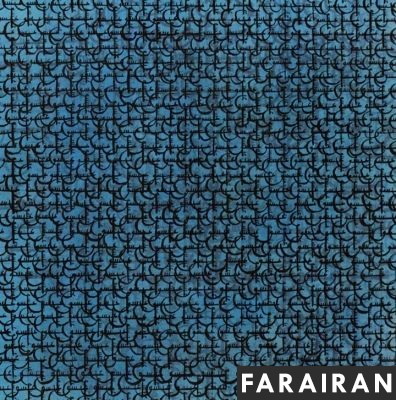
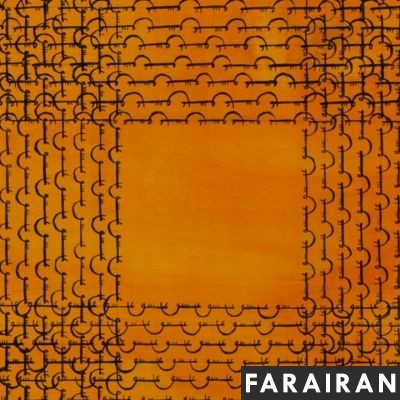
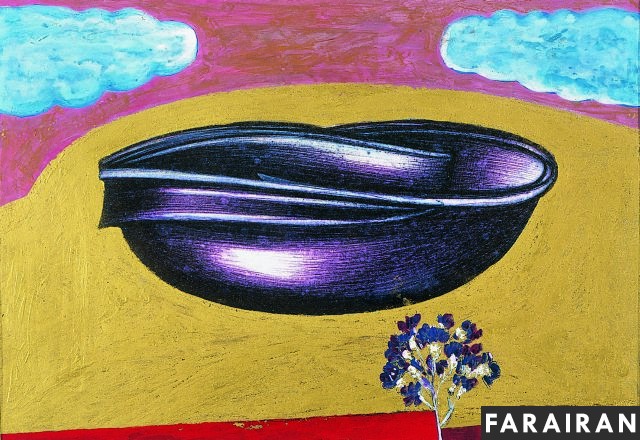
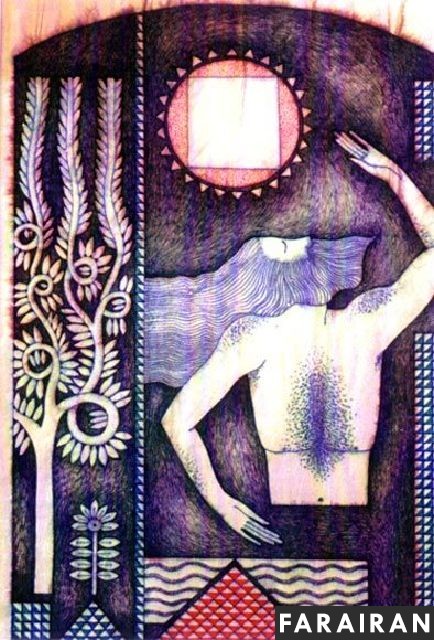
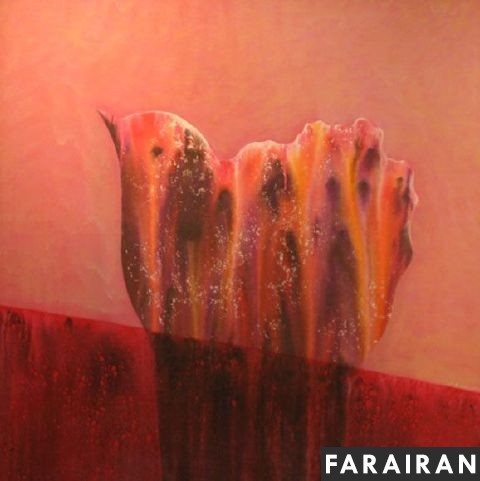
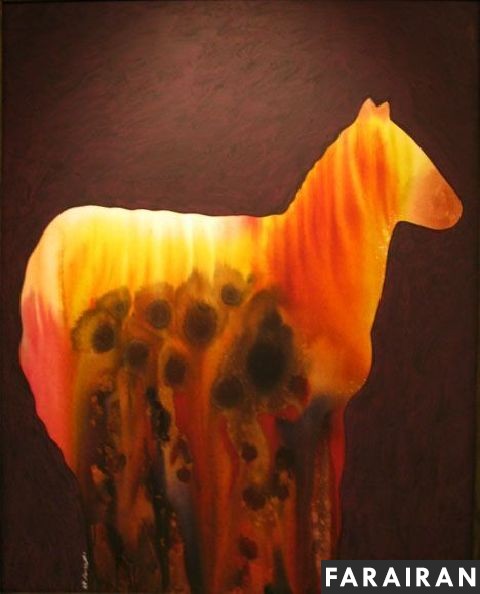
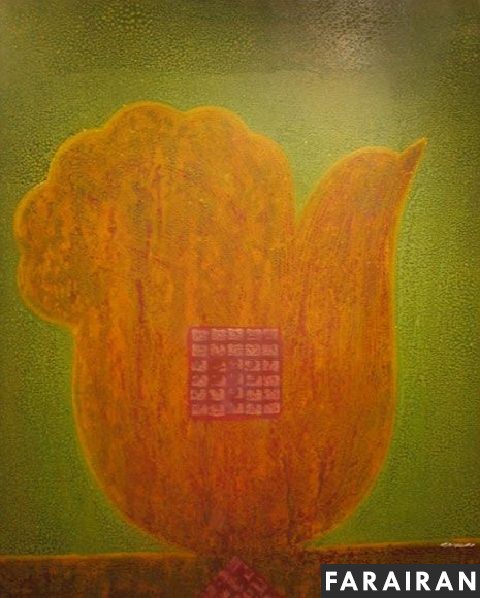
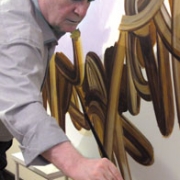
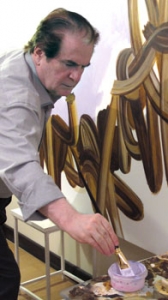
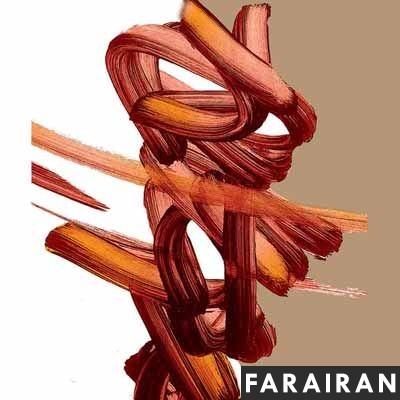
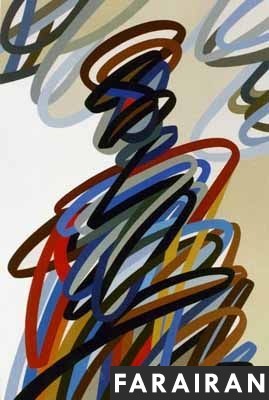
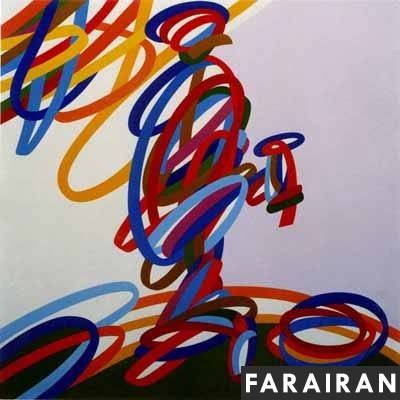
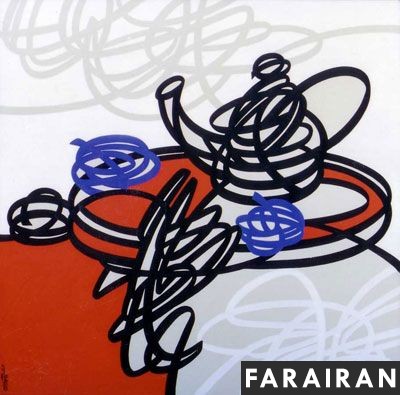
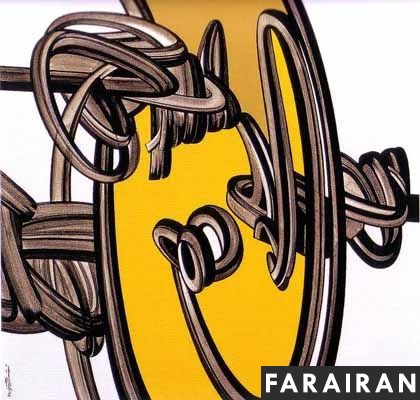
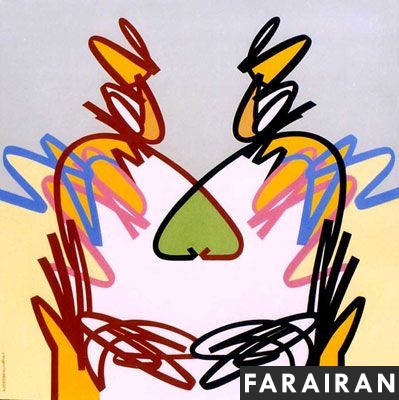
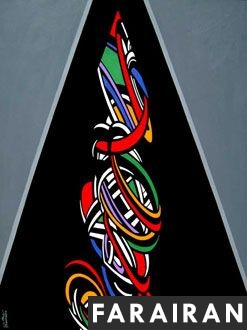
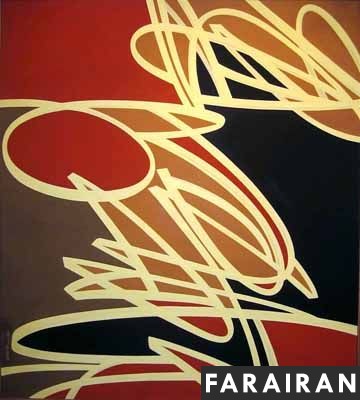
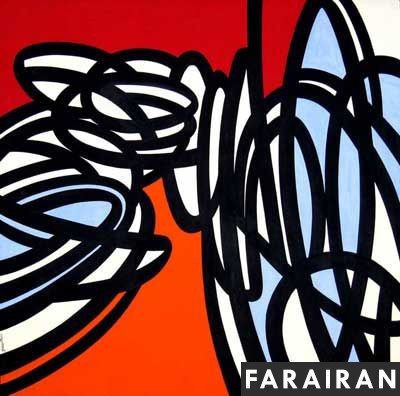
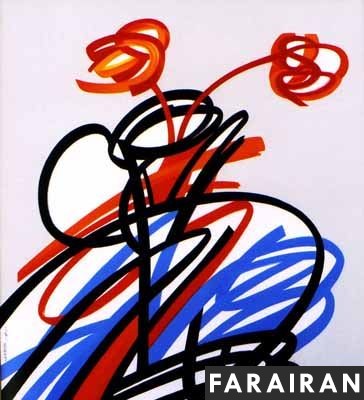
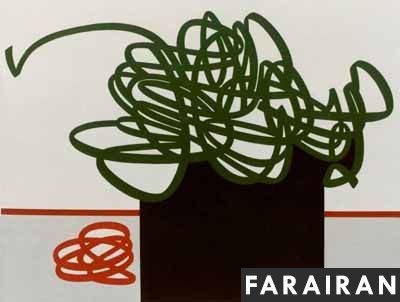
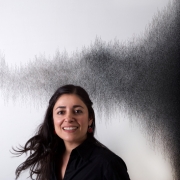
Born in 1972 in Tehran, Golnaz Fathi studied Graphic Design at Azad Art University (Tehran) and completed the calligraphic courses at Iranian Calligraphy Society. She was the first woman to win an award for Ketabat (a genre of calligraphy). Yet, Fathi’s practice has extended far beyond the traditional approach to calligraphy to develop an abstract style, which is based on the warm-up exercises (sia’h mashq) practiced by professional calligraphers before they begin their work.

Fathi is a self-taught painter: “The only period in my life that I had a teacher for painting was when I was nine, and at that time I fell in love with the form, and I had a dream that one day I would become a painter. For calligraphy, I am thankful to my father. He introduced it to me, as he believed that everyone should have good penmanship. His aim was to familiarize me with beautiful handwriting; he never knew it would lead me to practicing seven hours a day and becoming a professional calligrapher.”

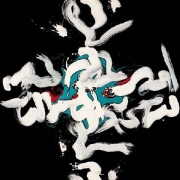
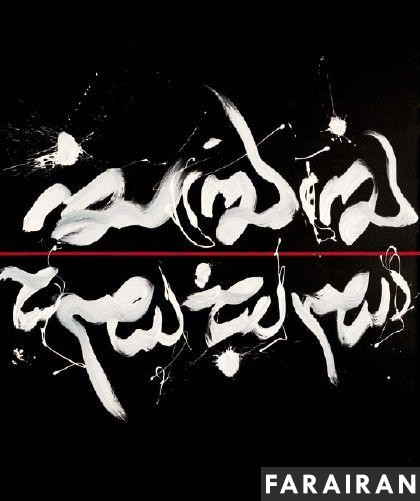
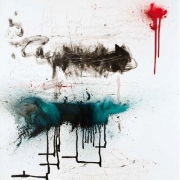
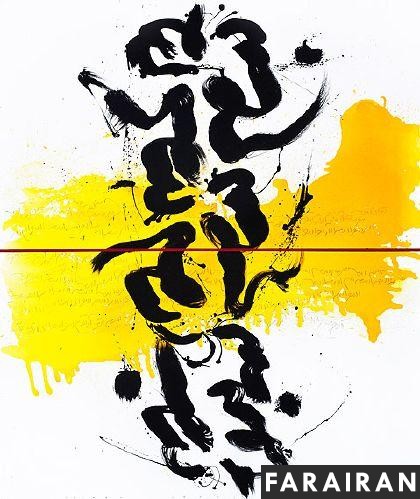
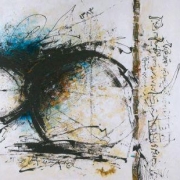
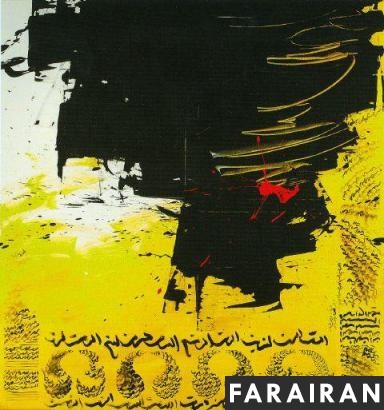
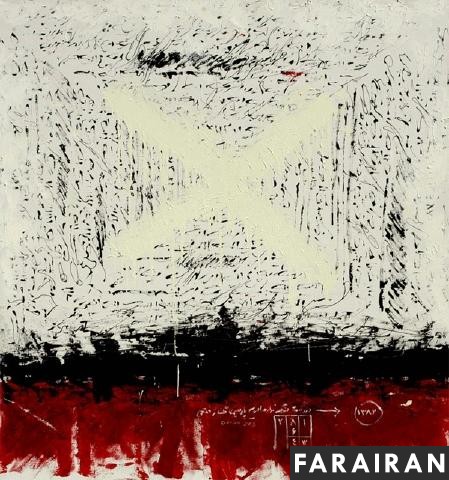
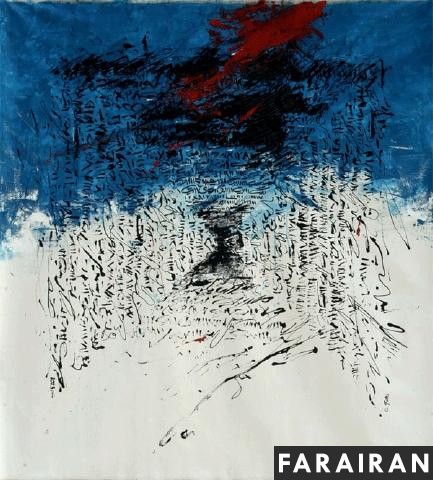
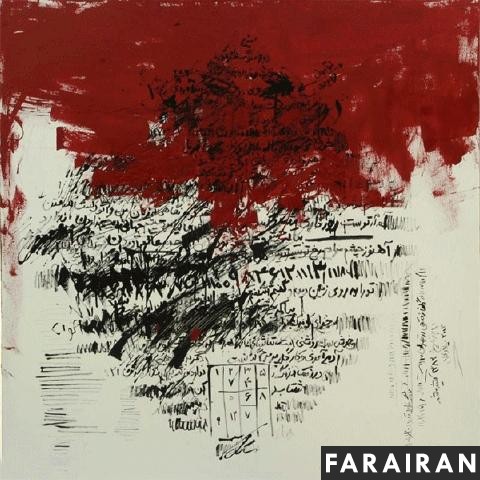
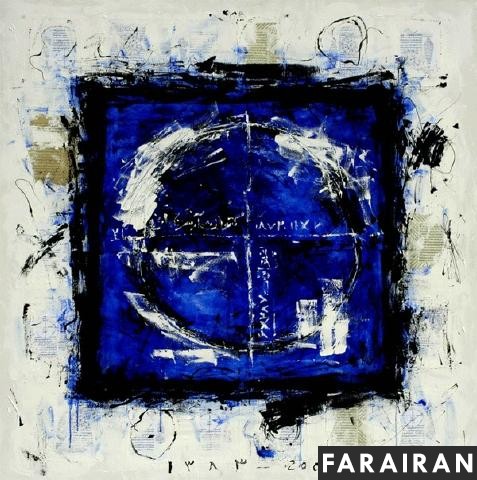
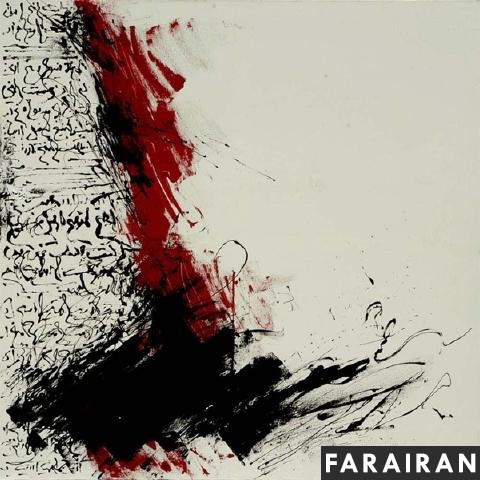
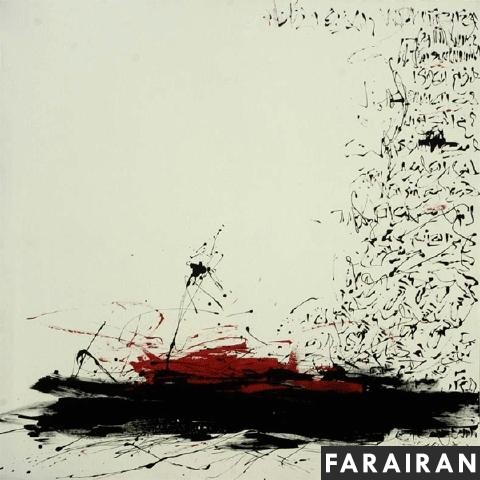
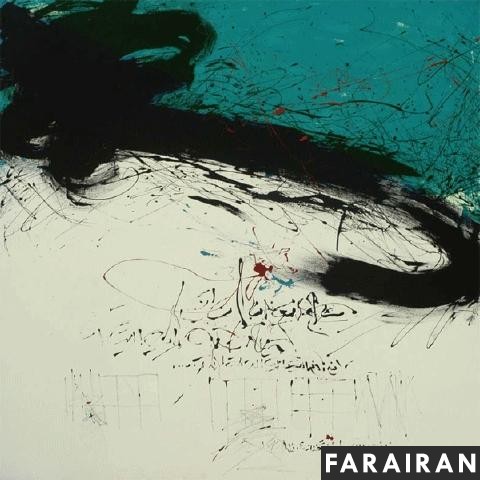
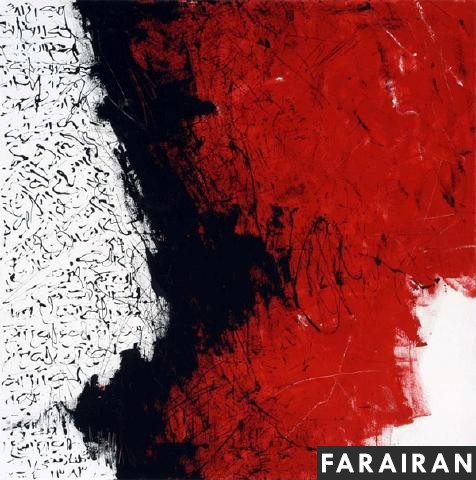
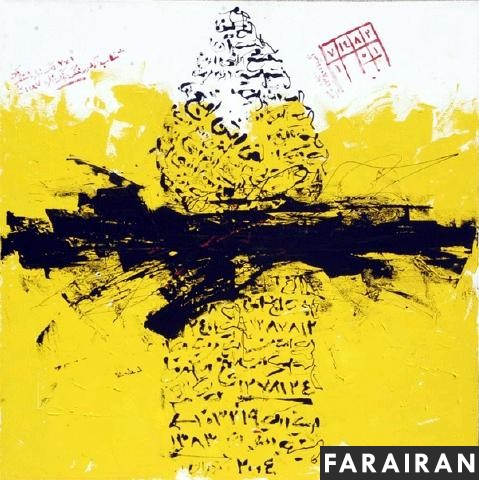
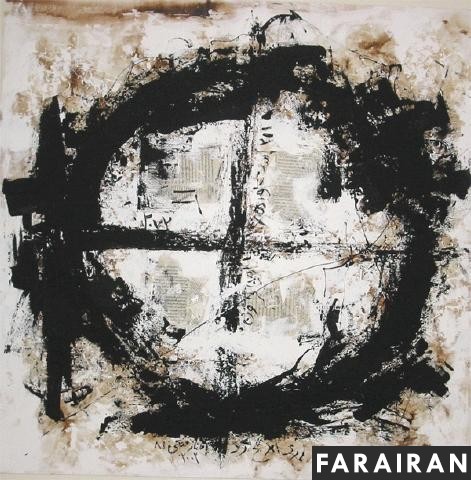
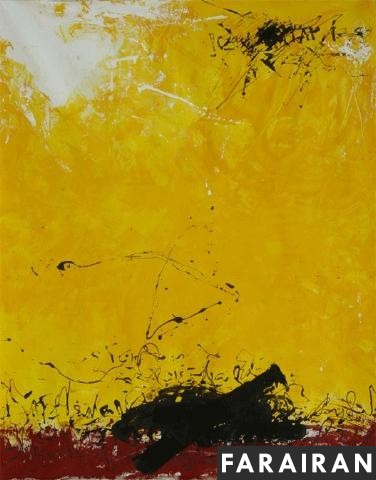
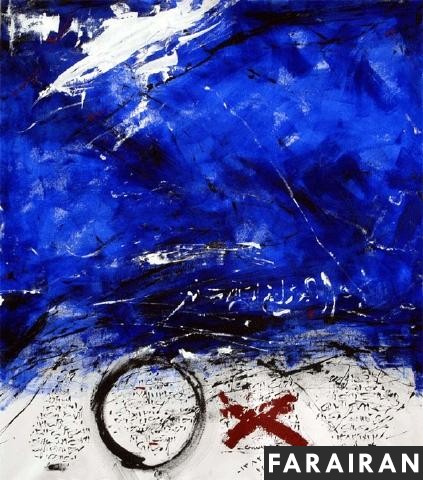
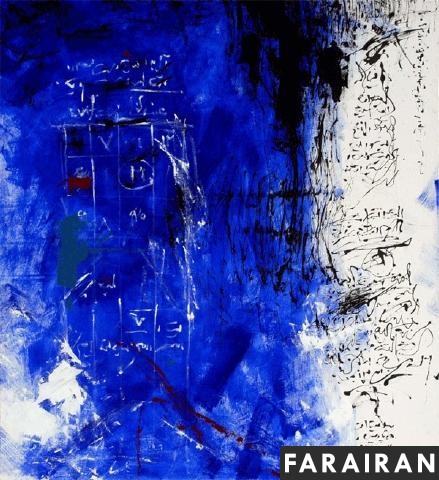
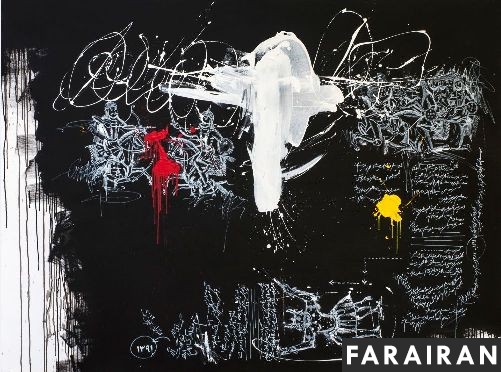
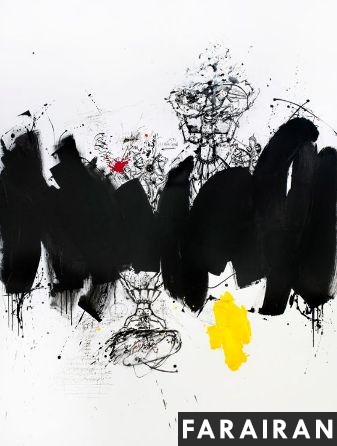
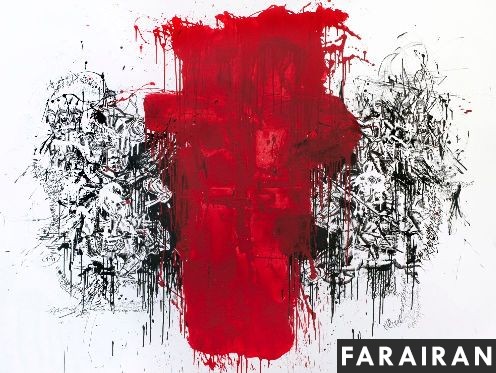
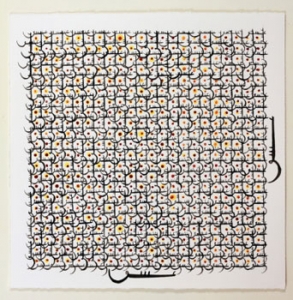
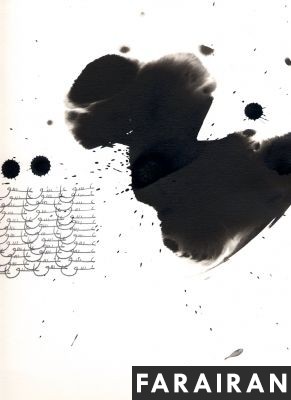
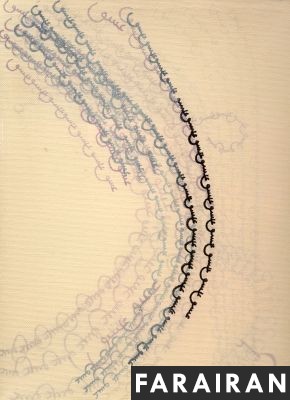
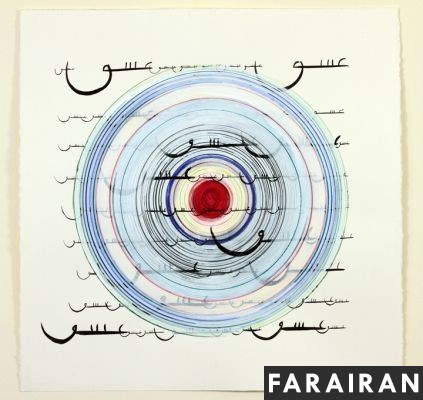
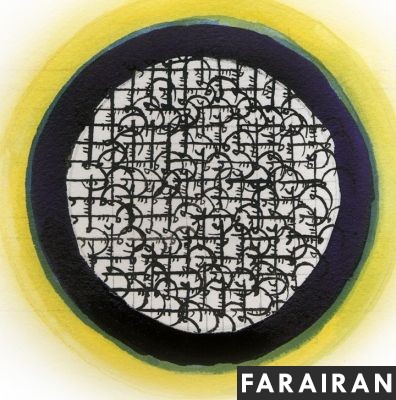
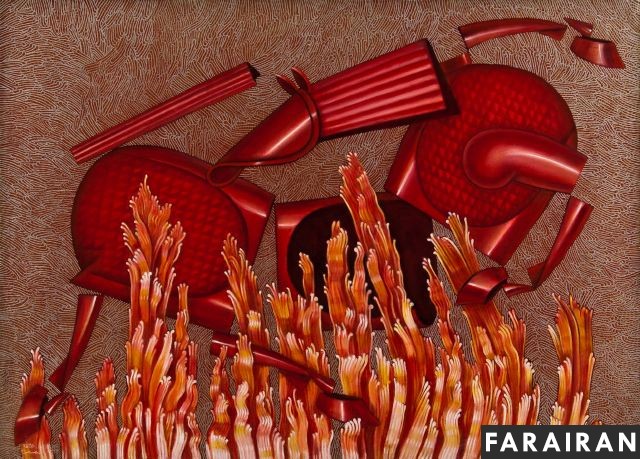
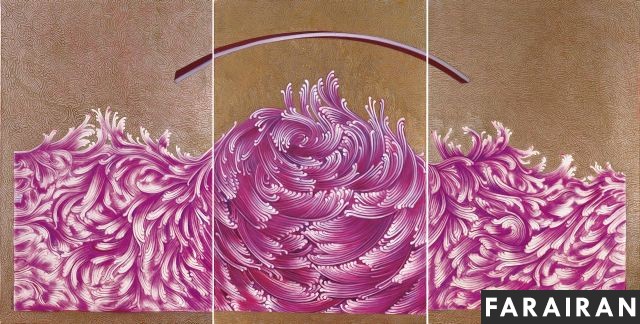
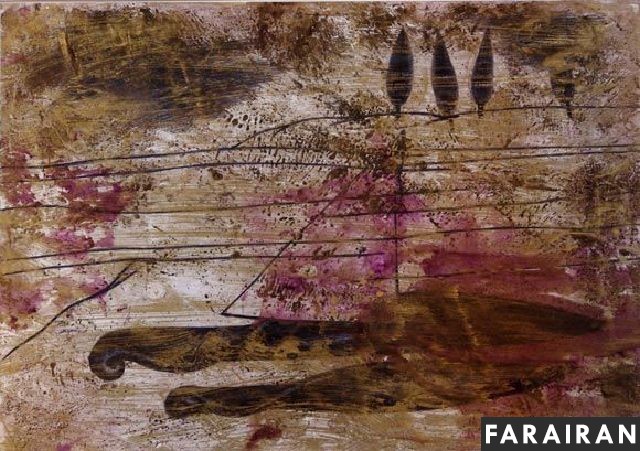
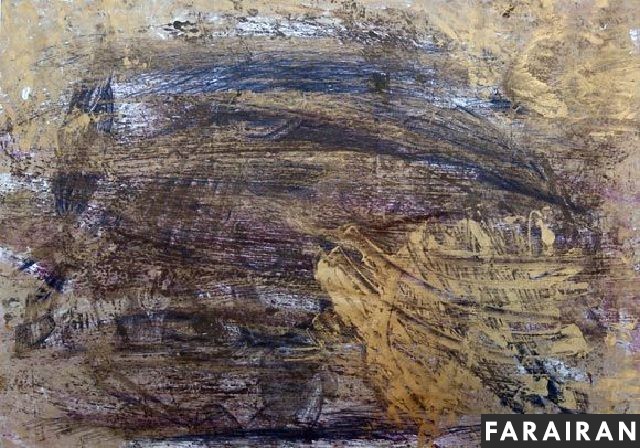
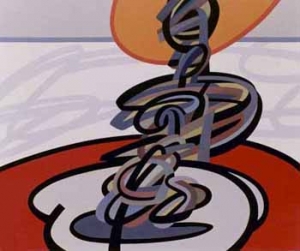
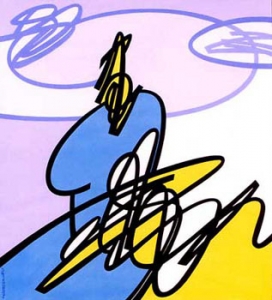
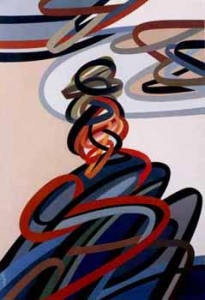
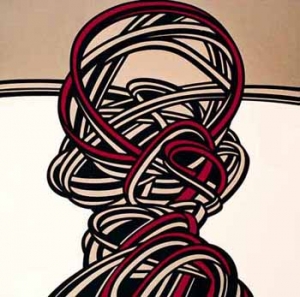
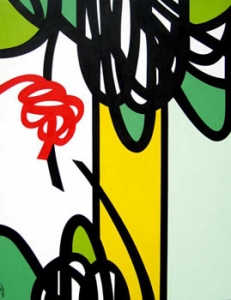
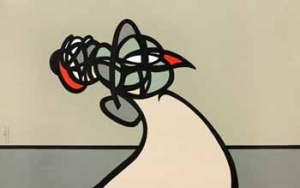
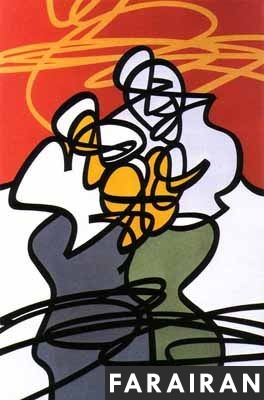
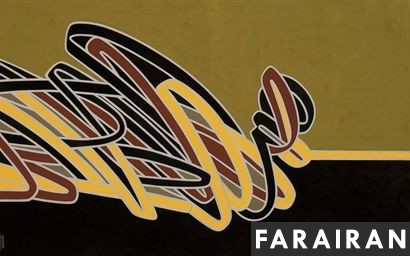
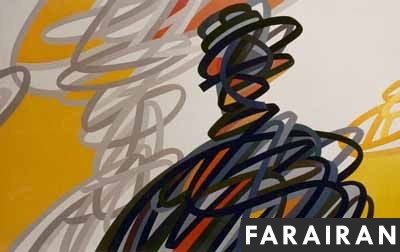
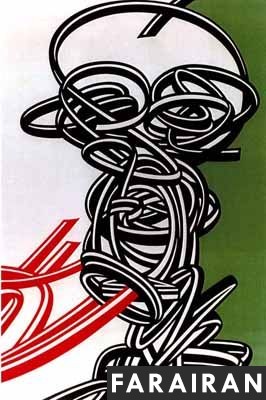
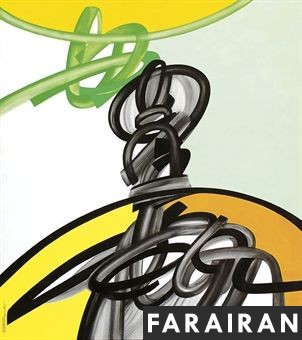
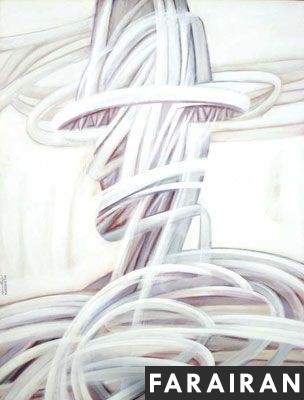
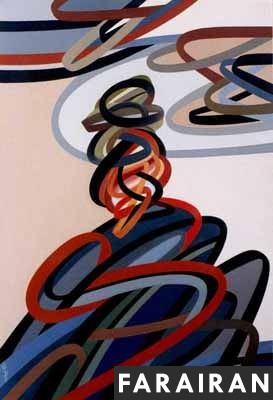
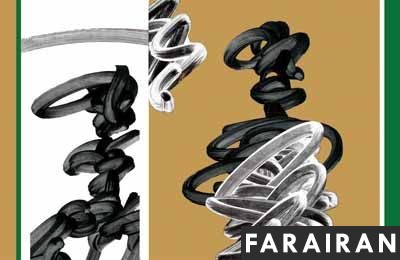
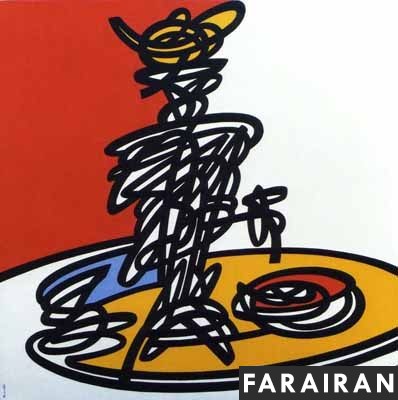
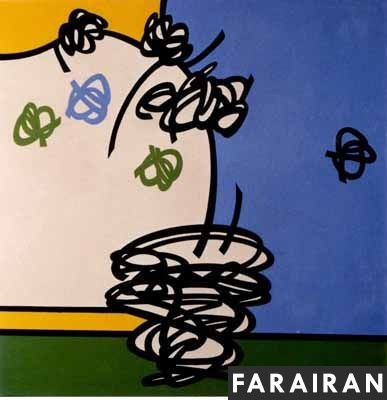
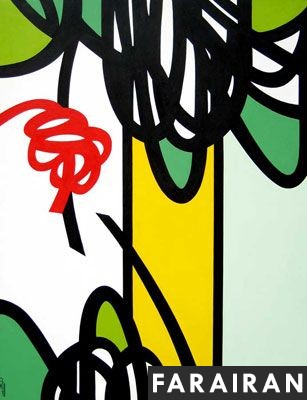
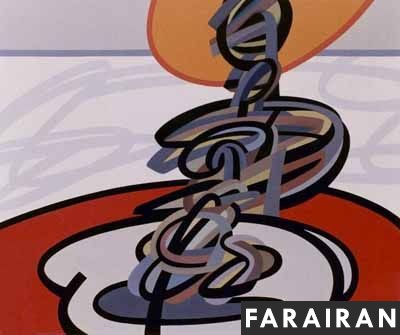
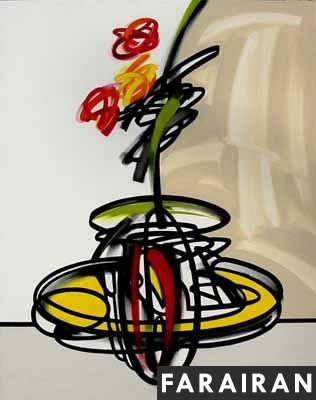
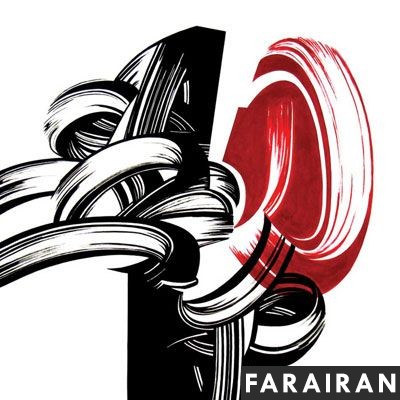
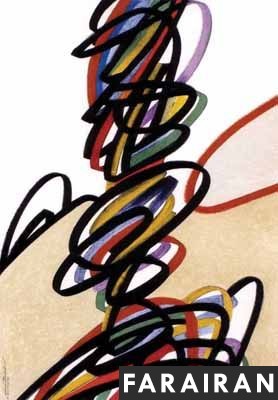
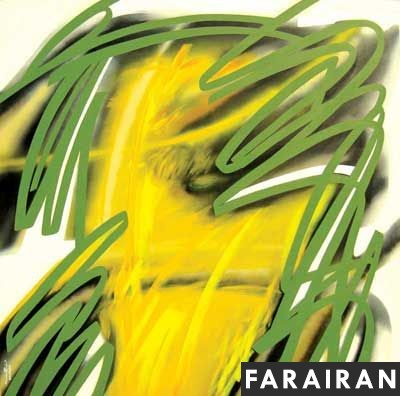
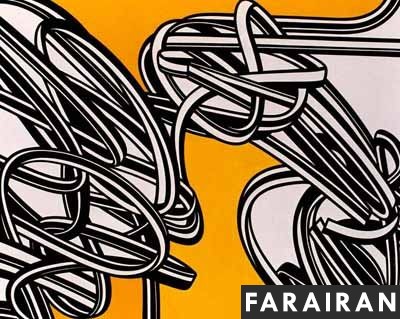
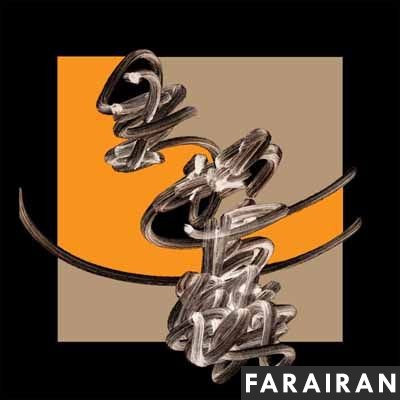
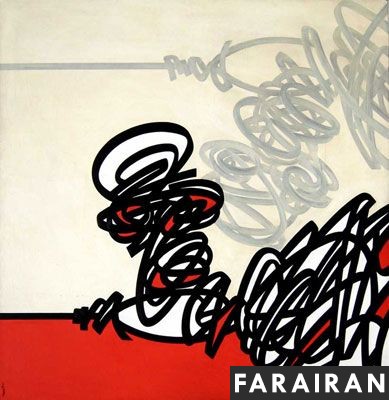
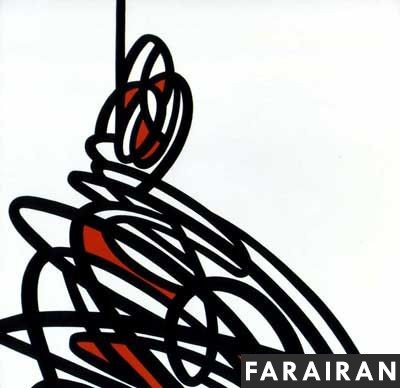
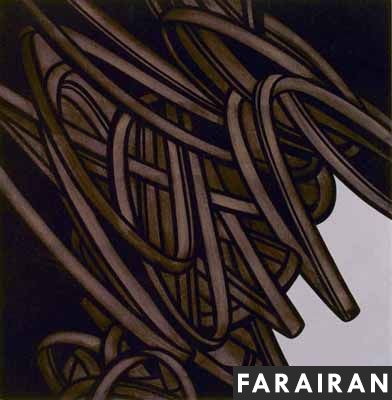
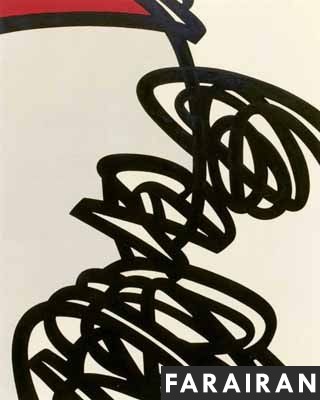
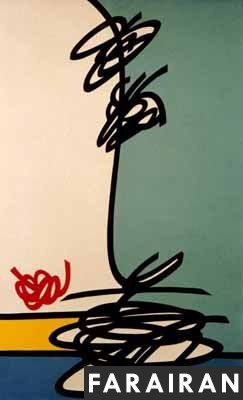
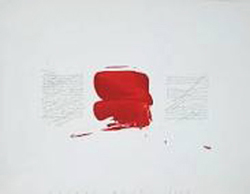
Fathi’s works focus on visual expression; her words are indistinct, so there is no literal meaning to the calligraphic text. Instead these abstractions serve as visual stimuli for the observer, which she masterfully combines with painting. Such complex writing practices are sometimes styled “automatic writing” or called “asemic” which implies an absence of absolute meaning. However, as Gerard Hougton says: Fathi’s style, “should be considered as ‘polysemic.’ Each is densely inscribed with potential meanings and freighted with interpretive possibilities. The works come to mean something unique to each particular individual who views them.”

“I combined the disciplines, and transferred them onto my canvas, with my own taste and interpretation, without obeying the laws of traditional calligraphy. So, although I have had the traditional training, I allow myself complete creative freedom.”
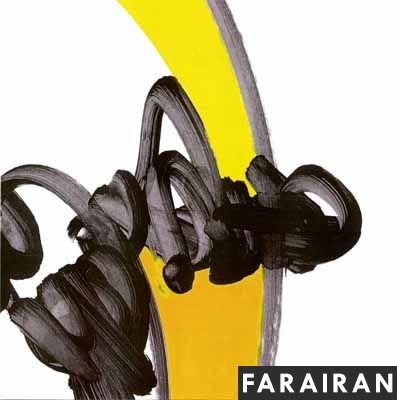
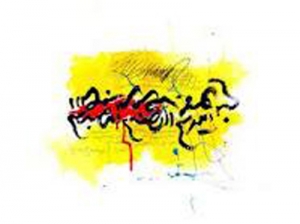
Fathi’s intricate brushstrokes add new dimensions to the traditional notion of calligraphy, rather than focusing on the literal meaning of any words, she opens up a new world of symbols, which the viewer can openly interpret. “I am a trained calligrapher and my brush strokes know the structure of each letter. When it comes to my painting, it’s the brush that speaks, it’s like the improvisation — I let it go and it leads me wherever it needs to.”

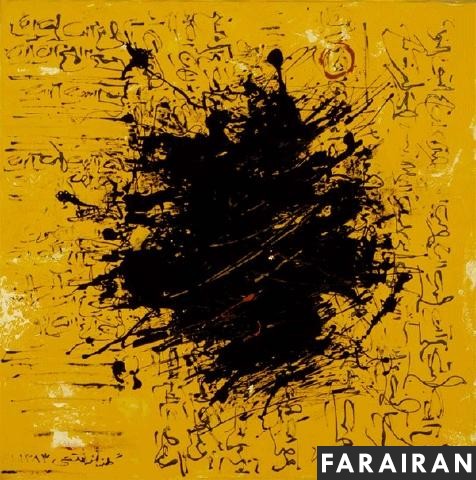
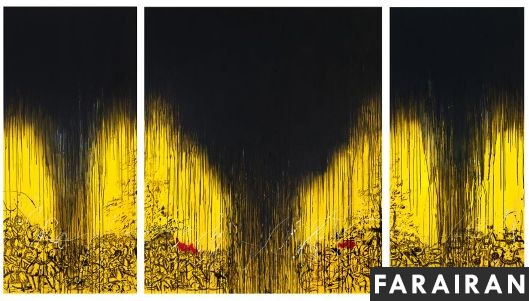
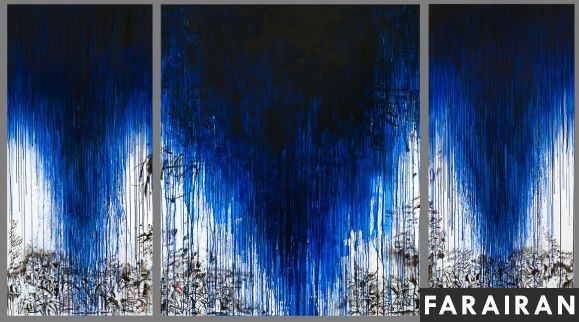
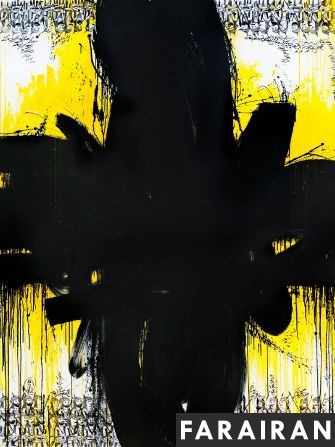
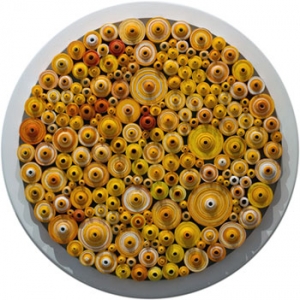
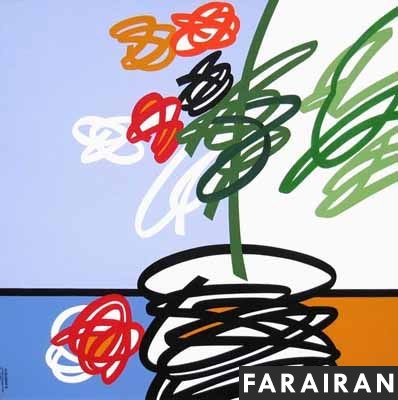
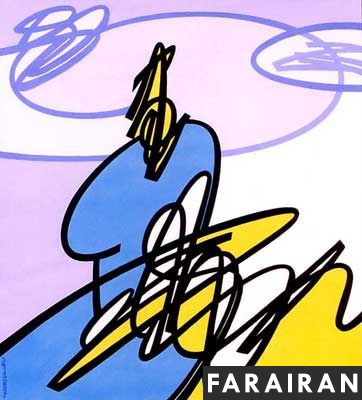
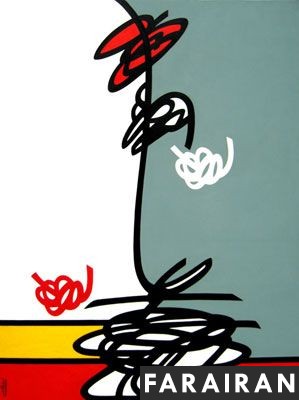
Her use of white is like a meditation on silence; a space she leaves for the viewer to pause to take a breath. In contrast to this quiet space of white red is the color of energy, blue the color of domes of the mosques “especially in Esfahan” and black which is the most complete color for me because it has everything. . . it can express all my true feelings. It is never the color of sadness.” Sometimes later, she added yellow to her palette

Fathi has exhibited internationally since 1993 from Turkey and Dubai, US and many European countries to Jamaica. She has taken up a number of artist residency placements in Paris, Rome and London. In 1995, Fathi was awarded best Woman of the region.”

As part of the artist’s continued exploration, Fathi constantly reinvents her bag of painterly tricks. She has moved from a “layering and searching methodology” in her earlier works, to drastically editing her approach and resolving for a single strategically placed gesture — much like a highly controlled action painter. Her striking and engaging style has its foundations in the traditional style of Iranian calligraphy, but is not indebted to tradition. Instead Fathi strives to deviate from convention. “My artistic aim has been to transform calligraphy from words into forms. For me, it’s not the literal part that is important, but the form. I treat the letters as a form, I make them float or dance on my canvas. Being restricted by so many rules in traditional calligraphy made me break all the rules and treat the letters just the way I want to. The inspiration comes from my own culture. I am proud of my country’s very rich cultural heritage which in turn has greatly inspired me.”

Fathi engages with her physical environment and also with Iran’s vibrant historical archives to compliment and fuel her own practice. “Looking at the old lithography or handwritten books, gives me enough energy and inspiration to paint throughout the night. Every page of these books is a piece of art. I think that every aspect of life becomes the best teacher in itself and the best inspiration on its own. We are surrounded by so many stimuli that if we just used our eyes to see them, it could infuse us with limitless ideas. For me, every up and down in my life affects my work.”

Fathi’s success is a pleasant departure from the many stereotypes circulated about Iran and the population in the Western media.

Her exhibition titled My Freedom ((Xerxes Fine Art, London) a selection of her works from 2007-2008 features her trademark works with calligraphy and strong brushstrokes and vibrant colour. “I have done my work, and I have said the things that I wanted to say, albeit all in an abstract the fashion. For me, it is interesting to see people and to hear people as they interpret my work. The writings are in exact language, so not even Iranians can necessarily read the works, let alone Arabs, other Middle easterners, Asians, Europeans or Americans. I want people to be inspired in the same way that my Iranian culture and artistic have inspired me.”
Fathi’s exploration of calligraphy and the development of the abstract style emphasises the non-verbal aspects of the form, allowing the viewer the space to engage their imaginations, bringing their own interpretation to her work. “I want the audience to see the writings with pictorial eyes. I want my audience to see the dance of the letters and to allow their minds to take them as far on as they can go.”

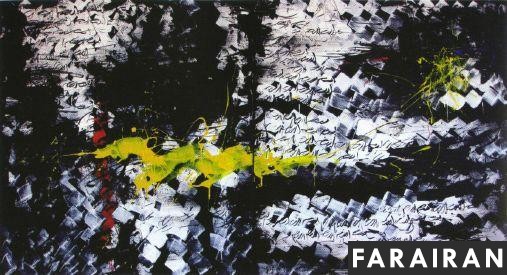
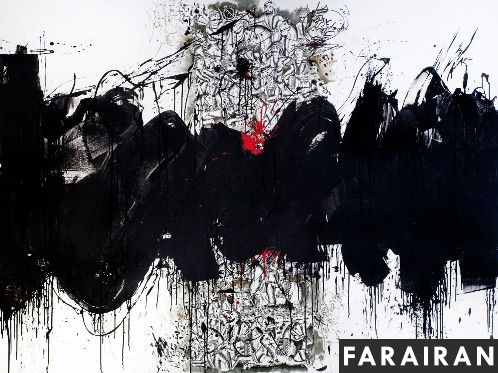
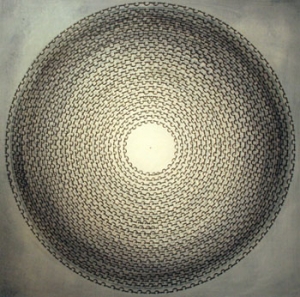
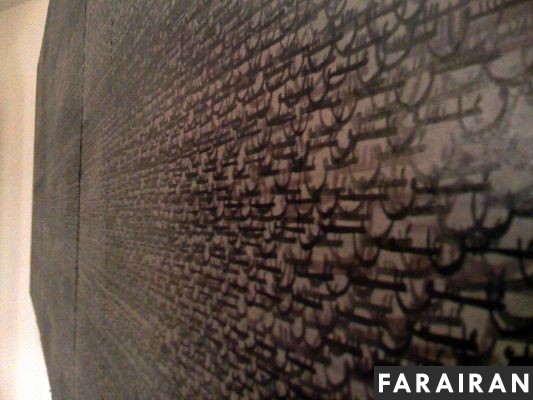
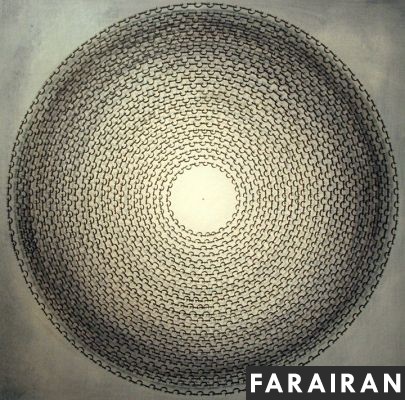
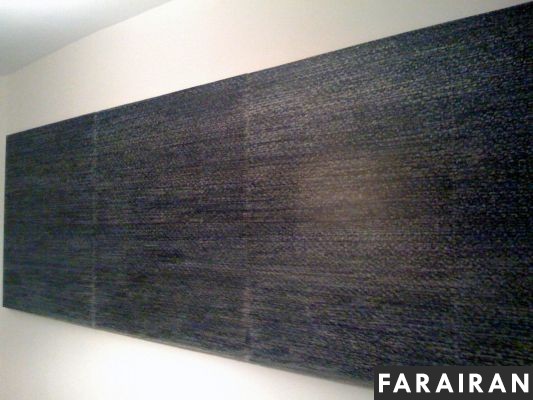
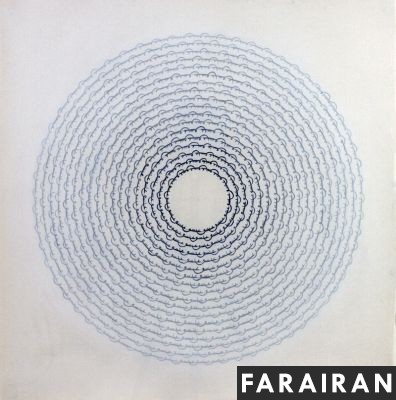
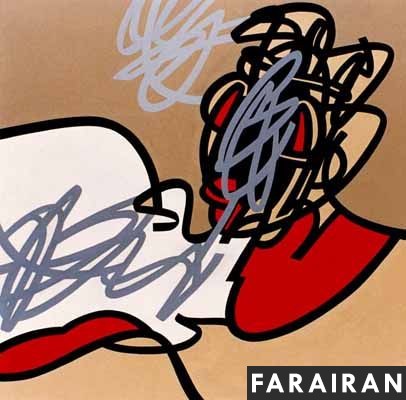
In her Sleepless Nights (The Third Line Gallery, Dubai, 2008) she appears to have given up on the idea of getting it ‘just right’ with one motion and opted for a much more time based approach. The meditative aspects of her ‘scribbles’ are inherently based on the passing of time. Highly labour intensive, these works create textures, surfaces and tensions all through the simple and incessant repetition of lines. Framed by the boldness of the blacks and whites, the essence of the words and the letters dissolve into a strangely still frenzy of movement: an introverted and pensive form of communication that holds within it open-ended forms of emotion.
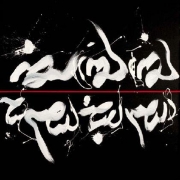
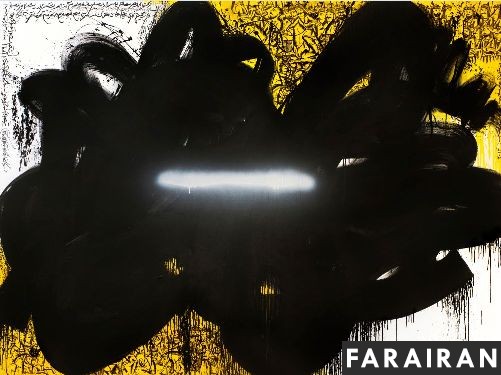
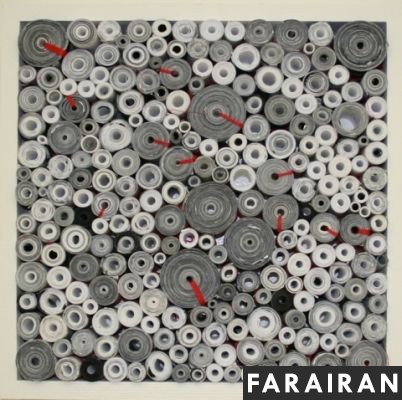
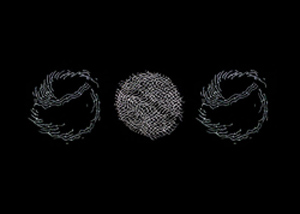
Continuing her practice of expressive calligraphic forms, Fathi constantly blurs the lines between the legible and illegible reaching a climax in her exhibition titled Controlled Chaos (The Third Line, 2010), a selection of light boxes and works on paper. She began working with light boxes in 2007 while seeking an alternative to her previous works on canvas. The fine lines are framed by the boldness of the black box as the glow of letters and forms merge into a strangely still frenzy of movement. The elements of color and form, movement and calm interweave into an imposing relationship of aesthetic balance and divided energy. The resulting works contain a raw beauty — a silver lining amongst the chaos.
This exhibition also sees her return to working on paper, a medium which offers a sense of vulnerability as the brushes stroke the surface of the blank paper.
“My painting is the medium I have chosen to express both my limitations and my freedom. Everything I feel is magnified and at the same time purified by the time I paint the last stroke. My brush is both my weapon and my shield.”

Articulate and outspoken, Fathi’s independence of spirit extends beyond her artistic practice. Much like her work, she is at once the embodiment of what Iranian women have always had to offer, and an effective challenge to some of the widely-held stereotypes about the region.

Sources:

Catalogues of her various exhibitions , particularly at Third Line Gallery Dubai, Sharon Parker’s article at Virtual Gallery, Paola Vallone and Gerard Houghton’s Redrawing the world.


Farairan’ Choice Iran Daroudi

Born in 1936 to a prominent dynasty in the ancient city of Neyshapur, in the province of Khorasan, Iran. Iran Darroudi is a revered Iranian painter, director, writer, art critic and university professor. Her paternal family was among well-known merchants in the north-eastern province, while her maternal family were Caucasian merchants, who immigrated to Iran and settled in Mash-had after the Soviet. In 1937, the family moved to Hamburg for her father’s business, but with the outbreak of the World War II they were forced to return to Mash-had.

“We escaped Germany in the middle of the war, under very grave circumstances. When we reached Iran, war had also reached Iran and Mash-had was under air strikes. Famine was at its peak. There were many Russian soldiers in the town. I was five years old then.” (1)
Back in Mash-had they lived in a house near the Green Dome mosque, leaving its deep impression on her personality and appearing in her artworks and paintings.
Darroudi discovered her passion for arts and music at a young age. Her father was interested in arts and particularly the art of painting and taught her daughter many primary lessons of this art, such as the importance of line, volume and colours. Her mother was a pianist and on her part taught their daughter her first piano lessons. This early passion for both music and painting has left its lasting impression on Daroudi’s later artwork.
“My father had a determining role in the development of my love for Iran. As a young girl when I talked about Dali with my father, he always would say: “You better learn Farsi well and speak the language properly and then talk about arts. You should discover your national identity and culture first…. Following his advice, my interest in the culture and history of my birthplace grew more and more to the extent that in my book In the Distance between two points, I write: “Painting Persepolis is not solely a reference to history. It is to tell the fable of a love, my love for my country.” (2)
“In youth, I learnt to love Iran from Ebrahim Pourdavood and made it the aim of my life. I learnt courage from Simin Behbahani. From Taha Behbahani I learnt balance, and from Parviz Kimiyavi, simplicity and succinctness, from Shamlou and his poetry, infinite dimensions, from Abbas Kiarostami, rhythm in painting, from Mahmoud Dolatabadi, spatial arrangement and tacitly; from Fereydoon Moshiri, friendship in the real sense of the word, from Parviz Nateq Khanlari, awareness of the universal culture and pure verse; from Shafi-ee Kadkani, human psychology, from Bijan Mofid, not to deceive and be deceived; from Ahmad Mahmoud, simplicity and serenity; from Akhavan Sales, the need for beauty and living beautifully, but one of these great figures was my father who taught me all this from my childhood…(3)
In 1945, the family moved to Tehran where she completed her secondary school in 1954. She then joined her sister in Paris to study at l’École des Beaux Arts. After graduation in order to learn the secrets of successful colour mixing, she headed to the Belgian capital and attained a course in “stained glass” at the Imperial and Royal Academy of Brussels. Darroudi completed her education with a degree in the History of Art at Ecole du Louvre in Paris.
Meanwhile she took part in several group exhibitions and won a few prizes. Her first solo Exhibition was held in Miami in 1958 and her first exhibition in Iran was held in April 1960 at the Farhang Hall.
In 1968 Darroudi was commissioned by the ITT Corporation to create an artwork, entitled Iranian Petroleum, on the occasion of the launch of a pipeline from Abadan to Mahshahr. The painting received a wide media coverage and was published in important magazines inlduing Time magazine, Newsweek and Life Magazine.

The painting was later dubbed by the distinguished Iranian poet, Ahmad Shamlu “Our Veins, the Earth’s Veins,” who composed a poem for her in 1973 with the following relevant line:

Painters before you
Brought to life many deer by compositions of leaves..
Or a flock of sheep on the mountain skirts…
Paint us the lines of similarity..
Paint us the cry…
Paint us my era
Paint us my life…
We had all the words of the world
And virtually said nothing
For it was not about only a single one word
Freedom

We did not say it
You paint it!

Following her success in arts, Darroudi took on a new adventure. In 1966 she began to learn directing at the RCL institute in New York City. That’s where she met her husband, Parviz Moghadasi, who was also studying television directing at the time. The two began to collaborate on various projects at a newly established television production company. Over the period of six years, they produced over 80 documentaries about both Iranian and international artists.
After the death of her husband in 1985, Darroudi continued to paint and display her work, proving herself a never ending artist.
Her work was consequently recognized by Iran’s university of Sharif, where she was invited to lecture as an honorary professor on Art History, always emphasizing to her students that “science and industry are not separate from art and aesthetics.” (4)
In an interview which was held with her on the occasion of a retrospective exhibition of her work with the title “Everlasting Persian Gulf” in 2008 at Tehran Museum of Contemporary Art, she talks about her passion for Paris, which is in a way her second home and most of her works were still kept in her studio there. “All these years, whether as a student, or a traveler and finally a resident, I have always felt a special infatuation for this city filled with artistic and cultural attractions. I have had my sweetest and most bitter experiences of my life there. I love its architecture and particularly its urban form, always discovering something of beauty there. I have had a studio in many areas of the city during various periods of my artistic life… What is strange is that when I paint in Paris, its gray sky and the fading pink colour of its sunsets penetrates my paintings.
“Despite its tremendous beauty Paris would never creep under my skin like the city of Yazd with its wind-towers and covered alleyways or Esfahan with its necklace like domes. No doubt, the roots of my identity dominate over my passions and fancies.”
The majority of the works belonging to ‘the freezing period’ have been painted in Paris with some of them conveying a peculiar coldness. That is the period when I left Iran. I lost my father and then my husband. Iran was at war with Iraq. In other words, they do not speak of unknown fears, but rather of the bitter reality of my life.
“Ultimately, I look into human being who is capable of overflowing the world with love, even though human figure is rarely found in my paintings. I try to attain order out of chaos and attain balance out of instability and then paint this disorderly order to reach my own world. I believe humans should at the end discover their own abilities and nature and should not surrender to earthly or heavenly fate… I live the world beyond my sight, beyond my senses. When I decide to paint, it is when something is squeezing my throat. Fears and qualms begin. I feel the weight of my suppressed cries in my chest… I am not scared of my paintings, nevertheless I can not tolerate the weight of some of my works. (5)
In the opinion of the contemporary art critic Javad Mojabi, “Iran Darroudi’s paintings have remained faithful to the bright light of Iran; a light rooted at once in geography, owing to the sharp angle at which sunlight shines on this land, in culture, reflecting the lofty thoughts of our great mystic scholars, and in history, mirroring the inner light of the collective life of the peoples living on this plateau. …. Akin to crystals glittering in the sunlight, Iran Darroudi’s late paintings are filled with the flamboyant light of the desert. Bathing in a mystical light, their constituent elements are combined into resplendent compositions. .. The artist’s intuitive awareness of her fatherland’s culture has indeed led her towards mysticism, prompting her to declare the eventual victory of light across her oriental fatherland.” (6)
“I do not see color separate from the life texture because if you take away the color from it, it is like taking away the love from it. Light is vital for me and I think I am one of God’s selected individuals who has seen the light in the heart of humans. As I see life condensed and short, I don’t prefer any colors in particular and all of them are noble for me.” (7)
Darroudi’s lifetime achievements include her 60 individual exhibitions and 200 group exhibitions, art critiques published in various newspapers, colourful speeches in cultural and artistic establishments around the world, some 80 collaborative documentaries, and last but not least an autobiography, “Distance Between Two Dots”. These are the results of more than 50 years of her work in Contemporary Art of Iran. The same activities that she carried out while rubbing shoulders with great individuals such as Andrew Marlowe, Salvador Dali, Jean Cocteau, Antonio Rodriguez and others turned her into a great international artist.
In the same interview held on the occasion of her “Eternal Persian Gulf” Daroudi says: “How beautiful that at 70 instead of repeating myself, I have entered a new phase. I always feared repeating myself, even though certain people do not see any difference between the periods of red colours, such as “Such a “ white period, freezing cold periods such as “For Riders of Death”, but I know that my attitude is constantly changing. This new period is in reality the concluding turn of the life of a painter. Today I paint more solidly than before and laugh at these poor works. Painting returned the reward of patience, endurance and faith to my work.”
“I value life and growth and regard death as the end of all pains and a rebirth. However, I believe that one should keep one’s head up during the most difficult moments of one’s life.

Today she’s hailed as one of the most influential artists in the world, with her artwork displayed at internationally recognised venues such as the Tehran Museum of Contemporary Arts, the Kerman Museum of Fine Arts, the Sa’dabad Palace, the Saheb Gharani-e Palace, Belgium’s Ixelles Museum and a number of exhibitions of Contemporary Art in New York.

In her opinion: “Certain doors should remain closed. Certain secrets should not be revealed. Those who should know, have found the knowledge and those who wish to know, will find the way to knowledge. My paintings are reflections of my mentality. In other words, my paintings are the result of my life and not my entire life. (8)

I think the sky is jealous of me for standing so strong and warring against it. Those who love life and human beings, will rise from their own ashes. Maybe I am one of them. In order to reach where I am standing now my only trick has been my honesty and I have never failed to reveal my weaknesses on this path.” (9)

Her latest project, to open an art foundation with her own expenses and donation of 150 works to it has taken Darroudi back to her motherland.

In reality, it is not immorality that I wish to attain. My aspiration has always been to devote my love to this land, expressing my gratitude somehow. The only think I have in mind is to present all my works to her. That is why I am making the roads shorter in order to return to the soil on which I was born… A green leaf as the gift of a dervish… (10)

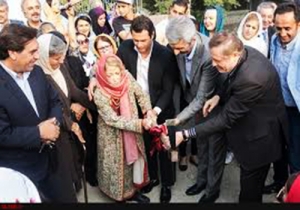
On her birthday in 2016, Tehran Municipality allocated a 1500 square meters piece of land near a park in Tehran to this aim. According to Iran Daroudi, her foundation and museum “will be a cultural center to teach painting, hold conferences on Art. I will build the museum for the future generation in order to be in contact with the contemporary world and its changes. After my death a board will run the museum. After my death, a directing board will run the museum.” (10)
All my life I was obliged to asses myself and my abilities in regard to my wishes. One of my characteristics here is that I have always cherished life. I experienced death when facing cancer and I regarded it as the miracle of my life. That is why it is our attitude to life which increases our powers… I tell those who have lost hope in life: Aren’t you enjoying the virtue of being alive?
“Humans are the fruit of their mental attitudes. Now that life is challenging us, we should equip ourselves and make everything anew. The most important thing on this path is that human life is a purpose . I believe every hardship of life is an experience and a lesson from which we have to learn. Those who have a purpose in life will neither lose hope nor will stop fighting. (12)

Individual Exhibitions
1958 Miami Beach Art Centre, USA
1958 Columbia University, New York
1959 Royal Hilton Hotel, Tehran
1959 Farhang Hall, Tehran
1961 Iran-America Society, Tehran
1961 Farhang Hall, Tehran
1963 Museum of xelles, Brussels
1964 Galeria Santa Maria Pizza, Milan
1964 Borghèse Gallery, Tehran
1965 Iran-America Society, Tehran
1969 Negar Gallery, Tehran
1970 Royal Hilton Hotel, Tehran
1970 Sharif Industrial University, Tehran
1972 Goethe Institute, Tehran
1973 Space Gallery 2000, New York
1973 Goethe Institute : Shiraz, Abadan, Mashhad, Isfahan
1973 Drouant Gallery, Paris
1973 Atrium Artis Gallery, Geneva
1974 21 Gallery, Zurich
1974 National Iranian Oil Company, Abadan
1974 Ferdowsi University, Mashhad
1975 Darroudi Gallery, Tehran
1975 Drouant Gallery, Tokyo
1975 La Galleria Gallery, Mexico
1976 Museum of Bellas Artes, Mexico
1976 Heritage Gallery, Toronto
1976 Ferdowsi University, Mashhad
1976 Isfahan University, Isfahan
1976 National Iranian Oil Company, Abadan
1976 Iranian National Television, Shiraz
1976 Alexander Gallery, Tehran
1978 Prime Minister’s Club, Tehran
1978 Intercontinental Hotel, Geneva
1982 Motte Gallery, Geneva
1987 Bailleul Gallery, Paris
1988 Salon Roland Garros, Palais de Chaillot, Paris
1988 Studio Q, New Jersey
1988 Art Decor Gallery, Washington D.C.
1989 First Credit bank, Los Angeles
1991 A.M.O.R.C. Cultural Center, Paris
1991 Iran Cultural Center, Dusseldorf, Germany
1992 Azadi Museum, Tehran
1993 Sepehri Gallery, Tehran
1994 Art 54 Gallery, New York
1994 United Nations, New York
1995 Barg Gallery, Tehran
1999 Hourian Gallery, San Francisco
1999 Virginia Tech University, Virginia
1999 U.C.L.A. University, Los Angeles
2002 Artists’ House, Tehran
2002 Museum Of Modern Art, Isfahan
2003 Pegah Gallery, Kerman
2008 Museum of Modern Art, Tehran

Group exhibitions
200 group exhibitions in France, Belgium, Switzerland, USA, Mexico, Australia, Japan, and Germany also exhibitions with Iranian artists in Iran, France, USA, Canada, Monaco, Germany and UAE.
Other activities
Since 1964, a member of International Congress of Artists, Art Critics and Artistic Studies of Rimini, Verrucchio, San Marino, Italy.
From 1967-1972, producing and directing 1900 minutes of documentary film for television on “Art Appreciation”.
Producing and directing a 55 minute documentary film entitled “Biennial of Venice 1968 ”.
1970-1972, Honorary professor of “History and Art Appreciation” in Sharif Industrial University, Tehran.
A series of conferences about painting and the role of women in the Iranian history and the contemporary art, and also about her book entitled “ In the Distant between Two Points”.
Conferences:

1988 Cultural Society of Iranian Immigrants, Brussels.
1998 The Library of Iran’s Study Center; London
1998 Virginia Tech University, Virginia
1999 L.A. University, Los Angeles
1999 Berkeley University, San Francisco
1999 San Jose Experts Society, USA
1999 Kahrizak ‘Cultural Institution’, San Francisco,
1999 Virginia Tech University, Virginia
1999 Sokhan Society, San Francisco
1999 Sokhan Society, Los Angeles
1999 Iranian’s Cultural Society, Sacramento
1999 Cultural Society of Iranian Immigrants in New Jersey

Publishing:
Research on “ The Art of Achaemenians ”, printed in Sokhan and Negin press in 1957 and 1958.
Articles and criticism on painting in Iranian press and Sokhan magazine.
1973 “Iran Darroudi’s Paintings ”, Tehran, first edition
1976 “Iran Darroudi’s Paintings ”, Tehran, second edition by Amir Kabir
1995 “In the distance between two points…!”, Her autobiography, first edition by Ney
2004 “Hearing Eye” Iran Darroudi’s Paintings, Tehran, First edition

2007 “In the distance between two points…!”, Ninth edition


Iran Daroudi, officially inaugurating her future museum on her birthday, 2016

Sources:
Iran Daroudi, website
Iran Daroudi: An Everlasting Artist, by Shamsi Shahrokhi, Persian Tribune
“I am not scared of my paintings,” an interview with Iran Daroudi,
The Ideal World of an influential contemporary artist, an interview with Iran Daroudi, Pejman Mosavi, Sharq Newspaper, reproduced at Aftab news webstie.
Footnotes:
1)“I am not scared of my paintings,” an interview with Iran Daroudi.
2) Ibid.
3) The Ideal World of an influential contemporary artist…
4) “I am not scared of my paintings,”
5) Ibid.
6) Iran Daroudi’s website
7) The Ideal World of an influential contemporary artist…
8) “I am not scared of my paintings,”
9) Ibid.
10) The Ideal World of an influential contemporary artist…
11) Ibid.
12) Ibid.

Shahriar Adl The Knight of the Iranian World (1944-2015)


The Knight of the “Iranian World”, Shahriyar Adl was born on 3 February 1944 in Tehran. His father, Ahmad Hossein Khan Adle was from Tabriz and his mother Homa Vali, with the honorary title Zia-ol-Moluk was from the city of Bastam.

After finishing the primary and the first half of the secondary school, he was sent to Paris, for to quote him: “it had become a custom in my family since 19th century.” As a freshman he simultaneously began to study in three fields of Architecture at Beaux Arts, Art History, Oriental or Ancient Archaeology at Louvre’s Collage and Historical Iranian Studies at Sorbonne. Later, in order “to decrease the load,” as he put it himself, he gave up studying Architecture. He acquired his doctorate degree in history and started to teach when 24. “My main career from the very beginning was doing research at the National Center for Scientific Research (CNRS) in Paris… My other position was directorship of the International Editorial Committee of UNESCO’s History of Civilizations of Central Asia… If you ask others about me, depending on their field of interest, and how they have come across my work…some may say, Mr. Adle, is a Cartographer, or more precisely an aerial Cartographic engineer; some might say, he is a specialist in Old Tehran until Qajar era, another may say, he works on the history of photography and films…. Most of my articles are in French and English, but I also have several published articles in Farsi. In regard to executive positions I never had one. But, it happened that I often found myself involved in this kind of work as well…” And by executive posts, he meant, inscription, restoration and surveys of ancient art-works and historical sites in the Iranian World. 1

“The Iranian World (the world under the influence of Iranian Culture) is different from the Iranian Political Unit. The Iranian World extends far beyond the present Iran. In addition to Afghanistan, Tajikistan and Uzbekistan, it even includes countries like India and the old Ottoman Empire, which were different political units. Iranians, i.e. the inhabitants of the present Iranian Political unit, exactly like the people of Afghanistan and Tajikistan, are branches of the monumental tree of Iranian Culture and not the center and its sole heir.” 2

According to Shahriyar Adl, “In contrast to what is generally believed, the declining course of the Iranian World began eight centuries ago. It was actually under the Reign of Seljug (a Turkish-Sunni Muslim Persianized dynasty ruling the Iranian World from 1016-1153) when Iran, the whole Orient and the World of Islam in general started to decline. Under the reign of Mongols (1206-1368), we had agricultural decay, in other words, the regression was economic in nature. It was not sociological or philosophical. Our socio-philosophical regression had begun before that; when we came to think and believe that we have found the answer to all & everything and, religious discourses as an example came to a standstill. We reached certainty 800 years ago, henceforth stopped asking questions and from the moment a society stops asking questions, it is doomed to decline and perish… Our last achievements were accomplished at the time of Omar Khayyam (1048-1131). We haven’t had any scientific progress since 800 years ago. What progress, in which field? We have reached such certitude that we no longer ask questions…Old Iranians used to ask questions, but that is the past now.”3
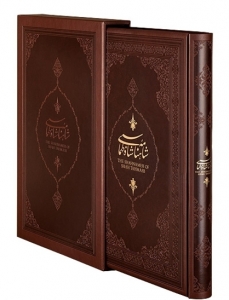
Among Adl’s costly efforts in the field of art history, in addition to his precious researches and writings on the Mongolian, Indian, Safavid and Qajar schools of miniature painting, was the vital role he played to bring back the rare illustrated copy of Ferdowsi’s epic, Epistle of Kings, known as Tahmasbi Shahnameh with the help of Iraj Afshar, which is one of the most precious illustrated copies carried out under the reign of Shah Tahmasb Safavid (1524-1576).


Tahmasebi’s Shahnameh

It is the fruit of 20 years of hard work of professional painters and calligraphers of the time. It was taken from Iran to the Ottoman Empire and from there to Paris, and from Paris to America and finally, back to Iran.4 He is also credited for his efforts in the return to Iran of stolen paintings from Golestan Palace in 1979.


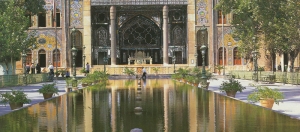
Golestan Palace, Tehran, Iran.

It was then when he discovered the Qajar films now being processed by the Centre National du Cinéma (CNC) with the support of IHF. Among the films found there was also a film by the world’s first woman director, Alice Guy-Blanché called Faust. The discovery inspired him to carry out a research on the history of photography in Iran and together with Yahya Zoka wrote an article in French called. “Notes et documents sur la photographie iranienne et son histoire: I. Les premiers daguerréotypistes c. 1844–1854/1260–1270.” Studia Iranica 12, no. 2 (1983).He also wrote another article on this subject titled Acquaintance with cinema and the first steps of filming and fimmaking in Iran in Farsi which was published in Farairan Quarterly in 2000.

In reply to the question whether he had seen any photographs of nude women in that collection, he points out that, “Under the Qajar, there were special houses in a few districts of Tehran which served the rich and the princes…. That’s why they had prepared a photo album to make the choice easier for the clients.” He has apparently also written an article on this subject in French.5

In addition to his valuable articles on the history of photography and cinema in Iran, one of his last articles titled “Significations and symbolisms of colors in the Iranian World during the Islamic era,” where he deals with the subject why we have images (painting, sculpture and photography) in Iran, but not in western Islamic countries for example.6

With the foresight of an archeologist and art historian, Shahriyar Adl began collecting religious and political posters during and after the Islamic Revolution. “I saw how in a very short time span after the Pahlavi era, in less than two decades, there suddenly appeared an enormous volume of extraordinary images on religious themes intertwined with those of everyday life on the walls of public places, tea-houses, shops, and even houses extending to the remotest villages. Considering Pahlavi’s policies together with the ideological, political and intellectual movements of the era, this amazing widespread appearance of images all over the country in such a short period of time was absolutely incredible and hard to justify. The idea crossed my mind that they are among the most important documents for the future researchers to understand what a sudden tremendous explosion had happened in that historical period of this country and how and to what extent the whole society and culture was revolutionized.”7

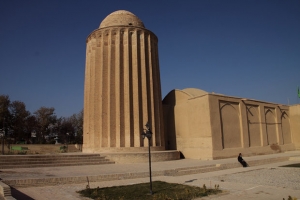
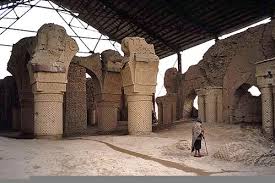
His interests as mentioned in passing included a wide spectrum from archaeological studies and art history of the Islamic period of the Iranian World, from painting under Mongols in India and its connection with Iranian Miniature to the history of photography and film-making to earthenware found in Rayy, Kashan to various archaeological surveys in Great Khorasan, Rayy, Kumesh (Semnan), Damghan and Gorgan Plateau; to restoration of Bastam’s Ancient Tower, preparation of meticulous topographical plans of monuments such as the portico of the old mosque in Zuzan in the south of Khorasan, the nine-domed mosque in old Balkh (Afghanistan), one of the oldest mosques of the world (8th century). After the tragic earthquake in the historical region Bam (2003) he made tremendous efforts to protect the remaining remains of its ancient citadel (Arge-Bam 500 BC), making a careful study in his own way, and opposed to the customary method of excavations and destructive explorations carried out by the overwhelming majority of archaeologists of this unique architectural and artistic treasure and its inscription on UNESCO World Heritage.


Bastam Tower


Nine domed Mosque in the Old Balkh (Afghanestan)

“Our archaeologists, no matter what they say are overwhelmingly under the influence of the West. They don’t know that they approach Iranian archaeology exactly in the same manner of Westerners. Despite all their claims, they adopt a Western methodology.” Yet, it seems this deep overwhelming influence goes far beyond even his own imagination to question his own approach to Persepolis when he said: “Nothing in Persepolis is Iranian, but it is all Iranian. It is an Iranian and Achaemenidian complex. The cow’s head is Assyrian, the columns are Ionian, Fravahar, which is its divine symbol is Egyptian and its head is Assyrian, even our architecture is not of stone, but clay, khesht (unheated brick) and brick, while Persepolis is made of stones. Yet, its architecture on the whole is neither Hellenic, nor Assyrian, nor Egyptian, but Achaemenidian and Iranian.” Where does the source of Professor Adl’s information come from? If not from the historians, archaeologists and other specialists of the present “Western Empire?”8

But let us not take it hard on him, as it is the turn of Western Civilization to rule the world and one should not disregard the fact that Adl’s is specialized in the Islamic era and not Ancient Iran. “One of the main reasons I decided to study the Islamic era is that it was neglected field at that time. When nearly all Iranian and foreign archaeologists were focused on pre-Islamic eras, I concentrated on the post-Islamic period.”9 That is why most of his researches in the fields of history and art history concentrate on mid-Islamic period and the Safavid and Qajar eras in particular. He has written an invaluable series of articles on Mongolian, Indian and the Safavid schools of painting.

It was in mid-seventies when he joined the International Editorial Committee of UNESCO’s History of Civilizations of Central Asia and under the deep impact of the historical events taking place in Iran at that time (the Islamic revolution and the war with Iraq) he became deeply concerned and endeavored hard to register ancient historical Iranian monuments and sites on the world heritage list and save them in this way.


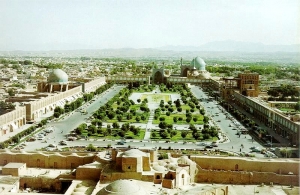
Naghsh-e Jahan Square, Esfahan, Iran


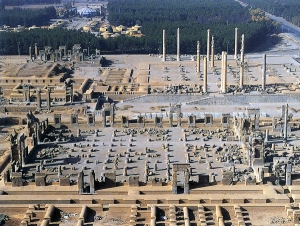
Persepolis, Shiraz, Iran

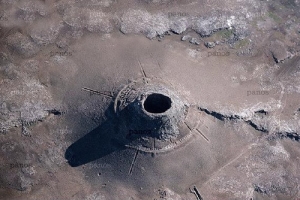
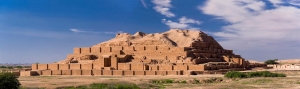
That is how he relates the story: “I remember how the inscription of Naqsh-e Jahan Square in Esfahan (Isfahan) turned out to be effective. Sadam’s missile hit Esfahan and ruined a part of Jameh Mosque… I remember I appointed myself as the representative of Iran and asked my friend Souren Melikian who was at that time a columnist of Saturday Herald Tribune to interview me as the representative of Iran (although officially I was not). The interview appeared on the first page of Herald Tribune with a photograph of Jameh mosque. In that interview I said Iraqis are bombarding the world’s heritage, an ancient mosque. After that there were no more threats to Esfahan.”10 In fact he managed to register Persepolis and the ancient ziggurat of Choghazanbil at the same time (1979).


Choghazanbil Ziggurat


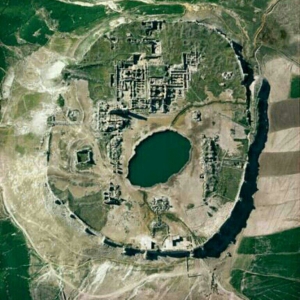
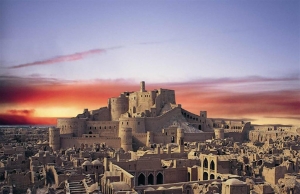
Bam Citadel, Kerman, Iran

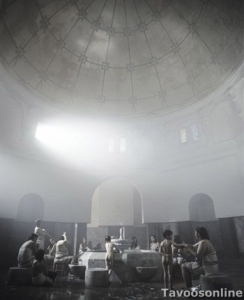
After the tragic earthquake in Bam (2003), Shahriyar Adl proceeded in a very intelligent way to succeed in registering the remaining parts of this ancient city with its famous Citadel, the largest adobe building in the world going back to 4-6th centuries BC. With 80 percent of the citadel being destroyed, the work of its inscription on the world heritage list seemed impossible due to some technical archaeological rules and regulations. Here is when the knight steps forward with an ingenious idea: with a history of 7000 years, the historic site has not only a very significant place for Zoroastrians and thus the Iranian World, but as its Arge (citadel) is also known as Solomon’s Throne, it is one of the most holy places for the Jewish people, Christians and Moslems. According to Adl: “based on mythologies, even Cyrus’ Tomb with an altar inside it is attributed to Solomon’s mother.”11

Professor Adl also was instrumental in the preparation of the second cycle of the World Heritage Periodic Reporting in the Asia and the Pacific region and contributed to the serial transnational World Heritage nomination of the Silk Roads.12

He also played a major role in the inscription of other monuments like Sheikh Safi al-din Khānegāh and Shrine Ensemble in Ardabil and Tabriz Historic Bazaar Complex during 2004-2009.

One of his last public appearances was at an international conference organized by Iran Heritage Foundation and sponsored by the British Institute of Persian Studies, among others, in January 2015: From Persepolis to Esfahan: Safeguarding Cultural Heritage, where he gave a talk entitled ‘The Inscription of the First Iranian Sites on UNESCO’s list of World Heritage Properties in the Revolutionary Iran of 1979 and its Aftermath.’13

Shahriyar Adl, was a tireless scholar. As the President of the Editorial Committee of the International Editorial Committee of UNESCO’s History of Civilizations of Central Asia, he described the publication of this series as an immense task, part of his wish to contribute to one of the main goals proclaimed in UNESCO’s Constitution, which aims ‘to develop and to increase the means of communication between peoples and to employ these means for the purposes of mutual understanding and a truer and more perfect knowledge of each other’s lives.’ He participated in the reflection on the cross-reading of UNESCO’s General and Regional Histories.13


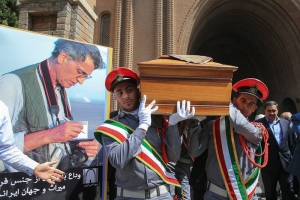
Professor Adl’s Funeral from the National Museum, Tehran, Iran

The sudden death of Shahriyar Adl on 21 June 2015 in Paris shocked the whole Iranian World and deprived it of its singular Knight.

However, the good news is that in an interview with World Zoroastrian Council, his brother Kamran Adl has announced that their parents’ house in Tehran (where Shahriar was born and continued to live whenever in Iran) is hopefully to be turned into Shahriyar Adl’s Museum with his library and other collections now in his home in Paris eventually transferred to this future Museum.14

May that be so!

Farairan is honored to have had Professor Adl as one of Farairan Quarterly’s most respected consultants.

Awards:

1. Bronze Medal of CNRS, 1364

2. The Five Continents Medal of the United Nations Educational Scientific and Cultural Organization, 1967

3. Aristotle’s Silver Medal, UNESCO, 1375

4. Ibn Sina’s Medal, UNESCO, 1382

5. UNESCO’s Sixtieth Anniversary Medal, 1384

6. CNRS’ Medal, 1388

Works:

Books: “Art and Society in the Iranian World,” a collection of articles on The History and Art of Iran from the beginning of Islamic conquest to the Qajar era.

“Tehran, the two-hundred years old Capital,” with collaboration of Bernard Orgard.

The History of Civilization of Central Asia, UNESCO, with collaboration of Irfan Habib (2003). Adle was the editor of the fifth volume of this collection.

Selected Articles:

Significations and symbolisms of colors in the Iranian World during the Islamic era, Actes des colloque international tenu a paris les 11 et 12 janvier 2013, Paris 2016.

Recherche sur le module et le trace corrcteur dans la Miniature Orientale,

See Chahryar Adle, “New Data on the Dawn of Mughal Painting and Calligraphy,” in Making of Indo-Persian Culture: Indian and French Studies, ed. Muzaffar Alam, Françoise ‘Nalini’ Delvoye and Marc Gaborieau (New Delhi, 2000)

Acquaintance with cinema and the first steps of filming and fimmaking in Iran, Farairan Quarterly, No.2 & 3, 2000.

Khorkheh, The Dawn of Iranian Scientific Archaeological Excavation, Farairan Quarterly, No.3 & 4, 2000.

Investigations et releves archeologique a Zuzan Dan le Khorasan, A la frontier Irano-Afghane (1988-1999). Foundation Max van Berchem, 1999.

Daguerreotype, Encyclopedia Iranica, vol.6, 1993

Les artistes nommés Dūst-Muḥammad au XVIe siècle,” Studia Iranica 22/2 (1993),

Chahryar Adle, “Les artistes nommés Dūst-Muḥammad au XVIe siècle,” Studia Iranica 22/2 (1993)

La Reconstitution Photogrammertrique de la Mosquee-Medresse de Zuzan, Foundation Max van Berchem, 1990

Entre Timourides, Mogols et Safavides – Notes sur un Châhnâmé de l’Atelier-Bibliothèque Royal d’Ologh Beg II à Caboul (873-907/1469-1502),” Art Islamique et Orientalisme – Vente aux Enchères Publiques (15 Juin 1990), Drouot-Richelieu (Paris, 1990), pp. 136-48, esp. p. 140.

Le Mausolee d’Abu Yazid Bastami, Dossiers Historie et archeologie, 1987

Adle, Chahryar, and Zokā Yahyā. “Notes et documents sur la photographie iranienne et son histoire: I. Les premiers daguerréotypistes c. 1844–1854/1260–1270.” Studia Iranica 12, no. 2 (1983): 249–80.

Le Minaret du Masjed-e jame de Semnan, Studia Iranica, 4 (1975)

Les Monuments due XIe siècle du Damqan, Studia Iranica, 15, 1972

Note Sur le Qabr-I Sahruh de Damghan, Le monde iranien et l’Islam, II, 1974.

Farairan Quarterly, Issues 5 and 6

There are alos three articles, Duust-Mohammad Mosawwer, Encyclopedia Iranica, Lost treasures at the Amiranshvilli Museum, Tibilisi and IHT: Souren Melikian 10/18/97 cited at www.spongobongo.com/her9982, but all are apparently removed.

Footnotes:

1. All quotations in this paragraph is taken the article Shahriyar Adl in his own words, Hamidreza Hosseini, www.jadidonline.com

2. An extract from an unpublished interview with Shahram Zare,, Bokhara, No.107, 2015.

3. ibid.

4. Hassan Habbibi, The story of how Tahmasebi’s Shahnameh was returned to Iran, www.khabaronline.ir

5. Mohammad Fadaee, “Shahriyar Adl’s Care and Zeal,” Bokhara.

6. Ibid.

7. Ibid. For information about Adl’s new discoveries in Bam, see/Articles/

Ibid. See, Khoobchehr Keshavarzi, A New Approach to Persepolis (1392) and The Lost Citadel of Avesta (1393), Farairanonline.

8.

9. Shahriyar Adl in his own words, Hamidreza Hosseini, www.jadidonline.com

10. Ibid.

11. Shahriyar Adl, The History of inscription of Iranian historical sites, Soltanieh (in Zanjan), Persepolis and…

12. http://www.iranheritage.org/

13. http://whc.unesco.org/

14. Interview of the World Zoroastrian Council with Kamran Adl, http://w-z-c.com.

Farairan’ Choice Nicky Nodjoumi

On the occasion of the “Chasing the Butterfly and Other Recent Paintings” exhibition by the celebrated Iranian artist, Nicky Nodjoumi at Teymour Grahne Gallery in TriBeCa, 7 September – 19 October 2013 and the article printed in “New York Times” about his work and artistic life:

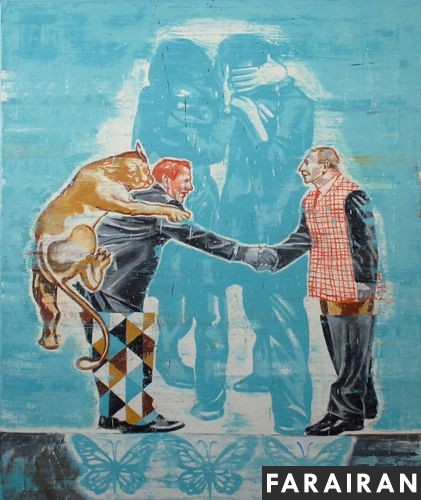
“The new Taymour Grahne Gallery in TriBeCa couldn`t wish for a more auspicious kickoff than its excellent inaugural show of new paintings and drawings by Nicky Nodjoumi. Born in Kermanshah, Iran in 1942, Mr. Nodjoumi arrived in New York City in the late 1960`s, when he became involved in protest movements against the Pahlavi regime in his home country. The political thrust of his early work was acute, as is evident in a pair of bruise-dark 1976 pictures in “Iran Modern” at Asia Society. This is emergency art; the sound of alarms still surrounds it.

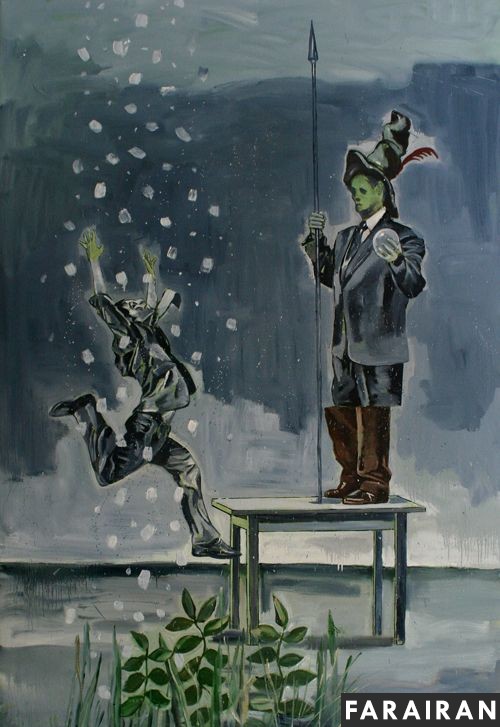
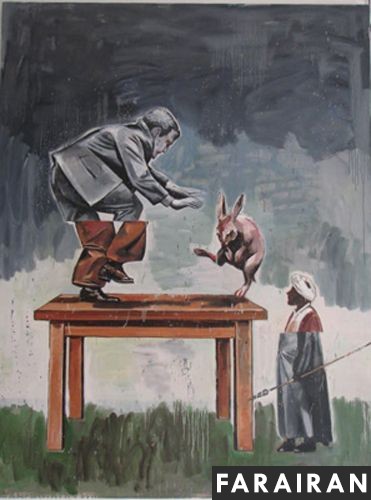
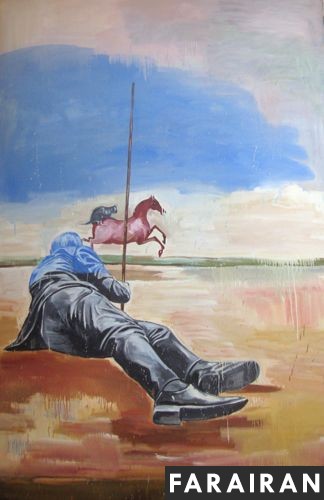
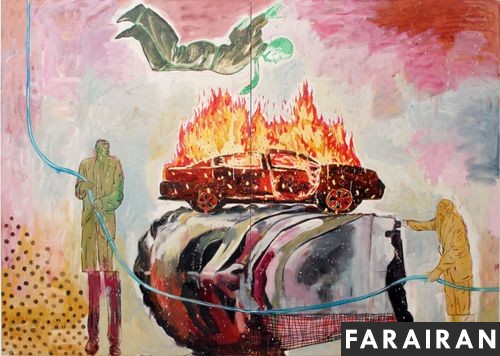
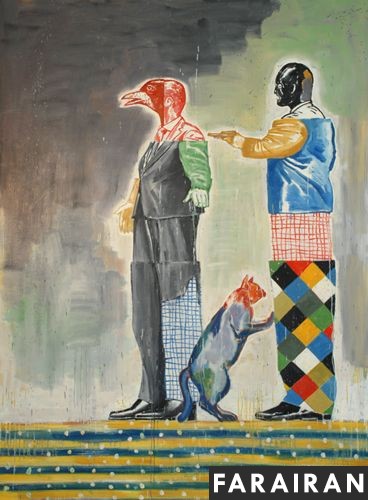
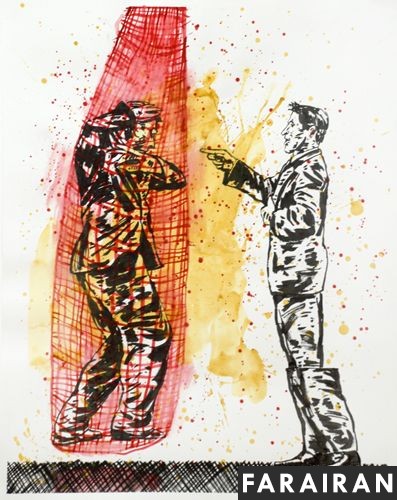
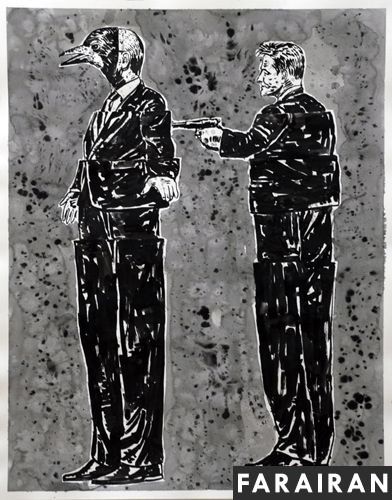
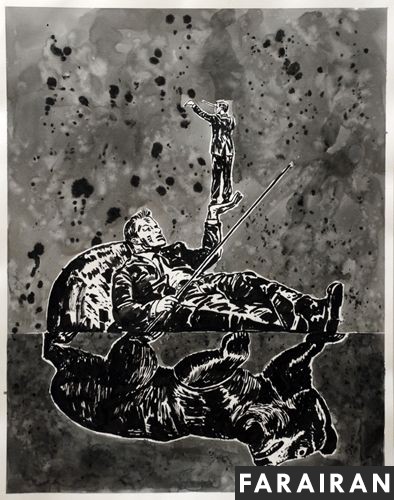
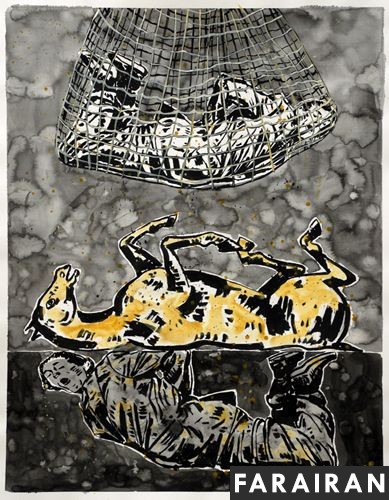
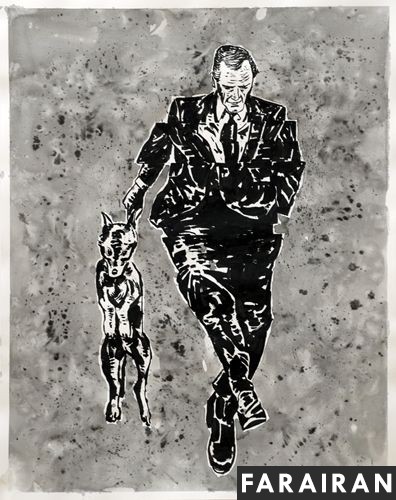
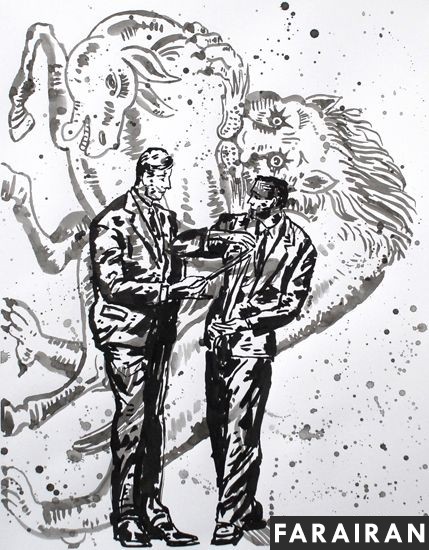
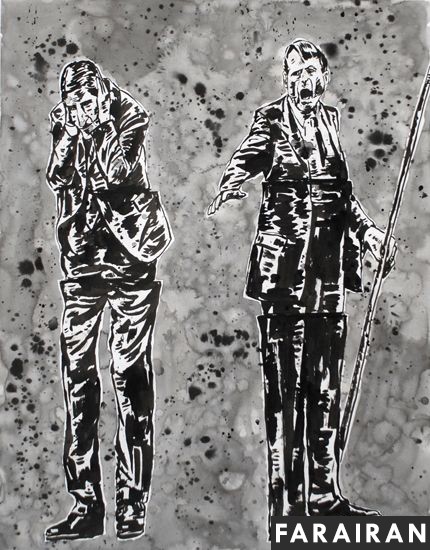
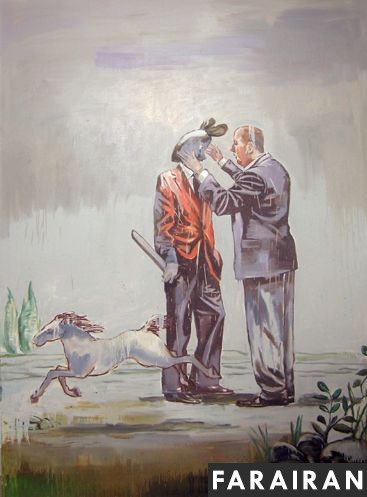
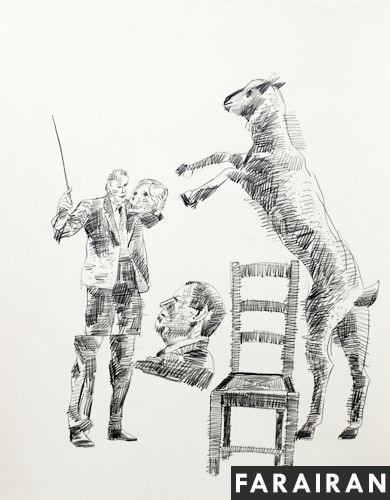
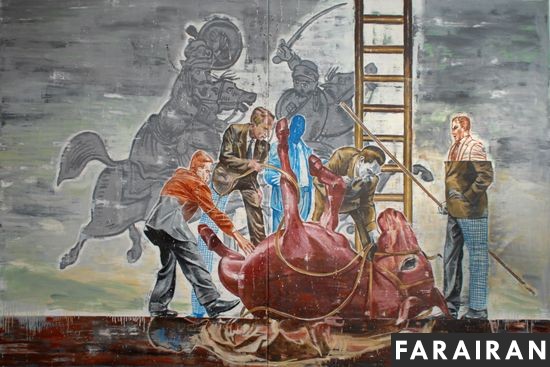
The new paintings at Taymour Grahne are political too, but the tone is different. Visually the work is light, even airy, and filled with absurdist, mocking incident. Men in suits share space with horses, apes and apparitional figures from classical Persian painting. Almost nothing feels grounded or organic: figures are composed of mismatched legs, torsos and heads, and seem unbound by perspective or gravity. Only in a series of magisterial black-and-white ink drawings does the mood tense up. In a 2012 piece called “Invasion”, figures fall as if under attack; a blindfolded man lies flat on the ground. In “The Accident”, from 2013, an interrogation is in progress against a wall of wreckage, and the drawing`s surface is sprayed with ink drops as if with bullet holes.

The artist offers fascinating insights into his working method in several small studies for paintings, made up of elements cut from newspaper clips and collaged in ways that throw off logic of placement and scale but suggest an insistently, if unlocatably, topical content. Mr. Nodjoumi who has lived in New York City many years, is a treasure, and he`s never looked better.”

Holland Cotter,

New York Times, October 18, 2013

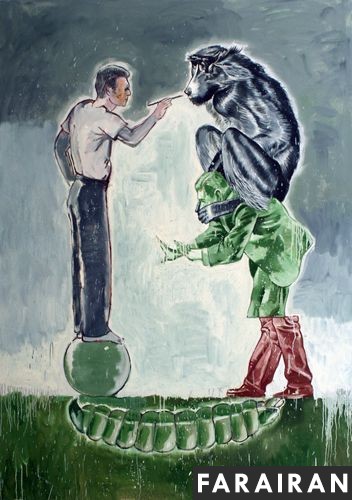
If we take mythology as the science of gods and supernatural powers, then it will not be too wild to describe Nodjoumi as the painter of contemporarized mythology, painting surreal narratives of gods and supernatural powers in the figure of captains of politics, industry and finance, mainly based on their photographs newspapers and magazines. In other words, his paintings can be described as absurd allegories of power or allegories of absurdity of power.The source and inspiration of his style going back to when on the proposal of Firouz Shirvanloo, the former director of Niavran Cultural Center, he studied Mani, the Iranian painter-prophet before the advent o Islam.

The result was 270 paintings, which in his own words, changed the course of his artwork. Years later a selection of these Manichaean paintings carried out mainly in the traditional Iranian painting –negargari- was exhibited at Arya Gallery (1993), his sole exhibition in Iran after the revolution, disregarding the retrospective of his works called Reort on revolution held only for a few days at Tehran Museum of Contemporary Arts upon its re-opening after the revolution in 1979, bringing about his forced move back to New York.
After graduating in Fine Arts from Tehran University (1967) and working for Kanoon, Institute for Intellectual Development of Children and young Adults, Nodjoumi went to New York, where he finished a course in Animation from the New York school of Visual Arts (1972) and his master degree in Fine Arts from City College of New York (1974).

He landed in New York at the height of anti-Vietnam war protests and it was there-then when he found his political voice by joining the Confederation of Iranian Students. “The freedom of expression I witnessed in New York had such a profound effect on me that I albeit temporarily, felt that art was not an effective instrument of change.” This active political life, though led to being summoned by Shah’s secret police on his return to Iran in 1975, three months of repeated interrogations and his final deprivation of his dream of teaching at Tehran University, but being allowed to have annual exhibition of his artwork. So when he returns to Iran for his annual show at Shahr gallery in 1978, the revolution was already on the way and surely the politically oriented Nodjoumi joins it with the above-mentioned outcome of forced immigration a year later.

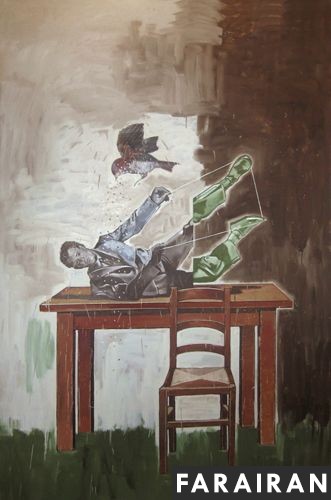
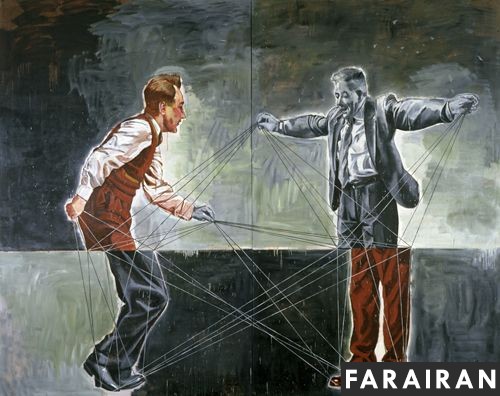
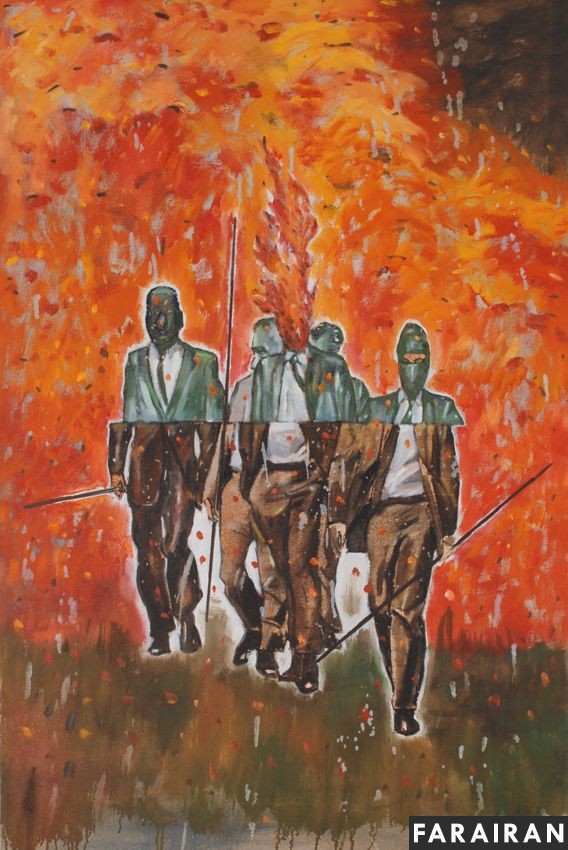
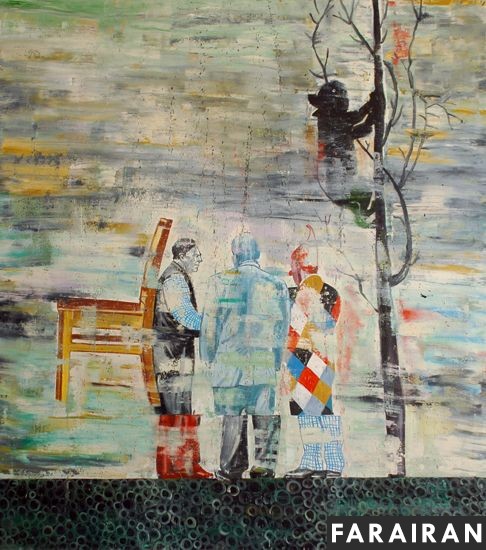
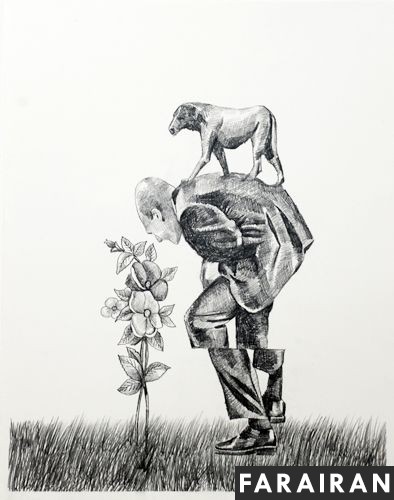
Nodjoumi’s experience in illustration and design gathered while working for Kanoon are evident in his paintings with his figured depicted in sketchy, monochromatic strokes in stark contrast with his otherwise vivid palette. The hierarchical arrangement of his life-size figures gives his paintings the communicative clarity of successful agitprop. He often slices his compositions and figures horizontally, fracturing and refracting he picture planes to create two adjacent, related but distinct realities which are distinguished by a slight misalignment or the use of different colour or pattern. In this way he recreates the collage process to plan his compositions and subtly registers displacement and difference. The technique also dismembers the body, producing amputated limbs and disintegrating bodies, playfully depicted in colorful dots, to imply violence without actually representing it. On the other hand, images of these amputated legs placed asymmetrically over one another evoke the shifting fortunes in an unstable social order; there is nourishment an rebirth.
The subject matter in my paintings mostly deals with power structures and power struggles in intentionally nondescript situations. I challenge the inherent limitations of the multilayered content of my works by crossing cultural and sociopolitical boundaries. Each painting acts as a singular critique of society in general without being specifically political.

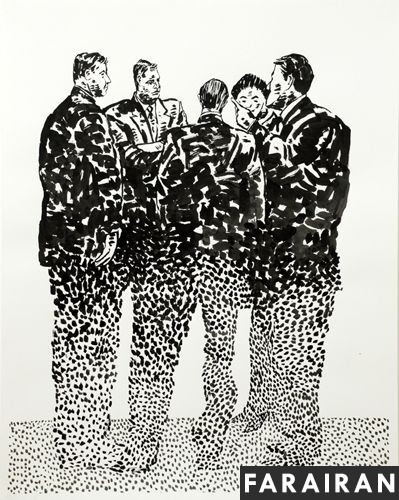
Power-possessors are seen conversing in groups, observing what they consider transgressions performed by individual or by the populace at large. Such transgressions involved the most innocuous actions, as a man and a woman holding hands in public. His works articulate outrage at the ignorance and prejudice of those who maintain this pervasive control of individual and group behavior. Beneath the painted ground structure, various figures appear; repetitions of ape heads, upside down feet and legs and chair lying sideways. These chaotic underpinnings stress the repressed animal instincts and unconscious confusion the drive insecure authority figures toward sexual and social repression. It is all about their fear of losing control. Ultimately, the artist speaks out against a totalitarian climate that crushes natural human instincts and desires. As such his work comes across as a call for individual freedom and reason.

My paintings present theatrical stages with scenes played out in which costumed characters, animals and props engage in an ongoing dialogue. Animals appear throughout the works as both gestural metaphors and/or ambiguous aggressors or victims. I use them in a mythological sense as representations of the emotions that are associated with cruelty, innocence and at times despotism. Referring to animals helps me to maintain the unity of thinking and feeling. They collectively, with the other props, add to the spiritual and psychological dimension of my paintings.
In fact, his men in suits represent universal signifiers for political and corporate functionaries. He makes absurd scenarios for these global power players, sometimes infantilizing them, sometimes presenting them as overgrown boys fighting and playing games, with the use of webs and strings pointing to their invisible puppet masters, if not the gymnastic of political or corporate negotiations. In the same way that scissors and wire cutters allude to torture, forced abortions and other similar ignominies.

Throughout my work, uniforms of Western business suits and Iranian clerical garments portray the authority of a male-dominated world. The discourse of these elements integrates humor that operates to humiliate political leaders and their violence, while pointing out immanent weaknesses of the human condition. I employ lines of divisions in my compositions as well as visible cuts across the figures and their surrounding environments to reflect not only oppression, but a sense of dislocation. Furthermore, I reference eroticism to investigate the prevailing hypocrisy and duplicity in patriarchal societies, especially those of the Middle East.

In the process, this simultaneously seductive and subversive visual vocabulary works to create a cohesive and dramatic narrative. These representations, set against a continuous backdrop of ambiguity, allegory and irony, suggest an extremely delicate balance between the personal and the universal.

Though a resolutely political painter, Nodjoumi steers clear of representing politics. Instead his scenarios dramatizes the invisible relationships, connections and behaviors through which power is expressed, maintained and circulated. He reveals the mechantions of politics for what they truly are, games played by the powerful, often without a clear sense of the real consequences of their actions.

In general as Mary c says: Nodjoumi’s Iranian background combined with American influences allows for unique perspective in his work, an ironic metaphoric world view. His large scale oil paintings employ visual conceptual puzzles to express obliquely outrage at life’s modus unfortunate operandi. He communicates this outrage metaphorically to the viewer, who is challenged to analyze his heretic works to discover clues to their alarming implications. The beauty and perversity of the images add allure to the challenging iconography: They take the edge off the unknowable.

but a sense of dislocation. Furthermore, I reference eroticism to investigate the prevailing hypocrisy and duplicity in patriarchal societies, especially those of the Middle East.

In the process, this simultaneously seductive and subversive visual vocabulary works to create a cohesive and dramatic narrative. These representations, set against a continuous backdrop of ambiguity, allegory and irony, suggest an extremely delicate balance between the personal and the universal.

Nicky Nodjoumi has exhibited internationally and is in several prominent collections worldwide, including the Metropolitan Museum of Art in New York, the British Museum in London, the Salsali Private Museum in Dubai, and the National Museum of Cuba. His work will be featured in the exhibition Iran Modern, opening at the Asia Society in New York in September 2013, in conjunction with his solo exhibition at Taymour Grahne Gallery. The artist lives and works in Brooklyn.
Horne, Sarah. “Politically Charged”, Canvas Magazine, Vol. 5 Issue 3, May / June, 2009, 84-95

Vali, Murtaza. “Nicky Nodjoumi: Educating the Horse”, Bidoun, Spring 2011
Horne, Sarah. “Politically Charged”, Canvas Magazine, Vol. 5 Issue 3, May / June, 2009, 84-95


Farairan’ Choice Shirin Neshat

I appreciate beauty as a way to neutralize violence.

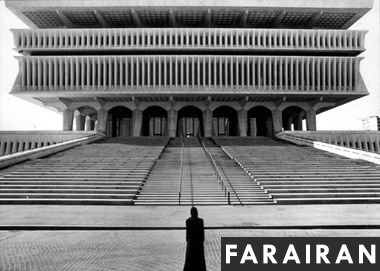
Shirin Neshat was born in Qazvin, Iran in 1957. She was sent to the United States to complete her education inn 1974, at the age of seventeen. After receiving a BA from the University of California at Berkeley in 1983, Neshat moved to New York, where she soon began working at the Storefront for Art and Architecture, an interdisciplinary alternative space in Manhattan. Though Neshat had studied art in college, her arrival in New York commenced a hiatus from art-making until 1993, when she made her first trip back to Iran.

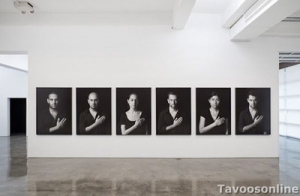
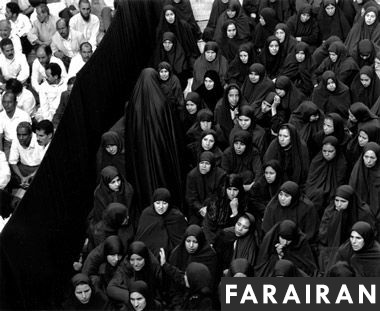
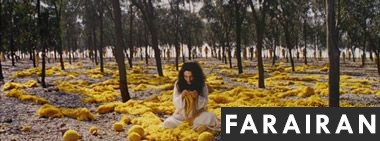
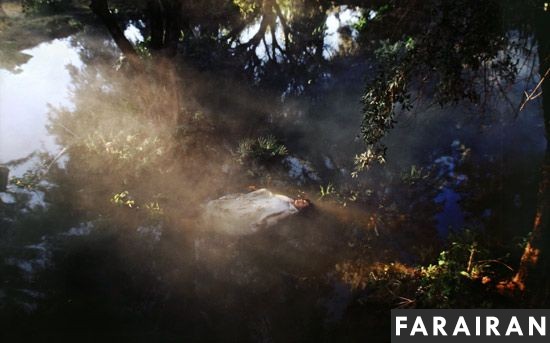
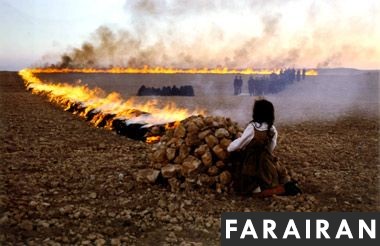
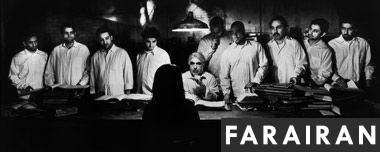
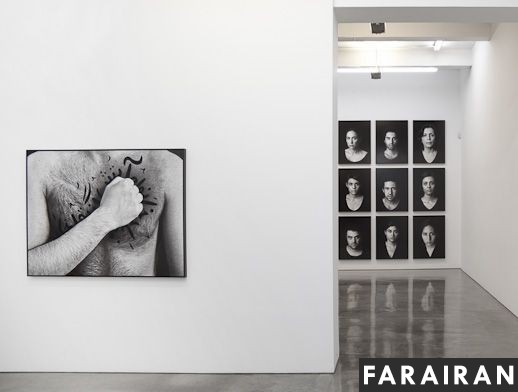
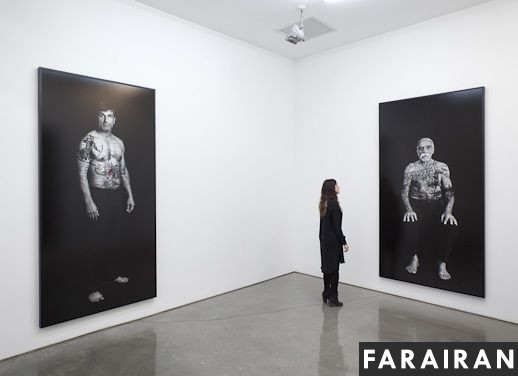
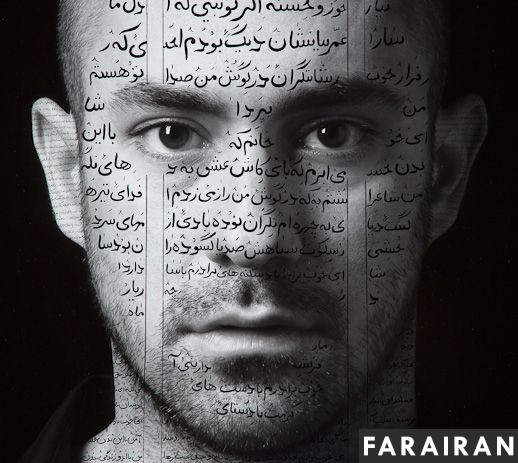
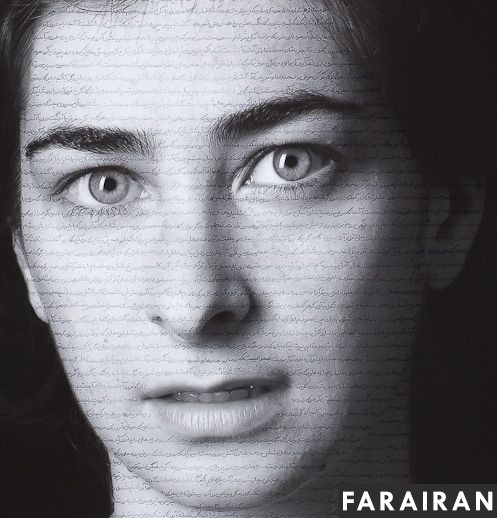
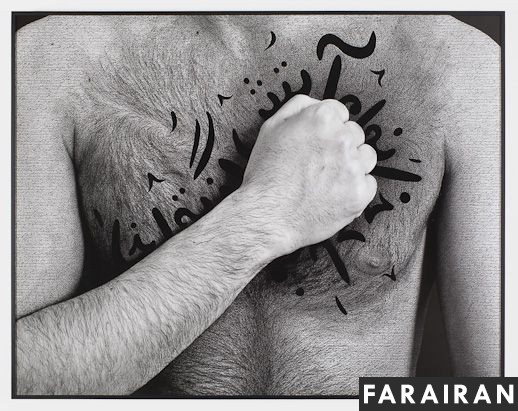
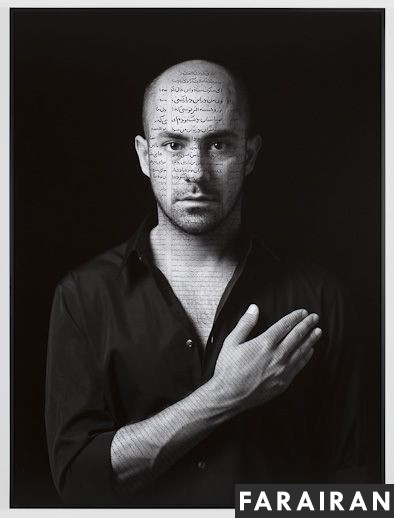
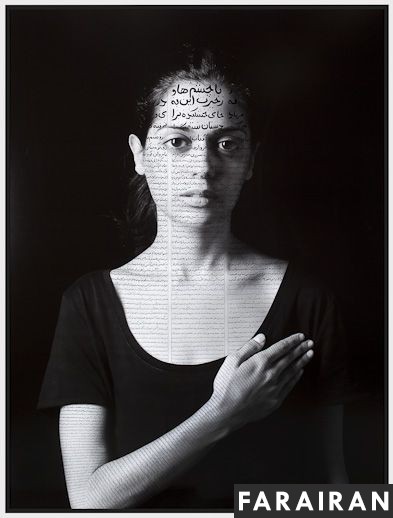
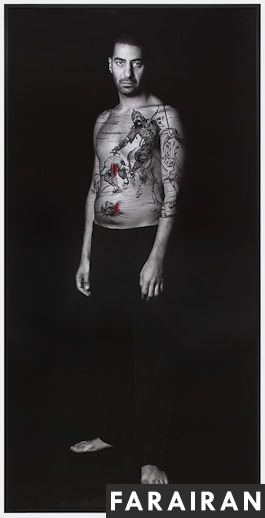
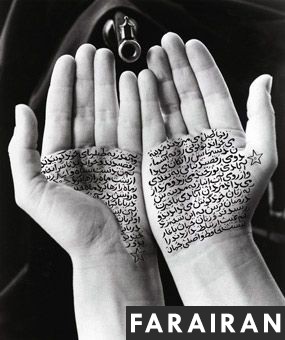
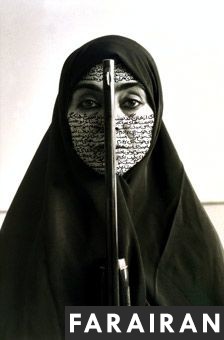
Neshat’s earliest works were photographs, such as the Unveiling (1993) andWomen of Allah (1993–97) series, which explore notions of femininity in relation to the ruling politics and militancy in her homeland. Her subsequent video works departed dramatically from overtly political content or critique, in favor of more poetic imagery and narratives. Her first video installations—the trilogy comprising Turbulent (1998), Rapture (1999), and Fervor (2000)—utilize dual video screens to portray abstract oppositions based around gender and society, the individual and the group. While these works hint at the restrictive nature of Islamic laws regarding women, they deliberately open onto multiple readings, reaching instead toward universal conditions. Other videos, such as Soliloquy (1999), Possessed (2001), Pulse(2001), and Tooba (2002), along with the film Passage (2001), have expanded upon this formula, presenting similarly ambiguous narratives.


2008-Faezeh

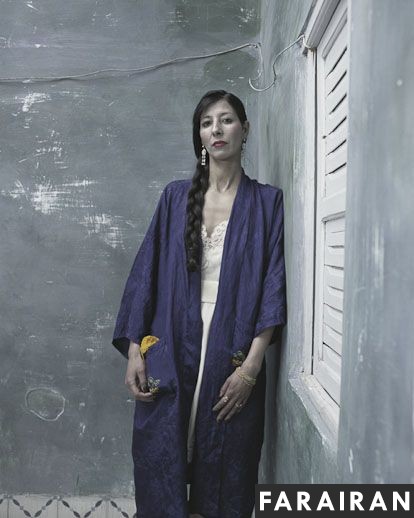
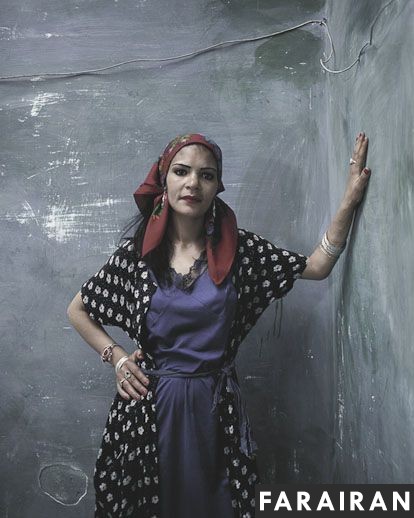
Collaboration has played an important role throughout Neshat’s career; singer and composer Sussan Deyhim and cinematographer Ghassem Ebrahimian have contributed to many of her works, while Passage was a joint project with the composer Philip Glass. In 2003 the Screenwriters Laboratory of the Sundance Institute helped Neshat to develop and begin production on the feature film Mahdokht (2004), an adaptation of Shahrnush Parsipur’s novel Women Without Men. Since 2003 Neshat has continued to probe the central themes (religion, violence, madness, and gender) and characters in Women Without Men through photographic series like Zarin (2005) and the film Faezeh (2008).

Since her first solo exhibition, at Franklin Furnace in New York in 1993, Neshat has been featured in solo exhibitions in various countries of the world and has participated in several biennials and also international film festival, including Cannes film festival in 2008.
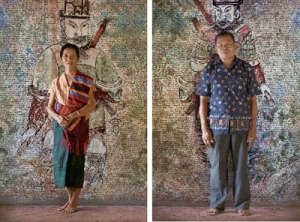
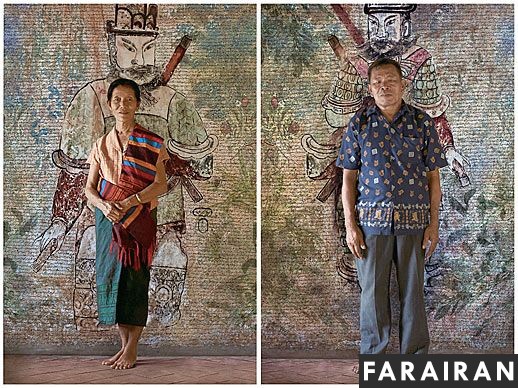
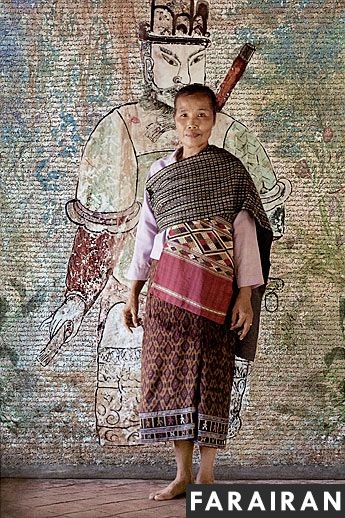
Her last exhibition, Games of Desire series took place in December 2012 in which she sheds light on the life of elderly Laotian women, living under a mitigation of tradition in a globalised world. The artist’s expression and her use of space puts the audience right in the heart of the couple’s interaction, compelling one to examine his own perceptions of Love, Sexuality and Age.

“Poetically speaking, I thought it could be beautiful to connect the plight of the women with the plight of the country. They are looking for the same thing: democracy, change, freedom. So it is an allegorical story.”

In an interview with Carol Becker, Neshat says: … a lot of people have accused me, even Iranian people, saying that I use the veil or other ideas as a way of exoticizing the subject or making purely aesthetic exercises and I’m saying well of course, I am an artist, aesthetic concerns are fundamental to what I do, but the question of orientalization is not my problem in that women in that part of the world actually wear the veil and the question of orientalization is a Western concern. For me, the mystery is built out of those two differences. Again, when Zarin was in the bathhouse, I made the set so that it looks like an Orientalist painting, partly because I thought how often do you have an anorexic woman who appears in an Orientalist picture? In other words, I was very conscious of both averting the ideas of stereotypes while playing with them, trying to deconstruct and construct the text and image at the same time.

My justification at the end is that this notion of beauty, symmetry, and harmony is a fundamental part of all arts, whether Persian, Islamic, or Classical art. I really believe that beauty is a fundamental way of getting closer to the divine. Of course, that conception comes from spiritual Islam. But I also think it’s very poignant to bring that spiritual element into juxtaposition with the political reality. In other words, we have all these beautiful women with the veils against the background of those magnificent mosques and architecture, and then we have the guns. To me, these are two conflicting forces that reveal the ongoing complex web of Islam today. Where it comes from, where it’s going, and how they’re all in this world together.


2012 Shahnameh (Epistle of Kings)

I am a strong believer that I am the captain of my own ship, and as long as I’m clear about which way I’m going, I’ll take all the good and bad that comes with it. And I have to say, I’ve made mistakes in collaboration, or making work that is not so strong, and that’s OK, because the fundamental thing about the process of being an artist is failure. That you have to learn to accept that you are going to fail. It is similarly important for your critics, your audience, and your peers to understand that failure is part of growth. There is nothing wrong with failure. You fail or fall, and then you pick yourself up again. It’s that very process that is what really counts in the end.

Games of Desire 2012

Among the many awards Neshat has won are the First International Prize at the Venice Biennale (1999), the Grand Prix at the Kwangju Biennale (2000), the Visual Art Award from the Edinburgh International Film Festival (2000), the Infinity Award from the International Center of Photography in New York (2002), the ZeroOne Award from the Universität der Künste Berlin (2003), the Hiroshima Freedom Prize from the Hiroshima City Museum of Art (2005), and the Lillian Gish Prize in New York (2006).

In 2010 Neshat was named Artist of the Decade by Huffington Post critic G. Roger Denson, for “the degree to which world events have more than met the artist in making her art chronically relevant to an increasingly global culture,” for reflecting “the ideological war being waged between Islam and the secular world over matters of gender, religion, and democracy,” and because “the impact of her work far transcends the realms of art in reflecting the most vital and far-reaching struggle to assert human rights.”

Sources:

http://www.ted.com/speakers/shirin_neshat.html
Britta Schmitz http://universes-in-universe.org/eng/nafas/articles/2005/neshat
Arthur C. Danto http://bombsite.com/issues/73/articles/2332

Born 1957, Qazvin, Iran

Lives in New York City

Selected Solo Exhibitions

2012

“The Book of Kings,” Gladstone Gallery, New York

2011

“Women Without Men,” Palazzo Reale, Milan

“Shirin Neshat: Soliloquy,” Yorkshire Sculpture Park, Wakefield, England

2010

“Shirin Neshat,” La Fabrica Galeria, Madrid, Spain

2009

“Games of Desire,” Gladstone Gallery, Brussels

“Games of Desire,” Galerie Jerome de Noirmont, Paris

Women Without Men,” National Museum of Contemporary Art, Athens

“Shirin Neshat: Turbulent,” Galleri Faurschou, Copenhagen

2008
“Shirin Neshat,” Gladstone Gallery, New York

“Shirin Neshat: Women Without Men,” Newcomb Art Gallery, Tulane University, New Orleans, LA

“Shirin Neshat: New Works,” Galerie Jérôme de Noirmont, Paris

“Women Without Men,” ARoS Aarhus Kunstmuseum, Denmark; Gallery Faurschou, Beijing

“Shirin Neshat,” National Gallery of Iceland, Reykjevik

“Women Without Men,” Galleri Faurschou, Beijing, China

2007

Shirin Neshat,” Galeria Filomena Soares, Lisbon, Portuga

2006

“Shirin Neshat,” Espoo Museum of Modern Art, Espoo, Finland

”Shirin Neshat: The Last Word,” Centro Atlantico de Arte Moderno, Las Palmas de Gran Canaria

“Shirin Neshat,” Stedelijk Museum CS, Amsterdam, NL

“Shirin Neshat,” Lumen Travo Gallery, Amsterdam, NL

2005

“Zarin,” Gladstone Gallery, New York

Hamburger Bahnhof, Museum Für Gengewart, Berlin

Museo de Arte Contemporaneo, Leon, Spain

Hiroshima City Museum of Contemporary Art, Hiroshima, Japan

2004

“Shirin Neshat,” Auckland Art Gallery, New Zealand

2003

“Tooba” Asia Society Museum, New York

Galeria Filomena Soares, Lisbon, Portuga

Lumen Travo Gallery, Amsterdam

Museo de Arte Moderno, Mexico City

2002

Castello di Rivoli, Turin, Italy

Centre for Contemporary Art, Ujazdowski Castle, Warsaw

Banco di Brasil, Rio de Janeiro

Aarhus Kunstmuseum, Aarhus, Denmark

“Passage,” Regina Gouger Miller Gallery, Carnegie Mellon University , Pittsburgh, PA

2001

Musée d’Art Contemporain de Montreal,; Walker Art Center, Minneapolis; Contemporary Arts Museum, Houston; Miami Art Museum

Irish Museum of Modern Art, Dublin, Ireland

Patrick Painter, Santa Monica, CA

Barbara Gladstone Gallery , New York

Kanazawa Contemporary Art Museum, Kanazawa, Japan

Hamburger Kunsthalle, Hamburg

2000

Serpentine Gallery, London

Pitti Discovery, Florence, Italy

Kunsthalle Wien, Vienna, Austria

Lia Rumma, Milan, Italy

Dallas Museum of Art, Dallas, TX

Matrix, Berkeley Art Museum, Berkeley, CA

Wexner Center, Columbus, OH

1999

Malmö Konsthall, Malmö, Sweden

Art Institute of Chicago

Patrick Painter Gallery, Los Angeles

D’Amelio Terras, New York

Galerie Jerôme de Noirmont, Paris

Henie Onstad Artsentre, Oslo, Norway

Tensta Konsthall, Spanga, Sweden

1998

Tate Gallery, London, England

Whitney Museum of American Art, Philip Morris Branch, New York

Maison Européene de la Photographie, Paris

Thomas Rehbein Gallery, Köln

1997

Museum of Modern Art, Ljubljana, Slovania

Annina Nosei Gallery , New York

Lumen Travo, Amsterdam, Holland

Artspeak, Vancouver, Canada

1996

Centre d’Art Contemporain Kunsthalle, Fribourg, Switzerland

Marco Noire Contemporary Arts, Turin, Italy

Lucio Amelio Gallery, Naples, Italy

Haines Gallery, San Francisco

1995

Annina Nosei Gallery , New York

1993

Franklin Furnace , New York

Selected Group Exhibitions

2012

“Every Exit is an Entrance: 30 Years of Exit Art,” Exit Art, New York

“Half of the Sky: Visualized,” Contmemporary Art Galleries, University of Connecticut

2011

“Beyond Conventions: Reimagining Human Rights in a Time of Change,” Ford Foundation, New York

“In The Name of the Artists,” American Contemporary Art from the Astrup Fearnley Collection, Bienal Pavilion, São Paulo

“TRA. Edge of Becoming,” Palazzo Fortuny, Venice

“I Know Something About Love,” curated by Ziba Ardalan, Parasol Unit Foundation for Contemporary Art, London

2010

“Calder to Warhol: Introducing the Fisher Collection,” San Francisco Museum of Modern Art, San Francisco, CA

“ARTE Y POLITICA : CONFLICTOS Y DISYUNTIVAS,” Museo de Arte de Culiacán, Culiacán

“Exposure: Photos from the Vault,” Denver Art Museum, Denver, CO

“Disquieted,” Portland Art Museum, Portland, OR

“Diabolique,” Galierie de l’Uquam, Montreal

2009

“Bad Habits,” Albright-Knox Art Gallery, Buffalo, New York

“BAROCK,” MADRE Museo d’Arte Contemporanea Donna Regina, Naples

“Being in the World: Selections from the Ella Fontanals-Cisneros Collection,” Cisneros Fontanals Art Foundation, Miami

“Shirin Neshat e Shoja Azari,” Noire Contemporary Art, Turin, Italy

“The Female Gaze: Women Look at Women,” Cheim and Read, New York

“Iran Inside Out,” Chelsea Art Museum, New York

“Photographic Power and Violence, Disease, and Death Photographed,” Fotomuseum Winterthur, Switzerland

“Typical, Clichees of Jews and Others,” Spertus Museum, Chicago; Jewish Museum of Vienna, Vienna

2008

“Prospect..1: New Orleans International Biennial” New Orleans

“Me Ophelia,” The Van Gogh Museum, Amsterdam, Netherland

“Stereotypes,” The Jewish Museum, Berlin, Germany; Spertus Museum, Chicago; The Jewish Museum, Vienna

“Wanderers in Contemporary Video Art,” Museo Civico, Commune di Siena, Siena, Italy

“Paixóns Privadas, Visións Públicas Collections D.O. Galicia,” Museo de Arte Contemporánea de Vigo, Vigo, Spain

2007

“Foto.Kunst,” Essl Museum, Vienna

“Kunst Film Biennale,” Köln

“Ten Years,” Emily Tsingou Gallery, London

“So Close / So Far Away,” BE-Part Platform voor actuele kunst, Waregem

“Weltempfänger,” Hamburger Kunsthalle, Hamburg

“After The Revolution: Women Who Transformed Contemporary Art,” Dorsky Gallery Curatorial Programs, Long Island City, New York

Programs, Long Island City, New York

“Border-Crossing Exercises,” Galleri Nord Norge, Norway

“Not for Sale,” P.S.1, New York

“Lights Camera Action: Artist’s Film for the Cinema,” Whitney, New York

2006

“Kapital,” Kent Gallery, New York

“Saastamoinen Foundation Art Collection,” Espoo Museum of Modern Art, Helsinki

“A Selected State,” emily Tsingou gallery, London, England

“Reverence,” Hudson Valley Center for Contemporary Art, Peekskill, New York

2005

“Translation,” Palais de Tokyo, Paris

“Remapped Realities,” Eyebeam, New York

“Some Stories,” Kunsthalle Vienna, Austria

“Beauty, House of World Culture, Berlin

“Important, Modern and Contemporary Art,” Gary Nader, Miami, Florida

“Figure It Out,” Hudson Valley Center for Contemporary Art, Peekskill, New York

2004

“Non Toccare La Donna Bianca:, Fondazione Sandretto Re Rebaudengo per l’Arte,Turin

Santa Fe Art Institute, New Mexico

“In Bed”, Toyota Art Museum, Japan

“From Bonifatius to Beuys,” Kunsthalle Erfurt, Germany

“Monument to Now,” Deste Foundation, Athens

Museum of Contemporary Art, Tehran, Iran

“The Parallell World of Marrakech,” Lille 2004, France

“Transculture,” Museum of Contemporary Art, Athens

”Far Near Distance,” House of World Culture, Berlin

“Masterpieces from the museum of Contemporary Art”, Chicago; Villa Manin Center of Contemporary Art, Udine, Italy

2003

“Bill Viola and Shirin Neshat,” The State Hermitage Museum, St Petersburg, Russia

“Moving Pictures,” Guggenheim Bilbao, Spain

“Fantasies of the Harem and the New Sherezades,” Centre de Cultura Contemporania, Barcelona

“Elsewhere,” UCLA Fowler Museum, Los Angeles

“The Natural Cosmos,” Staadtische Kunsthalle Mannheim, Mannheim, Germany

“Imagining Prometheus,” Palazzo della Ragione, Milan

“Nouredine Amir,” ModeMuseum, Antwerp, Belgium

“Films of the Iranian Diaspora,” Gene Siskel Film Center, Chicago

“Armour:The Fortification of Man,” Foundation Fort Asperen, Acquoy, The Netherlands

“ICP Triennial of Photography and Video,: International Center of Photography, New York

2002

“Diversions,” Contemporary Art Museum, Baltimore

“Synopsis II-Theologies,” The New Museum of Contemporary Art, Athens

“Alter Ego,” Jean-Gabriel Mitterand Galerie, Paris

“Recent Acquisitions,” Solomon R. Guggeheim Museum of Art, New York

The Beauty of the Evil,” De Zonnehof, Amersfoort, The Netherlands; Documenta 11, Kassel, Germany

“Picturing Ourselves,” Worcester Art Museum, Worcester, MA

“Moving Pictures,” Solomon R. Guggenheim Museum of Art, New York

“Visions from America,” Whitney Museum of American Art, New York

“Iconos Metropolitanos,” Fundación PROA, Buenos Aires, Argentina

“New Art,” Tehran Museum of Contemporary Art, Iran

“Real Life,” Tate St. Ives, Cornwall, England

2001

“Galerie Farschou, 1986-2001,” Galeri Farschou, Copenhagen, Denmark

“Fervor,” Tensta Konsthall, Spanga, Sweden

“Black + White,” Blains Fine Art, London

“New Acquisitions from the Dakis Joannou Collection,” Deste Foundation, Centre for Contemporary Art, Athens

Beyeler Foundation, Basel, Switzerland

Biennial de Valencia, Valencia, Spain

French Institut, Rabbat, Morocco

Croatian Photographic Union, Croatia

“Arte Contemporaneo Internacional,” Museo de Arte Moderno, Mexico City

“The Beauty of the Evil,” Armando Museum, Amsterdam

2000

“Corpo Chimico,” Cá di Fra, Milan, Italy

“Photography Now: An International Survey of Contemporary Photography,”

Contemporary Arts Center, New Orleans, Lousiiana

“State of the Art: Recent Gifts and Acquisitions,” Walker Art Center, Minneapolis

“Erresitentziak/Resistencias,” Koldo Mitxelena, Donostia-San Sebastian

The Fruitmarket Gallery, Edinburgh Festival, Edinburgh

Lyon Biennial, Lyon, France

“La Beauté in Avignon,” Avignon, France

“Continental Shift,” Ludwig Forum, Aachen, Germany

Biennale of Sydney, Australia

Kwangju Biennale, Kwangju, Korea

Whitney Biennial, Whitney Museum of American Art, New York

“Outbound. Passages from the 90’s,” Contemporary Art Museum, Houston

“Greater New York. New Art in New York Now,” PS1, New York

“Contact: A 90’s Journal,” Contemporary Arts Museum, Houston

Kunstsammlung Nordrhein-Westfalen, Düsseldorf, Germany

“THE END: An Independent Vision of Contemporary Culture, 1982-2000,” Exit Art, New York

1999

“Heaven: An Exhibition That Will Break Your Heart,” Tate Gallery Liverpool, England

“Zeitwenden: Rückblick und Ausblick,” Kunstmuseum Bonn, Germany

“Shirin Neshat: Rapture/ Pipilotti Rist: Sip My Ocean,” The Fabric Workshop and Museum, Philadelphia

Voiceovers,” Art Gallery of New South Wales, Sydney, Australia

“Project 70: Shirin Neshat, Simon Patterson, Xu Bing,” The Museum of Modern Art, New York

Carnegie International, Carnegie Museum of Art, Pittsburgh

“My Culture? My Self. Lee Friedlander, Gerhard Richter, Christian Boltanski, Shirin Neshat,” Ydessa Hendeles Art Foundation, Toronto, Ontario

“La Biennale di Venezia,” Venice, Italy

“Exploding Cinema,” Rotterdam Film Festival, Boijman Museum, Rotterdam, The Netherlands

“Unfinished History” by Museum of Contemporary Art, Chicago

“Video Cultures” ZKM/Museum of Contemporary Art, Karlsruhe, Germany

“La Ville, Le Jardin, la Memoire” Villa Medici, Rome, Italy

“Global Art Rheinland 2000,” Ludwig Museum, Köln, Germany

“SITE SANTA FE: Looking For A Place,” Santa Fe

“Zeitwenden-outlook into the next millennium,” Kunstmuseum Bonn, Germany

“Heavenly Figure,” Kunsthalle Düsseldorf, Germany

1998

“Unfinished History” Walker Art Center, Minneapolis

“In The Detail” Barbara Gross Galerie, Munich, Germany

“7 th Summer of Photography,” Museum van Hedendaagse Kunst, Antwerp, Belgium

“Mar de Fondo” Roman Theatre of Sagunto, Valencia, Spain

“Vanessa Beecroft & Shirin Neshat,” Galleria d’Arte Moderna, Bologna, Italy

“Maschile Femminile e oltre” Palazzo Branciforte, Palermo, Italy

“Mostrato” Pescara, Italy

“ECHOLOT” Museum Fridercianum Kassel, Germany

“Transatlantico” Centro Atlantico de Arte Moderno, Canary Islands, Spain

“A Noir,” Triennale di Milano, Italy

“Interference,” Comunidad de Madrid, Spain

“Genders and Nations: Reflections on Women in Revolution” Johnson Museum, Cornell University, Ithaca, New York

“5 Th International Istanbul Biennale: On Life, Beauty, Translations and OtherDifficulties” Istanbul, Turkey

“2 nd Johannesburg Biennale 1997, Trade Routes: History and Geography” Johannesburg, South Africa

“Unbeschreiblich Weiblich” Fotomanifestatie Noorderlicht, Groningen, Holland

1997

“Triple X: Contemporary Investigating Arts,” International Art Festival, Amsterdam, Holland

“Der Rest der Welt” Haus Der Kulturen Der Welt, Berlin, Germany

“International Art Festival City of Medellin,” Medellin, Columbia

“Foto text/text foto” Museum of Modern Art, Bolzano, Italy

Frankfurt Kunstverein, Germany

“Le Masque et le Miroir” Museum of Contemporary Art of Barcelona, Barcelona, Spain

“Jurassic Technologies Revenant, Sydney Biennial” Australia

“Le Masque et le Miroir” Rencontres

Internationales de la Photographie, Arles, France

“Inclusion/Exclusion” Kunstlerhaus, Graz, Austria

“Radical Images: Austrian Triennal of Photography 1996,” Neue Galerie; Kunstlerhause, Graz, Austria

Kunsthalle Szombathely , Hungary

“Interzones” Kunstforeningen Gl. Strand, Copenhagen, Denmark

Uppsala Konstmuseum, Uppsala, Sweden

“Ghostwriter” (a project in collaboration with Jamielie Hassan), Mercer Union, Toronto,Ontario

“Group Exhibition,” Haines Gallery, San Francisco

“Auf Den Leib” Kunsthalle, Vienna

“Gallery Artists,” Galerie Lumen Travo, Amsterdam, Holland

“Imaginary Beings” Exit Art, New York

Video Installation commissioned by Creative Time for Anchorage, Brooklyn Bridge, New York

1995

“Orientation,” USA participation, Istanbul Biennial 95, Turkey

“Transculture” Venice Biennial 95, Venice

Contemporary Art Museum, Okayama, Japan

“Campo ‘95” Venice Biennial 95, Italy

Fondazione Sandretto Rebaudengo Per L’Arte, Turin, Italy

“It’s How You Play the Game” Exit Art, New York

1994

“Three New Photographers,” Haines Gallery, San Francisco

“Revolving Histories,” SF Camerawork, San Francisco

“Selection from the Artists File” Artists Space, New York

Labyrinth of Exile: Recent Works by Four Contemporary Iranian Artists,” Fowler

Museum of Cultural History, UCLA, Los Angeles

“Fever,” Wexner Center, Columbus, Ohio

“Beyond the Borders: Art By Recent Immigrants,”The Bronx Museum of the Arts, Bronx

1993

“The Office: History, Fantasy and Irregular Protocols,” site-specific installations in an abandoned Wall Street office building, organized by the Lower Manhattan Cultural Council in New York

1990

“Fever” Exit Art Gallery, New York

Multi Media Performance

2003

Logic of the Birds,” Ortigia Festival, Syracuse, Siclily, July 25 – 27

2002

“Logic of the Birds,” Walker Art Center, Minneapolis, MN , June 20-23

“Logic of the Birds,” Lincoln Center, New York, July 12-13

“Logic of the Birds,” ArtAngel, London, November 7-17

2001

Logic of the Birds (Phase One),” The Kitchen, New York

Film Screenings

2010

“ Women Without Men,” Institute of Contemporary Art, Boston

“ Women Without Men,” Sundance Film Festival, Utah

“Women Without Men,” International Rotterdam Film Festival, Netherlands

“Women Without Men,” New Directors/New Films, New York

2009

Premier of “Women Without Men” at the 66 th Venice Film Festival, Italy

“Women Without Men,” London Film Festival, London, England

“Women Without Men,” Viennale Film Festival, Vienna, Austria

“Women Without Men,” KunstFilm Biennale, Cologne

“Women Without Men,” Dubai International Film Festival, Dubai

2008

18th Annual Celebration of Iranian Cinema, UCLA Film Archive, California

2007

KunstFilm Biennale, Cologne

International Incheon Women Artists’ Biennale, South Korea

Istanbul Film Festival, Istanbul

2006

Florida Golf Coast University

Art Tower-Mito, Japan

Kunsthalle Mannheim, Germany

Centro Atlantico de Arte Moderno-CAAM, Spain

Creative Time Inc, New York

2003

Sundance Film Festival, Salt Lake City

Smithsonian Institution, Freer and Sackler Galleries, Washington D.C.

UCLA Film and Television Archive, Los Angeles

Gene Siskel Film Center, Chicago

Tribeca Film Festival, New York

Athens International Film Festival

Edinburgh International Film festival

Kunst Film Biennale, Cologne

2002

Locarno Film Festival, Switzerland

Dans Le Cadre Du Festival International De Films De Fribourg, Centre D’Art Contemporain Kunsthalle, Fribourg, France

“Outer & Inner Space: A Video Exhibition in Three Parts/Part Two,” Virginia Museum of Fine Arts, Richmond

Forum des Images, Paris

Thessaloniki International Film Festival, Athens, Greece

Philadelphia Museum of Art

2001

Chicago International Film Festival, Chicago

Francisco Film Festival, San Francisco, CA

London Iranian Film Festival, London

Virginia Film Festival, Charlottesville, VA

Pacific Film Archive Festival, Oakland, CA


Farairan’ Choice Ali Banisadr


Born 1976, Tehran, Iran

Lives and works in New York City

EDUCATION:
MFA, New York Academy of Art (2007)
BFA, School of Visual Arts, New York (2005)

SOLO EXHIBITIONS:
2012 – “We Haven’t Landed on Earth Yet”, Galerie Thaddaeus Ropac, Salzburg,
Austria
2011 -“It Happened and It Never Did”, Leslie Tonkonow Artworks + Projects, NY
2010 -“Evidence” Galerie Thaddaeus Ropac, Paris (works on paper)
-“Paintings” Galerie Thaddaeus Ropac, Paris
2008 -Leslie Tonkonow Artworks + Projects, New York

GROUP EXHIBITIONS:
2013 – Safar/Voyage, Museum of Anthropology(MoA) at The University of British Columbia, Vancouver, Canada (Curated by Fereshteh Daftari)
2012 – Contemporary Iranian Art in the Permanent Collection, The Metropolitan Museum of Art, New York
-The Sound of Painting , Palazzo Saluzzo Paesana, Turin, Italy (Curated by Margherita Artoni)
-Peekskill Project V, Hudson Valley Center for Contemporary Art, Peekskill, NY (Curated by Livia Straus & Lilly Wei)-Hue and Cry, Sotheby’s (S2 Gallery) New York, NY; (Curated by Vladimir Restoin Roitfeld)
-Dynasty, Hotel Particulier, New York, NY (Curated by Omar-Lopez Chahoud)
-Lucie Fontaine: Estate Vernissage, Marianne Boesky Gallery, New York
-Referencing History, Green Art Gallery, Dubai (Curated by Jane Neal)
2011 -XXSmall, Gemeente Museum, The Hague, Netherlands
-East Ex East, Brand New Gallery, Milan, Italy (Curated by Jane Neal)
-Visions, Monica De Cardenas, Milan, Italy
2010 -Hareng Saur : Ensor and Contemporary Art, Stedelijk Museum voor Actuele Kunst (SMAK), Ghent, Belgium-Contemporary Notes, Assar Gallery, Tehran, Iran (Curated by Vahid Sharifian)
-Ghosts, Luce Gallery, Torino, Italy
2009 -Epic Painting, Samek Art Gallery, Bucknell University, PA
-Raad O Bargh- Kunstraum Deutsche Bank, Salzburg, Austria
-Unveiled: New Art from the Middle East, The Saatchi Gallery, London
-Raad O Bargh – 17 Artists from Iran, Galerie Thaddaeus Ropac, Paris
2008 -Weaving The Common Thread, Queens Museum of Art, Queens, N.Y
-Utopia Dystopia, Leslie Tonkonow Artworks + Projects, New York
-Small is Beautiful (2), Flowers Gallery, New York
-Post Graduate Fellows Exhibition , New York Academy of Art
2007 -Small is Beautiful, Flowers Gallery, New York
-Homecoming, New York Academy of Art, New York
-CAA Exhibition, Hunter College/Time Square Gallery, New York
2006 -Tribeca Ball, Skylight, New York
-Summer Painters, Chateau de Balleroy, France
2005 -In Exile, Visual Arts Gallery, New York

PUBLIC COLLECTIONS:
The British Musuem ,UK
Museum of Contemporary Art, Los Angeles
The Metropolitan Museum of Art, New York
The Olbricht Collection, Germany
Francois Pinault Foundation
The Saatchi Gallery, London
Sammlung Essl , Vienna, Austria
The Wurth Collection, Germany

AWARDS:
-New York Foundation for the Arts Fellowship in Painting (2010)
-Post-Graduate Research Fellowship, New York Academy of Art, New York (2007–08)
-Travel Grant to Normandy, France at the Chateaux Balleroy (2006)
-Prince of Wales / Forbes Foundation (2006)

PRESS:
2012
-Cover of Flash Art International Magazine (July-September 2012)
– G. Roger Denson, “Going Forward in Reverse : The Present Tense(ion) of History
Painting”, The Huffington Post (September, 7, 2012)
-Julie Chae, “Conversation with Ali Banisadr”, The Huffington Post (September, 4, 2012)
– Julie Chae, “Conversation with artist Ali Banisadr”, Arts in a Changing America (September, 2, 2012)
-Nicola Trezzi, “Ali Banisadr”, Flash Art International Magazine (July-September 2012)
-Will Corwin, “Ali Banisadr, Tehran to New York”, Art on Air International Radio (August, 20, 2012)
-Jane Neal, “What Lies Beneath”, Flash Art International Magazine (July-September 2012)
-Shirine Saad, “Impulse to Paint”, Aishti Magazine (April/May 2012)
-Jyoti Kalsi, “Lessons from the Past”, Gulf News (May, 25, 2012)
-Rebecca Ann Proctor, “Historical Relayerings”, Canvas Guide (May 2012)
-Pamela A Lewis, A defiant Beauty: Contemporary Iranian Art from the permanent collection at the Met”, Galo Magazine (March 2012)
-Jonathan Beer, “Conversation with the Unnamed: Ali Banisadr”, Art-Rated (January 2012)

2011
-“Top 100 Artists” (Ranked #1), Flash Art International Magazine (November 2011)
-Margherita Artoni, “Visions”, Flash Art International Magazine (November 2011)
-Marco Tagliafierro, “East Ex East”, Artforum (October 2011)
-Damiano Gulli, “East Ex East”, Flash Art Magazine, Italy (October 2011)
– Christopher French, “Ali Banisadr”, ARTnews (September 2011)
-Media Farzin, “Profile: Clamour and Colour Ali Banisadr”, Canvas Magazine (September 2011)
-Amanda Church, “Ali Banisadr”, Art in America (June 29, 2011)
– Vaziri, Katayoun. “Interview: Ali Banisadr : It Happened and It Never Did”, BBC Persia (TV), Tamasha, (May, 5. 2011)
– Olivia Sand, “Profile: Ali Banisadr”, Asian Art Newspaper (February 2011)
– Augustin Besnier, “Ali Banisadr Evidence”, Paris Art, (January 2011)

2010
– Valerie de Maulmin., “Les arcanes poetiques d’ Ali Banisadr”, Connaissance des Arts, Paris (November, 2010)
-“Prima candelina coi fantasmi: una mostra astratta e figurativa” il Giornale, Italy (September, 15, 2010)
-Chiara Badinella e Fabrizio Affronti, “Ali Banisadr: Un caos controllato in procinto di andare a pezzi” , Flash Art Magazine, Italy 286 (August/September 2010) issue
-Vahid Sharifian, “Interview with Ali Banisadr”, Tandis Magazine, Tehran (May, 2010)
-Alexandra Cheney, “All’s Fare in Art”, Wall Street Journal, (May, 9, 2010)
-Chiara Badinella e Fabrizio Affronti, “Grandi Masteri, Fonte Perenne”, La Casana, (March, 2010) Italy
-Genie Godula, “Ali Banisadr”, France 24 (Video), (February, 12, 2010)
-Sophie De Santis, “Ali Banisadr”, Le Figaro, (February, 23,2010)
-Catherine Rigollet, “Ali Banisadr”, L’agora Des Arts, (March, 2010)
-Nicolas Villodre, “Ali Banisadr”, Paris Art, (March, 2010)

2009
-Tom Jeffreys, “Unveiled New Art From The Middle East,” Spoonfed, (January, 29, 2009)
-Santevecchi Guido, “Arte Shock Per I’ Islam Senza Veli,” Corriere Della Sera, (January, 31, 2009)
-Neal Brown, “Middle Eastern Promise,” The First Post, (February,2, 2009)
-Philippe Dagen, “Le Moyen-Orient détrône la Chine chez Saatchi, collectionneur avisé,”Le Monde, (February,6, 2009)
-“Thunder and Lightning”, Wall Paper (February, 20, 2009)
-Alireza Amirhajibi, “Iranian Raad O Bargh in Paris and London,” Etemad Melli,(February 2009)
-Eric Van Tuijn, “The Middle East Unveiled”, MetropolisM (March 2009)
-Philippe Dagen, “Raad O Bargh”, Le Monde (March, 8, 2009)
-Fiona Gruber, “New Middle Eastern Art”, ABC Radio National, (March, 15, 2009)
-Emily Verla Bovino, “Raad O Bargh”, Frieze Magazine, (April, 2009)
-Morad Montazami, Review, ArtPress, (May 2009)
-“Donner Und Blitz Aus Dem Iran”, Der Standard, Austria (July, 29, 2009)
-Robert Ayers, Modern Painters, (November, 2009)

2008
-Karen Rosenberg, “Ali Banisadr,” The New York Times, (7 November 2008)
-Greg Lindquist, “Ali Banisadr,” The Brooklyn Rail, (December 2008 – January 2009)
-Halasz, Piri. “Detour Through Chelsea,” (An Appropriate Distance) From the Mayor’s Doorstep, No. 81:1 December, 2008
-James Wagner, “Ali Banisadr at Leslie Tonkonow”, Jameswagner.com (December,2008)

PUBLICATIONS:
-Ali Banisadr: Paintings (New York: Leslie Tonkonow Artworks + Projects, 2008)
-Unveiled: New Art from the Middle East (London: The Saatchi Gallery, London, 2009),33–36.
-Raad O Bargh, Text by Vali Mahlouji (Galerie Thaddaeus Ropac, Paris, 2009) 20-23.
-Different Sames: New Perspectives on Contemporary Iranian Art, ed. Hossain Amirsadeghi (London: TransGlobe Publishing Ltd., 2009)
-Epic Painting, Bucknell University/Samek Art Gallery, 2009 (Essay by Dan Mills)
-Ali Banisadr, Text by Fereshteh Daftari, Published by Galerie Thaddaeus Ropac, 2010,52 pages
– Hareng Saur : Ensor and Contemporary Art, distributed by Ludion, S.M.A.K. and MSK Ghent, 2010, 240 pages (Texts by Pierre Alechinsky, Ali Banisadr, Susan Canning, Robert Hoozee, Timothy Hyman, Yang Jiechang, Bart Koubaa, Thomas Kowalski, Enrique Marty, Emilio López-Menchero, Raymond Pettibon, Elly Strik, Koen Theys and Philippe Van Cauteren.)
– Jane Neal , “East Ex East”, Published by Brand New Gallery, Milan, 104 pages (June 2011)
-Nicola Trezzi, “Visions”, Published by Monica De Cardenas, Milan ,55 pages (September, 2011)
Jane Neal, “Referencing History”, Published by Green Art Gallery, Dubai (May 2012)
-Maryam Ekhtiar, Greg Lindquist, “We Haven’t Landed on Earth Yet”, Published by Galerie Thaddaeus Ropac, D.A.P. (June 2012)

VISITING ARTIST / TALKS
2012 -New York Academy of Art , New York
2010 -Rutgers University, Mason Gross School of the Arts, New Brunswick, NJ
-Syracuse University, College of Visual and Performing Arts, Syracuse , NY
2009 -New York Academy of Art, New York, NY
2008 -Queens Museum of Art, Queens, NY

Born in Tehran, Iran in 1976, Ali Banisadr moved to America with his family when 12 years old, already having experienced –if not intellectually for his age, but emotionally – a revolution and a war by then. As a teenager living in San Francisco, Banisadr was part of a well-known group of graffiti artists. After briefly studying psychology, he left the Bay Area to attend art school in New York, receiving a BFA from the School of Visual Arts in 2005 and his MFA from the New York Academy of Art in 2007. He still lives and works in New York.

The visual and narrative content of Banisadr’s works is shaped by his exposure to war, Pop culture, Cinema, Graphic novels, Persian Miniature and European Painting. In an interview with Julie Chae, when she points out to these influences, Banisadr says: It is true that there have been so many influences mentioned about my work. All these influences and others are brought into my work subconsciously so perhaps that is why there are glimpses of this and that in my work but there is always so much more than the ones mentioned.

And in reply to her question whether his paintings are, in the end, decode-able, he says: When I am working on a painting, everything that I am thinking about at the time — be it current events, the books I am reading, personal events, influences, emotions, etc. — all find their way into my work. And in a way, painting is a way of thinking visually, so whatever is happening with me at the time gets reflected in the work. So the title does at the end give some kind of clue about some of the things I was thinking of when I was making the work.


In the Name of, Oil on Linen, 2008

Banisadr’s art has an aural quality, a way of experiencing sound through paint and linen. This goes back to 2006 when he began to make charcoal drawings based on the sounds of explosions, thus bringing auditory elements into the work and letting his subconscious take over. After this, he started to compose his paintings in an auditory way, which felt very organic and visceral. He has taken the time to learn many of the Old Master techniques in handling oil paint, creating illusions such as light and air, and he fuses those brushwork elements with features of Persian Miniatures, particularly the compositional layering of perspectives and stylization of motifs. He creates his own unique versions of “history paintings”; instead of glorifying the current political systems and power structures, however, his art questions myths, history, what really happened and what is really happening.

Influenced by Persian miniatures — small, intricately rendered illustrations similar to illuminated manuscripts — Banisadr’s canvas unfurls like an ancient map, a spatially skewed terrain of detailed activity. Throughout, angular shapes suggesting topsy-turvy architecture provoke a disorienting sense of wonder. Out-of-scale figures are formed from indulgent dabs, and exotic fauna and pools evolve from luscious smears and layered washes. Rendered in the gold and blue associated with European religious painting, Banisadr bathes his scene of earthly pleasures in a divine glow, ignited by bombardments in the distance.


Things Fall Apart, 2007

While addressing universal questions about humankind and life, Banisadr’s art is thoroughly post-Modern, eluding easy categorization and incorporating a myriad of artistic influences from both Western and non-Western history along with renowned Modern artists. His artworks entice you to engage in an act of looking that becomes a pleasurable Borges-ian labyrinth where you think you’re beginning to figure out what is going on just as you realize you probably do not.

Ali Banisadr conceives most of his works with the lack of a center. Scattered, diffuse, dispersed, the characters animating his largescale paintings are continuously undermining the necessity of a focus. For him, seeing and non-seeing are connected both to motion and to the imaginings of the mind. In his imagination, things are always in a state of flux, and so the resulting images are based on fragments from different places, which are combined until they become encyclopedic hybrids. Unlike many of his contemporaries who conform to traditional Western painting conventions, Banisadr refutes the idea that a painting needs a central focus. He wants the entire painting to be the focus; every part should matter. He also wants to capture non-static elements like sound, to turn what he hears emanating from his landscapes into something visual. Often these elements emerge as ghost-like figures. …He has an acute awareness of the role of the invisible.


دورویی و دمکراسی، روغن روی پارچه، 1390

بنی‌صدر بیشتر کارهایش را با نبودِ یک مرکز به نگاره درمی‌آورد. شخصیتهای پراکنده و پخش‌وپلا که نقاشی‌های اندازه‌ی بزرگش را زنده می‌کنند پیوسته پایه‌های ضرورتِ وجودِ کانون را سست می‌کنند. برای او دیدن و ندیدن هم با جنبش و هم با خیال‌پردازی‌های ذهن پیوند دارد. در خیال‌پردازی او همه چیز همواره در جریان است و برای همین نگاره‌های برآمده از آنها بر پایه‌ی پاره‌هایی شکل می‌گیرند که از جاهای متفاوت می‌آیند و با هم تا آنجا درهم‌آمیخته می‌شوند که دورگه‌هایی دائره‌المعارفی به وجود آوردند. برخلاف بسیاری از هم‌روزگارانش که از قراردادهای سنتی نقاشی باخترزمین پیروی می‌کنند، بنی‌صدر انگاره‌ی لزوم کانون در نقاشی را رد می‌کند. می‌خواهد کل نقاشی کانون باشد؛ “تمام بخشها باید مهم باشد.” از این گذشته می‌خواهد عناصر غیرایستا مانند صدا را بگیرد و آنچه را که خود تراوش آن را از مناظرش می‌شنود به چیزی دیدنی تبدیل کند. اغلب این عناصر در قالب اندامهایی شبح‌مانند پدیدار می‌شوند… او هشیاری تیزی نسبت به نقش نادیدنی دارد.

بنی‌صدر با حالتی فیزیکی احساسی با رنگ برخورد می‌کند؛ بافت‌های گزافه‌آمیز و رنگ‌مایه‌های زنده‌اش از لحاظ دیدنی به تجربه‌ی چشایی، بویایی و به ویژه میدان‌های آوایی ضرب‌آهنگی گوشخراش برگردانده می‌شوند. به گمان او مقایسه‌اش با بوش بیشتر به آنچه که بوش در زمانه‌ی خودش با آن سروکار داشت بازمی‌گردد. به گفته‌ای دیگر می‌توانید ارزش جهانی کار بوش را ببینید و پی ببرید که پیام کار به این روزگار هم ربط دارد. بنی‌صدر دوست دارد کارش به همین سان کار کند.


Hypocricy and Democracy, 2011                                                                        Wonder of the East, 2011 

Banisadr handles paint with a sentient physicality; his extravagant textures and vibrant tones visually translate the experience of taste, smell and especially sonic fields of cacophonous rhythm. He thinks the comparison with Bosch is more about what Bosch was dealing with in his time. In other words, you can see the universal value in Bosch’s work, and you can still find the work’s message relevant today. Banisadr wants his work to function in a similar way.

Ali Banisadr sees the narrative in his work as something developed out of painting. When he starts a dialogue with the painting, the figures begin to create a story of their own — they begin to speak to each other. His figures are archetypes; each represents many different things: a combination of personal history, art history and the history of our century. Banisadr likes when one thing can represent many things at once. Also, the narrative requires that the viewer participate in completing the story. The painting establishes a fifty/fifty relationship, asking viewers to use their own imagination to make sense of it, not unlike a Rorschach test.

Banisadr’s works are influenced by his experiences as a refugee from the Iran-Iraq war, and his approach to abstraction evokes displacement, memory, nostalgia and violence. His fantastical

landscapes, rich in aromatic colors, convey a fairytale orientalism that is both majestic and medieval. The use of color comes in a very intuitive way, driven by the mood of the day and the organic preponderance of one color over another. While working on a painting where blue is predominant, he might imagine the next one to be black, and so on. Amid his lush surfaces, splendor gives way to embellished anarchy and carnage as onslaughts of painterly gestures replicate the chaos of an attack. The fractured background, reminiscent of stained glass, is inspired by his recollection of the sound of shattering windows during bombings. This synesthetic connection between auditory memory and visualization is consistent throughout his work.

Ali Banisadr pushes the boundaries of what we understand as painting. His work is not merely poetic; it is, indeed, pure poetry.

The work always requires a 50/50 participation with the viewer as they need to complete their half by filling in the spaces that I have left for them to complete.

Movement is the key. Using writhing calligraphic marks and squiggles, blobs and veils of paint, Banisadr is devising landscapes that are also mindscapes-trippy, visceral and cerebral-with intimations of war and turmoil but also of pure pleasure. Predominantly bluish-green, the paintings are each separated into “land” and “sky,” often with flecks and spatters of orange, green and yellow blurring the boundary between the two. Some have a gorgeous misty veil of silvery vertical strokes raining down from the top of the canvas, reinforcing the ambience of a verdant Shangri-La. The Marvels of the East (2011) stands out simply for its hot-pink sky across which flecks of black suggest either confetti or barbed wire. The cobalt blue sky of Nowhere (2010) is punctuated by what look like lingering spirals of battle smoke, and its ground appears strewn with debris. Interrogation (2010) has a similar ashy gray atmosphere of pessimism and despair. It is one of his apocalyptic paintings, in which meticulously rendered figures and monumental expanses reminiscent of Hieronymus Bosch are combined with abstract brushwork and gestural compositions. These paintings demonstrate the dichotomy in Banisadr’s work: that of a joyful celebration juxtaposed against a war-torn world.


Interrogation, Oil on Linen, 2010                                         It Happened & It Never Happened, 2011    

After his first solo exhibition “Unveiled” held at Saatchi Gallery in 2009, his second exhibition “It Happened and It Never Did” suggests a sort of political machination that merges fact and fiction. With their amassing of so many small marks and strokes in a palette variously fiery or verdant, his paintings are riotous and chaotic, creating scenes of what could be either paradise or a battlefield.

“I don’t make things that have names,” he told Jonathan Beer on the Art-Rated blog recently. “I don’t make identifiable things—like here’s a tree or a rock or a car, I just don’t make things that way. The painting doesn’t communicate to me that way, because its paint. As paint, it’s telling me different things and those things are unnamed things.”

In regard to his monoprints he says, he managed “to create a different kind of space; on each piece of paper there would be about 4-5 different rolls of prints and each had a different set of images. I wanted it to have a feeling as if you were an investigator looking for some kind of clue — that is why the title of the show was called “Evidence.” With the monoprints, I had this idea of making work that mimics a film negative. I wanted it to have a forensic quality to it as if you were looking at these for some kind of evidences.”


Ranked #1 in Flash Art’s Top 100 Artists of 2011Banisadr belongs to a generation of contemporary painters who are rethinking the connection between abstraction and figuration. He creates his own narratives with fragments of abstraction. In the end he rejuvenates the genre of history painting by resorting to abstraction and updates abstraction by infusing it with current events.

“It has taken me 36 years to get to where I am now and, when you are looking up to artists like Goya, Michelangelo, Velazquez and Bosch, for example, you realize that you have a long way to go and may never even reach close to what these artists reached in their time. Painting is a slow process; it takes time to get there, you learn little by little and always want the next painting to be better than the last. For me, success is about this, seeing the slow progress in my work.”


We haven’t Landed Yet, Oil on Linen, 2012

Sources:

Nicola Trezzi, “Ali Banisadr”, Flash Art International Magazine (July/August/September 2012)

Julie Chae, “Conversation with Ali Banisadr”, The Huffington Post (September, 4, 2012)
Shirine Saad, “Impulse to Paint”, Aishti Magazine (April/May 2012)

Fereshteh Daftari, Ali Banisadr Voices of Evil, A Common World Order, Galerie Thaddaeus Ropac


Farairan’ Choice Hadieh Shafie


Love and Talisman

Born in 1969 in Iran and immigrated to the United States in 1983.

EDUCATION:
2004 MFA Imaging and Digital Art UMBC, MD
1999 MFA Painting Pratt Institute, Brooklyn, NY
1993 BA Painting University of Maryland, College Park, MD

GRANTS & AWARDS:
2011 Jameel Prize, V&A Museum, London, UK Shortlist
2011 Franz and Virginia Bader Fund, Washington D.C.
2010 Individual Artist Grant, Maryland State Arts Council
009 Mary Sawyers Baker Award, William G. Baker Jr. Memorial Fund
2008 Individual Artist Grant, Maryland State Arts Council

SOLO EXHIBITIONS:
2011 Hadieh Shafie, Pentimenti Gallery, Philadelphia, PA (Upcoming)
2010 Some Kind of Love, Jean Efron Art Consultants, Washington D.C. (Current)
2009 Paper Pattern Color Culture, Pentimenti Gallery, Philadelphia, PA
2008 Exodus, The Carriage House, Baltimore, MD
2004 The Little Black Fishes, School 33 Art Center, Baltimore, MD
Spin, MFA Exhibition, Center for Visual Art and Culture, UMBC, Baltimore, MD
2000 Taste, UMBC, Baltimore, MD
1997 Speak + Sound + Touch, East Hall Galleries, Pratt Institute, Brooklyn, NY
1996 September Promises, MFA Thesis Exhibition, Pratt Institute, Brooklyn, NY
Eshgeh, Higgins Hall Gallery, Pratt Institute, Brooklyn, NY

GROUP EXHIBITIONS:
2011 Hadieh Shafie, XVA Gallery, Dubai, UAE (Upcoming)
2010 Ritual: Form, Script and Gesture, A Pop Up Project, Amy Morton Fine Art, Washington DC
Crazy Beautiful II, Kenise Barnes Fine Arts, Larchmont, NY
More of the best is yet to come, Pentimenti Gallery, Philadelphia, PA
Sondheim Prize, Semi‐Finalist Exhibition, MICA, Baltimore, MD
MICA Sondheim Prize and Baker Award Honorees, Casewerks Baltimore, MD
I(RAN) Home (In America), CoCA, Seattle, WA
Gallery Artists Group Show, Pentimenti Gallery, Philadelphia, PA
2009 Hidden Wounds, Paper Bullets: Iranian Contemporary Art, Grant Arts Central, California State University at Fullerton CA
I (RAN) Home (In America), The Fridge DC, Washington D.C.
Cross‐Currents: Trends in Contemporary Art Media, Sarah Silberman Gallery, MontgomeryCollege, MD
Protocol: Syntax / Semantics, Gallery 4, Baltimore, MD
Baker Artist Awards Exhibition, Baltimore Museum of Art, Baltimore, MD
Women’s Work, Civilian Art Place, Washington D.C.
Bastakiya Art Fair, Saatchi, Dubai, UAE
i‐Annual Symposium on Media Arts, Delaware College, Delaware, PA
Hand to Frame/Surface to Lens, MSAC Gallery, Baltimore, MD
Penned, Traveling Exhibition, Lump Gallery/Projects, Raleigh, NC
2008 Drawing Fusion, CCBC, Catonsville, MD
Hidden and Revealed, Maryland Art Place, Baltimore, MD
Full Circle, Rosenberg Gallery, Goucher College, Baltimore, MD
Penned, Pinkard Gallery, Maryland Institute College of Art, Baltimore, MD
2007 Iconology, Red Saw Gallery, Newark, New Jersey
Changing Climate Changing Colors, Abrons Art Center, New York, NY
2006 The Notebook, Current Gallery, Baltimore, MD
Displacement, Pyramid Atlantic, Silver Spring, MD
2004 Solace: Searching for Meaning in a Time of Distress, Middle East Institute, Washington, D.C.
2003 Under The Table and Dreaming, Raleigh Studios, Baltimore, MD
2002 Solace, Open Studio Exhibition, Raleigh Studios, Baltimore, MD
2000 Thirty‐Feet of Wisdom, University of Maryland Baltimore County, MD
1999 30 x 30, Cinque Gallery, New York, NY
Summer Show, Center for Iranian Modern Art, New York, NY
998 Art of the Book, Pratt Institute Library, Brooklyn, NY
1997 Now and Here, Steuben Gallery West, Pratt Institute, Brooklyn, NY
1996 Women, East Galleries, Pratt Institute, Brooklyn, NY
1995 Art Made in Exile: Iranian Artists, George Washington University, Washington, D.C.
Contemporary Iranian Artists, Avicenna Center, Vienna, VA

ARTIST TALKS:
2010 Some Kind of Love, Jean Efron Art Consultants, Washington D.C.
2009 Baker Artist Awards, The Hamilton Club, Baltimore, MD
Women’s Work, Civilian Art Place, Washington D.C.
2008 Negotiating Times: An Exploration of Culture, Politics and Identity by Artists from Pakistan,
Iran and Tunisia, Tribeca Performing Arts Center, New York, NY
007 Emergence, Current Gallery, Baltimore, MD
2006 Displacement, Provisions Library, Washington, D.C.
2004 Solace: Searching for Meaning in a Time of Distress, Middle East Institute,
ashington D.C.
Spin, RTKL Public Lecturer Center for Visual Arts and Culture, UMBC, Baltimore, MD
2004 The Little Black Fishes, School 33 Art Center, Baltimore, MD
2004 Children’s Workshop: The Little Black Fishes, School 33 Art Center, Baltimore, MD

PUBLICATIONS:
“Issue #88,” New American Paintings, The Open Studio Press, Boston, MA, 2010
“Emergence,” Exhibition catalogue, Current Gallery, Baltimore, MD, 2007
“Siouxsie,” Link Journal on the Arts, Issue No. 10, Baltimore, MD, 2004

BIBLIOGRAPHY:
Emily Warner, “paperpatterncolorculture” The Brooklyn Rail, (November, 2009)
Richard Chang, “Iranian art at Grand Central in Santa Ana”, The Orange County Register (November 20, 2009)Richard Chang, “Iranian art offers window to changing world”, The Orange County Register (November 16, 2009)Lavanya Ramanathan, Gallery opening of the week: “I RAN Home at the Fridge” in SoutheastWashington, Washington Post, (November 13, 2009)Maura Judkis, “ I RAN Home (in America)”, Washington City Paper, (November 11, 2009)
Stephanie Merry, “ Art I Ran Home (In America)”, Washington Post (November 4, 2009)
Mike Unger, “Baker Artist Award Winners at BMA” About.com, (May 26,2009)
Michael O’Sullivan, “In Baltimore, Artists Win a Vote of confidence” Washington Post, (May 22, 2009)
Victoria Donohoe, “New Media Exhibit” The Philadelphia Inquirer, (April 10, 2009)
Edward Gunts, “Baker Artist Awards Names Winners” The Baltimore Sun, (March 25, 2009)
Bret McCabe, “Moving Pictures Exhibition Exploring Transforming Images Also Recasts
Their Emotive Potential” Baltimore City Paper, (February 25, 2009)
Ellyn Weiss, “Wright, Shafie, Cabazon and Tan at Civilian Art Projects” eweissart.com
Robert Jason Fagan, “Hand to Frame/Surface to Lens” Exhibition Catalogue, (February, 2009)
Robert Jason Fagan, “Drawing Fusion” Exhibition Catalogue, (October, 2008)
Mike Guiliano, “MAP‐ing Out How We Figure In” Baltimore City Paper, (August 14, 2008)
Bret McCabe, “Visions of Excess: Information Overload Trumps Demur Artfulness”
Baltimore City Paper, (August 20, 2008)
Kate Noonan, “Full Circle” An Artscape Exhibition, Baltimore City Paper (July 23, 2008)
Alex, “Full Circle” Then There Where Ten Tigers, (July, 10, 2008)
Hadi Gharabaghi, “Where is the friend’s house?” Iranian.com (October 19, 2005)
“Iranian Artist in Exile” Payvand Iran News, Washington, D.C. (July 30, 2004)
Associated Press, “Iranian‐American Artists Focus on Exile” AP Washington, D.C. (July 29, 2004)
Carl Hartman, “The Poignancy and Pain of Exile” AP Washington, D.C. (August 8, 2004)

Works in Collections:
Bank of America, Corporation Collection, North Carolina
Art in Embassies, Public Collection, Dubai, UAE
Private Corporation Collection, London, UK
Private Corporation Collection, Hong Kong

After completing her BA in Painting at the University of Maryland, Shafie moved to New York in 1993 to live and to study painting at Pratt Institute, where she graduated in 1999 with an MFA in painting. Shafie presented her first video installation titled Spin in 1995 and a year later she showcased her thesis titled September Promises which was like weaving the Farsi word eshgh (love) in the shape of a scroll. Shafie’s work to date is the continuation of the same principles of repetition and the exploration.

In her statement she says in this regard:

A constant element of my work is the significance of repetition, process and time. In works comprised of paper scrolls, individual strips of paper have been marked with the word “eshghe,” both hand-written and printed in Farsi. While the most direct translation of “eshghe” to English is “love” its expressive power is “passion.” I chose this word because it encompasses my longing and search for acceptance and understanding. The repetition of text, in particular the word “eshghe,” is a recurring element in much of my work of the last decade. Using concentric forms of text and material I seek to magnify its meaning. Writing by hand on strips of paper, I repeat what is printed, filling in gaps to emphasize a particular, existing form. For each work I decide on a limited color palette. As I roll the paper the colors on the edges of the strips align, creating bands of alternating hue that stand along side one another, while at once, seeming to merge into new color formations which are often delightful surprises. I may decide to repeat the color sequence but I try to encourage myself to let go so new combinations may arise. Placing each scroll side by side, I make decisions about color and composition at every step of the work and so the process of making progresses much like a painting or drawing. What interests me is the tension between control and spontaneity that emerges at every step. During the repetitive process of adding paper strips to create individual scrolls, text and symbols are hidden within these concentric rings of material as the scroll grows outward. There are compositions of printed and handwritten text sealed in the work that sometimes I wish I could see again, that are now relinquished to the eternal turning within the work.

Concentric forms of text and material also take inspiration from the Sama dance of the whirling dervishes with the resulting work as the physical expression of my awe.

Shafie left New York in 1999 after accepting a fellowship at the University of Maryland in Baltimore County and began to focus on performance and video art. She completed her second MFA degree in Fine Arts in Digital Media in 2004.

Shafie’s design sensibility and intuitive grasp of color theory are strong. As geometric abstraction alone, her scroll pieces make dynamite eye candy.

But it is the work’s conceptual underpinning that gives it its real charge. By Shafie’s own admission, there’s a certain obsessive-compulsiveness to their making, revealed in her numerical titles (e.g., “11800”), referring to the number of paper strips that went into making each one.

Though Shafie’s earliest scroll pieces contained paper so tightly coiled that it was impossible to read what was written on it, her most recent works are less . . . hermetic. Though the artist typically begins a scroll by wrapping the paper around a knitting needle — making it impossible to read what’s inside it — in several of her latest works she has used dowels as thick as shower curtain rods, creating a more interesting and varied rhythm of tight and loose circles. Those loose circles, where you can finally see a little bit of the writing that’s inside them, make her art more of an open book.

The repetition of a key like shape can be found in varying degrees throughout Hadieh Shafie’s work. The image of a key is often symbolic for unlocking the secrets to something great, possibly unlocking the mystery of Hadieh Shafie’s motifs. This might be partially true, however, Shafie’s main reason for incorporating this particular emblem relates to the fact that “eshghe” in script resembles that of a skeleton key. In certain paintings, such as “Radiate In” and “Radiate Out”, Shafie illustrates this symbol so many times it becomes an abstract pattern, adding a rhythmic quality to her work. Hadieh Shafie likens her repetitive process to a ritualistic performance, such as prayer, made tangible.

Hadieh Shafie’s fascination with the sheer method of making art stems from her Iranian heritage. The elements of repetition and time are ingrained in Islamic art and craft as well as the Sama dance of the whirling dervishes (also echoed in the artist’s use of concentric shapes). Shafie’s palette is as breathtaking as her intricate designs. The vibrant hues of orange and pink that comprise “Still of the Turn” and the rich maroon used in “Keep on Turning” are quite spellbinding. And the interesting facets of Hadieh Shafie’s work are seemingly endless. For instance, the number of paper scrolls contained in an individual painting makes up the title of the piece. For example, “1890” contains that precise amount of cylindrical rings of paper.

Shafie’s work has been included in numerous exhibitions and she has been the recipient of grants from the Kress Foundation, RTKL and MSAC Individual Artist Grant (2010 & 2008) and the Mary Sawyers Baker awards from the William G. Baker Jr. Memorial Fund (2009) & Franz and Virginia Bader Fund (2011). Most recently Shafie was shortlisted for the Jameel Prize (2011).

May her scroll of love and sama continue…

Sources:
Michael O’Sullivan Art review: Hadieh Shafie at Morton Fine Art, 2011
Tara Heuser, The Sweet Turning of the Page, 2009
mortonfineart@gmail.com


Farairan’ Choice Ahmad Nadalian

Born in Sangsar, Iran, 1963

Education:

1983 BA in Painting
1995 PhD in Painting and wall decorations, University of Central England (UCE)

Exhibitions:

In the 50th Biennale of Venice and Nadalian presented his RiverArt project.  Then he was invited to many countries for promoting his environmental art.
2007 5th Biennale of Sculptor – Tehran Contemporary Art Museum
2007  Environmental Art Project in China
2007  Contemporary Art in Iran- Tehran Contemporary Art Museum
2007 Sand Print at Shahdad Desert,  Kerman Environmental Art Festival
2007 Environmental Art Project at Shahroud
2007 Performance and Environmental Sculptor – 7th Environmental Art Festival at Paradise
2007 4th New Art Exhibition, Saba Cultural Compelex
2007 Environmental Art Project – in USA –  Rock Creek River- Washington DC, Kansas City Missouri, New York and  Santa
e (New Mexico)
2007 Environmental Art Project – in United Arab Emirate
2007 Environmental Art Project – in UK-   London (River Thames),  Chalford (Golden Valley) Stroud River
2007 Environmental Art project Turkey – Istanbul
2007 Environmental Art Project in Kerman  (Meymand,  Stone Garden) and Shiraz (Rahmat Mountain and Siwand)
2007 Carved Stones Hormoz Island- Persian Gulf
2007 Interactive Installation – Print Exhibition-  Tehran Contemporary Art Museum
2006  Sand Print-  Persian Gulf Environmental Art Festival
2006  Carved Stones Wali Asr Street Tehran
2006 Environmentaal Art Zahedan
2006 Goddess of Fertility, “Verdearte”  Pescia (PT- Tuscany)  Italy
2005 Thirsty Fish, Seattle – USA
2005  Export of Culture , Hidden Treasure in France and USA
2005  Carved Stones, Modern Art,  Tehran Contemporary Art Museum
2005  Third Tashkent Biennale  – Uzbekistan
2005  Interactive Multimedia, Nature in the East,  Khial Gallery, Saba Cultural Complex
2005  Carved Stones- Second Exhibition of Quran , Niavaran Cultural Complex
2005  L’Eau Partagee: Exhibition,  in South of France (La Mole, Gogolin – Toulon)
2005  Carved Stones  Artitude Gallery, Paris
2005  Hidden Treasure,  New York-  Manhattan, and  Seattle – Bottle
2005  Environmental Works,  Seine river,  Paris
2005  Interactive Multimedia, in group Exhibition of Difficult Start, Member of Association of Iranian Painters
2005 Interactive Multimedia in the exhibition of Masterpiece of Persian Painting, Tehran Contemporary Art Museum
2004  Carving on the Rock of Fairies, Ramatuelle, France
2004  Carving on the Rock of beach in Sant Tropez
2004  Individual exhibition, Carved Stones, Installation, and Performance at Epi Plage (Art- Hotel) South France
2004 Interactive Multimedia work at Tehran Contemporary Art Museum
2004  Environmental Installation, Mehr Festival, Isfahan
2004  Unclaimed Language, Installation, Circulo de Bellas Artes in Madrid
2004 Third New Art Exhibition, Student Union, Tehran University
2004  Individual exhibition, Galleria Portal Mallorca of Spain
2004  Environmental Installation, Purification, Palma, Spain
2004  Individual exhibition, Installation in Can Marques, Mallorca of Spain
2004  Installation & Carved Stones at the Gallery of Artist House
2004  Search for life  Virtual work in the web
2004 Multimedia Art ant Aluminum exhibition Baku (Republic of Azerbaijan)
2003 Video Installation of River Art,   50 biennale of Venice-  Italy
2003  Installation  at the Goethe Institute f  Mannheim- Germany

2003  Group Exhibition of Group What is Art? What is Sound? in Luisen Park of  Mannheim- Germany

2003  Lido Still has Fish  in Open 2003 in Lido of Italy
2003  Group exhibition,  Member of Group 30+   carved stones, Barg Gallery  Tehran.
2003  Group exhibition,  Member of Group 30+  in Hayart cultural center in Yerevan , Armenia , April
2002 Group exhibition,  Member of Group 30+  in Zanjan Uninersity, December
2002  Web Art in New Art exhibition at Tehran Museum of Contemporary Art
2002  Individual exhibition , carved stones, installation & Multimedia Art, Barg Gallery  Tehran.
2002  Group exhibition,  Member of Group 30+   Triennale De Paris:  International d’Art Contemporain
2002   Installation in Orientalism: Inside & Outside: International exhibition of Conceptual Art – Baku (Republic of Azerbaijan)
2002   Group Project in Tochal Mountain with collaboration of Group 30+.
2002  Exhibition of Iranian Contemporary Painting, Muscat  Oman
2002   Exhibition of  the Photo of  River Art , Poloor.
2001  Group exhibition Member of Group 30+  at Tokyo’s Metropolitan Museum 2001 Group  exhibition Member of Group 30+ , at the Esfahan Museum of Contemporary Art
2001  Video installation in The First Exhibition of Iranian Conceptual Art at the Tehran Museum of Contemporary Art
2001  Group exhibition , installation,  conceptual art exhibition of Barg Gallery.
2001  Exhibition at the Niavaran Cultural Complex (November )
2001  Individual exhibition, drawing on fabric, paintings, carved Stones & installation – Gallery of the Association of Sculptors
nd Painters of Lebanon – Beirut .
2001   Group exhibition, carved stones, painting on fabric, Member of Group 30+ Niawaran Cultural Complex
2001  Group exhibition, New Experiences: Members of Society of Iranian painters, Gallery of Iranian artists.
2001   Group exhibition, carved stones, installation and painting,  Member of Group 30+ Niawaran Cultural Complex
2000 Group exhibition, sculpture, The second Biennial of sculptor of Tehran at Tehran Museum of Contemporary Art
2000 Individual exhibition, Paintings and Drawings, Arya Gallery, Tehran of Tehran.
2000 International Symposium of Sculpture Aley
2000 The fifth biennial of Iranian contemporary painting at Tehran Museum of Contemporary Art
1999 Group exhibition, Painting, Tehran Gallery
1999 Group exhibition, Drawing, Shys Gallery, Tehran
1999 Group exhibition, Painting, Tehran Museum of Contemporary Art
1999 Group exhibition, Drawing, The third exhibition of contemporary drawing, Barg Gallery.
1999 Group exhibition, Drawing, The first international exhibition of drawing of Tehran. at Tehran Museum of Contemporary Art
1998 Group exhibition, Painting Arya gallery, Tehran
1998 Group exhibition for Green frontline (Jebhe-i sabz), Painting Arya gallery, Tehran
1998 Individual exhibition, Paintings and Drawings, Sureh Gallery, Tehran
1998 Group exhibition, painting, Sureh Gallery, Zahedan
1997 Third Biennial of Painting, Tehran
1997 Group exhibition, Painting, Tehran Gallery – Tehran
1996 Group exhibition, Painting, Sureh Gallery – Tehran
1995 Group exhibition, Painting, Bahman Cultural Center – Tehran
1994 Group exhibition, Painting, Exhibition Hall- The University of Central England in Birmingham
1993 Individual exhibition, Carton Drawing- Exhibition Hall- The University of Central England in Birmingham
1986 Individual exhibition, Drawings Shahed Gallery – Tehran
1986 Group exhibition, Painting, Brass House Birmingham
1989 Group exhibition, painting, Tehran Museum of Contemporary Art
1988 Individual exhibition, Paintings and Drawings – Faculty of Fine Arts, Tehran University
1986 Individual exhibition, Drawings – Tehran Museum of Contemporary Art
1986 Group exhibition, Painting, Gallery of Faculty of Fine Arts- Tehran University
1986 Group exhibition, Drawings and painting – Gallery of Faculty of Fine Arts- Tehran University
1986 Group exhibition, painting, Shahed Gallery -Tehran
1985, Group exhibition, Tehran Museum of Contemporary Art
1985, Group exhibition, Gallery of Faculty of Fine Arts- Tehran University
1984 Individual exhibition, Paintings and Drawings – Faculty of Fine Arts, Tehran University1983 Group exhibition, Tehran Museum of Contemporary Art
1982  Individual exhibition, Paintings, Shariati School at Tehran
1982 Group exhibition, Tehran Museum of Contemporary Art
1981 Group exhibition, Paintings and Drawings Shariati School at Tehran
Conferences, Lectures and Articles:
Nadalian has taken part in several conferences and seminars and his articles on Persian art and modern European art and its impact on the contemporary art of Iran have been published in different art journals and magazines.
2004  “Iranian Contemporary Art” Conference of Tashkent international Biennale Uzbekistan
2004  “Dialogue of Artists and Scientists with Nature”  presented at the Art Culture Nature conference University of Washington.
2004 Video in Net Aban Gallery- Tehran2004  Virtual Interaction,  Galeria Portals  Mallorca Spain. 2003  New Art: Challenges and Approaches,  Film Magazine
2002  Land Art: Unity of Human and Nature
2002  “Web Art” presented in Conference of New Art Exhibition at the Tehran Museum of Contemporary Art.
2002 “How Cultures Blossom”  presented at the Conference of the 8th  General Meeting of International Association of
esidential Arts Centers in Helsinki of Finland.
2002  “Conceptual Art from Beginning up to Today. presented at the Arasbaran Cultural center
2002  “Safavid Art and its impact on Contemporary art. In conference of Orientalism: Inside & Outside: International exhibition of Conceptual Art – Baku (Republic of Azerbaijan)
2001  “Conceptual Art in Iran”  Tehran Museum of Contemporary Art  It will be unpublished.
2001   “An Attempt to Understand Conceptual Art”  presented at the Tehran Museum of Contemporary Art
2000  “Critic of Visual Art Center of Ministry of Islamic culture and Guidance”
2000 “The Painting of Islamic World”,  (About The First International Painting Biennial Of The Islamic World) , It will be unpublished.
2000 “Iranian Art In The Mirror Of American Art (P.D. Movement)”, It will be unpublished.
2000 “An Attempt to Understand Postmodern Art”, presented at the Tehran Museum of Contemporary Art and published in Nagsh No. 3.
2000  “Crises of Modernism in the West and its Impact on Contemporary Iranian Painting”, presented at the Tehran Museum of Contemporary Art and published in Daneshvar magazine No. 28.
2000 “Global Modernism or Iranian Identity”, presented at the Tehran Museum of Contemporary Art.
1999 ” The Bird of Celestical Garden (Peacock) “,  published in Daneshvar magazine,  No 25.
1999 “An Analysis of Contemporary Iranian Drawing”, presented at the Tehran Museum of Contemporary Art.
1999  “An Introduction To Persian Mural Decorations”, published online
1999 “An Analysis of Contemporary Iranian Miniature Painting (Negargari)”, abstract of the article published online.
1999  ” The Signification of Persian New Year (Norouz) and Its Reflection in Persian Art ” , published online.
1999 “Critique of the Activities of the Visual Art Center of the Iranian Ministry of Islamic Art and Guidance”, unpublished
article.
1998 “Shamss (The Sun)”, printed in Shahed University’s Daneshvar magazine No 21.
1998 “Lost Values: A Comparative Study of Contemporary and Traditional Iranian Paintings”, printed in Faslnameh-ye Honar-e Tajassomi ,  No 1.
1998 “The Social and Historical Background of Modern Art”, presented at the Faculty of Art in Zahedan
1998 “The Impact of the Islamic Revolution in the Development of Contemporary Iranian Painting”, published by the Tehran Museum of Contemporary Art. published by the Tehran Museum of Contemporary Art in Tajdid-e Misaq.
1998  “The Islamic Revolution in Contemporary Iranian Painting”, presented at an exhibition in Esfahan
1997 “The Symbolic Meaning of Persian Art”, presented at the Talar-e Aftab in Semnan.
1997 “The Role of Iranian Ancient Religion in the Development Of Persian Art”, presented at the Talar-e Ejtemaat in Zahedan.
1997 “The Spiritual Meaning of Persian Painting”, presented at the Tehran Museum of Contemporary Art and published in Mahnameh Honarhay-i tajasomi  No. 55
1997 “The Characteristic of Contemporary Miniature Painting”, presented during a panel discussion at the Tehran Museum of Contemporary Art
1997 “The Influence of Mysticism on the Decorative Features of the Mosques of Esfahan”, presented at the Conference Mosque Architecture, Esfahan.1996 “ Image In Monotheism Religions “The Image in Monotheistic Religions”, presented at the second Seminar on Arts and Humanities Ph.D. students in the Birmingham (UK).1995 Vision of Heart Or Pupil of Eye:  A Study On The Perspective And Its Developments in Persian Mural Decorations, presented at the first Seminar on Arts and Humanities by Ph.D. students in the , Sheffield (UK)
1984 “An Analysis of Children Paintings”, published in J. D. of the Faculty of Fine Arts at Tehran University No 1.

Awards:

2002 Awarded a Netdays Europe 2002 label
2005 The Grand Prize of the 3rd Tashkent international Biennial
Books:
Human life was  the main subjects of his early  works. His early works were published as a collection of drawings, by J.D.H.Z of Tehran University in 1987.  The second collection of his drawings, “Ahmad Nadalian” was published by Barg Press in 1993.  He has also illustrated four books of poetry and stories for children.
1987   “Didar (Vision)”   (A collection of drawing)  Published by J.D.H.Z of Tehran University.
1993  “A collection of drawings by Ahmad Nadalian”.  Published by Barg Press.
During his Ph.D. studies he showed interest in cartoon drawing. “A Collection of Cartoon Drawings; Research: By Ahmad Nadalian” was published by The University of Central England in Birmingham in 1994 (ISBN- 1- 869954- 35-1).

Nadalian works in Books and Press:

Nadalian has been introduced as one of the world’s leading environmental artists by Edward Lucie Smith in his recent book Art Tomorrow.  He was also chosen for the book “The most exciting Contemporary Artists (a work of 7 years and much travels in the world) by Gottfried Junker.   In addition many catalogues and journals and newspaper introduce his environmental works.

Born in 1963 in Sangsar, an ancient town on the skirts of Alborz Mountain in Semnan, Nadalian was drawn to arts since he was 14. He studied painting at the College of Fine Arts of Tehran University (1988). After graduation he went to France and studied the history of art in various museums and cultural centers  of that country. He obtained his Ph.D in painting and wall decorations from Central University of England (UCE) in 1996. Nadalian is one of the pioneers of Environmental art in Iran and his art and fame has spread to the whole world.

According to John Grande in his book Dialogue in Diversity: Nadalian is an Iranian sculptor whose life’s work involves engendering respect for living creatures and the natural environment. To achieve this, besides living with nature himself, he established sculpture grounds in a peaceful environment in natural surroundings. Water is a living element that contributes to his sculptures, and many of the symbols he engraves and sculpts are derived from ancient mythology and the rituals of pre-Islamic civilizations.”


Without the motion and sound of the rushing water, my work has little meaning.  The river has been transformed into art. The rising of the water level in spring and the lowered level in autumn gain significance from the life-affirming rituals that are part of the philosophy of ancient Iranian mysticism.

Various symbols are incised on boulders- chiefly fish, which for the artist are emblems of the human soul, thirsty to experience life, but also human figures, emblems of hands and feet, and images of birds, goats, snakes and crabs. While some of these engravings are on a large scale, others are carved on small pebbles, and are left for casual visitors to find. Nadalian regards the discoveries these visitors make as acts of collaboration with the artist.
                                     
 Snake                                                                                                           Goddess, Italy
According to Robert Morgan: Nadalian’s work is like a synaptical charge between the Paleolithic cave art and Ancient Persia.  He works with directly the earth, primarily in sand and stones on the shores or shallow pools of rivers, ponds, and streams…  French artist Yves Klein felt that art was somewhere between the ancient world and the future.  A similar statement could be made about Nadalian, except that his forms appear as simulacra of a pre-linguistic culture, in fact, as true signs reiterating something about our present moment. One of his titles is “The River Still Has Fish” – meaning that, in contrast to Paleolithic times, the threat of pollution is changing the rivers of the world in a way that is threatening to all species on Earth. One could say that Nadalian’s real studios are the rivers of the world…   Nadalian’s work is a kind of a combined Earth and Process art, at least in Western terms.  Yet he is also within the context of Postmodernism by returning us to an era when language did not exist other than as signs, an era when there were no urban monuments and no public art in city squares.
  There was only the earth on which we trod and the satisfaction of knowing what had to be done each day.
                                       
Nuclear Energy
As part of his art, Ahmad Nadalian buries his creations all around the world in holes in the ground.  People who observe him doing it may secretly want to retrieve the “treasure,” hoping to find gold and jewels.  But at the bottom of each hole there is a simple stone with a motif carved into it.  These stones are the treasure, though people often do not realize it. For the carved stones represent the artist’s ideas and good wishes for the whole earth. In this way he seeks ,to repopulate the spirit of neglected streams and rivers in his native Iran and around the world and share these treasures with future generations. Over the past decade the artist has traveled to cities and remote regions in every continent (with the exception of Antarctica) to work with children and local residents to create countless treasures which are then tossed into rivers and buried under the earth, spreading his message on a scale that few artists have before. Nadalian’s “message to contemporary man is to remain aware of the dangers of environmental disasters and political crises. If there is any audiences in the future, this work will tell them the story of life and humanity.”
I think about the future.  I have deliberately buried many of my carvings in their natural settings.  These burials are secrets I share with the earth, an exhibition for later generations.  These pieces highlight the value of the earth, the cradle of humanity and its civilizations.
                                       
Adam & Eve                                                                                                                        Fetus
The universality of Nadalian’s stone images and their ties to his Persian heritage, are part of their appeal. As natural images with deep historical roots they are both recognizable and enigmatic. For the artist, “walking along a riverbank and washing the stones, which he has already carved, is not only a performance, but also a prayer, a form of worship, an invocation” For him art is a blessing and a connection with Time-Space.
Bicycle-No-War
In the past, rituals and beliefs stipulated that elements such as water and earth remain pure; to pollute them was a sin.  Today the descendants of those ancient societies have neither retained their divine beliefs nor gained the necessary know-ledge to combat the ecological crisis.

Polluted environments are the result of polluted emotions, thoughts and attitudes; a pure world belongs to a pure being.

  The pollution of nature comes from the pollution of the human soul.  We may be wrong in thinking we can work to save the environment; we have to realize that we too are part of the environment. All we need to learn is to stop polluting it any further.  This awareness will help us humans more than anything else.

Environmental crises and the need to resurrect a pure environment call for a new art form.  Environmental art can play an important role.  Art is capable of illustrating the crisis, critiquing its conditions, and describing a utopian world.
                                   

Farairan’ Choice Reza Lavasani

Born 1962, Tehran, Iran,

Education:
1991 B.A. in painting, Faculty of Fine Arts, Tehran University
1981 High School Diploma in Graphic Design, Tehran, Iran

Membership:
Member of Iranian Society of Painters

Solo Exhibitions:
2008 Dar Al-Funoon Gallery, “Planting New roots”, Kuwait
2007 Assar Art Gallery, painting exhibition, Tehran, Iran
2006 Tarahan-e Azad Gallery, installation exhibition, Tehran, Iran
2005 Mah Art Gallery, painting and sculpture exhibition, Tehran, Iran
2004 Assar Art Gallery, painting and sculpture exhibition, Tehran, Iran
2003 Elaheh Gallery, hand printing and sculpture exhibition, Tehran, Iran
2003 Iranian Artists’ Forum, hand printing and sculpture exhibition, Tehran, Iran
2002 Arya Gallery, sculpture exhibition, Tehran, Iran
2001 Tarahan-e Azad Gallery, hand printing exhibition, Tehran, Iran
2000 Barg Gallery, painting exhibition, Tehran, Iran
1998 Barg Gallery, painting and sculpture exhibition, Tehran, Iran
1994 Arya Gallery, painting exhibition, Tehran, Iran

Group Exhibitions:
2007 International House of Art for Children, Biennial of Illustrations, Bratislava, Slovakia
1994-2007 Noma Concourse, Tokyo, Japan
2006 The 12th Asian Art Biennale, Dhaka, Bangladesh
2006 University of Fine Arts, Mexico
2005 International House of Art for Children, Biennial of Illustrations, Bratislava, Slovakia
2000 The Tehran Museum of Contemporary Arts, the Second Biennial of Sculpture, Tehran, Iran
2000 The Tehran Museum of Contemporary Arts the Sixth Biennial of Graphic Design, Tehran, Iran
1999 Tehran Museum of Contemporary Arts, the Sixth International Biennial of Illustration, Tehran, Iran
1993 Tehran Museum of Contemporary Arts, the Third International Biennial of Illustration, Tehran, Iran

Other Activities:
Speeches made at different occasions and articles printed in various periodicals on the subject of illustration, sculpting and painting in Iran
2006 Works printed in the book “Contemporary Graphic Design in Iran” in Netherlands
2006 Works printed in Vroom Journal: The journal of drawIng and handmade illustration, UK
1995-1996, Works printed in The UNESCO calendar

Auctions:
2008 Sotheby’s Modern and Contemporary Arab and Iranian Art Sales, London, UK
2008 Bonhams Islamic and Indian Art Sales, Dubai, UAE

Reza Lavasani
Illustrator of Lyrics

Translated by Roya Monajem
The sculptor, illustrator, painter, Reza Lavasani was born in 1962 in Sarcheshmeh; one of the old residential quarters of Tehran which in his own words: continue their life only in films today; a neighborhood with small bazaars, narrow alleyways and their unique gorgeous light, arcades, carved wooden doors, stained glass windows of their houses, with the sound of peddlers, green-grocery and secondhand-clothes vendors echoing daily in them, associating times when beauty and aesthetics, art, science and philosophy were part of every day life and not the subject of academic discourses; when ‘conceptual art’ was not displayed in museums and galleries, but on drinking water bowls which with their textual engravings or images either wished blessing for the drinker or exhibited the fine handwork of some anonymous artist… “In the same way that Iranian architecture, the whole structure of a city is based on poetry, the decorative images which are also a part of architecture, are also considered as a part of a lyric… Our culture is the culture of poesy, all the works carried out by human beings in the past are inspired by poetry and lyrics and lyrics are allusions to love. There was a time when human life was closely bond to poesy; and poetry had deep roots in human being.”

“It is years now that I am working with the language of poetry. Hafez’s and Molavi’s poems have inspired me for years now.” No wonder that his last series of sculptures titled Amazement (Asar Gallery 2011) all carry a name derived from the poetry of the above mentioned poets; ‘Seraphim’s Trumpet,” (or blowing in the sur) “Tree of Friendship,” “Trees are burdened”, “He is not to be found, he said,” and… The collection created out of papier mache evoke amazement for two reasons: their huge size and apparent solidity; which at the first glance appear to have been made out of some hard material like stone or metal.


“When we think of sculpture, we usually think of stone and metal and seldom does this idea cross the mind that it is possible to make sculptures out of used paper, while the use of papier mache in making various objects such as pen-holder, book-cover or table has been prevalent in Iran from long time ago… The question of reclamation, restoration and recovery has been one of my main preoccupations.”


In regard to the huge size of his sculptures, Lavasani says: “The path to inner world usually begins from the outer world. Therefore, we should first create things which would be seen. It is only later that the nature of the artist’s world is revealed,’ which in this collection expresses the artist’s preoccupations with one of the spiritual stages of Persian Mysticism or in Attar’s terminology one of the cities of Love, called Amazement (also translated as Bewilderment).
“The spectrum of Lavasni’s works, though not very broad and expansive, is a combination of two attitudes or approaches to visual arts: a decorative, very ornamental and colorful approach with their compositions based on symmetry displaying a kind of balance and harmony in the application of images and motifs. Nearly all his non-plastic works possess this vertical structure associating wall paintings of Iranian Palaces or stained-glass paintings. The vertical composition is divided in two, right in the middle and images with all their detailed colorful decorations are repeated in a symmetrical way. Their graphic structure complements their decorative form and it is this harmony which bestows them balance and equilibrium.


This vertical structure is generally repeated in his quasi-engravings and musical instruments as well, with the exception that here a single thick heavy color has replaced numerous dense colors. The decorative quality has been reduced and their graphic features more hidden. It is as though little by little the artist comes down from the heaven to the earth. The three dimensional works gradually are transformed to earthly forms and the element of color, that is the palette of numerous dense thick colors gives its place to economical use of color. In this way color loses its decorative ornamental characteristic and changes into an expressive element.”

If the philosophical or mythological motives of his early works are elaborated, pluralistic and multidimensional, they are gradually replaced by certain definite symbols.

Lavsani learns and experiments to pour his painterly world with all its mythological extra-terrestrial symbols into more earthly, private rather than some ready-made cliché forms and shapes. His birds are placed in the heart of horses and religious or mythological icons in the heart of simplified profane terrestrial forms. His crowded detailed decorative colorful compositions, give their way to apparently more private simplified forms. His symbolism, with the use of all those heavy mythological motifs and symbols, are now manifested in simplified shapes, with the least use of forms and colors.”
“A closer look at the heart of Lavasani’s works reveals his obsession with compilation of fanciful images and themes, including angels and prophet-like human beings which knows no limit, bestowing a fresh richness and status to these sacred forms.”

Lavasani’s other artistic activities include stage design, production of masks for theater, designing for teaching kits in the field of painting and illustration of 35 books inside and outside the country. He has won several prizes inside and outside Iran and his works have appeared in Iranian Contemporary Graphic Arts published in the Netherlands, the English Verum Magazine and UNESCO’s calendar.


Although it is not possible to classify Lavasani as a painter, illustrator or sculptor, but what he has created in the field of illustration is in harmony with what can be seen in his sculptures; while his sculptures are his illustrations and paintings surging out of pure imagination finding meaning in a three dimensional forms.


Sources:

Reza Lavasani’s interview with Ethics and Arts Newspaper, November 2011, No. 25161

Omid Rohani, Mirror, Reza Lavasani’s Selected Works, Nazar publishing house, Tehran, 2004.

Farairan’ Choice Kourosh Shishegaran

Born in 1945, Qazvin – Iran.

Education:
Diploma from School of Fine Arts, Tehran
BA in Decorative Art, Art University, Tehran

Awards:
– Honorary certificate from United Nations for poster of “Peace in Lebanon”.
– Winner of the 1st prize in the “Painting Universal Millennium Competition” in Iran.
– Certificate of Merit from The First Painting Biennial of the Islamic World, 2000

Solo Exhibitions:
1973 Mes Gallery, – Dr. Beheshti University
1974 Messe Gallery,
1976 Iran Gallery & Messe Gallery,
1978 Exhibition under title “Art for Production”,
1989 Classic Gallery,
1990 Drawing exhibition on war in Golestan Gallery.
1992 Painting exhibition in Golestan Gallery.
1996 Arya Gallery,
1997 Painting exhibition in Golestan Gallery,
2006 Painting exhibition in Khak Gallery,
2007 Painting exhibition in Khak Gallery,
2012 Opera Gallery, London

Group Exhibitions (more than 70):
1973 Tehran International Painting Exhibition,
1975 Painting exhibition for the 10th anniversary of Iran Gallery,
1976 Painting exhibition for the 14th anniversary of Messe Gallery,
1977 International Painting Exhibition in Washington – USA,
1978 International Painting Exhibition in Switzerland,
1976 Poster exhibition.
1979 Poster exhibition in Tehran university,
1979 Poster exhibition in Iran Researchers Association
1979 Poster exhibition in Iran Authors Association,
1990 Painting exhibition in Tehran Museum of Contemporary Art,
1990 Iran contemporary Painting Exhibition in Azin gallery,
1990 Painting Exhibition in Tehran Museum of Contemporary Art,
1991 The 1st Iran Painting Biennial,
1992 Iran Contemporary Painting Exhibition in Tehran International Fair,
1993 Iran Contemporary Painting Exhibition in Tehran International Fair,
1993 Painting exhibition in Dubai,
1993 Painting exhibition in Barg gallery,
1995- Iran Contemporary Drawing Exhibition in Barg Gallery,
1996 Painting Exhibition in Barg Gallery,
1998 Iran Contemporary Art Exhibition in Gheshm Island,
1998 Iran Contemporary Art Exhibition in Turkmanestan,
1999 Iran Contemporary Art Exhibition in London,
1999 Iran Contemporary Art Exhibition in Switzerland,
1999 The 9th Asian Art Biennale Bangladesh,
1999 Iran Contemporary Drawing Exhibition in Tehran Museum of Contemporary Art,
1999 Iran Contemporary Drawing Exhibition in Barg Gallery,
1999 Painting Exhibition in Tarrahan Azad Gallery,
1999 Painting Exhibition in Iran Artists Organization Gallery,
2010 Group Exhibition, Van Gough’s Ear, 10 Gallery, Tehran
2010 Group Exhibition, Mona Lisa, 10 Gallery, Tehran

Koroush Shishegaran was born in 1945 in an artisan family. In contrast to what his surname implies in Persian, glass-workers, his ancestors were gun-makers and he had watched his grandfather masterfully engraving gol-o-boteh (flowers and bushes) on guns in his childhood. His father too was a creative artisan, an expert in plastic work who could apply plaster directly to the wall to produce reliefs of the same gol-o-boteh patterns. He began painting when still a child; on noticing Koroush’s passion for painting his school headmaster advised him: “If you want to become a painter, try to be an educated painter.”
“I realized I love painting and it must have been an unusual love, otherwise with all the hardship I experienced because of it, I would have definitely given it up by now.”

Vishkaee, Vaziri Moghadam, Kazemi, Ghahari, Davoudi and Golzari were his teachers who initiated him to Modern painting. After obtaining his diploma in painting, he entered Art University and studied Interior Design at the Faculty of Decorative Arts. Before graduation, however, he abandoned academic studies for two years in order to experience and study on his own. This makes up the first period of his artistic activity which he calls ‘mass production’ because with this idea that art is created for people, he “mass-produced” his paintings. The main works of this period (early 70s), however were serenely painted surfaces –in gray or dark blue- with simple small objects such as a chair or a car decorating them. Minimalist in style these works were meticulously executed, but perhaps “not that beautiful.”
He held his first exhibition at Mes Gallery in 1973, and at the end of the exhibition he gave his works to people and certain state institutes for free after.

During the second period of his work, inspired by Western art masters and Reza Abbasi, Shishegran executed and reproduced their works in his personal style and technique: “The general goal of the exploration and search was to earnestly reproduce the works of certain artists with another painter’s technique, style and knowledge; in other words to see whether it is possible to show the works of different painters from different countries, with different techniques, styles, philosophies under a single world-view and approach. (2)

These works were simultaneously exhibited at Iran, Mes Galleries and Kakh Javanan (palace of youth) in the north and south of Tehran (1976).
Then pursuing the same approach, he appealed to poster-design: “The idea was if a graphic designer omits commissioners and instead tries to express social political questions of his/her society, then surely poster could have a far greater influence than painting which is a rather private, recreational and perhaps ceremonial phenomenon.” Thus he ‘mass-produced’ his poster called. “Shahreza Street is art” and displayed it all along Shahreza Street (now called Revolution Street) (1976). He also produced and replicated a poster titled “For the sake of peace in Lebanon” on which he had painted a red gun with a black flower, this time not only displaying it all over the city of Tehran, but also sending it as a postcard to various individuals, and political, social and media centers throughout the world, including United Nations.
On receiving a letter of appraisal from UN, he was encouraged to continue this technique for which he coined the word “Postal Art.” He also produced six other posters calling them False Art displaying them at a World art fair in US in 1977.


During the revolution Shishegaran designed four posters, including “Freedom of Press” and because no printing house was ready to print it, together with his brothers, he replicated and distributed them widely. He calls this period of his creativity “Art + Art.”

After the revolution he continued designing and printing social posters with his brothers Behzad and Esmail in a larger scale until 1981, producing a total of 40 posters in this period. This led to their arrest with Shishegaran being condemned to one and half years of imprisonment.


He then abandons applied arts which he had begun in 1977-78 when together with his brothers and others he designed and produced fifty two pieces such as chandelier, wardrobes, armchair, table, chair, etc and becomes one of the first pioneers of painting-calligraphy. He displayed this new series of his works in 1989 in Classic Gallery and later in Golestan Gallery.
What was the source of inspiration of these lines and this style which he still seriously follows? “Its origin goes back to drawings of museums and architectural monuments in high school days, when I made drawings of crescents and arabesque patterns, which seems to have precipitated in me…the arabesques of tiles, carpets , the clouds in Iran’s sky which pursue each other with pleasant curves of calligraphy which transcend the familiar combinations of Persian script.”

According to Abbas Daneshvari, Iranian researcher teaching history of art at State University of California, one of the distinguishing features of Shishegaran’s work is his ability to give shape to abstract forms. A large number of his works are portraits of human figures, even though, the shifting boundaries of these portraits and the energetic swirls of their inner spaces is an allusion to vehement experiences. Many of these portraits associate the Herculean and mythological adventures. They have all appeared on the basis of an architectural structure and a mysterious consciousness. ..


A fearful voice echoes practically from all his portraits and their vacillating rhythm are confined by their outlines in their diagonal, vertical and horizontal motion, just like the spirit of Michelangelo’s slaves imprisoned in their bodies. I believe that the confinement of energy in Shishegaran’s paintings, shown always in human figure raise existential questions. Therefore the play and counter-play of gestural acts and the diagrammatic restraint of the borders can not be separated from existential motives. Thus one can say that Shishegaran’s abstract works reveal the essence of life through a complicated quantum motion and remind us of the determining role of impervious indescribable emotions which often raise further questions than offering answers.
There is no doubt that Shishegaran is an expert in creating and destroying equilibriums, a master at displaying entropy and disorder, but it is a kind of disorder which obtains its power from an essential symmetry and pleasant appearances… There is also another kind of playful and vibrant symmetry creating a harmonious flow of energy, seen in The Tree and 2 Figures


which compared to the pompous complex humanity of his previous works is light, pleasant and serene, not having the confined energies and psychological complexes seen in his portraits. These works are also abstract and transcendental, yet at the same time they are worldly and life-affirming indirectly expressing a certainty which the Modernist generation of artists has sought.”