Sohrwardi & JondiShapour University awaiting registration on UNESCO list

Date: 13 May 2017

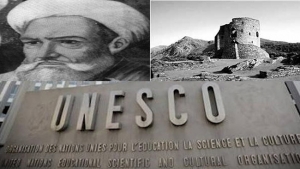
Iran has submitted two new cases to UNESCO for registration on the World Heritage lists this year, said the head of Iranian National Commission for UNESCO.

Sadollah Nassiri-Qeydari said one of the cases is a request for the inclusion of the name of Sheikh Shahabuddin Sohrawardi on the list of world renowned personalities.

Sohrewardi was a Persian philosopher and founder of the Iranian school of Illuminationism, an important school in Islamic philosophy and mysticism that drew upon Zoroastrian and Platonic ideas.

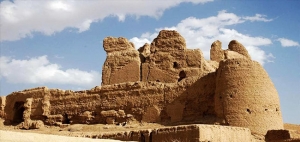
The other case is to register Ahwaz Jondishapur University on the list of UNESCO World Heritage Sites.

Dating back some 1,750 years ago, Jondishapour was the intellectual center of the Sassanid Empire and the home of the Academy of Jondishapour, founded by Sassanid king Shapour I.

Home to a teaching hospital and a library as well as a center for higher education, it has been identified with extensive ruins to the south of Shahabad, a village 14km southeast of Dezful in the present-day province of Khuzestan, southwest Iran.

“Given the fact that the cases meet the required criteria at UNESCO General Conference in 2017, they are expected to be inscribed on the world heritage list.”

He also noted that Jondishapour University in Ahwaz is far older than Bologna University in Italy or even University of Cambridge in England.

Thus far the names of 33 famous Iranian people and some 20 cultural heritage items, including historical buildings and cultural works as well as 10 intangible heritage items and nine written heritage cases, have been inscribed into the UNESCO list, the official elaborated.

Source: Iran Daily

Tandorostoon celebration in Kerman

Date: 10 may 2017

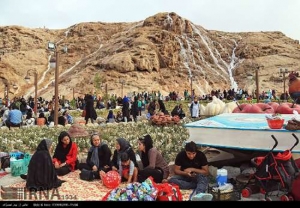
Tandorostoon is the name of a celebration, which is traditionally held by people in Kerman, southeast of Iran, 40 days after the beginning of the Iranian New Year, Noruz, on 30 April 2017.

The history of the celebration, which literally means happiness and health, dates back to ancient times. Kermani families, especially grandmothers gather at the foot of Shivashgan and Ghaleh-Dokhtar mountains.

They cook Aash, an Iranian soup, and play music. The family also entertains with fortune telling and smoking Zaq, alum, to protect them from evil eye.

Various tribes and ethnic groups who live in different parts of Iran are just like colors, which make a great painting. Iran is home to about 20 ethnic groups who live in different regions of the country.

Source: Tehran Times

Soltaniyeh Dome: The World’s Largest Brick Dome

Date: 9 May 2017

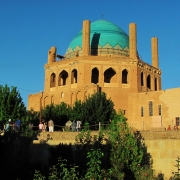
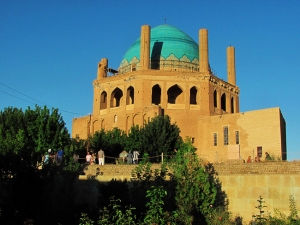
A UNESCO World Heritage site, the 14th-century Soltaniyeh Dome, also known as Mausoleum of Oljaytu is highly recognized as an architectural masterpiece particularly due to its innovative double-shelled dome and elaborate interior decoration.

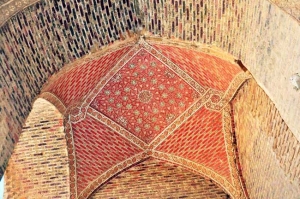
The very imposing dome stands about 50 meters tall from its base. Covered with turquoise-blue faience tiles, the stunning structure dominates the skyline of Soltaniyeh, an ancient city in Zanjan province, north-western Iran.
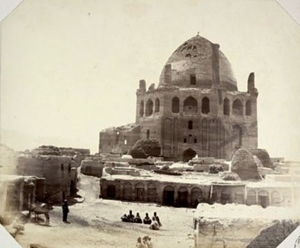
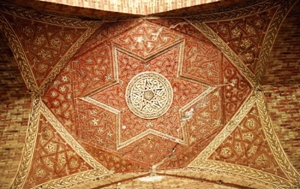
The interior has long been under renovation, chockfull of scaffolding poles. However, its decoration is such impressive that scholars including A.U. Pope described it as ‘anticipating the Taj Mahal’. It is the earliest existing example of the double-shelled dome in Iran.

A great-grandson of Hulegu, founder of the Il-Khanid dynasty, Oljaytu was a Mongol ruler who, after dabbling in various religions, adopted the Shia name Mohammed Khodabandeh.
The city of Soltaniyeh was briefly the capital of Persia’s Ilkhanid dynasty (a branch of the Mongol dynasty) during the 14th century.
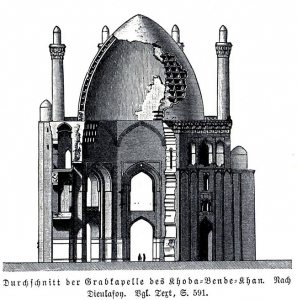
According to the UNESCO, the Mausoleum of Oljaytu is an essential link and key monument in the development of Islamic architecture in central and western Asia. Here, the Ilkhanids further developed ideas that had been advanced during the classical Seljuk phase (11th to early 13th centuries), during which the arts of Iran gained distinction in the Islamic world, thereby setting the stage for the Timurid period (late 14th to 15th centuries), one of the most brilliant periods in Iranian-Islamic art.
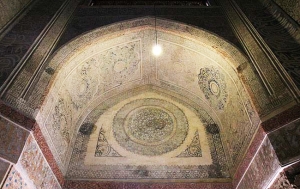
The very large dome is the earliest extant example of its type, and became an important reference for the later development of the Islamic dome. Similarly, the extremely rich interior of the mausoleum, which includes glazed tiles, brickwork, marquetry or designs in inlaid materials, stucco, and frescoes, illustrates an important movement towards more elaborate materials and themes.

Amazing architecture despite the scaffolding

The dome of Soltaniyeh displays amazing brick work architecture and blue mosaics. It has been undergoing major restoration since the 1970s which is still ongoing, so expect scaffolding. Despite this, the visit is memorable. (FrenchTraveler form Paris; visited Oct. 2016)

Unfortunately inside not nice

From outside the brick dome is impressive but inside it is still under renovation. The interior is full of scaffolds and there is nothing to see inside because of this. All in all it’s not worth going there in an extra trip. But it can be a nice stop on the way with the view from outside. (StefanBaW235 from Biberach (Riss), Germany; visited April 2017)

Great outside, dull inside

While this UNESCO listed dome shape mausoleum looks really impressive from outside, thanks to its shining blue color dome, its interior is really disappointing.

We saw a full view of construction structure that not only overshadow all delicate works of art but also the remaining ancient crafted works are all badly damaged and seems lack proper maintenance. (Suwatss from Bangkok; visited April 2017)
Plain is striking

Here’s another fantastic site that has been in a state of renovation for quite a long time, according to the site’s guide. The scaffolding covers almost everywhere inside, but looking up to the inside of the dome is worthwhile. Outside is beautiful, the unadorned pressed Adobe mud/brick compliments the bright blue turquoise dome. (Miriahm D. from Boulder, Colorado; visited May 2016)

Source: Tehran Times

Iran’s Qeshm Island becomes UNESCO Global Geopark

Date: 7 May 2017

The United Nations Educational, Scientific, and Cultural Organization has registered Iran’s southern Qeshm Island in the Persian Gulf on its Global Geoparks list.

“The Qeshm Island has been granted the designation of UNESCO Global Geopark for a four-year period from May 5, 2017 to May 4, 2021. And the first revalidation will take place in 2020,” the UNESCO official website announced on Friday.

The UNESCO Global Geoparks Council made an initially decision for the inscription last September. The verdict was finalized by an executive board of the UN agency during its 201st session in Paris on May 5.

During the session seven other sites received the label as well, amongst the entrees that demonstrate great diversity of geology are Arxan in China, Causses du Quercy in France, and Las Loras in Spain. With the eight new additions that celebrate, the world network adds up to 127 UNESCO Global Geoparks in 35 countries.

Qeshm Island embraces wide range of ecotourism attractions such as the Hara marine forests and about 60 villages dotted mostly across its rocky coastlines. The island has an abundance of wildlife, including birds, reptiles, dolphins and turtles as well.

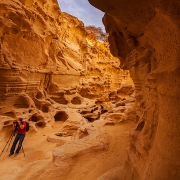
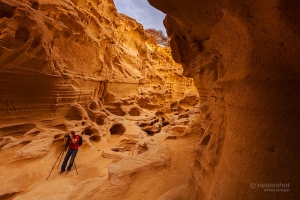
PHOTO: An undated photo depicts a man snapping photos at the picturesque Chahkooh Canyon on Qeshm Island.

Source: Tehran Times
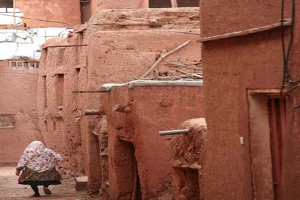
Abyaneh Village: An anthropological museum

Date: 6 May 2017

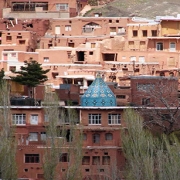
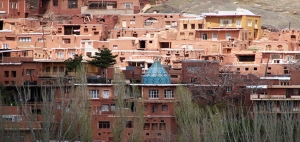
Abyaneh is a beautiful historic village at the foot of Karkas Mountain and at a distance of 70km to the southeast of Iran’s central city of Kashan and 40km to Natanz in E(I)sfahan Province.

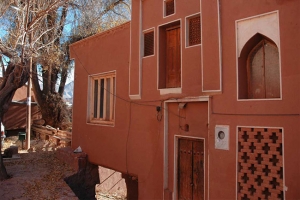
This is a village of living traditions, architectural styles (all in red clay), and probably the most interesting example of human adaptation to nature, wherein one can transcend the boundaries of time and space and experience the ancient civilization and culture of Iran.

The village is compact, with narrow and sloped lanes, and houses located on the slope as if placed on a stairway. Here, the roofs of some houses are used to serve as the courtyard for other houses higher up on the slope. The language spoken by the literate people of Abyaneh is Parthian Pahlavi. They are deeply committed to honoring their traditions.

No matter how well educated a person from Abyaneh might be, he or she puts on the traditional Abyaneh costume on coming back to the village from anywhere in Iran.

The women’s traditional costume ―consisting of a scarf with floral motifs and pleated pants ― is particularly attractive.

Even today their costume, way of life and ancient dialect are still practically unchanged and for many anthropologists a reason to travel to Iran.

The architectural facet in this village along with the rituals and apparel of its inhabitants is a sight to witness.

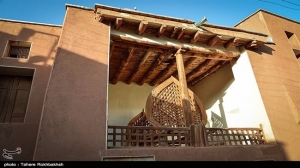
The Jame’ mosque of this vicinity with its historical wooden altar dating to 1355 CE, and its wooden pulpit dating to 1045 CE. And an inscription in the ‘Kofi’ script is greatly valued both as a historical and religious monument.

Abyaneh village was registered on the National Heritage list on 21 August 1975.

Source: Iran Daily

Comparative Chronology Table of Iran & the World

Date: 1 May 2017

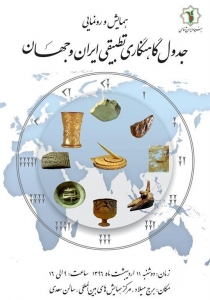
A comparative chronology table of Iran and the world will be unveiled during an academic conference which will be held at the Milad Tower in Tehran on 1 May 2017.

Titled “Comparative Chronology Table of Iran and the World from the Paleolithic Era to the End of the Iron Age”, the initiative has been organized by Iranology Foundation and developed by a cluster of Iranian experts to give a fresh look into the role and place of Iran in the progress of human societies.

The foundation’s director Ayatollah Seyyed Mohammad Khamenei along with several other scholars and archaeology professors will deliver lectures on the national project that encapsulates occurrences from the Paleolithic era to the late Iron Age.

One of the advantages of developing a reliable chronology is enhancing a more meticulous familiarity with the history, culture, politics, economy, sciences, and art of each society in comparison to other societies.

Undoubtedly, such a chronology provides plenty of data in different fields to interested parties. Presently, several chronologies which have been mainly developed by Western researchers are available. However, no noteworthy activity has been carried out in this regard in Iran, the foundation says.

Parts of an introduction to the chronology reads as follows:

“Given the historical negligence of eastern countries and Europeans’ innate megalomania, which began since the Renaissance and, particularly since the Industrial Revolution and the subsequent scientific advancements, the latter set out to write the history of the world from their own point of view. In doing so, either advertently or inadvertently, they failed to provide accurate accounts and interpretations of important aspects of human progress.

Hence, many of the world chronologies, when introducing Iran, rarely move beyond the Achaemenid era [c. 550–330 BC] and interpreted many of the later significant human achievements in a pre-historical context while focusing on the centrality of Mesopotamia. Clearly, several political thoughts and positions have promoted such an approach.”

Photo: The poster of the conference

Source: Tehran Times
Parthian citadel Narin to be turned into museum

Date: 1 May 2017

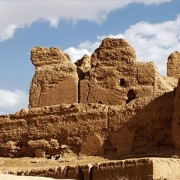
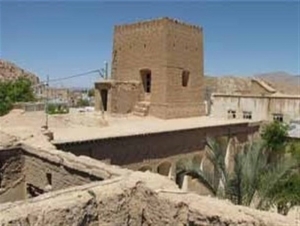
Iran’s Cultural Heritage, Tourism, and Handicrafts Organization is set to turn Narin citadel into a site museum, after a restoration project is fully implemented, CHTN reported on 27 April 2017.

Known as Narin Qa’leh, the mud-brick fortress dates back to the Parthian era (247 BC–224 CE). It stands in the city of Nain, Isfahan province.

Nain is one of the oldest continuously settlements in central Iran, located on the junction of the desert road to Tabas and Mashhad.

The city has been an important crossroad on converging trade routes for thousands of years. It is well regarded for its handicrafts as well.

Source: Tehran Times
Discovery of Human Settlement in Fars Province dating back to 35,000 years ago

Date: 29 April 2017

The oldest works identified in archeological explorations in the Rustaq district of Neyriz, Fars Province, puts the presence of human beings in that area at least 35 thousand years ago.

According to the Research Institute of Cultural Heritage and Tourism RICHT Public Relations Office, Head of the exploration team Hassan Moradi has recently said that the first season of archeological explorations has been conducted in that area in southern Iran with an aim of preparing archeological map and finding the position of the remaining works in the region.

Although over 85 years have passed since the start of archaeological activities in Fars province, however the city of Neyriz as the communication corridor between Fars and Kerman provinces, is still unknown and there is not much information available of its remaining works, he added.

Moradi noted that in this season of explorations a total of 110 works have been identified which are being dated from the Middle Paleolithic Age to the late Islamic period.

The works included hill and site, rocky ridges graves, ponds (water storage), aqueducts, waterway, pools, home, garden house, caravanserais, tombs, fortresses, structures, mills, mosques, bathrooms and old trees, he said.

According to the archaeologist, most of the works which have been identified in the site of exploration are related to the Islamic period that represents the importance of Neyriz plain in that period.

Source: Iran Daily

Louvre museum to hold exhibition in Tehran

Date: 29 April 2017

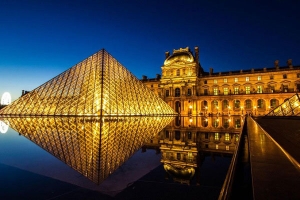
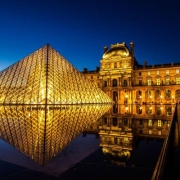
Iran’s Director of Museums and Historical Properties Office said that for the first time an exhibition of some items from Louvre Museum will be held in Tehran.

“The exhibition is based on a Memorandum of Understanding (MoU) between the deputy of Iran’s Cultural heritage, handicrafts and tourism Organization (Iranian National Museum) and Louvre Museum signed in March,’ Mohammad Reza Kargar added.

According to him, in the exhibition valuable items from Louvre Museum related to Egyptian and Ancient Greek civilizations as well as some artworks from France will be displayed for four months in National Museum of Iran.

Kargar explained that the Louvre Museum items have been given to Iran for the firt time, which is an indication of the trust between Iran and France as well as the promotion of the two countries’ museums.

He also described the event as indicating Iran’s security and stability, in addition to a contribution to Iranian people’s knowledge and awareness of various civilizations.

Other countries such as Armenia and South Korea and Mexico will also hold exhibitions in Iran this year.

Source: IRNA

Pottery kiln discovered in western Iran

Date: 29 April 2017

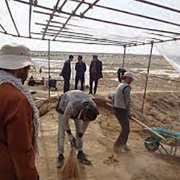
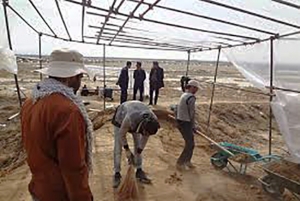
Valuable findings, including remains of a pottery kiln dating back to the Seljuk and Ilkhanid eras were identified in Famenin, Hamedan province.

The Public Relations Office of the Research Institute of Cultural Heritage and Tourism (RICHT) quoted head of the first season of the salvage explorations in Tappeh Haji Khan (Haji Khan Hill) Esmaeil Hemmati Azandaryani as saying on Sunday that although finding out the exact date of the pottery kiln requires detailed laboratory testing, but due to the findings of the clay works it seems that the kiln belongs to the late Seljuk and the Ilkhanate eras.

Almost all of the basic structure of the kiln has been fully preserved and made readable in the course of the exploration, he added.

He noted that the approximate shape of the kiln is oval and the dimension of its bigger diameter is about 2.5 meters and its smaller diameter about 1.5 meters.

Source: IRNA