Cultural remains of Iron Age era discovered in W. Azarbaijan

Date: 23 April 2017

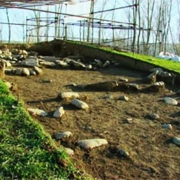
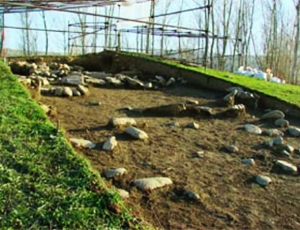
Cultural remains of the Iron Age era as well as a number of burials belonging to a cemetery in the Islamic era were discovered in Tappeh Silveh 2 in West Azarbaijan.

The Public Relations Office of the Research Institute of Cultural Heritage and Tourism (RICHT) quoted head of the exploration team Kiumars Haji Mohammadi as saying graves of the cemetery have been identified at three levels that represent the sequence of usage of the Tappeh (hill) as a cemetery in different Islamic centuries.

He pointed to identification of the remains of cultural objects from the historical and Iron Age eras in the cuttings created by unauthorized excavators, saying that in the southern slope of the hill a trench was made for the detailed study of the layer.

The archaeologist said the density of the cemetery in the Islamic era at the surface of the hill has slowed down the trend of the exploration and therefore efforts are being made to make the study of the remains of other cultural eras possible.

On the basis of the hypothesis raised about Tappeh Silveh 2 (Sarbaz) and with regard to the surface evidence, these settlement remains have been in the pre-history era (Copper and Stone, Bronze and Iron Age eras).

Source: IRNA

National Museum of Iran dedicates exhibit to ancient Tehran

Date: 17 April 2017

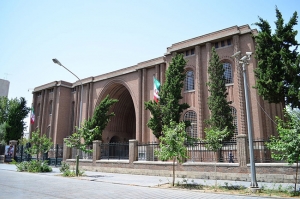
An exhibition of historical relics and archaeological treasures of Tehran Province opened its doors to the public at the National Museum of Iran on Saturday 16 April 2017.

The four-day exhibit embraces objects that date from the Neolithic era onwards, CHTN reported.

The objects have been unearthed in the cities of Rey, Varamin, Damavand and Tehran neighborhoods such as Darroos and Qeytarieh, the report added.

Source: Tehran Times

In the Memory of Tehran’s Sepahsalar Mosque and School

Date: 18 April 2017

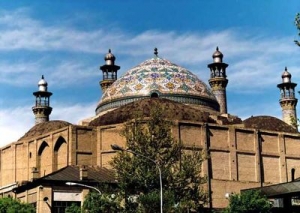
On the occasion of the anniversary of the construction day of Tehran’s Sepahsalar Mosque and School, Seyed Alireza Qahari, the head of the Society of celebrated figures of Iranian Architecture has written a note accompanying a photo of this complex.

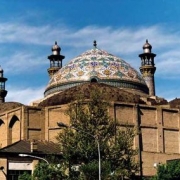
From a purely architectural point of view, Sepahsalar Mosque and School in Tehran’s Baharestan Square is one of the last majestic Qajar buildings which is considered as the continuation of the Safavid Architecture.

During the Qajar era, as the result of the encounter of Iranian educated people with the European culture, not only the impact of the latter on all aspects of the Iranian society gradually manifested itself, but the Turkish Mosque architecture also became a source of inspiration.

Mirza Hossein Khan Sepah-Salar, Naser-aldin Shah’s Grand Vizier had lived in Istanbul as the Minster of Foreign Affairs for several years, but what we know is that the Iranian Architecture has always been the pioneer. Inspired by Istanbul’s Hagia Sophia Mosque, Esfahan’s Chahar-Baq School and Jameh Mosque, Sepahsalar School has been built in a way whose counterpart can only be found only in E(I)sfahan’s Seyed Mosque, Semnan’s Sultani Mosque and Kashan’s Aqa Bozorg Mosque. In all of these mosques, chambers (hojreh-s) and Eyvans (porticos) are in two floors. The main designer of Sepahsalar school, Mohammad Khan Momtahan-ol-doleh Shaqaqi had studied architecture abroad and is among the last contemporary traditionalist architects. His design was carried out by Haj Abol-Hassan from Qom and Jafar Khan Memarbashi from Kashan.

The construction of the complex began on April 8 1879 by Mirza Hassan Khan. However as he died two years later in Mash-had, his brother Yahya Khan Moshir-ol-doleh continued the construction work which took 5 years. In 1934, when the French architect, Maxime Siroux founded the College of Fine Arts، he also designed a library for the school where the first Academy of Persian Language and Literature led by Mohammad Ali Forouqi took shape.

In 1963, Hossein Lorzadeh introduced some changes to the mosque’s winter shabestan (part of a mosque designed for sleeping or nocturnal praying) and in 1996, the architect Saidi repaired its main dome.

The complex is made largely of bricks and decorated by the characteristic Iranian architectural features such as Moqarnas (stucco relief), tile-work, Yazdi-bandi (arch decoration), Kaseh-bandi (bowl-decoration) derived by the Safavid architecture, because tile-works are not found in Turkish mosques. The mosque’s courtyard has four flowerbeds and a large pool in the middle with the famous Mehran qanat crossing underneath it before. Sepahsalar is one of the largest mosques with four Eyvans and surely one of the last ones. Its majestic dome, modelled after Turkish mosques and its eight minarets are what make this complex so unique.

Source: Farairan

Samen Underground City suggests clues to life in ancient Mithraic Iran

Date: 16 April 2017

Situated in the southwestern city of Malaya, the history of Samen underground city, accidentally discovered in 2005, goes back to pre-Parthian Empire, when Mithraism was widespread in Ancient Iran.

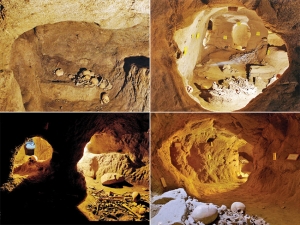
The site 3 hectares in area, embraces over 50 chambers and catacombs of various dimensions, most of which interconnected by corridors and thresholds, and punctuated with human skeletal remains that are rich sources for revealing the lifestyle, food habits, and diseases in ancient Iran.

According to the journal Bioarchaeology of the Near East, the human remains date back to the time of Mehrdad I (160-130 BC) of the Parthian Empire (247 BC – 224 CE) that was a major Iranian political and cultural power in ancient Iran and Iraq. Most probably it was first built to perform special Mithraic religious ceremonies. Mithraism or the worship of Mithra or Mehr, the god of Sun was one the most ancient Iranian gods. According to the available evidences, the followers of this cult conducted their ceremonies in secret underground altars called Mehrabeh. Some of the channels in this space were used to bury religious victims and most probably high religious leaders. This is the first period of its use. Then comes the second Parthian period, which can be called its heyday. In the third period where its decline begins, particularly after the Arab invasion of Iran and Nahvand war it was used as a shelter and for the burial of special figures until WWI and even the Qajar dynasty.

Situated under a modern urban area of the same name, the site was recovered accidentally during some development activities in 2005 and explored further during four seasons of archaeological investigations in 2007, 2008, 2010, and 2011.

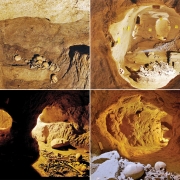
A combination of photos by photographer Abdollah Heidary from IRNA shows the Samen Underground City, an archaeological site near Malayer in western Iran on April 10, 2017.

Source: Farairan from various sources

Prehistoric Iran, Persian Garden under spotlight at German museum

Date: 16 April 2017

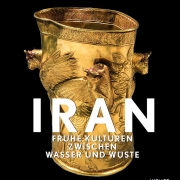
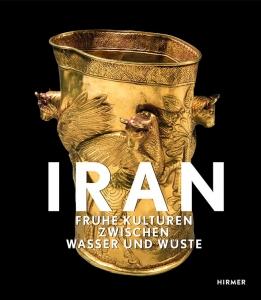
Separate exhibitions on Iran’s prehistoric cultural heritage and Persian Garden open to the public today at the Art and Exhibition Hall of the Federal Republic of Germany — Kunst und Ausstellungshalle der Bundesrepublik Deutschland – in Bonn.

Organized under the auspices of National Museum of Iran and the Iranian Cultural Heritage, Tourism and Handicrafts Organization, the exhibits titled “Iran, Ancient Culture between Water and Desert” and “The Persian Garden, the Invention of Paradise”, will be running through Aug. 20 and Oct. 15 respectively.

Iran has loaned some 450 artifacts to the German museum. The objects date back to early Iranian civilizations that flourished between the seventh millennium BC and the rise of the mighty Achaemenid Empire in the first millennium BC.

“The event aims to introduce parts of Iran’s history and civilization to the world, providing a great opportunity for people who are not able to travel long distances to experience the country’s ancient culture from close,” Mohammadreza Kargar, the director of Iran’s Museums and Historical Properties Department, said on Sunday.

The German government has assumed the responsibility of any kind of damage to the museum objects, IRNA quoted Kargar as saying on April 9.

Speaking to reporters, Kargar said that the government permits for the exhibit have been acquired from relevant entities, including the Ministry of Economic Affairs and Finance, the Customs Administrations, the Ministry of Foreign Affairs, and the Presidential Office as well.

According to the German museum, “Iran, Ancient Culture between Water and Desert” opens up a window onto a country that has been inaccessible for decades and whose imagery is little known in Europe. “The treasures from the graves of two Elamite princesses and the spectacular finds from the burial grounds of Jiroft are shown outside Iran for the first time.”

Regarding to “The Persian Garden, the Invention of Paradise”, the museum says “Light and shade, heat and cool freshness, the soothing burbling of water, the heady scent of flowers – a [Persian] garden is a manmade paradise. And indeed, the very word ‘paradise’ has come down to us from ancient Persia. Do come in and enjoy the paradisiac atmosphere of the Persian Garden, an oasis for the mind and the senses!”

The genuine concept of the Persian Garden that is deeply rooted in time interweaves natural elements with manmade components to embody an idea of creating a paradise on Earth by the means of artistic, philosophical, figurative, and religious notions. Several gardens in Iran have been designated as UNESCO World Heritage sites.

Source: Tehran Times

Would Time No Longer Stand Still in Golestan Palace?

Date: 9 April 2017

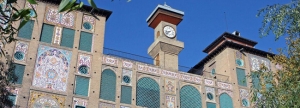
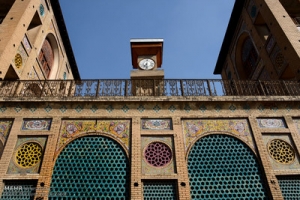
The clock of Shamsolemareh, the finest edifice on the eastern wing of Golestan Palace and the first high rise in Tehran, started to run after a 90-year slumber.

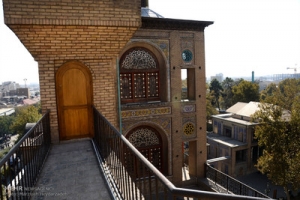
Shamsolemareh, literally meaning ‘edifice of sun’ is the tallest building in Golestan Palace and fuses Persian and European architecture into a five-story structure with two imposing towers and a small clock tower in the middle.

For 90 years, people walking down Nasser Khosrow Street in downtown Tehran read 6:10 when they cared to look up at the clock, Mehr News Agency reported.

The famous clock was gifted by the British Queen Victoria (1819-1901) to Nasser al Din Shah (1831-1896) of the Qajar Dynasty more than a century ago. But it ticked a bit too noisily annoying the people who, at the time, used Golestan Palace as residence and court. Eventually complaints piled up and the authorities tried to reduce the unfriendly noise only causing damage to the clock.

Thus, the damaged clock was left unattended for almost nine decades until in 2010, master clocksmith Mohammad Saatchi Hamedani, 81, was asked to come over and take care of it. He complied. But barely 10 months later the clock again stopped working, because the sate-owned Iran Cultural Heritage, Handicrafts and Tourism Organization (ICHHTO) had no specific budget to be allocated to its maintenance.

However, according to the head of Golestan Palace Masoud Nosrati, the clock is now back to life. The ICHHTO has signed a contract for one year with Master Saatchi to keep an eye on the device.

“We’re going to renew the date of our agreement (with Saatchi) each year,” Nosrati said. “But the clock is now digitally driven, and there is no way of returning to the mechanical motor it once had.”

Clocks were among the special interests of Nasser al Din Shah. By collecting his clocks and watches, “we can showcase a valuable treasure for the public.”

The clock in Shamsolemareh is now working again, this time with no annoying noise.

Golestan Palace

Golestan Palace is the only remnant of Tehran’s historical citadel, a collection of erstwhile royal buildings that were once enclosed within large thatched walls. The citadel was built during the time of Shah Tahmasb I of the Safavid Dynasty (1501-1722). It was rebuilt in the time of Karim Khan (1705-1779) of the Zand Dynasty and was later turned into a residence and court for the Qajar rulers (1785-1925).

Source: Financial Tribune

German, Mexican Pieces by Tehran Symphony Orchestra

Date: 10 June 2017

Tehran Symphony Orchestra, the oldest and largest ensemble in Iran, will stage a concert on June 22 at Roudaki Hall in Tehran.

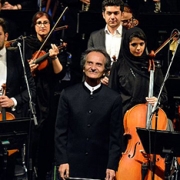
The event starts at 9:30 pm and will be conducted by Iranian-American composer, violinist, pianist and conductor Shahrdad Rohani, 62, according to the website of Iran Concert (iranconcert.com) where tickets are available.

Pieces by German composers and pianists of the Romantic period Ludwig van Beethoven (1770-1827) and Johannes Brahms (1833-1897), as well as a composition by Mexican composer Arturo Marquez, 66, will be performed by the orchestra.

Romanticist pieces of the repertoire are Beethoven’s Piano Concerto No. 1 and Brahms’ Symphony No. 3.

Piano Concerto No.1 was written in 1795 and revised in 1800. It was Beethoven’s first piano concerto to be published, but actually his third attempt at the genre. Three movements make up the concerto: ‘allegro con brio’ in sonata form, but with an added orchestral exposition, a cadenza and a coda; ‘largo’ in song form; and ‘rondo (allegro schezando),’ a seven-part sonata rondo with piano conveying the main theme.

Symphony No. 3, the other piece of the period, to be covered at the event, was written by Brahms in 1883 nearly six years after he completed his Symphony No. 2. It is the shortest of his four symphonies. Of four movements it consists: ‘allegro con brio’ in sonata form; ‘adante’ in a modified sonata form; ‘poco allegretto’ in song form; and allegro – un poco sostenuto’ in a modified sonata form.

From the compositions by Marquez who incorporates native Mexican music into his works, the orchestra will perform Danzon No.2, one of the most popular contemporary classical Mexican compositions.

This staple of the contemporary Mexican music literature expresses and reflects on the dance-style ‘danzon’, which has its origins in Cuba but is a very important part of the folklore of the Mexican state of Veracruz.

Written for full orchestra, Danzon No. 2 features solos for clarinet, oboe, piano, violin, trumpet, and piccolo. The rhythmic interest in the piece is maintained through the use of varying accents and tempi.

Piano solos of the concert are to be performed by well-known Iranian pianist Bahareh Komai.

Source: Financial Tribune

Iranian Music ensembles honored at Harrmonie Festival in Germany

Date: 7 June 2017

The Iranian ensembles Hamgam and Bamdad won prizes at the Harrmonie Festival in Limburg, Germany, the organizers announced last week.

Led by daf player Salar Mortazavi, Bamdad from Mashhad received the Special Prize for Best Instrumental Group in the International Folklore competition.

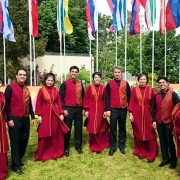
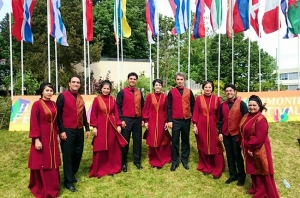
Meanwhile, Hamgam from Tehran won the Special Prize for Best Performance of Arranged Traditional Music in the International Choir competition. This ensemble was conducted by Farzin Abedini.

Numerous groups from Bulgaria, England, Georgia, Greece, Ireland, Croatia, Macedonia, Mexico, Netherlands, Nigeria, Peru, Turkey and several other countries participated in the festival, which was held from 25 to 28 May 2017.

Photo: Hamgam Ensemble at the Harrmonie Festival in Limburg, Germany

Source: Tehran Times

Armenian President awards Iranian musician Hossein Alizadeh

Date: 3 June 2017

Armenian President Sourish Sarkisian awarded Iranian musician Razmik Ohanian the Movses Khorenatsi Medal in recognition of many years of his artistic career and efforts to bring the Armenian and Iranian nations together.

The medal was named after the Armenian historian and philosopher who lived in Armenia during the 5th century AD.

Ohanian, conductor of Tehran Chore Orchestra received the medal in a ceremony attended by several Armenian officials in Yerevan.

Ohanian was selected for his influential services to the Iranian and Armenian history and culture, valuable professional record in the field of music, various performances, introducing the Iranian and Armenian cultures in the international scenes.

He has grabbed numerous badges in the Iranian and foreign festivals for his artistic career.

The Movses Khorenatsi Medal is the Republic of Armenia’s highest cultural award. It is presented by the president to people who have significantly contributed to the advancement of Armenian culture.

Source: Iran Daily

Iran’s Alizadeh honored with Asian World Music Award

Date: 3 June 2017

Iranian musician Hossein Alizadeh received Asian World Music Award from World Music Center.

The foundation working as world music center commemorates artists who connect their countries with other parts of the world, especially Asian countries.

According to YJC, Alizadeh is an Iranian composer, radif-preserver, researcher, teacher, and tar and setar instrumentalist and improviser, described by Allmusic as a leading Iranian classical composer and musician.

He has made numerous recording with prominent musicians including Mohammadreza Shajarian, Shahram Nazeri, Majid Khalaj and Djivan Gasparyan. He is a member of the musical group, Masters of Persian Music.

Alizadeh was born in 1951. As a teenager he attended secondary school at a music conservatory until 1975. His music studies continued at the University of Tehran, where his focus was composition and performance. He began postgraduate studies at the Tehran University of Art. After the 1979 Islamic Revolution, he resumed his studies at the University of Berlin, where he studied composition and musicology.

Alizadeh plays the tar and setar. He has performed with two of Iran’s national orchestras, as well as with the Aref Ensemble, the Sheyda Ensemble, and Masters of Persian Music. In Europe, his first professional performance was with the Béjart Ballet Company’s orchestra in a performance of a Maurice Béjart ballet called Golestan.

Source: Iran Daily