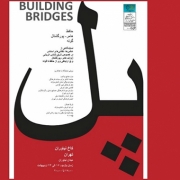
Photo exhibit “Building Bridge” on Orientalist Hammer-Purgstall

Date: 8 May 2017

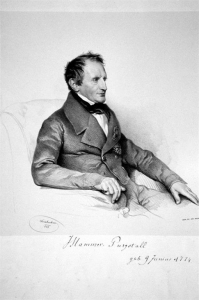
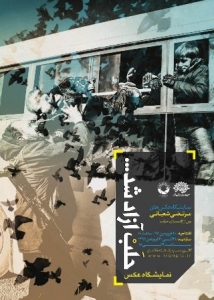
An exhibition of photos on Austrian Orientalist Joseph Freiherr von Hammer-Purgstall is currently underway at the Abi Hall of Tehran’s Niavaran Cultural Historical Complex.

The weeklong showcase entitled “Bridge” opened on Saturday during a special ceremony attended by Austrian Ambassador Friedrich Stift, some of his colleagues, and the deputy director of Iran’s Cultural Heritage, Tourism and Handicrafts Organization, Mohammad-Hassan Talebian.

Earlier last week, the National Library and Archives of Fars in Shiraz commemorated Hammer-Purgstall in a program titled “Hammer-Purgstall, a Bridge between Hafez and Goethe”.

Born in 1774, Hammer-Purgstall is mostly renowned for the first ever complete translation of the Divan of Hafez into a Western language, attracting the attention of European men of letters like Gothe to Haze’s poetry in this way.

Before his death in 1856, he already had a gravestone prepared bearing inscriptions in the ten languages that he had mastered.

Source: Tehran Times

Sydney photo exhibition to explore Iranian historical sites

Date: 1 May 2017

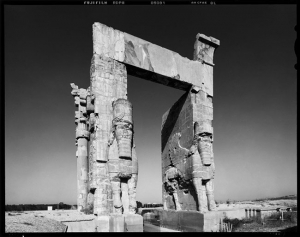
An exhibition photos of a number of Iranian historical sites by Australian photographer Rod Sainty will be held at M2 Gallery in the Australian capital of Sydney from 3 to 16 May 2017.

The exhibit entitled “Architecture of Ancient Persia/Iran” will showcase Sainty’s photos of the ruins of Persepolis, Soltanieh Dome, Sheikh Safi Mausoleum, Toghrol Tower, and many other sites that were taken during his visits to Iran in 2014 and 2015.

In his collection, Sainty focuses on the sites, which had previously been photographed in the 1920s by the German archaeologist Ernst Herzfeld and in the early 1930s by British traveler Robert Byron.

Source: Tehran Times

Iranian Photographer among 100 world photographers

Date: 22 April 2017

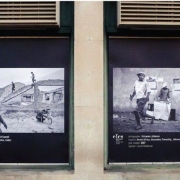
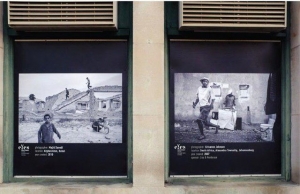
The 3rd edition of ‘Eyes on Main Street,’ a photo festival underway in Downtown Wilson, North Carolina, US, features a work by Iranian photojournalist Majid Saeedi, 43, among 99 other photos.

The event opened on April 8 and will run through July 16.

The 100 featured photographs are displayed on 100 storefront windows, spanning six city blocks. Focusing on the theme of ‘Main Street: a Crossroad of Cultures,’ the exhibition features the work of 100 photographers from 31 countries with an equal number of men and women.

“The photographs taken in 49 countries, not only celebrate our shared humanity, they illuminate our capacity and resilience to survive against all odds,” says co-curator Regina Monfort.

Saeedi’s featured photo shows Afghan children playing amidst the ruins of war. He has covered the Afghan conflict for more than a decade. But his interest in the country and its people extends beyond news headlines. Since 2009 he has lived among the people and focused on telling the story of daily life in a war zone.

For the past two decades, he has documented Middle East events, focusing on humanitarian aspects and was selected seven times as the Best Photographer of the Year in Iran in 1992, 1994, 1996, 1997, 1999, 2000 and 2001.

Saeedi has received numerous international awards including the 2015 Photo Reporter Festival in France, 2014 FotoEvidence Book Award in the US, 2013 World Press Photo contest in the Netherlands, the 2013 National Press Photographers Association awards, 2012 R. F. Kennedy Awards and 2011 Lucie Awards in the US, as well as 2010 UNICEF Photography Award, among others.

His photographs have been published in major publications such as Times, Der Spiegel, Life, New York Times, Washington Post and Washington Times.

In 2014, FotoEvidence, an American organization “documenting social injustice,” published Saeedi’s book’ Life in War,’ a portrait of Afghan people affected by decades of conflict.

Beyond Death and Destruction

His motivation for looking beyond the death and destruction of war is influenced by a desire to know the people that he comes into contact with, beyond a superficial understanding.

“As a photographer I believe it is my responsibility to show how other people live their lives … a lot of us sit at home and don’t even know our neighbors. I wanted to get closer to the normal people of Afghanistan, to live with them, eat with them and talk to them. To tell their stories, which have become part of my life,” Saeedi said in an interview with Australian journalist Alison Stieven Taylor.

In Life in War, Saeedi has focused on those living with the constant threat of violence, where explosions and gunfire are part of everyday existence, and where landmines, that litter the countryside, can rip human flesh to shreds in seconds. Yet amongst the devastation and pervasive sense of danger, life goes on; couples wed, babies are born, children play and people do their best to make a living.

When you consider Afghanistan has been at war for 35 years, there is a generation who has known no other life, a terrifying statistic that marks the faces of those in Saeedi’s book.

“People don’t expect to return home every time they go out,” says Saeedi. “War is death. It is all around them but they go on living. They are living in a paradox.”

“We have seen countless images of Afghanistan, particularly images of soldiers and aid workers throughout the country, but these images don’t portray the real Afghanistan. War is not the only thing going on,” he says.

Source: Financial Tribune

Exhibition of social documentary photos underway at Iranian Artists Forum

Date: 16 April 2017

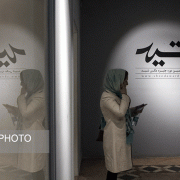
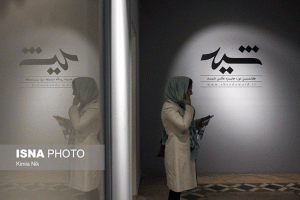
The seventh exhibit of the Sheed Photography Awards, which are presented to documentary works on social themes, opened in the Iranian Artists Forum on Friday 14 April 2017.

Works by 13 photographers including Azadeh Besharati, Azin Haqiqi, Ali Khara, Morteza Rafikhah, Hamed Sodachi, Sadeq Suri, Javad Maktabi and Adel Pazyar, selected by members of a jury, are being shown until April 23.

Yumi Goto, an independent art and documentary photographer from Tokyo, along with several Iranian photographers selected the collection of photos on display.

Photos by Mahin Mohammadzadeh and Farshid Tighesaz, the two Sheed winners in 2016, are featured in the special section of the exhibit.

In addition, a number of workshops have been arranged during the event.

Photographer Heidar Rezai will review documentary photography in the media today, while the photography of crisis by Vahid Salemi will review the Plasco tragedy on Monday.

Plasco, a 17-storey mega mall in downtown Tehran, collapsed to the ground three and a half hours after it caught fire on January 19, and sixteen firefighters and a number of citizens lost their lives in the tragic incident.

Social documentary photography will be discussed by Kiarang Alai on Wednesday.

The Iranian Artists Forum is located on Musavi St., off Taleqani Ave.

Photo: Art enthusiasts visit the seventh exhibit of the Sheed Photography Awards at the Iranian Artists Forum in Tehran on April 14, 2017. (Honaronline/Alireza Farahani)

Source: Tehran Times

Tehran photo exhibit explores liberation of Aleppo

Date: 10 April 2017

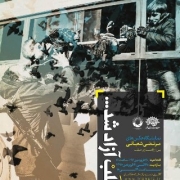
An exhibition of photos highlighting the liberation of the Syrian city of Aleppo opened at the Iranian Photographers Center in Tehran on Sunday 9 April 2017.

A selection of 35 photos taken by documentarian and photographer Morteza Shabani have been put on display at the exhibit entitled “Aleppo Was Liberated.”

According to Shabani, “Since the liberation of Aleppo and retaking full control of the city was of great strategic importance, the photographer has put his main focus on the urban space during the war and after its liberation,” he explained.

Occupied by NATO and Saudi backed terrorists for more than four years, Aleppo was liberated on 22 December 2016.

Baqeri added that this is the third exhibit on the Syrian war, hoping that more exhibits on Syria by other photographers would open at the center in the future.

The exhibit, which opened on April 9, will be running for ten days at the center located at Somayyeh St. off Hafez Ave.

Source: Tehran Times

The photo exhibition Swedish Dads to be held in Iran

Date: 8 April 2017

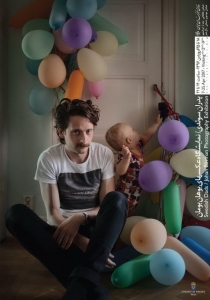
Embassy of Sweden and the Iranian Artists’ Forum will hold a photo exhibition called “Swedish Dads” at the Iranian Artists’ Forum on 7-14 April 2017.

Sweden has one of the most generous systems of parental leave in the world, enabling fathers to stay at home with their kids. The photo exhibition Swedish Dads by

photographer Johan Bävman portraits 25 fathers on parental leave and their

views on the role of the modern man.

The exhibition will be held at Iranian Artists’ Forum,

Shahid Mousavi Shomali Street, Taleghani Avenue, Tehran. Opening hours:

14.00-21.00.

The exhibition is free of charge. Welcome!

Source: Embassy of Sweden Website

Qajar, Pahlavi Era Photographs on Display

Date: 4 April 2017

Iran Photo Museum in Tehran is showing historical photographs from the Qajar (1785-1925) and Pahlavi (1925-1979) eras.

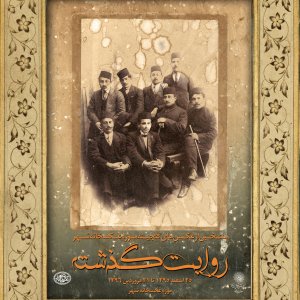
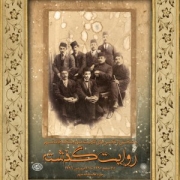
The exhibition ‘An Account of the Past’ (in Persian: Revayat-e-Gozashteh’) opened on March 15 and will run through April 20 at Iran Photo Museum located on Bahar-e-Shiraz Street, east of 7-Tir Square.

An Account of the Past features 24 photos taken by a number of celebrated figures including the former ruler of Iran Naser al-Din Shah of the Qajar Dynasty (1831-1896), according to the website of the museum, iranphotomuseum.com. Naser al-Din Shah took special interest in photography and many buildings and events were pictured during his rule.

Some of the photos are by Abdollah Mirza Qajar (1850-1909), son of Jahangir Mirza Qajar, a member of the then ruling family in Iran. He studied and later taught at Dar-al-Funun, a famed polytechnic school in Tehran, during the reign of Nasir al-Din Shah. Around 1878 he went to study in Paris, then in Vienna, followed by three years in Salzburg.

After he returned to Tehran, Abdollah Mirza worked on printing maps of Ahvaz and other towns, which he presented to the royal court. Then he shifted to photography.

His first works as a photographer in the Qajar court go back to 1883. A few years later he traveled to Khorasan and then to Rey and Qom to photograph new buildings being constructed there. He also undertook assignments in Tabriz, Kermanshah, Mashhad, and Kashan.

During his years as a court photographer, Abdollah Mirza also took pictures at Dar-al-Funun of the students in uniform and of other subjects. He continued to work under king Mozaffar al-Din Shah (reign 1896-1907). During his lifetime Abdollah Mirza was regarded as an accomplished photographer.

Mirza Ebrahim Khan Akkas Bashi (1874-1915) is another photographer of the Qajar era whose photos are on display. He was the royal photographer of Mozaffar al-Din Shah Qajar (1853-1907), the fifth Qajar king. Akkas Bashi (literally meaning photographer) happened to be the first Iranian film maker.

Also included in the exhibit are some photos by photographer Antoin Sevruguin (1830-1933). He was born into a Russian family of Armenian-Georgian origin. After his father died, Sevruguin gave up painting and took up photography to support his family. His brothers helped him set up a studio in Tehran on today’s Ferdowsi Street.

At the museum one can also find some photos by Mehdi Ivanov known as Roussie Khan (1875-1967) who ran a photography studio in Tehran. He played a significant role in promoting cinema in Iran.

Other featured photographers include Mirza Hassan Monshi, Mohammad Rahim Akkas Bashi, Doust Mohammad Khan Moayer-ol-Mamalek and Mashallah Khan.

The exhibition is open on all days except Fridays. Visiting hours are from 9 am-6 pm, and on Thursdays 9 am-1 pm.

Source: Financial Tribune
Iranian Artists Forum explores Plasco tragedy with “Love and Fire”

Date: 14 March 2017
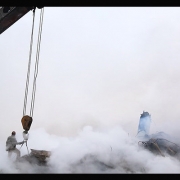
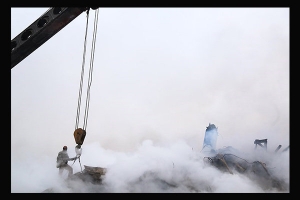
Works by photojournalists covering the raging inferno in Tehran’s Plasco Building in January and events in the aftermath of the tragedy are on display in an exhibition titled “Love and Fire” at Momayez gallery in the Iranian Artists Forum.

The exhibition that opened on Sunday showcases photos of the very first moments Plasco caught fire until the funeral of the brave firemen who were killed in the collapse of the building.

Plasco, a 17-storey mega mall in downtown Tehran, collapsed to the ground three and a half hours after it caught fire, and sixteen firefighters and a number of citizens lost their lives in the tragic incident.

According to the secretary of the exhibit Hamed Jafarnejad, the exhibit puts the spotlight on the round-the-clock endeavors of the firemen.

“We aim to express our thanks to the firefighters and pay respects to the families of the victims,” he added.

A selection of the photos of the Plasco tragedy is scheduled to be published in a book in the near future.

The three-day exhibit has been arranged in collaboration with the Puya Journalists Club, a photojournalists club, which is affiliated with the Tasnim News Agency.

Source: Tehran Times

Museum of Tbilisi History to Host Exhibition of Iranian and Georgian Photographe

Date: 12 March 2017
The National Museum of Georgia and the Department of Culture of the Embassy of the Islamic Republic of Iran to Georgia has organized an exhibition of Georgian and Iranian photographers for an Iranian photography and film retrospective week.

The exhibition, entitled “Sea: A Symbol of Friendship,” unites sixty works by Georgian and Iranian artists and introduces the theme of the sea as a symbol of unity and friendship. The sea is a mood and a space that represents anything related to humanity and society.

The photo exposition will open on March 9th, at 18.00 in the museum of Tbilisi history (Karvasla) 8, Sioni Street Tbilisi. The exhibition closes on March 11th.

Alternatively, cinema lovers will have a chance to attend an Iranian film retrospective at the Tbilisi State Institute of Theatre and Film on March 10th.

Source: Georgia Today

Photography Exhibition “Deserts of Iran” at Nikon Plaza Ginza, Tokyo.

Date: 12 February 2017

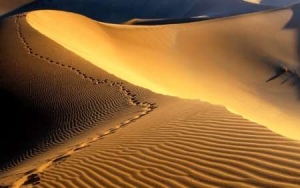
An exhibition underway at Tokyo’s Nikon Plaza Ginza is showcasing photos of Iranian deserts by Iranian photographer Afshin Valinejad.

The exhibition entitled “Deserts of Iran” opened yesterday. It is one of his four consecutive exhibits, which will be held at the center in the near future.

The exhibition displaying digital photos of the Lut Desert in the central Iran will run until 21February 2017.

The second exhibition named “Kyoto” will be held from 22 February 3 March 2017 and the third exhibit “Spider” will be organized from 4 to 14 March 2017.

“Tehran’s Milad Tower” is the last exhibition, which will be held from 15 – 25 March 2017.

Source: Tehran Times