Farairan’ Choice Parvaneh Etemadi
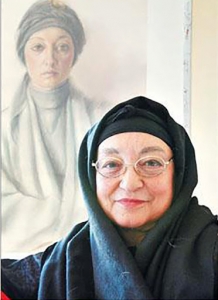
Born in 1948 ̗ Tehran ̗ Iran
Educated from College of Fine Art ̗ Tehran University
She has had some solo and group exhibitions in Iran and abroad such as:
Wade Gallery ̗ Los Angeles ̗ CA
Wade Gallery ̗ Vancouver ̗ British Columbia ̗ Canada
Majless Gallery ̗ Dubai
First exhibition of International Art ̗ Tehran
Fifty Years of Iranian Art ̗ Iran – America Society
The International Art Fair 7’76 ̗ Basle ̗ Switzerland
Specimens of Iranian Art ̗ Peking – Shanghai (Peaple’s Republic of China)
Cite Des Arts ̗ Paris 1978
Contemporary Iranian Art: Four Women ̗ Foxley / Leach Gallery ̗ Washington ̗ D.C
Gallery Espace (Collaboration with Manjit Bawa) ̗ New Delhi ̗ India
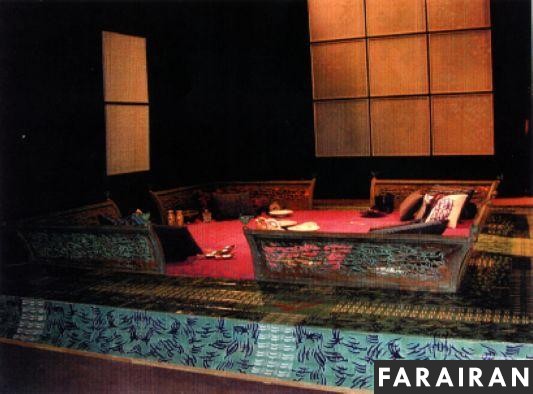
Expo 2000 – Basic Needs Pavilion- Hanover – Germany – Installation
Once upon a Time (1) – Golestan Gallery – Tehran – Iran – 2004
Once upon a Time (2) – Mah Art Gallery – Tehran – Iran – 2009
Parvaneh Etemadi
Creation of Beauty as an innovation in Art
Translator : Roya Monajem
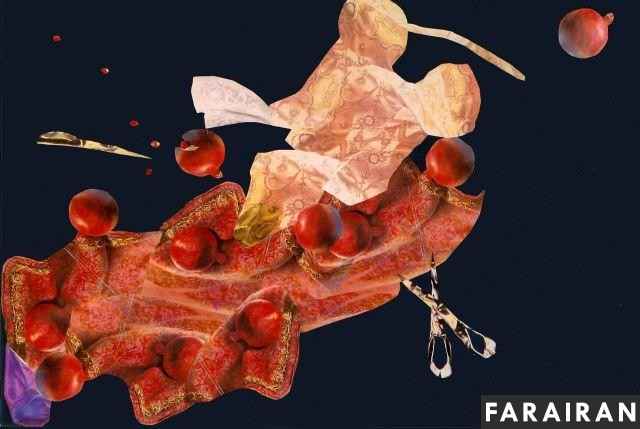
Born in 1948, with nearly five decades of lively presence on the scene of visual arts, Parvaneh Etemadi is one of the most successful and popular Iranian artists both in the eyes of art virtuosos and laymen. Her relaxed recusant work style, whether in the early periods of her artistic activity – that is in her still lives, termeh-s (roughly meaning cashmeres) and pomegranates – or in her later periods – that is in her collages and installations –put her amongst the prominent figures in Iranian art. It is in the light of her working style and methodology, her attentive interest in creation of beauty – while heeding both exotic and mundane zeal and taste – her passion for figurative art, her sundry coloring and creation of beauty by virtue of heeding intelligent and pleasing proportions and rhythms that turns every exhibition she holds into an event in the field of contemporary Iranian visual art.
Even though she was born in Tehran, she spent her early childhood in the city of Birjand (in south of Khorasan close to the vast barren eastern Iranian plateau). After finishing both her primary and secondary education in Tehran she began to study at the Fine Art College of Tehran University (1967). This coincided with the foundation of Ta’la’r-e Iran (Hall of Iran, later changed to Talar Ghandriz) by a group of visual arts activists; a significant event attracting many young artists including Parvaneh who not only participated in more than 10 group exhibitions displayed there from 1967 to 1977, but also held her first solo exhibition at the same hall (Ghandriz) in 1969.
During the first period of her artistic activity, probably due to her collaboration and mental sympathy with the same group of artists who founded Ta’la’r-e Iran and under the influence of her academic teachings, she appeared as an abstract painter. Her abstract works were free compositions of forms appearing in pleasing proportions with extensive touches of cold opaque colors, nevertheless designed and worked out candidly and resolutely. The teachings of her first serious painting teacher Bahman Mohases, already known as an innovative painter of the sixties also had a great influence on her in this early period of her artistic activity. Although Mohases introduced her to ancient art, including Etruscan civilization and ancient Greek and attracted her attention to the essence of art, i.e. to something much more deeper in art, but Parvaneh’s adherence to the young group of progressive innovative painters of Ghandriz gallery who believed that the real vocation of art lies in abstraction and thus evaded figure, figurative art and narrative painting drove Parvaneh for a little while away from figurative art and toward abstraction. However, she finally chose a middle way and expanded the scope of her plastic experience which marked the second period of her artistic activity.
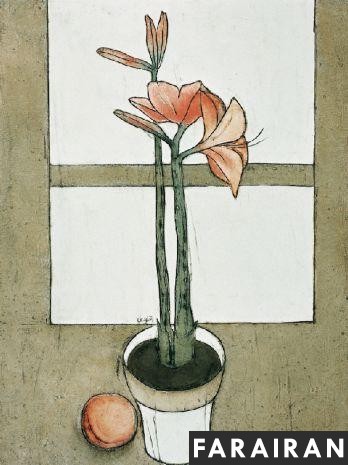
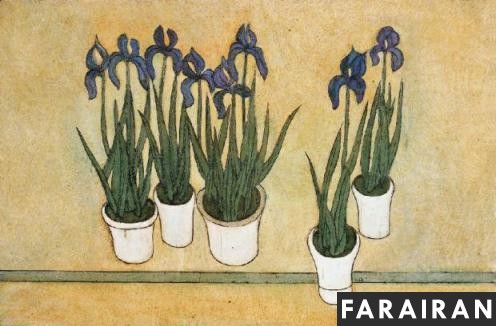
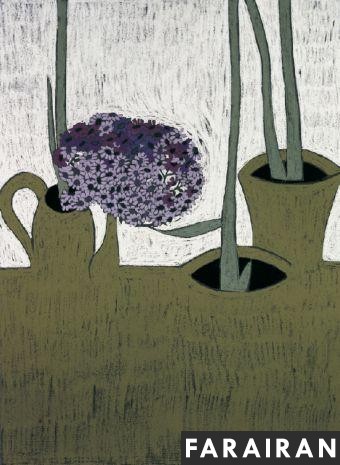
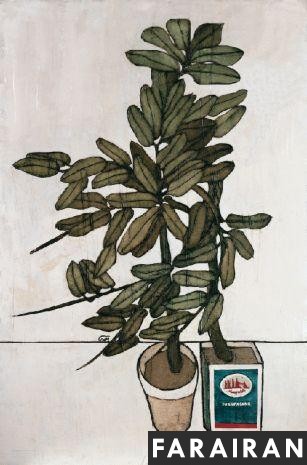
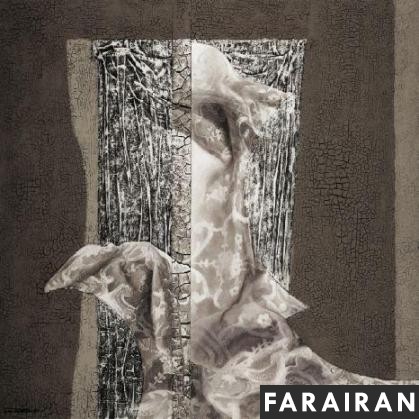
This second period of her artistic activity which took shape in seventies was a synthesis of constructivism of her first period with a return to figurative art. The works of this period with their rough sketchy textures of oil color on a cement infrastructure and their modern minimal structure, together with the least application of line and color as well as design and figure emerged as plain agreeable charming still lives. The white rough color of the background (made of cement or a cement texture) and the coloring of figures (mostly foliage and flora and every now and then faces) often in two or three limited opaque colors conveyed a pure simple visual beauty. In fact the stylization of her abstract period with the concision she discovered after being initiated into the simplicity of the Japanese art and the richness of Chinese painting now appeared as an artistic synthesis of figurative painting. It was when she discarded the personal expression of a challenging mentality in favour of a more general expression of beauty. Her paintings of vases, foliages and narcissuses in tin boxes and the direct exquisiteness of her works made her popular among both virtuosos and laymen.
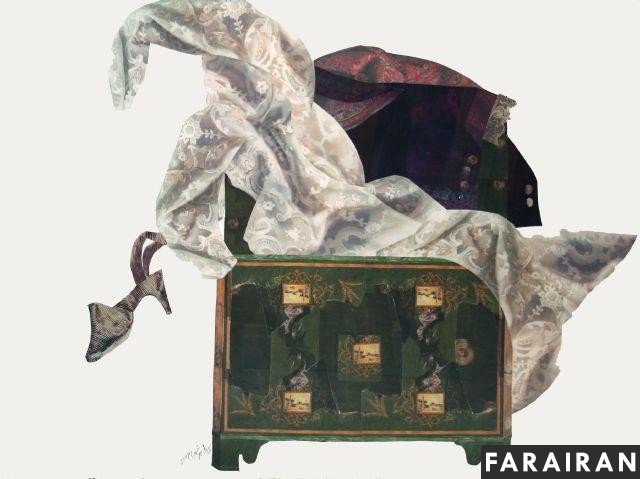
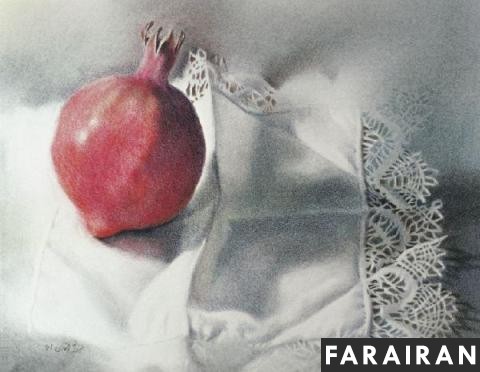
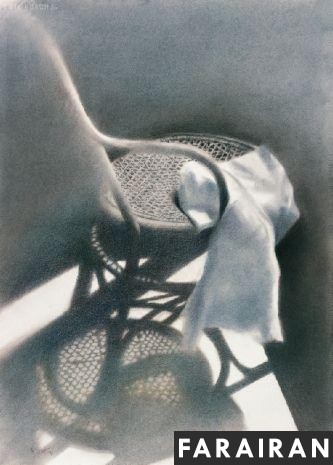
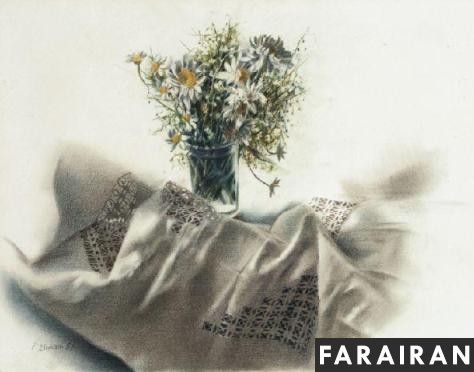
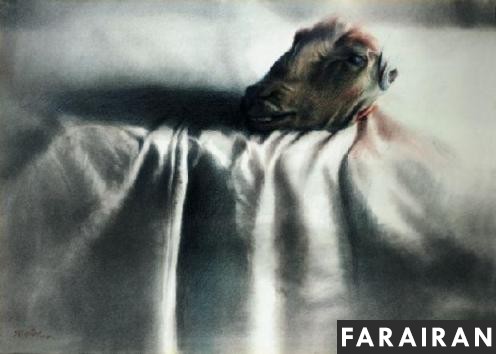
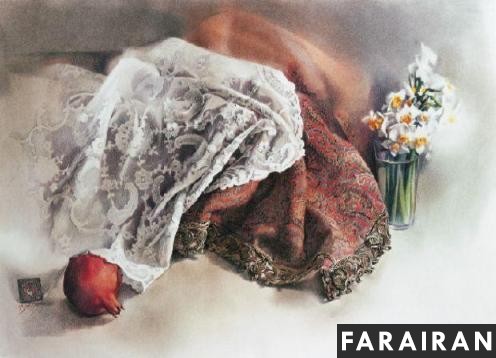
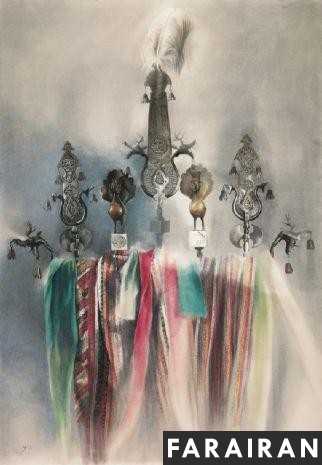
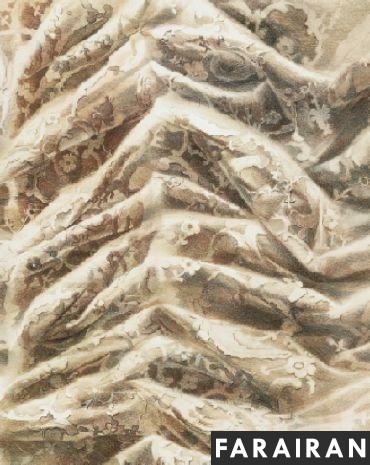
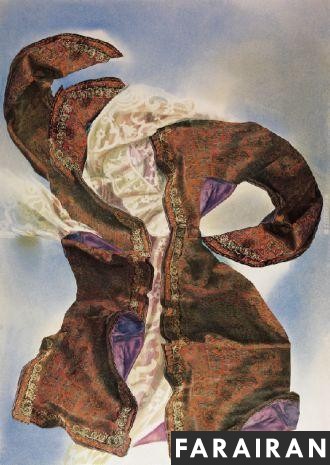
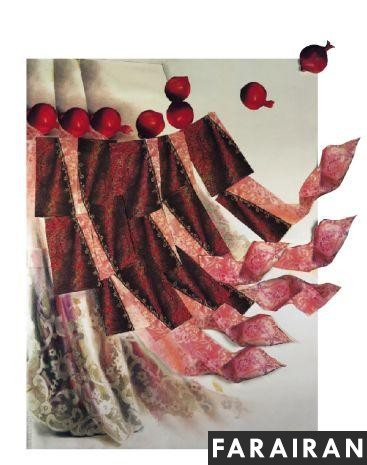
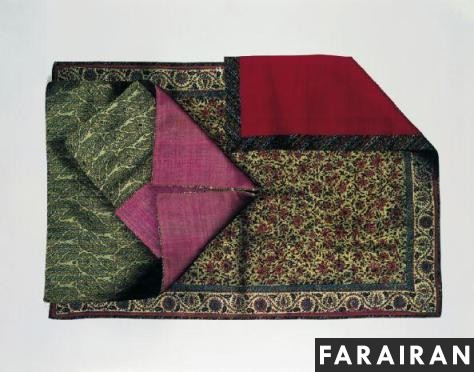
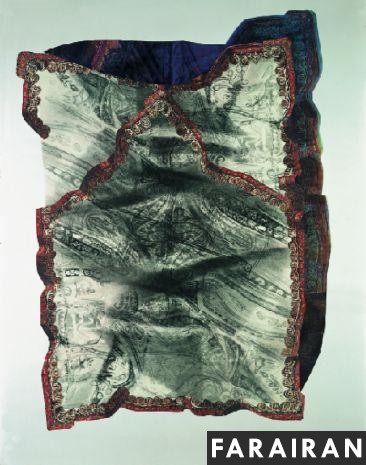
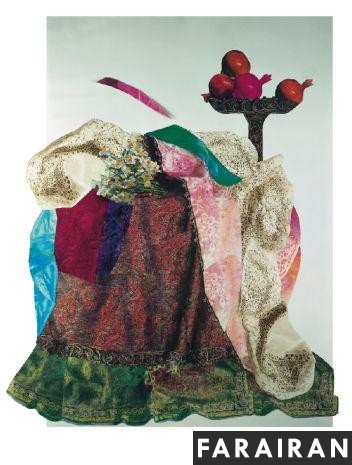
In the third period of her works (from 1980 onwards) – when she discovered color pencils – was in her words: A return to the imaginary basement of her grandmother with trunks of old forgotten outfits and textiles. During this period, by virtue of her perfect brilliant technique, a colorful pallet of warm shinny harmonious and balanced colors, she reproduced fine garments and textiles of silk and termeh designed with familiar flowers, fruit and home utensils in very gorgeous still lives. A synthesis of silhouettes, technical mastery in the use of color pencils, fine pretty textures, and then in a later period, sketching and designing old memorable termehs together with her encounter with the Indian art and an Indian artist turned this period extending to mid 90s into a brilliant period of her artistic activity. It was a period full of beautiful creations, while simultaneously observing both exotic and mundane taste and zeal, as well as proportions and harmony in design and coloring. In fact, it was in this period when she reached a kind of modern plastic art without neglecting fundamental rules of figurative and decorative art.
In her collages which mark the fourth period of her work, Etemadi began a new venture.
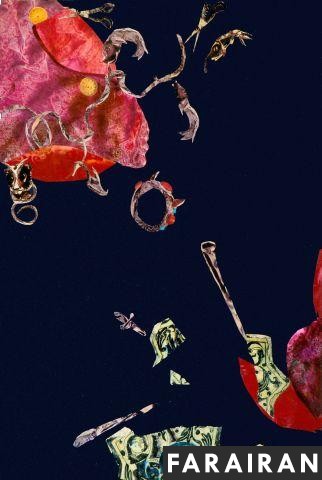
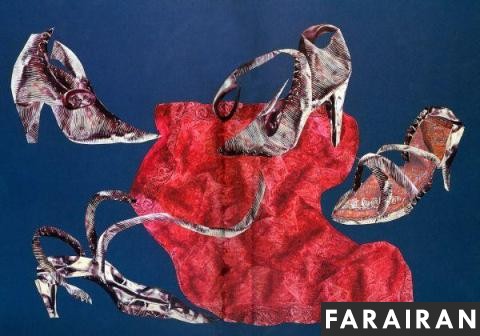
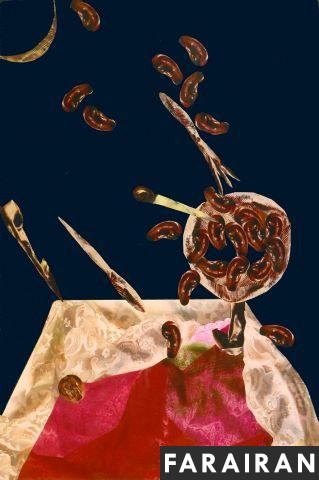
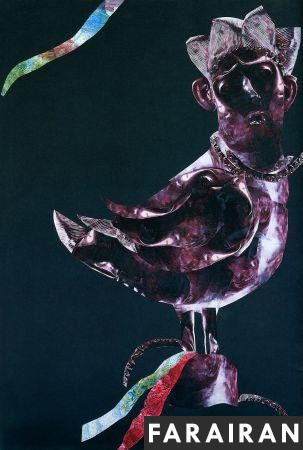
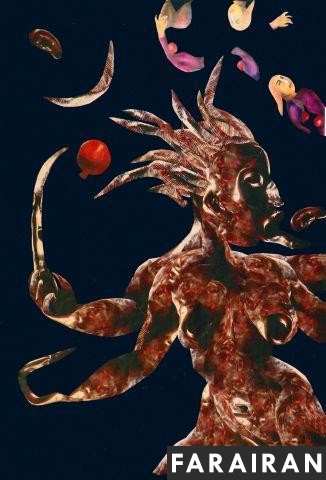
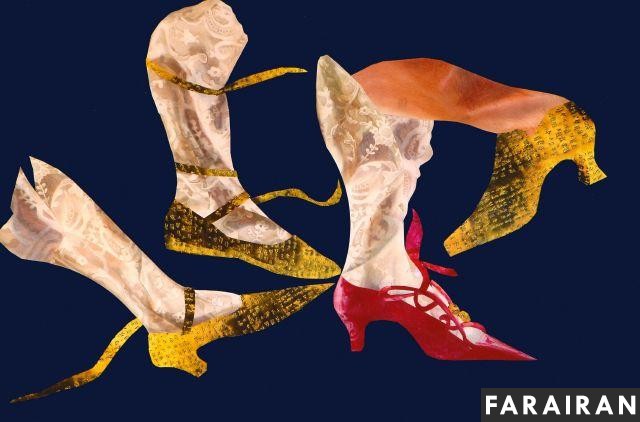
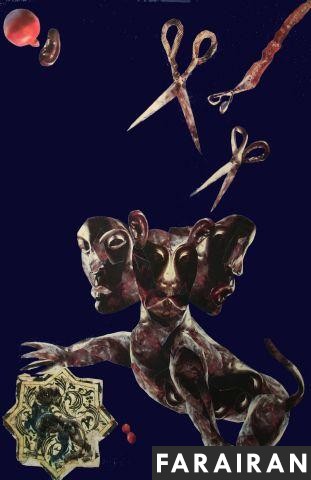
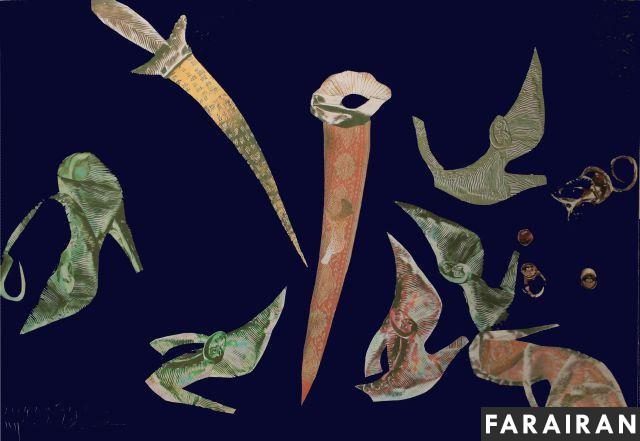
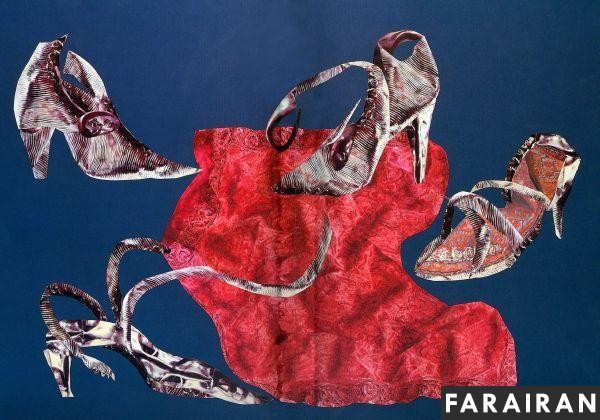
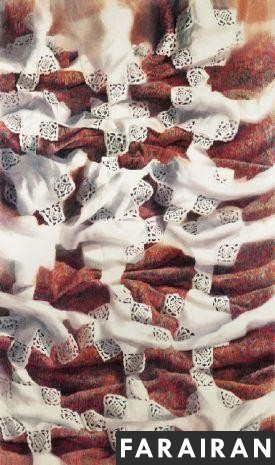
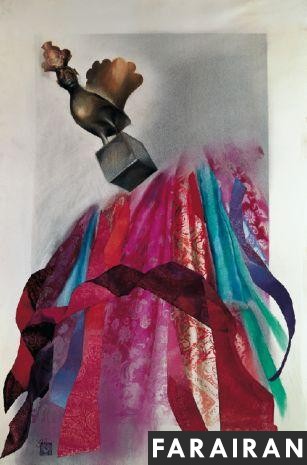
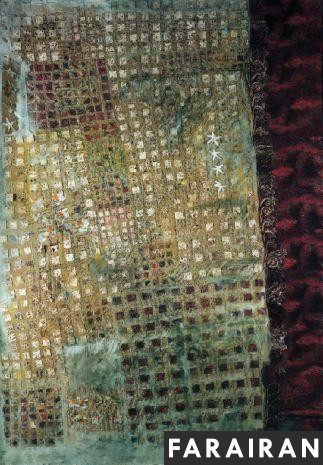
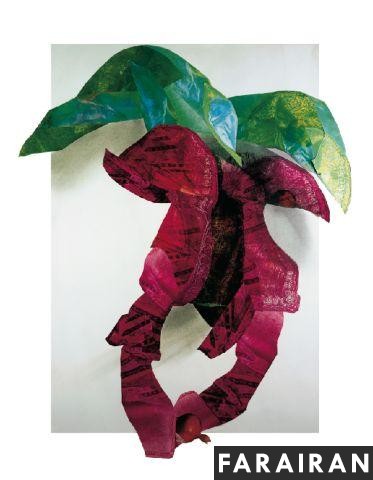
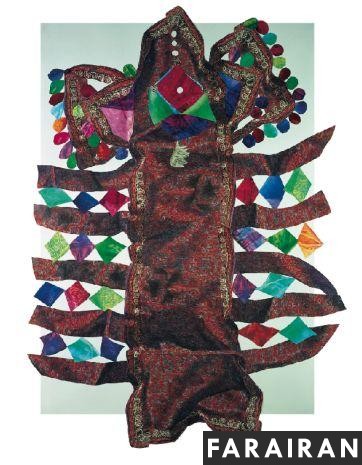
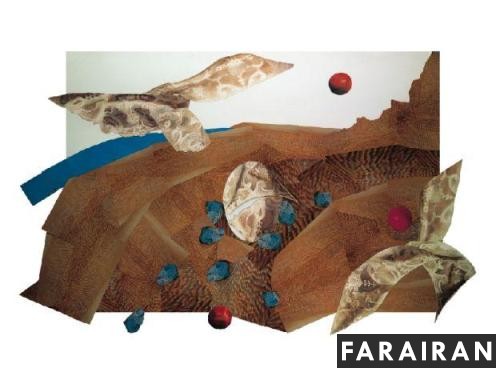
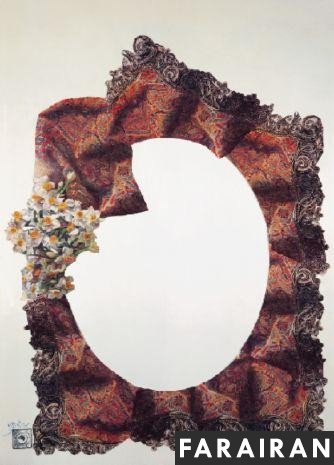
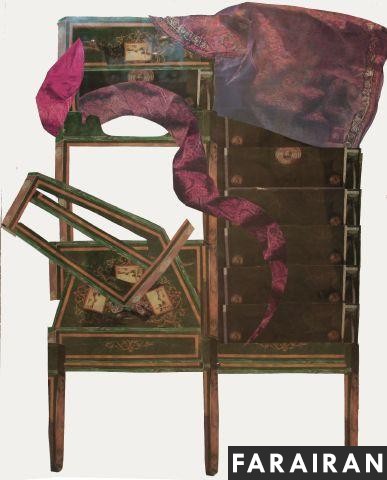
Her compositions now made up of cut photocopied pieces of her previous color pencil paintings glued on the surface of wide canvases with still more colorful and varied pallet appeard as a kind of artistic improvisation of fantastic free dancing outfits often breaking through the surface and the frame of the canvas as though refusing to be imprisoned in any limited fixed form. Her few brilliant joint works with other painters (Gholamhossein Nami, Fereydoon Ave, Manijeh Mir-Emadi and particularly the Indian painter Manjit Bawa) completes this collection. One of the best exhibitions of this period, held in Niavaran Gallery under the title of Dowry of the Fairy Tale Princes… show all the features of this period, i.e. the synthesis of figurative art and modern structure, very well.
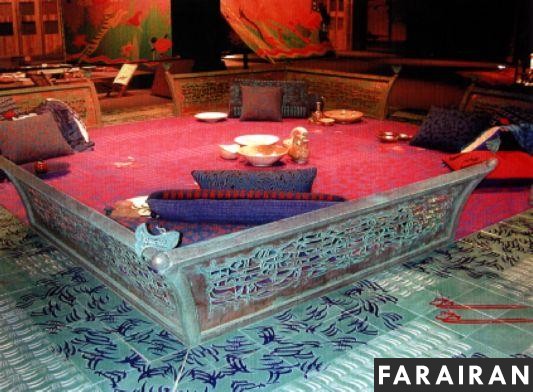
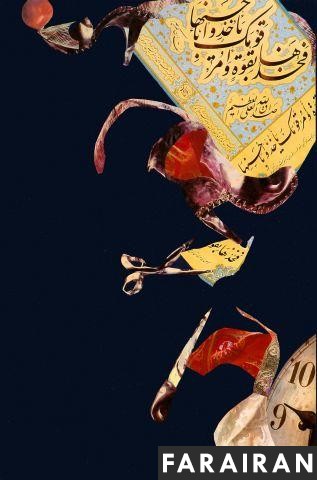
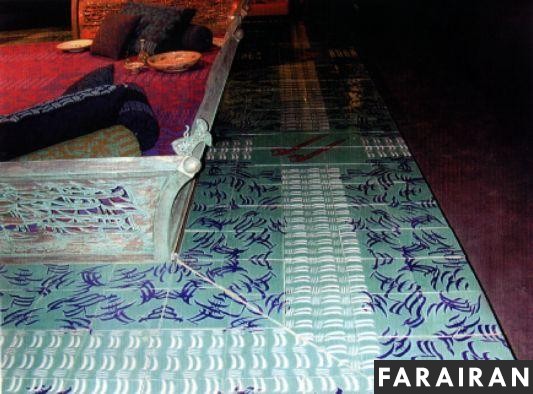
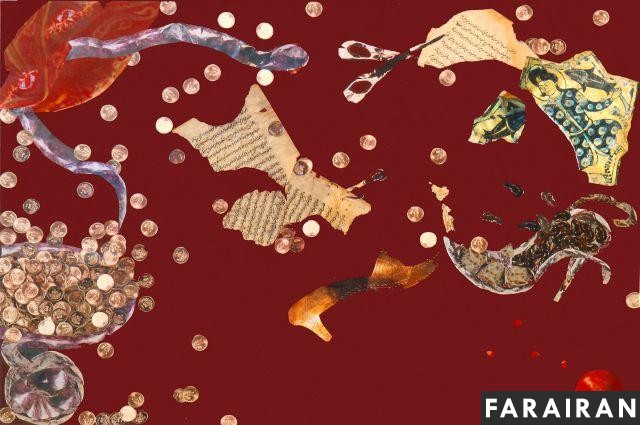
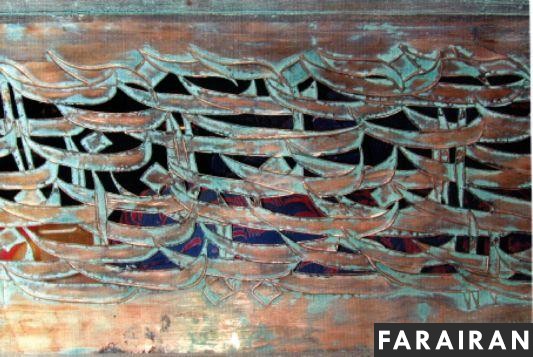
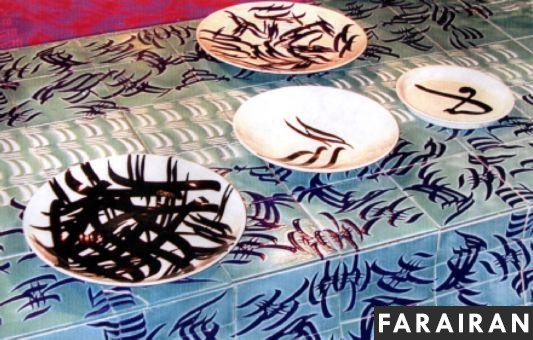
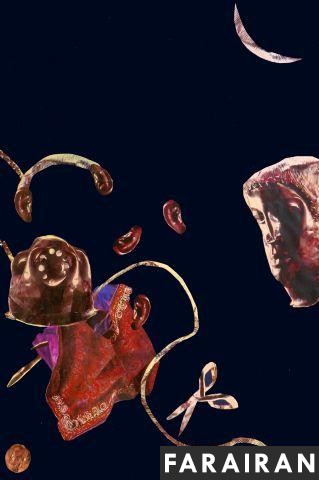
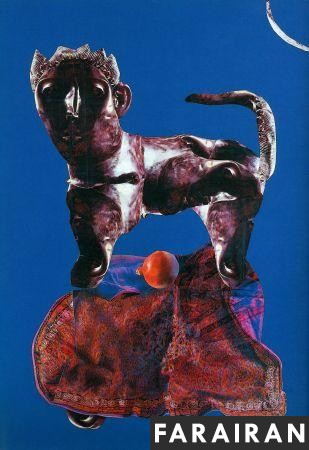
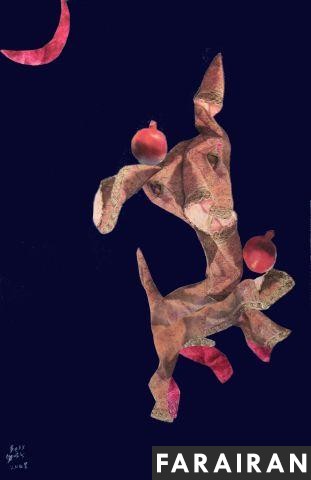
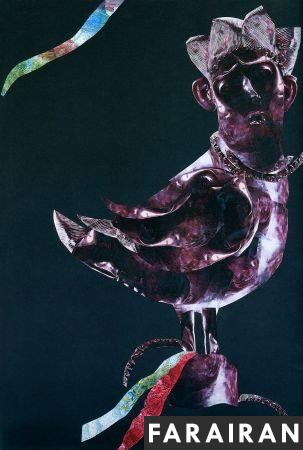
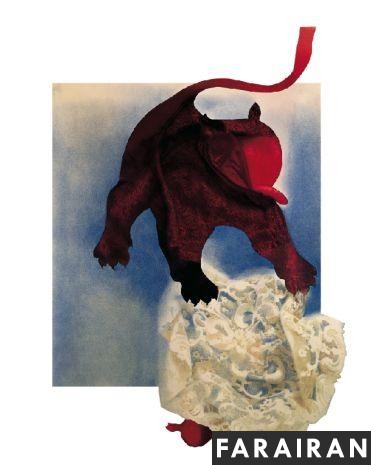
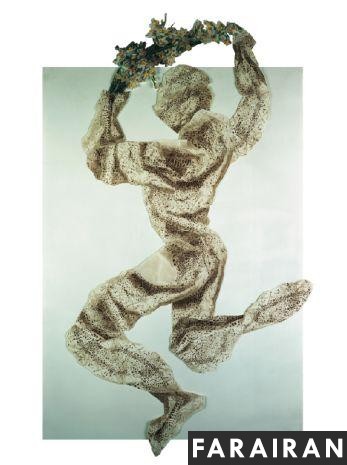
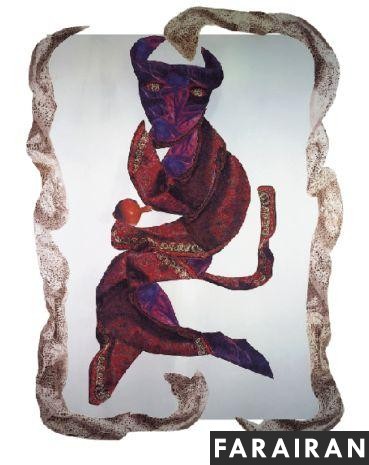
After 2000, Parvaneh Etemadi ventured new experiences. Participation in an installation calling public attention to the environment in Hanover, Germany in the same year, working with ceramic and combining it with calligraphy displayed in an applied art exhibition held at House of Iranian Artists and finally beginning a new period (still continuing) exhibited under the title Once upon a Time (1) held at Golestan Gallery in 2004 showing the peak of her collages, this time combined with ancient Iranian myths, fables and literature, and revealing her attention to and criticism of the social air of contemporary Iran together with a bit of separation from pure figuration, arriving at a kind of personal artistic closeness to all her artistic achievements, narrative expression, figuration, technical maturity and perfection as well as a new postmodern look at the turbulent world.
Parvaneh Etemadi’s last exhibition Once upon a Time (2) held at Mah Gallery in 2009 was a continuation of her previous exhibition accompanied with an made out of more or less her previous collages showing yet another dimension of Etemadi’s work.
Bibliography:
Apart from several booklets, there are two books about Parvaneh Etemadi
1. Parvaneh Etemadi, selected works 1966-1998 by Manijeh Mir-Emadi, Iranian Art Publishing, 1998, bilingual, 323 pages.
2. Once Upon a Time, a collection of 20 works, Mitra Shambiani, Zarin and Simin publishing house, 2004, bilingual, 64 pages.
Farairan’ reviews about Parvaneh Etemadi:
Representation and Recreation of Reality, Javad Mojabi/ Farairan Art Quarterly/no.1, summer 1999.
News & Art, On the occasion of Parvaneh Etemadi’s Art Exhibition: Once upon a Time (2), Roya Monajem,