
Identity: That is the question!
Neshan Iranian Graphic Magazine,Number 1,Winter 2003
Assistant Editor:Saed Meshki
www.neshanmagazine.com
Assistant Editor:Saed Meshki
www.neshanmagazine.com
Interviews with Aydin Aghdashlou, Farshid Mesghali and Mehdi Sahabi by Saeed Meshki
1. Aydin Aghadashlou

The first Iranian graphic artworks were printed around 200 years ago along with the first Iranian Newspapers. If we take illustration as the starting point and not consider print an issue, illustration and book illumination dates back to centuries ago. Thus, to seek the identity of Iranian graphic design, we should look back and see how our designers dealt with it.
The new wave of graphic design in Iran, however, was formed I 1960s. The first Iranian graphic designers and illustrators paid special attention to the legacy of their predecessors. The succeeding generations still took notice of carpet and tile designs as well as that of the act of Islamic era in the subsequent decades and used them as materials in their works.
Hence, the present-day generations of the Iranian designers have always sought their cultural and Iranian identity. Generally speaking, the present society’s cultural and artistic state lacks solid continuity, which could result in a prospect for an Iranian school. Much of our cultural product, when scrutinized, lacks essentially authenticity and depth. They seem more like superficial collages forged by the abuse of traditional Iranian motives.
We should bear in mind that unlike countries such as Japan and Poland, Iran has never enjoyed continuous artistic and cultural movements followed by successive generations, and political agitations have always caused long-term halts in such activities. On the other hand, the Iranian arts have always been hidden from the eyes of the ordinary people and kept in courts and high society, rarely exposed to the public. This has always caused people and ordinary artists’ a creative blockage and deprived them of continuity in their artistic efforts. The outcome of such interruptions and restrictions could clearly be seen in book illustration, which was a common popular art. The lack of technique in such designs is clearly noticeable and the dreadful effects of such interruptions can be better seen in the works of new generation. For instance, Persian calligraphy which used to be a common art among earlier generations and its technical details were known to the literate, is now being almost forgotten.
Hence young designers who intend to access associated information have difficulty in research, because the cultural and artistic information of the past is not conveyed from one generation to the next. You can refer to the products of some new designers, for example, and see how they present the worst and most illegible designs in their typographies.
The redeeming factor is that such erratic trials and errors date back to as few as four decades. More realistic expectations will help us look forward to a more constructive and promising future.
2. Mehdi Sahabi
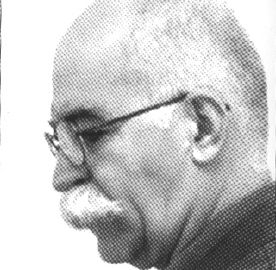
Identity is a complicated issue, particularly in visual arts, for contrary to the initial impression, few of the definitions are clear and agreed by all. On the one hand, raising such questions indicates that a crisis exists in its measurements and definitions, as identity should generally be a matter or course. We can refer to nationality, family origins, etc, whether we are Iranian or not, for example. But is there really a precise definition of identity accepted by every one in the field of visual arts? Which work is exactly Iranian in particular, which is not or is only half Iranian? Still, if there is a definition, to which era does it belong? I personally do not believe in any predetermined or prescriptive compulsion.
It is inferred from discussions concerning identity that being modern is in contrast with having identity or that it is absolutely a foreign and unfamiliar concept. I believe that modernism is a relative concept. Some thing might be modern but not complete as a whole. Such discussions usually seem incomprehensible and could not be considered as right basis for judgment and conclusion.
It is inferred from discussions concerning identity that being modern is in contrast with having identity or that it is absolutely a foreign and unfamiliar concept. I believe that modernism is a relative concept. Some thing might be modern but not complete as a whole. Such discussions usually seem incomprehensible and could not be considered as right basis for judgment and conclusion.
On the other hand, graphics is a means of communication and consumption and it does not claim to materialize any feature of cultural aspect of consumer society, so why should graphic design be intensely questioned? Why do we insist so seriously on determining the role of identity in graphic design? Why not spend our positive energy on designing more instead?
3 . Farshid Mesghali

The first Iranian graphic artworks were printed around 200 years ago along with the first Iranian Newspapers. If we take illustration as the starting point and not consider print an issue, illustration and book illumination dates back to centuries ago. Thus, to seek the identity of Iranian graphic design, we should look back and see how our designers dealt with it.
The new wave of graphic design in Iran, however, was formed I 1960s. The first Iranian graphic designers and illustrators paid special attention to the legacy of their predecessors. The succeeding generations still took notice of carpet and tile designs as well as that of the act of Islamic era in the subsequent decades and used them as materials in their works.
Hence, the present-day generations of the Iranian designers have always sought their cultural and Iranian identity. Generally speaking, the present society’s cultural and artistic state lacks solid continuity, which could result in a prospect for an Iranian school. Much of our cultural product, when scrutinized, lacks essentially authenticity and depth. They seem more like superficial collages forged by the abuse of traditional Iranian motives.
We should bear in mind that unlike countries such as Japan and Poland, Iran has never enjoyed continuous artistic and cultural movements followed by successive generations, and political agitations have always caused long-term halts in such activities. On the other hand, the Iranian arts have always been hidden from the eyes of the ordinary people and kept in courts and high society, rarely exposed to the public. This has always caused people and ordinary artists’ a creative blockage and deprived them of continuity in their artistic efforts. The outcome of such interruptions and restrictions could clearly be seen in book illustration, which was a common popular art. The lack of technique in such designs is clearly noticeable and the dreadful effects of such interruptions can be better seen in the works of new generation. For instance, Persian calligraphy which used to be a common art among earlier generations and its technical details were known to the literate, is now being almost forgotten.
Hence young designers who intend to access associated information have difficulty in research, because the cultural and artistic information of the past is not conveyed from one generation to the next. You can refer to the products of some new designers, for example, and see how they present the worst and most illegible designs in their typographies.
The redeeming factor is that such erratic trials and errors date back to as few as four decades. More realistic expectations will help us look forward to a more constructive and promising future.


