Iranian Cinema
Acquaintance with cinema and the first steps of filming and filmmaking in Iran
1277 to ca. 1285 AS / 1899 to ca. 1907 AD
(second version)
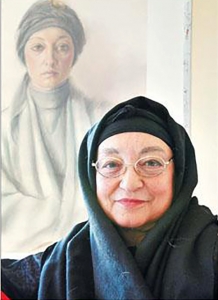
SChahryar Adlehahryar Adle (1944-2015)
to Farrokh Gaffari and Jamal Omid
The initial version of this article, written on the occasion of the commemoration of the hundredth anniversary of Iranian cinema, was distributed during the opening ceremony of the exhibition Antecedents and Beginnings of Iranian Cinema, held on the evening of September 17th 2000 in the Chadorkhaneh of the Golestan Palace. It was published as a batch of pamphlets that was soon expired, making a reprint necessary. Taking advantage of this opportunity, I began preparing a refreshed version in which typographic mistakes and some errors in the orientation of some illustrations were corrected, and I also added newly discovered facts. The partial identification of the first Iranian film, shot a hundred years ago by Ebrahim ‘Akkas-bashi at the Battle of Flowers in Ostend, is the most notable among these discoveries and it is introduced here together with a new documented description and history of the first filmed scene, shot in the same Belgian port. As all the films of the Qajar period identified to the present (late autumn 1379 / 2000) at the Golestan Palace are now being copied and studied, our knowledge of this cinema has greatly progressed and it is repeatedly undergoing change. I hope that the future versions of this text will keep the amateurs of history and cinema informed of any other changes brought about by new discoveries.
1277 AS / 1899 AD is the year in which Mozaffar-ed-Din Shah first issues an order concerning the acquisition of a cinema camera and projector, and 1285 AS / 1907 AD is that of his death. Thereafter, in the turbulent Constitutional Period and after it, several changes, including a growing number of theaters and cinema halls, occur in the evolution of Iranian cinema a thorough study of which requires a different entry.
Iranian cinema turned one hundred and Iranian photography reached the age of 158. No one remembered to celebrate the 150th anniversary of photography, but fortunately the centenary of Iranian cinema is being commemorated by the Iranian Cultural Heritage Organization and the Golestan Palace—custodian of the treasury of early Iranian films—, alongside the Museum of Cinema, the Ministry of Culture and Islamic Guidance, and other organizations and cinema lovers A multitude of cinema lovers contributed to the realization of this commemoration, but the following institutions and organizations must at least be mentioned by name; the cinema affairs and the artistic affairs vice-directorates of the Ministry of Culture and Islamic Guidance, Farabi Cinema Foundation, the Iranian National Film House, the Cinema House, Tehran Museum of Contemporary Art, the social vice-directorate of the Municipality of Tehran, the Surah Cinema Development Foundation, Visual Media Co., Film monthly…. Today’s Iranian cinema is famous across the planet, but in the past photography enjoyed a more elevated status and could appear among the best in the world during the reign of Nasser-ed-Din Shah. Today the Album House of the Golestan Palace, the major part of which dates back to that period, houses a collection whose sole rival in terms of uniformity and age is perhaps the material preserved in the Royal British Collection. The author long wondered why only three years separated the introduction of daguerreotype photography in Paris in 1839 / 1254 AH / 1218 AS from the first photography made in Iran in mid December 1842 / mid Ziqa‘deh 1258 / late Azar (Qows) 1221 by Nikolai Pavlov Upon Mohammad Shah Qajar’s request, the Russian and British governments sent daguerreotype apparatus to Iran. The Russian set, a present of the Czar, arrived earlier. Nikolai Pavlov, the young diplomat trained for the purpose, brought it to Tehran and took the first photograph recorded in Iranian history in presence of Mohammad Shah on the date mentioned. No mention of these yet unknown events is made either in the extensive article on the beginnings of photography in Iran which I wrote with the assistance of Yahya Zoka’, or in other articles on the subject, but I have amply delved into the matter in an article under preparation. For this article, see Adle Ch., “Notes et documents sur la photographie iranienne et son histoire; I. Les premiers daguerréotypistes, c. 1844-1845 / 1260-1270”, in the list of sources and references at the end of this article., whereas half a century later, according to recently discovered documents, it was five years after the introduction of the cinema in Paris in 1895 / 1274 AS that the first film was shot in an Iranian environment—in Europe at that. This delay can be attributed to the weakness of Mozaffar-ed-Din Shah’s rule, to his natural nonchalance, and to the people’s indifference and lack of sense of responsibility. Undoubtedly, had Nasser-ed-Din Shah not been assassinated in 1313 / 1896 / 1274, cinema film and cameras would have reached Tehran in the same year, causing this art to grow faster from the very beginning, but this was not to be. As concerns the creation date of the first Iranian film, the commendable classification of the Album House of the Golestan Palace, begun some three or four years ago, on one hand, and the recently begun review of the documents preserved at the Golestan Palace on the other, have deeply changed our knowledge about the beginnings of this art in Iran. The date of the arrival of the first cinema cameras to Iran has been pushed back, the early Iranian cinema has acquired a new visage, and its evolution has adopted a new path. Of course, access to some of the films preserved at the Golestan Palace, which will be mentioned, and more importantly, the understanding, even if limited, of the importance of these films, were gained some eighteen years ago within a project that is now coming to fruition, but slow progress was made until recently. In this brief article, hastily prepared in view of the commemoration of the centenary of Iranian cinema, two points are emphasized: the arrival of the first cinema equipment to Iran, and; the creation of what can be considered the first collection of films, particularly “cinema films”, in Iran.
One
The first cinema spectator and the first cinema theater in Iran.Arrival of the first cinema cameras and projectors.
1. The first Iranian cinema spectator (1314 AS / 1897 AD / 1276 AS) and the first Cinématographe theater in Iran: Ramazan 1321 / 21 November to 20 December 1903 / 30 Aban to Azar 1282.
As such eminent scholars as Farrokh Ghaffari and Jamal Omid have shown in the past, an Iranian’s initial acquaintance with the cinema is first mentioned in Ebrahim Sahhafbashi’s memoirs.
Ebrahim Sahhafbashi (Mohajer) Tehrani was born around 1237 AS / AD 1858 and died in 1300 / 1921 or 1301 / 1922, at the age of 63, in Mashhad His full name has been copied from a note of his reproduced below his portrait in Name-ye Vatan, and his birth and death dates are approximations provided by his son, Abolqassem Reza’i. See text below and the list of sources at the end of the article.. He was fascinated with new technologies and inventions and his trade of eastern Asian goods took him several times across the world. He was a liberal-minded modernist and rather nonconformist in his clothing. Undoubtedly, following the first cinematographic representation in Paris in 1895, and soon after that in London, Iranians living in Europe at the close of the nineteenth century were able to see various films, but since no writings from them have remained—or come to light—, the first spectator (as he is called today) must be considered to have been Ebrahim Sahhafbashi, in London, seventeen months after the first public representation in Paris. On Friday 25 Zelhajjeh 1314 AH, he writes in his memoirs:
“Yesterday, at sunset [Thursday 24 Zelhajjeh 1314 / Wednesday As it appears, a one-day discrepancy occasionally occurs in converting dates from the lunar calendar to the solar calendar and vice versa, which does not necessarily indicate an error. Nonetheless, texts written about the history of the cinema in Iran and abroad contain numerous errors regarding their notation of dates in the lunar and solar Hegira calendars and the conversion of these into the Christian calendar, on which we shall not elaborate in this brief article. Here, on the contrary, all the dates are given with a precision that may appear tedious to the ordinary reader. Several mistakes I had made in the first version have also been corrected. 26 May 1897 / 5 Khordad 1276], I took a walk in the public park… [In the evening] I went to the Palace Theater. After song and dance performances by ladies [… and a show of acrobatics, etc., I saw] a recently invented electric device by which movements are reproduced exactly as they occur. For example, it shows the American waterfalls just as they are, it recreates the motion of marching soldiers and that of a train running at full speed. This is an American invention. Here all theaters close one hour before midnight.” Travel account of Sahhafbashi, pp. 39-40.
Sahhafbashi was mistaken as to the cinema’s country of origin, perhaps because the film he saw was American, as his reference to the Niagara Falls seems to indicate. There is no reason to believe that Sahhafbashi’s interest in cinema, during his first encounter with it, went beyond that of a mere spectator, but it is also probable that the thought of taking this invention to Iran crossed his mind, although this is never mentioned in his writings.
According to sources known to the present, he was the first person to create a public cinema theater in 1321 AH / AD 1903 / 1282 AS, eight years after the invention and public appearance of the cinema in France, six years after Sahhafbashi’s seeing the cinema in London, and three years after the arrival of cinema equipment to the Iranian court.
Sahhafbashi perhaps held glass plate shows (akin to present-day slide shows) before making his career in the cinema. These were performed with the lanterne magique, known as cheraq-e sehri in Iran. In good shows of this kind, a succession of black and white—or, even better, color,—glass plates depicting a story (as in today’s comic strips) was projected on a screen. The lanterne magique was used in Mozaffar-ed-din Shah’s court and a couple of such color plates have been identified in the Album House of the Golestan Palace. Viewing was effected with one or another type of jahan-nama, including the stereoscope, in which a pair of almost identical pictures were used to achieve a three dimensional view. It consisted of a small (or large) box equipped with two viewer lenses and a slot in which the glass plates bearing the image pairs were inserted. Examples of this type of jahan-nama, for example of Verascope brand, existed in Mozaffar-ed-din Shah’s court and in the hands of private individuals, because I have seen glass plates of this type, both processed and unprocessed, in the Album House of the Golestan Palace. Another type of jahan-nama, the Edison Kinetoscope, was completed in 1270 AS / AD 1891. It was a large, hefty machine in front of which the viewer stood to watch a very short cinema-like film through a pair of lenses on its top. Other types of jahan-nama, namely Mutoscope, Kinora and Théoscope, also existed, in which cinema-like moving pictures could also be seen. The Théoscope, for example, was small and could readily sit on a footed stand Ample books and documents concerning these apparatus are extant. For example, see issues 91A to 103 of Images et magie du cinéma français, or E. Toulet, Cinema is 100 Years Old, p. 38, where a theater equipped with a Kinetoscope is shown. The picture Jamal Omid has reproduced on page 49 of Tarikh-e Sinema-ye Iran – 1 is also that of a Kinetoscope.. A sort of local jahan-nama known as shahr-e farang, in which a roll of pictures was moved behind viewing windows on the front of the machine, was made in Iran and was more or less current until the late 1340s AS (1960s AD), being carried on an ambulant operator’s shoulders Ja‘far Shahri, in his Tarikh-e Ejtema‘i-e Tehran, v. 1, p. 387, note 1, briefly but adequately describes the shahr-e farang. Also see Ghaffari, Jam-e Jam – Fanoos-e Khial…, p. 42.. Today a shahr-e farang is exhibited in the Cinema Museum of Tehran.The best shahr-e farang specimen, belonging to the film center(filmkhane), existed in the ex-Ministry of Arts and Culture.
As concerns lanterne magique shows, Nazem-ol-Eslam Kermani writes in his Tarikh-e Bidari-e Iranian,: “The (lanter majik) cheragh-e sehri appeared in Tehran in the sixth year of the reign [of Mozaffar-ed-Din Shah]”, which corresponds to 1320 / 10 April 1902 – 29 March 1903 / 21 Farvardin 1281 – 9 Farvardin 1282 Nazem-ol-Eslam Kermani, Tarikh-e Bidari-e Iranian, 1984 edition, v. 1, p. 656. In the previous version of this article, I had mistakenly set the sixth year of Mozaffar-ed-Din Shah’s reign as 1313 AH, because he accessed to the throne near the end of that year and the year 1314 AH must be considered the first of his reign. Hence the sixth year of his reign was 1320 AH.. What Nazem-ol-Eslam Kermani means by “(lanter majik) cheragh-e sehri” is unclear. If he means the kind of shows current at the time, which consisted of projecting a succession of various scenes depicting a story (as in today’s comic strips), these had certainly “appeared”, even if they had not yet achieved wide popularity, before this date. But, if he means the onset of private and semi-private film viewing with the lanterne magique and then the jahan-nama, then the date does not conflict with that of Sahhafbashi’s film screenings in 1321 AH / AD 1903 / 1282 AS (see next paragraph). It is conceivable that, following the warm welcome given at the court to various types of lanterne magique, jahan-nama and Cinématographe (see next paragraph), and perhaps after a second travel to the West in 1281 AS / AD 1902, Sahhafbashi brought together a collection of such devices, together with X-ray equipment, electric fans and probably phonographs, etc., which he sold to the rich or used to hold shows. Therefore, Nazem-ol-Eslam Kermani’s allusion to him—whom he says he knew well and with whom he was involved in underground political activity Nazem-ol-Eslam Kermani, Tarikh-e Bidari-e Iranian, events of Monday 12 Safar 1323 / Tuesday 18 April 1905 (edition of 1346, v. 1, p. 51; edition of 1362, v.1, p. 291), or events of Wednesday 14 Zelqa‘deh 1323 / 10 January 1906 (edition of 1346, v.1, pp. 120-121; edition of 1362, , v. 1, pp. 360-361).—, points directly to Sahhafbashi and his first public lanterne magique, jahan-nama and later Cinématographe shows. It was not rare at the time to refer to the Cinématographe as lanterne magique, and Khanbaba Mo‘tazedi, at the age of fifteen (1286 AS / AD 1907), heard his father say that Russi-Khan had “brought a lanterne magique… which showed moving pictures” to Arbab Jamshid’s residence.
The first reference to a theater (public cinema) is found in the absorbing memoirs of Nasser-ed-Din Shah’s protégé, Malijak Malijak, v. 1, p. 533.. He wrote about the evening of Sunday 2 Ramazan 1321 / 22 November 1903 / 1 Azar 1282: “I went to Sahhafbashi’s shop. On Sundays he holds simifonograf shows for Europeans, and in the evening for the public. When I arrived there was no one; just me, a secretary of the Dutch embassy and a few of Taku’s personnel.” Taku was a European goods shop on Lalehzar Avenue. Apparently, on this occasion Malijak went to see a session for Europeans, because he adds: “It was two and a half hours past sunset when I called for a landau. Accompanied by the supervisor [his teacher], I went to Sahhafbashi’s shop to watch the Cinématographe.” Malijak, v. 1, p. 533. Taking the season into consideration, the cinema session began around eight o’clock PM. Malijak was interested by the cinema, because he again went to a session on the next evening. He wrote in his memoirs; “I called for a landau and we went to watch the simifonograf. Having watched for a while, we returned home.” Malijak, v. 1, p. 534. This was probably no more than one or two days after Sahhafbashi had begun holding public film shows, because, had other films been shown earlier, Malijak would have certainly paid a visit or made an allusion to it in his memoirs. The study of Malijak’s memoirs clearly shows that, fortunately for the history of Iranian cinema and photography, he truly was a full-fledged professional sloth. From morning to night he paid visits to the court and the houses of different people, poked his nose into shops or wandered in the streets. Malijak’s life and the style of his memoirs, particularly concerning everyday events, hunting, music, gambling, …, and social visits, are such that it is hardly conceivable for a public film show to have taken place without him noticing it. Moreover, in those early years of the twentieth century, Malijak was also keenly interested in photography and music. He took piano lessons and was well aware of the existence of the Cinématographe. He had seen films at Mozaffar-ed-Din Shah’s court at least as early as 1320 AH / AD 1902 / 1281 AS, a year before the first public cinema was created Malijak, v. 1, p. 330. (see text below). Although opposed with his political views, he was acquainted with Sahhafbashi and had paid him visits even before seeing films, mentioning the novelties he had seen in his memoirs. At first Malijak misjudged Sahhafbashi as an ignorant liar, but after seeing his X-ray equipment at work on the next day—Tuesday 13 Moharram 1320 / Thursday 22 May 1902 / 1 Khordad 1281—he wrote extensively about it Malijak, v. 1, pp. 203-205.. Fifteen days later he spoke of an electric fan (charkh-e barqi) given to him by Sahhafbashi Malijak, v. 1, p. 217. Elsewhere he writes at the end of the same year: “I went to Sahhafbashi’s shop. He had no new gadgets” (Malijak, v.1, p. 369).. Unfortunately, as Malijak’s memoirs begin on 10 Zelhajjeh 1319 / 20 March 1903 / 29 Esfand 1282, they hold no indication concerning the first four years of filmmaking in Iran (see following paragraphs).
The first Iranian cinema, or tamasha-khaneh See the notice concerning the sale of Sahhafbashi’s belongings in Hossein Abutorabian’s Rahnama-ye Ketab, p. 692 and Film monthly, no. 258, p. 17, line 2. in Sahhafbashi’s words, was located in the yard behind his shop on Lalehzar Avenue Malijak writes (v. 1, p. 204): “We moved along Cheragh-e Gaz Avenue and reached Toopkhaneh Square, wherefrom we went to Lalehzar Avenue, straight to Sahhafbashi’s shop.” He used to go there via Mokhber-od-Dowleh Avenue as well (v. 2, p. 1272). and spanned four vaults See the notice concerning the sale of Sahhafbashi’s belongings in Hossein Abutorabian’s Rahnama-ye Ketab, p. 692; Film monthly, no. 258, p. 17, and; several lines lower in the present article.. In more precise terms, in the words of Sahhafbashi’s elder son, Jahangir Qahremanshahi, it was situated at present-day Mohanna Crossroads (“between Crystal Cinema, on Lalehzar-e No, and Arbab Jamshid Avenue”) The exact address of Sahhafbashi’s son is given by his son (Safarname-ye Ebrahim Sahhafbashi, preface, p. 15, based upon Ghaffari’s text) and it agrees with Malijak’s writings.. Jamalzadeh writes about Sahhafbashi’s estate: “He had a building at the crossroads and avenue known as Comte, on the northern stretch of Lalehzar, on the left hand side, and he and his wife had transformed their home into a hospital… [and] they had [also] built a functional water cistern on the street side of their garden …” Jamalzadeh, “Dar Bare-ye Sahhafbashi”, p. 129.. The type of goods that Sahhafbashi had in his shop indicates that his customers came from among the aristocracy (such as Atabak and ‘Ala’-od-Dowleh) The names are given by Jahangir Qahremanshahi in Safarname-ye Ebrahim Sahhafbashi, preface, p. 15, based upon Ghaffari’s text., and on this basis it is conceivable that they too frequented his cinema. Among the films shown there, Qahremanshahi mentions one in which a man “forced more than one hundred [?] men into a small carriage and had a hen lay twenty eggs.” Such comical or extravagant films (see paragraph 2C) were very popular at the time and lasted about ten minutes, as most other films made in that period. The history of the activity of Sahhafbashi’s cinema must be limited to the month of Ramazan and the day of the ‘Eid-e Fetr of 1321 (21 November to 20 December 1903 / 30 Aban to 29 Azar 1282), because Malijak makes no other mention of its activity, Sahhafbashi having apparently traveled to America in the meanwhile (see text below). The month of Ramazan, which occurred in autumn in that year, was undoubtedly chosen on purpose, because spectators could easily use the long evenings to go to the theater after breaking their fast. Financially, Sahhafbashi’s venture seems to have been rather unsuccessful. For example, as we saw, only a few spectators were present at the first session attended by Malijak. And this was probably why Sahhafbashi moved his cinema to a new address on Cheragh-e Gaz (later Cheraq-e Barq, and now Amir Kabir) Avenue after returning from America around 1905 (1284 AS)—not later than 1908 (1287 AS) in any case.
If this change of address actually took place, it was not any more successful, and this time Sahhafbashi’s theater closed its doors for good.
The only document on Sahhafbashi’s travel to America is a bust photograph that shows him in European attire and which was reproduced by Jamal Omid together with the caption “[The picture] shows Mirza-Ebrahim-Khan Sahhafbashi (Mohajer) Tehrani [in] San Francisco – early 1283).” J. Omid, Tarikh-e Sinema-ye Iran, p. 124. Of course, the picture does not bear the date “early 1283”, and if any date does appear on it, it is given following either the Muslim or the Christian calendar, and if the conversion is correct, taking into consideration the distance involved, one must conclude that Sahhafbashi was away from Iran at least during 1283 AS / AD 1904, and that the reopening of his cinema can therefore not have taken place before 1284 AS / AD 1905.
The reopening of Sahhafbashi’s theater is obscure and no contemporaneous written source concerning this event and the subsequent activity of this theater has yet come to light. As the present article does not intend to enter a long discussion on this reopening, we limit ourselves to a description of it as it was narrated by the late ‘Abdollah Entezam, who attended Sahhafbashi’s theater in his childhood, and another by Jamalzadeh, which may be related to the same cinema. Neither Entezam nor Jamalzadeh gives any date, but Farrokh Ghaffari’s inference from Entezam’s description was that it was situated around 1905 (1284 AS) “Around 1905” is the date that Ghaffari gave in his first text on Entezam’s words (“Avvalin Azmayesh-ha-ye Sinema’i dar Iran” – 1, p. 8), but later on, in view of his studies, he became more inclined toward the year 1904, and the same inclination is reflected in Jamal Omid’s writings. In the author’s opinion, since Sahhafbashi was in America in that year, as attested to by Omid himself (Tarikh-e Sinema-ye Iran, p. 124), given that Malijak makes no mention of Sahhafbashi’s theater being reopened, and as Entezam was born in 1895 / 1274, a date around 1905, say 1906 or 1907, when he was older, is more likely than 1904. Concerning entezam, see Azimi, “Entezam”, in the list of sources., and Shahrokh Golestan—the familiar figure of Iranian cinema and its history—understood from Jamalzadeh’s words that he had gone to the cinema shortly before leaving Tehran near the end of the winter of 1908 (1286 AS). One of Jamalzadeh’s sentences in his colloquy with Golestan also attests indirectly to this fact See text below. Jamalzadeh has said repeatedly (including in “Dar Bare-ye Sahhafbashi”, Rahnama-ye Ketab, p. 131, and “Yad-ha’i az Koodaki va No-javani”) that he left Iran in spring 1908, but he is apparently in error, because, again in his own words, he had spent the Nowrooz [Iranian New Year, beginning on the first day of spring] holidays of 1908 in Istanbul (“Yad-ha’i az Koodaki va No-javani”, p. 48). Therefore, he was in Iran at least until the end of the winter of 1908 (1286 AS).. If this assumption is wrong, then Jamalzadeh went to the cinema between 1905 and the beginning of 1908 (1283-1286 AS), because he had come to Tehran at the age of thirteen Inference from a letter of Jamalzadeh to a friend. See “Yad-ha’i az Koodaki va No-javani”, p. 49. In his own words, Jamalzadeh was born on 22 or 23 Jomadi-os-Sani 1309 / 23 or 24 January 1892 / 3 or 4 Bahman 1270 (“Yad-ha’i az Koodaki va No-javani”, p. 45).. Since, as we shall see, Sahhafbashi’s business also floundered before 1908 (1287 AS), Entezam’s and Jamalzadeh’s observations refer to anterior dates. In 1905 Entezam was ten and in 1908 Jamalzadeh was fifteen.
Entezam recounted his memories of Sahhafbashi’s cinema to Farrokh Ghaffari in Bern, Switzerland, in October and November 1940 (autumn of 1319 AS). To his relation of this event to the author, Ghaffari added that Entezam had repeated these words in Tehran in 1949-50 (1328-29 AS), in presence of the late Mohammad-‘Ali Jamalzadeh and himself, and that Jamalzadeh had confirmed them. Jamalzadeh himself has been more cautious in his interview with Shahrokh Golestan, believing it “very, very likely” that the cinema to which he had gone in his childhood was Sahhafbashi’s, and adding that he could no more be sure about it See the full text of Jamalzadeh’s account, reproduced a few lines below.. He also spoke of Sahhafbashi’s house on Lalehzar Avenue in a brief article he wrote on him in 1357 AS / AD 1978 on the occasion of the reiterated notice of the sale of his chrome plating factory and theater equipment Jamalzadeh, “Dar Bare-ye Sahhafbashi”, in Rahnama-ye Ketab. See the list of sources at the end of this article., but made no mention of the theater’s reopening on Cheragh-e Gaz Avenue or its connection with Sahhafbashi. Neither have Sahhafbashi’s son, Jahangir Qahremanshahi, or Malijak, that professional sloth, ever mentioned any such reopening. Despite these obscure points, doubting the reopening of Sahhafbashi’s theater on Cheragh-e Gaz Avenue is not justifiable either, and for the present, in view of Entezam’s solid testimony, the reopening in question should be considered as having taken place, and Jamalzadeh’s memories of going to that cinema should be taken into consideration. Of course, it is much more probable that Jamalzadeh visited another, lesser, cinema on the same avenue. During the chaotic days of Mohammad-‘Ali Shah’s reign, others had begun setting up cinemas. They included Aqayoff, whose film shows were also held on Cheragh-e Gaz Avenue but in the coffee-house of Zargarabad, and Russi-Khan, who had contrived a small cinema next to his photo shop.
As Entezam has recorded, Sahhafbashi’s cinema was located on the southern side of Cheragh-e Gaz Avenue, near Toopkhaneh Square; [in Ghaffari’s opinion, perhaps opposite a street running off the northern side of the avenue that was called Sar-takht-e Barbari-ha Ghaffari’s belief originates from the fact that, having gone to a coffee-house near Sar-takht-e Barbari-ha Street to shoot a sequence of Jonoob-e Shahr in 1337 AS (AD 1958) (this coffee-house appears in Jonoob-e Shahr in a sequence where a street bully listens to a dervish’s story), his cameraman, Nasser Raf‘at, and his assistant, Zakaria Hashemi, told him that the owner of the coffee-house opposite the street said that “a cinema was said to have existed long ago around here on the street front”, and that films used to be shown on the lower floor of his own shop in ancient times.
According to ‘Abd-ol-Ghaffar’s map, Sar-takht-e Barbari-ha Street, or Barbari-ha Street under Nasser-ed-Din Shah, stemmed off Cheragh-e Gaz Avenue and ran between Tekie-ye Barbari-ha and the Cheragh-e Gaz (lighting gas) plant (later Cheraq-e Bargh), joining Bagh-e Vahsh (Ekbatan) Avenue at the curve on the south of Zell-os-Soltan’s Park (the present site of the Iranian Cultural Heritage Organization). (Also see Ja‘far Shahri, Gooshe’i az Tarikh-e Ejtema‘i-e Tehran-e Qadim, pp. 124-125.) Thus, the southern part of present-day Mellat Avenue is probably none but Sar-takht-e Barbari-ha Street.]. The cinema showed films in the evenings during the month of Ramazan [ca. 1905] and its tickets were worth one, two, three and five qerans. Its entrance was a corridor or hall in which several Edison jahan-namas were exhibited. [Later Entezam told Ghaffari: “They weren’t jahan-namas, they were shahr-e farangs.” In Ghaffari’s, and the author’s, opinion, Entezam meant an Edison Kinetoscope rather than a stereoscopic viewer, mentioned above. Jamal Omid has recorded three jahan-namas (Omid, Tarikh-e Sinema-ye Iran, p. 23), but Ghaffari, quoting Entezam, says “several”. The number of the jahan-namas is also unclear in the previous edition of Ghaffari’s book: Ghaffari, “Avvalin Azmayesh-ha-ye Sinema’i dar Iran” – 1, p. 8. Ghaffari used to believe that jahan-namas were a kind of stereoscopic viewers (Gaffary, F., Coup d’oeil sur les 35 premières années du cinéma en Iran, p. 227), and the same view is reflected in Omid’s text, already mentioned.] Various lemonades and foodstuff were sold inside the cinema. The spectators on the front sat on straw mats and the others used benches [this is true, because these benches are mentioned in the theater’s sale notice]. Sahhafbashi was present in person, wearing a long black cloak [this is also true; Sahhafbashi wore that cloak as a sign of mourning for the country Nazem-ol-Eslam Kermani, Tarikh-e Bidari-e Iranian, events of Monday 12 Safar 1323 / Tuesday 18 April 1905 (edition of 1346, v. 1, p. 51; edition of 1362, v.1, p. 291). Jamalzadeh gives a more complete description of this attire, but not in the cinema, in “Dar Bare-ye Sahhafbashi”, p. 128.]. At times when the spectators did not sit still, Sahhafsbashi would say in a loud voice: “Shame on you. Go back to your places. Hey, you one qeranis, go back to your places.” [Apparently, the cinema’s audience had widened and Sahhafbashi’s calls for his one qeran ticket customers to leave the benches and regain their straw mats shows that it was no more restricted to the aristocracy.] The late Entezam remembered two films. One showed a man sweeping a street. A steam roller would arrive and crush him thin. Then someone standing on a stool would hit him on the head with a mallet, turning him into a short fat man this time Ghaffari, “Avvalin Azmayesh-ha-ye Sinema’i dar Iran” – 1, p. 8. The words ‘fat’ and ‘mallet’ appear as chaq and tokhmaq, respectively, in Omid’s text, Tarikh-e Sinema-ye Iran, p. 23, and Ghaffari agrees with them.. The second showed a terror-stricken hotel cook watching skeletons and spirits pouring out of his kitchen’s haunted cupboard Based on Ghaffari’s words to the author, as well as his text, “Avvalin Azmayesh-ha-ye Sinema’i dar Iran” – 1, p. 8, and Omid, Tarikh-e Sinema-ye Iran, p. 23. Ghaffari says that the late Entezam had probably seen Georges Méliès’ La cuisine infernale.! Newsreels on the Transvaal war were also shown. Of course, Entezam means the films of British military operations in southern Africa, which ended in the defeat of the Dutch inhabitants of southern Africa in 1902 (1281 AS). In Ghaffari’s opinion, part of these were reconstituted newsreels, and as he and Jamal Omid believe, most of them, whether narrative or informational, were imported into Iran via the Russian ports of Odessa and Rostov Ghaffari, “Avvalin Azmayesh-ha-ye Sinema’i dar Iran” – 1, p. 8; Gaffary, F., Coup d’oeil sur les 35 premières années du cinéma en Iran, p. 227, and; Omid, Tarikh-e Sinema-ye Iran, p. 23.. In the author’s opinion, this may have been true in the case of the films screened later by Russi-Khan and others, but as the court was in direct contact with European firms for its cinematographic matters, and as Sahhafbashi himself had British and Indian connections (see text below), the small number of newsreels then available concerning the war in Transvaal must have been primarily imported from Europe, or perhaps India, but not yet from Russia. It should be borne in mind that even the films of the Russo-British war of 1905 AD / 1284 AS were popularly attributed to the British ‘Ali Javaher-Kalam’s memoirs, quoted by Omid, Tarikh-e Sinema-ye Iran, p. 28.; an attribution that was probably justified, because the Russians were severely defeated by the Japanese, and, in the Iranians’ mind, belittling the Russians by showing these films benefited British power.
On 14 March 1992, at the age of one hundred, Jamalzadeh thus recounted to Shahrokh Golestan how he first went to the cinema when only fifteen, or a little younger, in Tehran (the words in straight brackets belong to the author and are added for the sake of continuity.)
“When we settled in Tehran, my father swiftly rose in rank, and his friends, who were in danger in Esfahan, under the oppression of Zell-os-Soltan and Sheikh Mohammad-Taqi Aqa-Najafi, also gradually moved to Tehran. One of them was Sayf-os-Zakerin. He was a good man, but a preacher.
One day, in Tehran, while strolling in a street—a street that was later called Cheragh-e Barq; I don’t know how they call it today; the famous street wagons of Tehran ran along it, going to [somewhere]—, I saw Sayf-os-Zakerin, turban and all, sitting on the ledge in front of a shop, before its still closed wooden shutters, behind a table. I approached and wished him a good day. [He said] “Ho Hey, Mamal”! I was not Jamalzadeh at the time; family names didn’t yet exist in Iran. “Hey, Mamal”! I was Mohammad-‘Ali, so my father called me Mamal. “What are you doing here?” I said, “I’m taking a walk.” He said, “Would you like to go to the cinema?” I said, “What’s a cinema?” He said, “Right here, the tickets are at two qerans; you… here, I’m giving you a free ticket.” He took me by the hand and ushered me into a dark, dark shop. It was as dark as in a warehouse, but he had a lamp. He told me, “Sit down here. Come to me when it’s finished.” My good sir, in I went, into the dark! Up on a wall, I saw a man sweeping a street! I was amazed at seeing somebody sweeping a street on a wall! Then I realized that it wasn’t a man, but rather the image of one. Yet, he was just as a living man, moving like a [he does not say what]! Then, while he was busy sweeping, a [pause] cart-like carriage appeared and ran him down. He lay on the ground like a smashed cardboard box, with his legs and arms like this [Jamalzadeh had mimicked the sprawling man]! All those sitting there in the dark made “Oh! Oh!”, and I made “Oh! Oh!” But in the meanwhile someone holding a ma[chine] appeared and began reviving the man with it. Little by little the man came back to life, and then rose up and began walking! The cinema was finished. In my estimate, the whole cinema did not last more than a quarter of an hour, and that was the first time [stressing the ‘first time’] that I saw a cinema anywhere in the world, and it is very, very [stressing the ‘very, very’] probable that this Sayf-oz-Zakerin was [employed] by Sahhafbashi; of those things I had no knowledge. I came back [home] running. Breaking the news, I said, “Aqa-Jun, I went somewhere; Sayf-oz-Zakerin was there; it’s called ‘cinema’!” My father, who hadn’t even heard the name, said, “Tell me!” I did. He said, “It’s strange! It’s strange! How did they resuscitate that man on the [ground?]?! Shahrokh Golestan’s interview with Jamalzadeh on 14 March 1992 in Geneva, broadcast in part in the Fanoos-e Khial series of the Persian service of the BBC on 1 October 1993. In his unfinished sentence, Jamalzadeh on the one hand stresses the ‘very, very’, but on another adds that he is not certain of what he is saying. He says, “it is very, very probable that this Sayf-oz-Zakerin was … by Sahhafbashi; of those things I had no knowledge.” The texts already published of this interview have been completed as follows, without any mention of its flaw: “it is very, very probable that this Sayf-oz-Zakerin was employed by Sahhafbashi; of those things I had no knowledge.”, Jamalzadeh, “Yad-ha’i az Koodaki va No-javani”, p. 45; in another text, published without Shahrokh Golestan’s authorization, the same sentence appears in this blatantly erroneous form: “it is very, very probable that this Sayf-oz-Zakerin was none but Sahhafbashi; but I had no knowledge of such things.”! Gharavi, Fanoos-e Khial, p. 13.
As already mentioned, although Jamalzadeh cautions about the accuracy of his memory—yet suggests that Sayf-oz-Zakerin may have been in Sahhafbashi’s employment—, comparing his account with Entezam’s clearly shows that they both saw the same film in their childhood, but not in the same theater (unless one of them, or both, incorrectly described the locale). The cinema to which Jamalzadeh had gone was a shop, and not a hall, as Sahhafbashi had seen. Jamalzadeh saw two more films, one in a school and the other in a cinema on Nasseriyeh (Nasser Khosrow) Avenue Jamalzadeh, “Yad-ha’i az Koodaki va No-javani”, pp. 51-52..
As already noted, the eventual closure of Sahhafbashi’s theater had financial causes, and later allusions to religious reasons or a mixture of courtly and religious issues have remained mere unfounded “narratives” In his writings, Jamal Omid has given two versions, and not documented proof, about the causes leading to the closure of Sahhafbashi’s theater. According to the first version, “… with the protest of some people who considered the creation of Sahhafbashi’s theater on Cheragh-e Gaz Avenue anti-religious, Sheikh Fazlollah Noori began preaching against cinema, and Sahhafbashi had no recourse but to close his cinema.” The second version is that, because Sahhafbashi was an activist in the Constitutionalist ranks, his problems at the court in this regard, compounded by the current protests against cinema, gave the courtiers pretext enough to have it closed down (Tarikh-e Sinema-ye Iran – 1, pp. 51-52 & note 14; ibid. p. 23 & note 24. N.B. The notes are unrelated to these two versions). Hamid Nafissi, quoting Sahhafbashis’ second wife through her son, only authenticates one—the first—of Jamal Omid’s versions, writing that Sahhafbashi’s cinema was closed because “the famous cleric Shaykh Fazlollah Nuri had proscribed cinema.”) In another article, this author absolutely, indeed historically, authenticates this point on the evidence of his previous text. He writes: “According to a report, in 1904 (1283 AS), Shaykh Fazlollah Nuri, the influential leader of the day, after going to a public cinema in Tehran, proscribed cinema and brought about its discontinuation” (Tanesh-ha-ye Farhang-e Sinema’i dar Jomhuri-e Eslami, p. 384). Sahhafbashi’s wife has been quoted as having said that Mozaffar-ed-Din Shah ordered Sahhafbashi to close his cinema because he feared the power of the clergy (Tahaminejad, Rishe-yabi-e Ya‘s, p. 14), but this recent assertion of hers appears equally unfounded. On the contrary, Abolqassem Reza’i’s statement that his father (Sahhafbashi) had “very close relationships with the court and Mozaffar-ed-Din Shah” is rather exaggerated (Interview with Golestan in Fanoos-e Khial; Shahrokh Golestan, Fanoos-e Khial, edition of Kavir Publishers, p. 14), quite the contrary having been most probably true, particularly as regards the court (cf. The famous event of the Shah being presented with a request written in his name at Amir-Bahador’s house: Nazem-ol-Eslam Kermani, Tarikh-e Bidari-e Iranian, edition of 1346, v. 2, p. 120).. In particular, Sheikh Fazlollah Noori’s alleged proscription of cinema See previous note. is not only unfounded, but refuted by evidence to the contrary: Russi-Khan—then a cinema owner himself—told Farrokh Ghaffari, in Javad Farifteh’s restaurant in Paris, that “the famous Sheikh Fazlollah Noori came to Darvazeh Qazvin to see his films, following which he declared them blameless.” Farrokh Ghaffari’s conversations with the author and Gaffary, F., Coup d’oeil sur les 35 premières années du cinéma en Iran, p. 229. Ghaffari writes in this concern: Russi-Khan “opened a new theater at Darvazeh Qazvin (Bazarche-ye Qavam-od-Dowleh). Sheikh Fayzollah (sic), the famous religious leader, sent Russi-Khan a message telling him that he wished to see his cinema, and a special session was therefore organized for the Sheikh and his entourage” (“Avvalin Azmayesh-ha-ye Sinema’i dar Iran” – 2, p. 5). As for Mr. Tahaminejad’s assertion, quoting Farrokh Ghaffari, that Russi-Khan claimed that the Sheikh intended to extort money from him, Ghaffari wrote to the author, on 6 February 2001, “I don’t remember, but it’s quite possible.” Jamal Omid has briefly recorded the latter event in the third person form (“It is said that…”), writing that it bears no mention of Sheikh Fayzollah response (Tarikh-e Sinema, p. 37, note 43). For Ghaffari, the Sheikh’s satisfaction was inherent in the sentence recorded and that no additional stress was needed.
Javad Farifteh—Ahmad Shah’s cook, as we were told in our youth—was the owner of the “Tehran” Iranian restaurant near the Place de l’Étoile, on rue Troyon, in Paris, to which, commixing with the grown-ups, we used to go for a chelo-kabab lunch on Sundays some thirty-seven, thirty-eight years ago, in the good old times. Ghaffari met three thrice with Russi-Khan, notably twice in that restaurant, on 30 May 1949 and 29 October 1963, obtaining ample information from him particularly during the meeting of 30 May 1949 (Ghaffari, “Avvalin Azmayesh-ha-ye Sinema’i dar Iran” – 2, p. 5, note 2). This information was published by himself in his early articles, and by Jamal Omid in his Tarikh-e Sinema-ye Iran. Ghaffari—whose notes were stolen—cannot remember the exact dates of his subsequent meetings with Russi-Khan, but he agrees with what he has told Jamal Omid and has been published by him, with the difference that the first meeting took place in 1940 and not 1943 (see note 30, p. 36, in Tarikh-e Sinema-ye Iran, or note 1, p. 67, in Tarikh-e Sinema-ye Iran – 1), because Ghaffari lived in Grenoble in 1943. In fact, neither Sahhafbashi possessed the capital needed to constantly attract a few well-off spectators by regularly importing new, unseen films, nor did a large enough audience exist in the closed, pre-industrial Iranian society to make an increase of screening days profitable. The gradual widening of the Iranians’ frame of mind under Mozaffar-ed-Din Shah, the dynamic, modernistic and liberal atmosphere prevailing during the Constitutional Revolution, and the technical progress achieved by the cinema, which made it possible to make longer films, brought about new social and economic conditions that led to the rebirth of cinema halls around 1325 AH / 1907 AD / 1286 AS, this time for good. This did not happen in the case of filmmaking—on which we shall elaborate—and its beginnings in Mozaffar-ed-Din Shah’s court, upon his personal orders, eventually succumbed to the Shah’s greater fondness for photography and the government’s declining authority. The reasons of this failure must be sought mainly in the composition of the Iranian society and the capitalistic situation at the time: filmmaking required that enlightened wealthy individuals unrelated to the court or the government invest in it, and that a wide spectrum of spectators be available, whereas none of these conditions were (are?) fulfilled in Iran. The wealth of land owners and aristocrats consisted of their lands, but cash money was mainly in the hands of tradesmen and usurers—particularly in the bazaar—who were not inclined toward factory building, let alone filmmaking. Of course, the legal insecurity and financial instability reigning in the country also prevented long-term investments to be made.
The first closure of Sahhafbashi’s theater was due to his travel to America. The second, and last, came about because around Rabi‘-ol-Avval 1324 / June 1906 / late spring-early summer 1285, perhaps following the installation of a chrome plating factory, Sahhafbashi became so short of funds that he was imprisoned when proven unable to repay a debt of twelve or fourteen thousand Tomans to Arbab Jamshid. With the intervention of the clergy, his sentence was commuted to a one-year confinement in the house of Sharif-od-Dowleh, the director of foreign judicial courts, during which he was to repay his debt. His efforts at procuring funds appear to have been unsuccessful, because he eventually “relinquished” his properties, perhaps minus his shop, to Arbab Jamshid at an undetermined date between the winter of 1286 AS / 1908 and the summer of 1288 AS / 1909 No source refers to this matter, but as, according to his son, Sahhafbashi’s “garden and building” (Jamalzadeh, “Dar Bare-ye Sahhafbashi”, p. 129) were located between present-day Crystal Cinema and Arbab Jamshid Avenue (Safarname-ye Ebrahim Sahhafbashi, preface, p. 15), one may conclude that Sahhafbashi “relinquished” his garden and building to Arbab Jamshid, after whom the avenue was renamed. The term “relinquish” is from Nazem-ol-Eslam, who knew Sahhafbashi very well, but here he does not mention Arbab Jamshid and leaves the issue unresolved (Tarikh-e Bidari-e Iranian, edition of 1346, v. 2, p. 193). The shop was perhaps exempted by court order. See text below.. On 23 Jamadi-ol-Avval 1326 AS / 23 June 1908 / 2 Tir 1287, the parliament house came under cannon fire and Mohammad-‘Ali Shah’s Minor Dictatorship began, lasting one year, until 27 Jamadi-os-Sani 1327 / 16 July 1909 / 25 Tir 1288. At an undetermined date, but probably after the bombardment of the parliament house and the beginning of this period, Sahhafbashi left Tehran with his “sinemotoqlaf”, eventually reaching Astarabad (present-day Gorgan) in mid July 1908 (late Tir 1287). He rented a place at the post office there and began showing “eight screens of moving images each evening”. He had “links” with the subordinate personnel of the British consulate, who were naturally on the side of the Constitutionalists following their government’s policy, and they formed part of his audience Maqsoodloo, Mokhaberat-e Astarabad, v. 1, p. 56. During WWI, Sahhafbashi also joined the British army in Iran. See text below.. Sahhafbashi later returned to Tehran and as his situation was still dire he decided to emigrate. He had a notice printed for the sale, possibly to the highest bidder, of his “chrome plating factory and theater ancillaries and belongings”. Besides the factory and its equipment, the items listed in that censored (or self-censored) notice—which smells of sorrow and in which he bemoans “the people” not being yet “aware”—, include a “machine for seeing the bones of the body [X-ray unit], electric fans, a sinemotograf with numerous screens [films]… lamps, curtains and benches”, and it concludes stating that the items on sale can be viewed “as from the first of Ramazan to its end”, and that “in case no buyer is found within a month, they will be put on auction wholesale in the afternoon of Friday 11 Shavval”. The year is not mentioned in the notice, but calendar calculations show that he meant the first to twentieth of Ramazan 1326 and Friday 11 Shavval of the same year, which corresponds to 27 September to 26 october 1908, that is 5 Mehr to 4 Aban 1287 and Friday 6 November 1908 / 15 Aban 1287. The sale did not take place on those dates, because Sahhafbashi had earlier rented (or sold?) the shop and left Iran to live for a while in Haydarabad, in the Deccan peninsula, in India. There he published a periodical entitled Name-ye Vatan, which “stood for the consultative assembly of Iranian expatriates”, and which, on this evidence among others, must have been published during the Minor Dictatorship, i.e., from the summer of 1287 AS / AD 1908 to the summer of 1288 AS / AD 1909. He printed a portrait of himself wearing his famous black cloak on its front page The portrait on the front page of Name-ye Vatan was reproduced by Jamal Omid on page 125 of Tarikh-e Sinema-ye Iran. No date appears on this page, but he gives its publication date as 1286 AS (1907), which does not agree with what we saw, being one year early.. On Wednesday 21 Rajab 1326 / 19 August 1908 / 28 Mordad 1287, two months before the downfall of the parliament and two or three months before the date set for the sale, Malijak wrote about it: “I came to Mokhber-ed-Dowleh Avenue, to Sahhafbashi’s shop, which Arsalan-Khan’s brother Siavash-Khan has now bought and [with which he] is busy earning money. He has also brought in a girl from Europe and is selling various items such as photographic cameras, large viewing lenses and haberdashery.” Malijak, v. 2, p. 1272. Of course, it is not certain that Siavash-Khan had rented the shop from Sahhafbashi himself. He could have rented it from a new owner (Arbab Jamshid?). As the lazy and inquisitive Malijak’s precise recording indicates, the shop must have been rented only a short time earlier. After the victory of the Constitutionalists, Sahhafbashi returned to Iran, settling and starting a trade in Mashhad. He joined the British army as an interpreter during WWI (1914-18), and he died in 1300 or 1301 AS (1921 or 1922) Memories of Abolqassem Reza’i, Sahhafbashi’s younger son, compiled by Jamal Omid, Tarikh-e Sinema-ye Iran, p. 24, and Shahrokh Golestan’s interview with Reza’i in Fanoos-e Khial (Golestan, Fanoos-e Khial, edition of Kavir Publishers, pp. 14-15).. His contacts with the British, whether in Astarabad or during the war, can depict him differently from his hereto published image as a liberal patriot in the mind of the suspicious reader, but in fact no judgment can be pronounced in this regard for want of documented evidence and, given of our scarce knowledge of the matter, these contacts may not have been necessarily negative.
As we saw, in his description of Sahhafbashi’s activities, Malijak speaks of photographic cameras and viewing lenses but does not mention the Cinématographe by name, raising the question of what happened to those apparatus and benches. At present there is no clear answer to this question, but one can assume that some of the first films shown in the early days of Ahmad Shah’s reign came from that source, perhaps with Siavash-Khan still operating the projector. And Jamal Omid’s assumption that Sahhafbashi’s Cinématographe came into the possession of Ardeshir-Khan (Artashes Patmagrian), who opened Tajaddod Cinema (soon followed by Modern Cinema) in 1291 AS / AD 1912, is not improbable either J. Omid, Tarikh-e Sinema-ye Iran, p. 37, note 48, & pp. 27-28.. Concurring with Jamal Omid, it should be borne in mind that, according to the evidence he presents, not only did Ardeshir-Khan’s projector appear old, but he also held lanterne magique shows of color pictures J. Omid, Tarikh-e Sinema-ye Iran, p. 28., while it was Sahhafbashi who had first promoted the lanterne magique and held jahan-nama shows alongside cinema screenings in his theater. Therefore, perhaps Ardeshir-Khan’s projector and color plates were also part of Sahhafbashi’s belongings that had come into his possession.
Four years before the opening of Ardeshir-Khan’s cinema in 1291 AS / AD 1912, new theaters had begun showing films in Tehran: initially, beginning from 1 Ramazan 1325 / 8 October 1907 / 16 Mehr 1286, in Russi-Khan’s photo shop, and later in a more appropriate locale See Russi-Khan’s advertisement in Habl-ol-Matin, no. 161, Thursday 7 Shavval 1325 / 14 November 1907 / 23 Aban 1286, p. 4; Omid, Tarikh-e Sinema-ye Iran, p. 25. Also see text below in paragraph C.; then in Zargarabad Coffee-house, on Cheraq-e Gaz (Amir Kabir) Avenue, by Aqayoff, who also shortly moved to a better place Advertisement in Soor-e Esrafil, Thursday 21 Rabi‘-ol-Avval 1326 / 23 April 1908 / 3 Ordibehesht 1287, no. 26, p. 8; Omid, Tarikh-e Sinema-ye Iran, p. 27., followed by Ardeshir-Khan and Esma‘ilioff, who became his rivals J. Omid, Tarikh-e Sinema-ye Iran, p. 27. Esma‘il Qafqazi, alias George Esma‘ilioff, was accountant at the Ministry of War (Omid, Tarikh-e Sinema-ye Iran, p. 26)., and later ‘Ali Vakili, Khanbaba Mo‘tazedi and others who also chose to become cinema owners.
2. Arrival of the first cinema cameras and projectors.
a. Curiosity of the Shah, as a photographer, about motion pictures; acquisition of the first Cinématographe.
In Iran, the news of the Lumière brothers’ invention and their first representation on the 28th of December 1895 in the basement of the Grand Café, No. 14, Boulevard des Capucines, must have reached Mozaffar-ed-Din Shah a few weeks, or at most two or three months, later. Yet, no information about his reaction is available. Just as his father, but not quite as assiduously, Mozaffar-ed-Din Shah was a keen photographer himself. He possessed numerous cameras and was constantly watchful of new inventions: from cars and trucks and steam engines for irrigation pumps to printing presses to telephones, to gramophones and X-ray devices. The date at which he first became interested in the Cinématographe is unknown, but newly found documents show that in February 1899—Bahman-Esfand 1277, that is over one hundred years ago—he commissioned the famous photographer Mirza-Ahmad-Khan Sani‘-os-Saltaneh For his biography, see Y. Zoka’, Tarikh-e ‘Akkasi, pp. 75-78, and Ghaffari’s article to be published in The Qajar Epoch, Arts and Architecture (see the list of sources at the end of this article)., who was in Paris at the time, to buy him a Cinématographe equipment. Sani‘-os-Saltaneh bought three complete sets and sent them to Tehran. The Shah inspected the equipment on Sunday 10 Shavval 1317 / Tunguz-Yl [the Year of the Pig] / 11 February 1900 / 22 Bahman 1278.
The document of this acquisition is preserved in the archives of the Golestan Palace under Code No. 1, Folder 51, Envelope 3 This unique document on the Iranian cinema is among those preserved at the Golestan Palace, which were first generally classified by Mr. Ahmad Dezvare’i, the director of the Treasury of the Golestan Palace, and then submitted in part to a team directed by Mr. Nader Karimian in view of a more detailed recording. In 1999, while reviewing the work of this team, Mr. ‘Ali-Reza Anissi, the director of the Golestan Palace-Museum, noticed this document and informed the author of its existence.. It lies within the pages of a European lockable booklet bound in a light green leather cover with gilded and amber-studded corner pieces. This booklet is 200mm high and 130mm wide. At present it contains four folios, of which two pages, i.e., the verso of folio one and the recto of folio two, bear written information. The booklet originally contained more folios, but some ten of them were torn off long ago and part of the writings on the recto of folio two have been clumsily erased. According to an inscription dated 19 Sha‘ban 1317 / 23 December 1899 / 2 Dey 1278 at the beginning of the booklet, the items bought for Mozaffar-ed-Din Shah in Europe were to be recorded on a folio at the right hand end of the booklet, and those arriving from Europe through other sources opposite it (on the left). Today, if indeed this recording was continued, nothing except the above-mentioned two folios remains from that list. On the recto of folio one, one reads: “He is the Supreme God / The list of goods and objects ordered in European countries will be written in this booklet, and continued on a new page whenever one is filled. 19 Sha‘ban 1317.”, followed by “From Paris, from Yamin-os-Saltaneh”. Thus, Aqa Yamin-os-Saltaneh, the Iranian plenipotentiary in Paris, is instructed to have the items listed below sent to Iran: broadcloth, ribbons and buttons for the royal horse-carriage attendants, paper and envelopes to be printed with individual and group portraits of His Majesty, and “two cameras were ordered in Paris / Monday 6 Ramazan 1317 (8 January 1900 / 8 Dey 1278)”. Here, of course, a photographic camera is meant, rather than a cinema camera. On the left hand side, on the next folio (2R), first comes a list of items ordered by the Shah in London and delivered, including a fountain pen (stylo), entrusted to the care of the rakht-dar (garments chamberlain), and “cast iron kitchen utensils […] which […] may be installed in two separate rooms. 5 Shavval al-Mokarram [6 February 1900 / 17 Bahman 1278], Tunguz-Yl […] now enter the andarun” The importance of these apparently worthless documents should not remain unnoticed by those studying modernity in Iran and the evolution of the history of its instruments of penmanship, cookery, etc., followed by a document which interests us here, and which reads:
“Complete with their large baudruche (covers?), the three si-no-fotokraf [cinématographe] sets, that is the electric moving lanter majik [lanterne magique] machines which His Majesty had ordered one year ago in Paris and had been brought in His illustrious presence on Sunday 10 Shavval al-Mokarram Tunguz-Yl 1317 [11 February 1900 / 22 Bahman 1278], are in compliance with the description and bill of sale submitted by Sani‘-os-Saltaneh and preserved by E‘temad-Hozur. The entire equipment is now the property of the Exalted Photographic House.”
It is noteworthy that three of the seven items listed belong to photography and cinema, and, as already mentioned, this indicates Mozaffar-ed-Din Shah’s keen interest in photography. Almost every page of the Shah’s accounts of his travels to Europe also bears allusions to photography. In such an atmosphere, it is only natural that, after the appearance of the cinématographe in Iran, films were both shown and made here, although nothing is known of such works. The positive trend of affairs became well apparent in the following months and, as we shall describe, six months later Mirza-Ebrahim-Khan ‘Akkas-bashi As I was recently informed by Farrokh Ghaffari, Mirza-Ebrahim must still be assumed to have been born in Rajab 1291 (13 August to 12 September 1874 / 23 Mordad to 21 Shahrivar 1253) in Tehran, and that the date of his death must still be considered to have occurred in “1333 AH (1294 AS / 1915 AD)” in Chaboksar. Several of Farrokh Ghaffari’s writings concern his biography and their essence appears in Jamal Omid’s Tarikh-e Sinema-ye Iran, pp. 22-24 (the dates mentioned in this book will be corrected in its next printing). These abstracts were published in Film monthly’s special issue on the centenary of Iranian cinema (p. 21), and the old date of 1333 still appears in his text in Encyclopaedia Iranica, vol. I, p. 719, which must be corrected. Ghaffari has also recently written an article that will appear in the collection The Qajar Epoch, Arts and Architecture, under preparation in London by the Iran Heritage Foundation under P. Luft’s and my own supervision. Also see Yahya Zoka’, pp. 113-116.—the son of Mirza-Ahmad-Khan Sani‘-os-Saltaneh—began making films in Ostend, Belgium.
The type of apparatus sent to Iran is recorded as “cinématographe” Even the first part of the word “cinématographe” had entered Farsi through the French “cinéma”. A Persian description of its operation was published in 1325 / 1907 / 1268, some ninety-nine years ago, by Mirza-‘Ali-Mohammad-Khan Oveissi in Baku, and reproduced in Film Monthly, on the occasion of the hundredth anniversary of Iranian cinema. See list of sources and references, under ‘Ali-Mohammad-Khan Oveissi. I am indebted to Behzad Rahimian for this information., but one should note that, at the time, this specific term—originally applied to the French Lumière brothers’ invention—had more or less become a generic appellation, so that the equipment in question could have included items other than the Lumière brothers’ Cinématographe. The number of sets bought is also debatable. The Persian digit “3” appearing above the letter sin in the word si-no-fotokraf can be interpreted as a vocal mark of that letter and not the number of sets involved, although the tradition of marking the digit “3” in documents is used to stress upon the word seh (three), and not si (thirty) as in here. The digit “3” appears above the letter sin in an advertisement of Omega watches in the middle of the mute film Haj-Aqa Cinema Actor.. If this assumption is correct, then the number of apparatuses bought decreases to one. In the description of the equipment, there is another unclear word that I have read as “ru-kesh” (cover). The Cinématographe was carried around in a sack of thick canvas or leather bag (saccoche in French). Perhaps the writer, who was unfamiliar with this name, has recorded it as such. In any case, both words—ru-kesh and saccoche—mean the same thing. Also, being unfamiliar with the Cinématographe itself as well, the writer has further on omitted the “n” in lanterne magique. In fact, no great mistake has been committed; he has only recorded a popular inaccuracy. Just as the Shah (see paragraph B), or Nazem-ol-Eslam Kermani in his Tarikh-e Bidari-e Iranian, he has transliterated lanterne magique as “lanter majik”.
It should be borne in mind that, on the eve of the cinema era, the Cinématographe could equally function as a film camera and a film projector See Oveissi’s description of the operation of the cinema, mentioned in previous note.. In other words, the Shah came into possession of as many film cameras as he bought Cinématographe projectors. In these conditions, it is quite improbable that, from 10 Shavval 1317 / 11 February 1900 / 22 Bahman 1278 onward, no filming (not filmmaking; see below) took place at the court. And this was six months earlier than any known filming (see below). Also, the first Iranian professional filmmakers and film-showers were most probably Mirza-Ebrahim-Khan ‘Akkas-bashi and his father, Mirza-Ahmad-Khan Sani‘-os-Saltaneh, because the devices, or device according to the document, were “the property of the Exalted Photographic House”, which was in the custody of Sani‘-os-Saltaneh. Mozaffar-ed-Din Shah must be considered the first Iranian amateur filmmaker, because he was a photographer and he certainly tried his hand at film cameras. The document concerning the filming of a lion, which we shall examine further on, also adds weight to this assumption.
If one admits that three cameras were bought, one can wonder why Mozaffar-ed-Din Shah would order three identical units. This may be justifiable as a precaution against the risk of parts breaking down, but a more likely explanation is that three different types of cameras were bought. Perhaps one of these was a 35mm Pathé, which was an imitation of the Cinématographe. During my classification of the photographs and plates of the Golestan Palace, I identified several French films with central perforation, and as this type of films belongs to the early period of the cinema, they can perhaps be considered relics from that initial acquisition. At present, no conclusive opinion can be expressed in this regard, and the author needs to carry out further studies.
b. Infatuation period and second acquisition of the cinématographe
Two months after coming in possession of his three, or one, Cinématographe(s) on Sunday 10 Shavval 1317 / Tunguz-Yl / 11 February 1900 / 22 Bahman 1278, Mozaffar-ed-Din Shah began his first travel to Europe on Thursday 12 Zelhajjeh 1317 / Friday 13 April 1900 / Farvardin 1279 AS, in the company of Sani‘-os-Saltaneh and his son, Mirza-Ebrahim-Khan ‘Akkas-bashi Mozaffar-ed-Din Shah, Safarnameh [first voyage], pp. 3, 10. Although the Shah did not write these lines himself and only dictated them for others to write, as he indeed points out, it is obvious that, on the whole, he must be considered their writer and the others his scribes., and returned to Tehran on Sunday 2 Sha‘ban 1318 / 25 November 1900 / Azar 1279 Mozaffar-ed-Din Shah, Safarnameh [first voyage], p. 255..
Numerous photographs were made along the Shah’s travel, but since no mention of the cinématographe is made in his travel account before his arrival in Europe, one must conclude that no cinématographe camera was taken along. In the evening of Wednesday 15 Safar 1318 / Thursday 14 June 1900 / 24 Khordad 1279, the Shah alighted in Contrexéville Mozaffar-ed-Din Shah, Safarnameh [first voyage], p. 80. The mineral water springs of this French town help curing renal diseases and gout. The Shah resided in the Hôtel/Pavillon de la Souveraine (Graux, pp. 8, 17), which should not be confused with the Palais des Souverains, his residence in Paris. See following pages., and on the next evening he paid a visit to the “tiatr (theater)”, “which they now build here”, and wrote “We admired. They have built a very good building. It seats almost one hundred and fifty spectators.” Mozaffar-ed-Din Shah, Safarnameh [first voyage], p. 81. By tiatr he probably meant the theater of the town’s casino, in which a particular loge had been built for him (Graux, p. 9). The Shah was very fond of theater and went to see as many plays as he could every time he traveled to Europe. Because he was not versed in languages (he only understood and spoke some French Mozaffar-ed-Din Shah, Safarnameh [first voyage], pp. 178, 193.), and because his nature preferred burlesque plays, acrobatics, prestidigitation and light music to the opera of Faust “The music [Faust] did not appeal much to His Majesty’s taste”, p. 84 of Badaye‘-e Vaqaye‘, compiled by a Corilin (?) Corilin had collected press excerpts concerning Mozaffar-ed-Din Shah’s travel to Europe that were translated by Nayyer-ol-Molk and later published under the supervision of Vahidnia (see list of sources). The Shah probably saw The Damnation of Faust by Hector Berlioz, but Ghaffari believes that he more likely saw Charles Gounod’s Faust. Of course, other composers had also created operas on Goethe’s dramatic poem, but any reference to those seems improbable in this case., he more often attended such shows. He never saw plays of Racine or Victor Hugo, but he did see Alexandre Dumas the elder’ The Three Musketeers on stage and often went to Sarah Bernhardt’s theater Mozaffar-ed-Din Shah, Safarnameh [first voyage], p. 84 and second voyage, p. 131.. On Tuesday 21 Safar / Wednesday 20 June / 30 Khordad, only five days after returning to Tehran, the Shah wrote in his travel account: “I have sent Sani‘-os-Saltaneh [to Paris] to select engraving and printing equipment for newspapers and the like, which, God willing, he will buy and carry to Iran.” Mozaffar-ed-Din Shah, Safarnameh [first voyage], p. 85, and the final part of this section concerning Savage Landor’s writings. It was with this very equipment that the Shah’s travel account, which is one of the sources of the present article, was printed and its illustrations were engraved Mozaffar-ed-Din Shah, Safarnameh [first voyage], pp. 1, 255, and engravings printed in this book.. This order makes no mention of a Cinématographe and it is not clear whether the Shah had inadvertently omitted it or not yet ordered one. The second option seems more probable, because, as we shall see, it appears that it was not until he saw the films sent by Sani‘-os-Saltaneh to Contrexéville and those shown at the international exposition of Paris that he decided to buy cinema appliances, being still attached to photography, as he ever remained.
Meanwhile, Mirza-Ebrahim continued making photographs Mozaffar-ed-Din Shah, Safarnameh [first voyage], p. 91.. On Monday 25 Safar 1318 / Sunday 24 June 1900 / 3 Tir 1279, the Shah went to see the Jahan-nama Mozaffar-ed-Din Shah, Safarnameh [first voyage], p. 88., another device used to see pictures. Eleven days after Sani‘-os-Saltaneh’s departure to Paris, the Shah received the camera he had asked for and made photographs, having “several glass plates developed” by Mirza-Ebrahim-Khan ‘Akkas-bashi (Friday 1 Rabi‘-ol-Avval / 29 June / 8 Tir) Mozaffar-ed-Din Shah, Safarnameh [first voyage], p. 92.. Two days after receiving the camera, that is on Sunday 3 Rabi‘-ol-Avval / 1 July / 10 Tir, “after his lunch” the Shah “called for Mirza-Ebrahim-Khan ‘Akkas-bashi”, sent him to join his father in Paris and “he was instructed to buy several photographic cameras.” Mozaffar-ed-Din Shah, Safarnameh [first voyage], p. 93. After the ‘Akkas-bashi’s return from Paris, he did not go back to Contrexéville. “Instead he sent a white-bearded photographer to deliver the photographic equipment (cinématographe) to the Shah, and this demonstration resulted in the issuance of strict orders to the ‘Akkas-bashi to acquire a cinématographe Mozaffar-ed-Din Shah does not describe the person who brought him the Cinématographe, but recognizes him three weeks later among the photographers gathered to make portraits of him, and notes the fact. Mozaffar-ed-Din Shah, Safarnameh [first voyage], p. 136 (3 Rabi‘-os-Sani 1318 / 31 July 1900 / Mordad 1279).. On Sunday 10 Rabi‘-ol-Avval 1318 / 8 July 1900 / 17 Tir 1279, the Shah wrote in his memoirs:
“In the afternoon I told the ‘Akkas-bashi to have the person who had brought back from Paris the sinemofotograf and lanter majik on behalf of Sani‘-os-Saltaneh prepare the equipment for us to see. He went and brought him back near sunset. I inspected both devices. They are well-made novelties. They reproduce the pictures of most places (exposition) in an astonishingly vivid manner. We saw most of the landscapes and monuments (exposition), the falling rain, the flow of the Seine, etc., which We have seen in Paris, and ordered the ‘Akkas-bashi to buy the entire set.” Mozaffar-ed-Din Shah, Safarnameh [first voyage], pp. 100-101.
The musician ‘Ali-Khan Zahir-od-Dowleh, who accompanied the Shah to Paris, has described this demonstration; “On Sunday the tenth at Contrexéville we were watching the cinématographe near sunset.” ‘Ali-Khan Zahir-od-Dowleh, Safarname-ye Zahir-od-Dowleh, p. 201. I am indebted to Farrokh Ghaffari for the information on Zahir-od-Dowleh. The term exposition refers to the international exposition of Paris in 1900, which was laid out on both banks of the Seine and included the Eiffel Tower. Iran also had a stand in the exposition and its director was Mr. Ketabchi-Khan Mozaffar-ed-Din Shah, Safarnameh [first voyage], pp. 130, 135-136.. Here the Shah makes no mention of three or one cinématographe(s) which he had received five months earlier in Tehran and it is not clear what difference could have existed between these two orders.
From Contrexéville, Mozaffar-ed-Din Shah set out on an official journey to Russia and no occasion presented itself for the subject of the cinema to be raised before he returned to western Europe. In the afternoon of Saturday 30 Rabi‘-ol-Avval 1318 / 28 July 1900 / 6 Mordad 1279, the Shah arrived in Paris on an official visit Mozaffar-ed-Din Shah, Safarnameh [first voyage], p. 129.. Photographic activity flourished: at times Sani‘-os-Saltaneh would bring a group of photographers Mozaffar-ed-Din Shah, Safarnameh [first voyage], p. 133., at others the ‘Akkas-bashi would take pictures of the Shah Mozaffar-ed-Din Shah, Safarnameh [first voyage], p. 135., and occasionally the Shah would buy new cameras (3 Rabi‘-os-Sani / 31 July / 9 Mordad) Mozaffar-ed-Din Shah, Safarnameh [first voyage], p. 138..
In these circumstances, on Monday 8 July 1900 / 2 Rabi‘-os-Sani 1318 / 8 Mordad 1279, upon the arrival of the news of the assassination of the Italian king, Umberto I, the Shah’s program was changed and the official audience of the ambassadors residing in Paris, which was to take place in the afternoon, was postponed. Instead, “on that afternoon His Majesty spent his time listening to music and examining the siminematograf which He wanted to buy…” Corilin, Badaye‘-e Vaqaye‘, p. 48. During his stay in Paris, the Shah resided at the Hôtel des Souverains (see Graux, p. 11), at 43 Avenue du Bois de Boulogne—today Avenue Foch (Corilin, Badaye‘-e Vaqaye‘, p. 43 and the letter of Gaumont Co. to Mirza-Ebrahim further on). This building was later demolished. “The next day, 3 Rabi‘-os-Sani / 31 July / 9 Mordad, He acquired photographic equipment and some devices and cameras, etc.” Mozaffar-ed-Din Shah, Safarnameh [first voyage], p. 138., no mention being made of a Cinématographe, but in the evening of Friday 3 August / 6 Rabi‘-os-Sani / 12 Mordad, having returned to his residence after reviewing a maneuver of French troops at Vincennes and having lunch in the fort of this city, the Shah began “viewing sinomatograf pictures among which were scenes of His Majesty’s own arrival to Paris.” Corilin, Badaye‘-e Vaqaye‘, p. 68.
The most valuable and most interesting cinematographic representation took place at 21:00 hours the following day, Saturday 7 Rabi‘-os-Sani 1318 / 4 August 1900 / 13 Mordad 1279, when Mozaffar-ed-Din Shah visited the international exposition. The news of this visit elicited a brief echo in Le Figaro in the following terms:
“… A highly novel and pleasant representation had been prepared at the exposition in view of His Imperial Majesty’s visit. At nine o’clock in the evening, His Imperial Majesty set foot in the sal der fet [read Salle des Fêtes] and his entire entourage was present. Initially His Imperial Majesty was seated on a chair in the sal and, on the side opposite the royal loge, sinomatograf scenes were shown for his attention that were quite original.” Corilin, Badaye‘-e Vaqaye‘, p. 69.
Mozaffar-ed-Din Shah’s own description is more extensive and Zahir-od-Dowleh gives valuable information about this representation. The Shah writes: “We went to the exposition and its hall of festivities, where the sinemofotograf, which is moving pictures of objects, was shown.” Mozaffar-ed-Din Shah, Safarnameh [first voyage], p. 146. The film representation at the Salle des Fêtes and the enthralling shows at the “iluzison” (read Illusion) building took place one after the other and in separate places. The Shah continues:
“We went to the iluzison building (Palais des Illusions), where the following took place. First We entered the special door of this building. It was sunset time and the lights of the exposition were burning[.] Upon entering the Salle des Fêtes, We were very impressed. Truly, it is a superb building. It is twice as large as the Tekie-ye Dowlat, and also round, with a roof of painted glass. Around it two tiers of red velvet-covered seats are installed for people to sit on and the sinemofotograf is shown in this hall[.] A large screen was raised in the middle of the hall and the sinemofotograf pictures were projected on it[.] Many things were shown, including African and Arab travelers crossing the African desert on camels, which was most interesting[;] We also saw the exposition, the bustling streets, the Seine and the movement of boats and other floating objects on it, which was most interesting[.] We have ordered the ‘Akkas-bashi to buy all kinds of it and have them carried to Tehran, where, God willing, they will be set up and shown to Our nokars [.] We watched some thirty screens and after the show [of films] at the Salle des Fêtes We went on to the iluzison building.” Mozaffar-ed-Din Shah, Safarnameh [first voyage], pp. 146-147. Illusion shows were created with mirrors and light effects.
Because, as we saw, the Shah had earlier ordered the acquisition of motion picture devices, this renewed order must be considered a reconfirmation of orders to buy various types of the cinématographe; perhaps a lapse had occurred during the Shah’s travel to Russia which made it necessary. As for the intended spectators of the cinématographe, the Mongol term nokar refers to the Shah’s entourage and courtiers, not ordinary servants in its present-day sense. And Si-shardeh is a reference to thirty short stories, or, rather varied anecdotes, often filmed separately and lasting a few minutes each owing to technical limitations. As already mentioned, a good, vivid complementary description is supplied by Zahir-od-Dowleh, who writes:
“We entered this room together with His Majesty and the others. It was an especial reception. No one had come uninvited. There were no more than a hundred Iranians and Europeans. A number of seats equal to the guests’ had been put on one side of this area. We all sat down. On the side facing us a white cloth nailed on a frame measuring seven or eight zar‘ in length and width hung from the ceiling. Five or six minutes after we were seated, all the lights suddenly went out and only that white cloth was visible in that darkness. The director of the room came forth and announced that we would be viewing the best and latest cinématographes of Paris. We all stared at the clear screen. A barren arid desert appeared in which several strings of laden camels were approaching from afar. The camels’ bells could also be faintly heard and the more they approached the stronger their bells’ sound became, to the extent that the camels and their drivers’ shouts, whom I was seeing, seemed to be in the room. Whoever had made the pictures of the caravan on its way also had a phonograph. While the images of its progression were recorded, the phonograph had captured its sounds and voices. When these are replayed simultaneously, the listener and viewer both sees it and hears its sounds. Two, three other screens were also shown. Once we had spent almost an hour watching, the room was lit and we arose.” Zahir-od-Dowleh, Safarnameh, pp. 245-246. Zahir-od-Dowleh and the editor of his text go misspell both the cinema’s address and its name. “Shan de Mari… meaning Mary’s Square” should read “Shan de Mars… meaning Square of Mars, the God of War”, and the museum’s name “Grévin” instead of “Krivan”.
At least one film—the arrival of the caravan—was a talkie, in the sense that, together with its projection, a phonograph (of which an advanced variety known as gramophone, or graphophone, became popular in Iran) reproduced the sounds corresponding to the different scenes. Of course, this was only feasible with the short films of the time, but even then synchronizing the sound with the images was fraught with difficulty. Consequently, mute films retained their monopoly on the international market until the late 1920s, when the first true talking films appeared. And a little later, in winter 1312 / 1934, the mute film Haji-Aqa Cinema Actor was defeated, at least financially, by the talking Lor Girl.
Although unrelated with cinema, the schedule of Mozaffar-ed-Din Shah’s travel on the next two days, Sunday 8 Rabi‘-os-Sani 1318 / 5 August 1900 / 14 Mordad 1279 and Monday, was not without affecting Iranian art then and now. First, on Saturday, Mirza-Mohammad-Khan Kamal-ol-Molk Naqqah-bashi went to see the Shah, who wrote: “Our Naqqash-bashi, Mirza-Mohammad-Khan Kamal-ol-Molk, whom we sent some time ago to Europe to perfect his art, was seen in Paris on these two days [the Saturday on which Mozaffar-ed-Din Shah had attended a film representation and the Sunday after it]. He has truly worked well.” Mozaffar-ed-Din Shah, Safarnameh [first voyage], p. 149. On Monday the Shah visited the Louvre Museum. The events that took place behind the scenes during this visit, and of which he never became aware, constitute a matter apart, but he himself wrote: “We saw the museum of Shush [the galleries dedicated to items unearthed during excavations carried out at Susa]. There was [and still is] a very large column capital there. A painting had also been done by Kamal-ol-Molk that truly bore no difference with the original. He has done an excellent work.” Mozaffar-ed-Din Shah, Safarnameh [first voyage], p. 149. Apparently, the occurrence of Kamal-ol-Molk’s easel on the Shah’s path during his visit of the Louvre was a theatrical arrangement. See Corilin, Badaye‘-e Vaqaye‘, p. 74. See Paoli, pp. 107-108, concerning the events behind the scene during the Shah’s visit of the museum, which I have briefly mentioned in note 29 of my article on Khorheh in Farairan 3/4. These statements express two meaningful points forgotten today or which many do not want to know: firstly, Kamal-ol-Molk and his ancestors, and of course Mirza-Ebrahim-Khan ‘Akkas-bashi and his father (and beyond them high class art), had benefited from royal and aristocratic patronage and their characters were quite different from the ones depicted in today’s Iranian cinema; secondly, artistic vision and taste had fallen apart both technically and conceptually from traditional Iranian perception and, as noted, the Shah’s words indicate that he has become inclined towards visual reality in the western sense, so that a superb painting is equaled to a superb copy. Thus, Kamal-ol-Molk, who would have been an ordinary or good orientalist painter if he were living in Europe, has become an idol whose work nobody dares question, let alone criticize.
On Tuesday 10 Rabi‘-os-Sani 1318 / 7 August 1900 / 16 Mordad 1279, in the Russian stand at the international exposition, Mozaffar-ed-Din Shah saw “a panorama of an Iranian road” in his own words, and, in Nayyer-ol-Molk’s interpretation, “a world atlas comprising a sequential string of landscapes of the road from Badkubeh [Baku] to Tehran which filed past the viewer’s eyes and showed its scenery as in a film. Himself a photographer, the Shah noticed that the artist had worked from photographs; He raised the matter, and the artist acquiesced.” Mozaffar-ed-Din Shah, Safarnameh [first voyage], p. 150; Corilin, Badaye‘-e Vaqaye‘, pp. 77-78. The Shah himself writes about this panorama: “We went to the upper floor hall [of the Russian pavilion], where a panorama of the road of Aryan had been made, actually represented, as though We were Ourselves moving along the road from Badkubeh to Gilan, going on to Qazvin, reaching Tehran, crossing the gates, proceeding past the Ministry of the Court’s garden and residence, eventually entering Our own palace and going in the museum hall. The entire panorama has been drawn by a painter who had come to Tehran in general Korapatkine’s company. We have not traveled across Gilan, but We have seen the road from Qazvin to our capital, Tehran. Truly, he has done a good job[.] In fact, today, in a mere two hours, We have visited the entire island of Madagascar and the desert of Siberia [the pictures of which Shah had earlier seen in the exposition] and traveled to Tehran, to Our own museum hall, and returned to Paris. One cannot realize how it is until one has seen it with his own eyes.” Mozaffar-ed-Din Shah, Safarnameh [first voyage], p. 150. This panorama still exists, and will be described on another occasion.
On Thursday 12 Rabi‘-os-Sani / 9 August / 16 Mordad, the Shah was shown other movies, but was apparently unimpressed, because he made no mention of them in his travel account. However, Zahir-od-Dowleh wrote in his memoirs: “At dusk His Majesty called for me and I went. A cinématographe, that is a moving picture device, had been brought. The representation was done in the same building. It was mediocre.” Zahir-od-Dowleh, Safarnameh, p. 253. “The same building” refers to above-mentioned residence of the Shah. In fact, the Shah had seen “cinématographe scenes of various guns being fired” Corilin, Badaye‘-e Vaqaye‘, p. 86. at the fort of Vincennes, during his review of a maneuver mentioned above.
From Paris Mozaffar-ed-Din Shah went to Ostend, Belgium. In the morning of Tuesday 14 August 1900 / 17 Rabi‘-os-Sani 1318 / 23 Mordad 1279, as he had expressed the desire to go on a ride in an automobile, which was a great novelty. Xavier Paoli, responsible for the Shah’s security in France, writes about the Shah’s relationship with cars and charming ladies: “One day in the Bois de Boulogne, on the outskirts of Paris, seeing an attractive scene, he stopped to take a few instantaneous pictures (vues instantanées). A group of very handsomely dressed ladies were strolling around, oblivious of our presence. Upon seeing them, the Shah told me: “Ask them to come forth that I may take pictures of them.” The ladies were astonished at the invitation, but gladly accepted it. Once the pictures were made, the Shah told Paoli: “Paoli, these ladies are most lovely and beautiful. Ask them if they are willing to come to Tehran with me.” Paoli adds that he somehow evaded the issue, replying that women were not “pianos, Cinématographes or automobiles” that one could just pick and take to Tehran! Paoli, p. 100. Relatively free translation except in quotation marks. In Ostend, charm, automobiles and cinema merged to make the first Iranian film.
In the morning of Tuesday 14 August 1900 / 17 Rabi‘-os-Sani 1318 / 23 Mordad 1279, “Madame Kron Comtesse de Bylant,” who was highly competent in this domain [automobile driving]”, volunteered to “take the Shah on a tour in her own automobile, a steam engine Stanley.” Corilin, Badaye‘-e Vaqaye‘, p. 101. The Comtesse de Bylant/Bylandt, daughter of Comte de Bylant, was the wife of Georges Grön de Copenhague, the representative of Stanley automobiles on Belgian soil Belgian sources. See list of sources at the end of the article.. The Shah did not ride in a car himself, but ordered his minister of finances to take his place. At the end of the demonstration, held on the beach in front of the Shah’s hotel of residence, “as this automobile was most novel and had innumerable qualities”, directions were given to have two models of the same, one with four seats and the other with three, ordered to the manufacture Corilin, Badaye‘-e Vaqaye‘, pp. 101-102.. Undoubtedly, Madame la Comtesse’s beauty and driving abilities had deeply impressed the Shah. A large crowd had gathered in front of the hotel, including Princesse Clémentine, the daughter of the Belgian king Leopold II, “in all beauty and charm”, who freely went here and there and incessantly took pictures Corilin, Badaye‘-e Vaqaye‘, p. 102.. The next morning, on Wednesday 15 August 1900 / 18 Rabi‘-os-Sani 1318 / 24 Mordad 1279, Madame Grön once again demonstrated her skill in driving around curves in the Shah’s presence, who told her: “The excellence of the automobile is now established, on the evidence that it is so docile in your small delicate hands as to allow you to drive it whichever way you wish.” The charm proved effective, and the deal of the cars was sealed. The Shah was pleased with his experience with automobiles on that day and, in order to preserve its memory, he had Madame Grön stand on his left hand side and “a series of moving pictures were taken with the Cinématographe,” following which the Shah went out on the beach Corilin, Badaye‘-e Vaqaye‘, p. 104. Writings on the history of Iranian cinema, which all make direct or indirect use of Corilin’s translated text, erroneously mention a French lady who made films, or a Madame Kron who actually shot films. These are incorrect and the story in Corilin’s text is none but the one related..
In this translation of Nayyer-ol-Molk, it is unclear by whom the photographs were taken, and it appears that the film of Mozaffar-ed-Din Shah and Madame Grön was taken first, before the Shah’s stroll on the beach, whereas in Belgian records the reverse is true, and the photographer is known Belgian sources. See list of sources at the end of the article, and Corilin, Badaye‘-e Vaqaye‘, pp. 104-105.:
“Le Chah s’est ensuite dirigé vers la plage en descendant la rampe qui se trouve devant le Palace et il s’est fait ramasser quelques échantillons de coquillages. Après une promenade d’une demi-heure environ… a donné ordre à son photographe particulier de prendre une vue cinématographique du groupe. Après quelques minutes d’attente, sur un signe du photographe, SMI suivie de son entourage s’est avancée lentement et la scène a été prise… [Le Chah] a fait appeler Mme Grön et l’a prié de se placer à sa gauche afin de figurer sur la vue cinématographique”.
Thus, the first documented Iranian film was made by the Shah’s personal photographer, Mirza-Ebrahim ‘Akkas-bashi, on the sandy beach in front of the Hôtel Palace of Ostend, of Mozaffar-ed-Din Shah, Madame Grön and their entourage on the morning of Wednesday 15 August 1900 / 18 Rabi‘-os-Sani 1318 / 24 Mordad 1279. Unfortunately, this film has not been found. It will be noted that it was shot three days before the one made at the floral carnival (see a few lines below), which we had thought to be the first historically documented Iranian film and accordingly adopted its date as the anniversary of Iranian cinema. Another notable point is that the floral carnival scene was that of an event and could therefore be considered documentary or informational, whereas the beach scene was somehow prearranged, because some stage setting was done before and during the shooting (see paragraph 4). In other words, the movement of the cast was effected in view of the filming, and not the opposite; therefore the film was not just “taken”; even if primitively, it was “made”.
The second filming took place in the afternoon of Saturday 21 Rabi‘-os-Sani 1318 / 18 August 1900 / 27 Mordad 1279, during a floral carnival, again in Ostend. Unlike the previous, it was planned in advance and therefore constitutes the first film of its kind in the history of Iranian cinema. Furthermore, even if it is a souvenir, it is also the first Iranian documentary film owing to its preplanned nature and especially its subject. Yet, it is not a documentary news report, because it was never publicly screened. After “His Imperial Majesty” (Sa Majesté Impériale) ordered the ‘Akkas-bashi to film the floral festival, the itinerary of the flower throwers’ carriages and chariots was surveyed in advance. The Villa des Familles, which had a balcony overlooking Longchamp-fleuri, along which the caravan was to proceed, was chosen as the best site for the camera, and the location of the loge in which the Shah was to sit was determined. Belgian sources. See list of sources at the end of the article. Perhaps wishing to reap “honor” (honneur) from its privileged location, the owners of the house had the Shah’s loge built almost exactly opposite it. That balcony truly offered ‘Akkas-bashi’s “interesting work” the best view of the avenue on the dyke, where the carnival was to proceed (c’était du reste le meilleur point de vue de la digue pour cet intéressant travail) Belgian sources. See list of sources at the end of the article..
At 15:00 hours on Saturday 21 Rabi‘-os-Sani 1318 / 18 August 1900 / 27 Mordad 1279, greeted by the cheering crowd, the Shah and his entourage appeared in the royal loge and, after he was presented with three flags, the carnival began Corilin, Badaye‘-e Vaqaye‘, p. 108..
The Shah wrote about that day in his memoirs:
“Today a floral carnival is being held and We have been invited to attend[.] We went to attend[.] His Excellency the prime Minister and the Minister of Foreign Affairs were also in attendance[.] It was a very picturesque feast[.] The entire carriages were invisible and ladies rode them past us with flower bouquets in their arms and the ‘Akkas-bashi was busy taking sinemotograf pictures[.] Some fifty carriages [laden] with flowers were proceeding in a neat file[,] and music was being played[.] A huge crowd had gathered and when the carriages reached Us flower bouquets were thrown towards Us one after the other, so that a tall pile of flowers appeared before Us[.] We in turn threw about a kharvar [300kg] of flowers towards their carriages[.] In Europe these festivities are also called Flower Feast and Flower Battle Translation of the French “bataille de fleurs”, an expression which the Shah himself uses elsewhere (Mozaffar-ed-Din Shah, Safarnameh [second voyage], p. 80) and which Farrokh Ghaffari found to be the equivalent of Corso fleuri. See Ghaffari, 20 ans de cinéma en Iran, pp. 179-195., and they are [regularly] held. It was most picturesque[;] We had a very good time[.] And the horses of Our carriage were all excellent and bedecked with flowers. They were very well decorated and made a truly superb sight[.] We returned to our residence at sunset[.] A group of Zoroastrians were brought into Our presence…” Mozaffar-ed-Din Shah, Safarnameh [first voyage], pp. 160-161.
I had found part of this film eighteen years ago (1361 AS / AD 1982), with the assistance of the personnel then in charge of the section at the Golestan Palace (Shahindokht Soltani Rad, Elaheh Shahideh and Hassan ‘Ala’ini), and other fragments were recovered in the course of the classification of the Album House of the Golestan Palace by Javad Hasti, assisted by Farida Qashqa’i, but the definitive identification of their contents eventually came on 13 Aban 1379 / 3 November 2000 in Paris, thanks to the data which Mlle Marion Baptiste and M. le Baron Michel de Radiguès collected for me in Belgium. Some of these films were copied under the supervision of Akbar ‘Alemi in 1362 / 183 at the IRIB, and later on used (in part: 2’ 26”) in the video known as Makhmalbaf’s, but none of us actually knew anything about their actual contents In this concern, also see Section 3, 2.. Today (5 January 2001 / 16 dey 1379), 71.80 m of these films (corresponding to the 2’ 26” mentioned) have been identified on ‘Alemi’s copies, and the originals are preserved in laboratory conditions and being prepared for copying at the Centre National de la Cinématographie in France. As these 35mm nitrate—hence self-destructive—films are stuck together and very brittle, it is not yet known what length of them will be saved for a time, and how much of it will be positive or negative.
Among the films copied in the past, one first sees the arrival of the Shah’s carriage escorted by Belgian mounted gendarmes and guards wielding nude swords. The horsemen wear fur caps like those of British royal guards. The police being in charge of order, a policeman is visible beside the flower-bedecked loge of the Shah. Then the carriages covered with flowers begin moving; the ladies riding the carriages throw flowers at the Shah, and he at them. A little girl runs towards the Shah; she is stopped. The Shah orders her to be allowed forth and embraces her; then someone carries her away. The rain of flowers continues and eventually the Shah leaves the loge towards his carriage. At this moment, noticing that the flags presented to the Shah have been forgotten, someone picks up the—apparently two, and not three—flags and carries them away. The Shah leaves, followed by his escort of mounted guards.
At first glance, it appears certain that Mirza-Ebrahim-Khan ‘Akkas-bashi was filming from within the stand with the Shah’s and his own camera, but this was probably not the case: On 20 August 1900 (Monday 23 Rabi‘-os-Sani 1318 / 29 Mordad 1279), that is two days after the floral carnival, Gaumont Co. sent a letter to the ‘Akkas-bashi in Ostend, informing him that the photographic material he had requested had been delivered in Paris at the date he had indicated, that the two film cameras he had ordered were being delivered (apparently to himself, together with the letter), and that a cameraman from that company then posted in Ostend would be at his service with a complete photographic equipment. Even if it took two only days for the letter and cameras to reach him, he did not receive them earlier than 22 August, that is four days after the floral carnival and a week after the beach scene. Therefore, Mirza-Ebrahim had no camera before 22 August, and the Shah only mentions Mirza-Ebrahim’s film shooting in Ostend, and not elsewhere; for these reasons, quite probably, no such event had taken place earlier during this trip, and Mirza-Ebrahim did his filming in Ostend with the camera of the photographer sent by Gaumont. Of course, he had become acquainted with these devices and learned film processing when buying the cameras, and it may therefore be assumed that he thereafter was in possession of a camera, which he later took with himself to Belgium. This is possible, nevertheless, taking into consideration the Shah’s meticulousness in recording matters related to pictures, one would expect him to also mention Mirza-Ebrahim’s filming elsewhere, whereas this does not happen. In fact, it appears that, even before receiving the letter and the cameras from Gaumont Co. on 20 August, ‘Akkas-bashi had borrowed that company’s camera from its representative since the day of the car ride. The managers of Gaumont. Co., perhaps notified by their photographer, welcomed the event and put the photographer and his camera at the disposition of ‘Akkas-bashi, with no mention being made of the past events. Of course, the proposition to use the instruments did not necessary require the knowledge of the managers of Gaumont Co. about the filming, and they could have made such a proposition to a prospective client on their own. Unfortunately the original letter of Gaumont Co. to Mirza-Ebrahim is in French and has not been published. This document, as well as two brief notes and a bust photograph of Mirza-Ebrahim, were uncovered by Farrokh Ghaffari, and have now been lost, perhaps forever In 1329 AS / 1950, through her husband, Dr. Siavash Shaqaqi, Moluk-Khanom, one of Mirza-Ebrahim’s three daughters handed over documents to Farrokh Ghaffari that includes the following: the letter of Gaumont Co., two letters concerning films shot by Mirza-Ebrahim on the Shah’s orders (see text below), and a bust portrait of Mirza-Ebrahim that has been published by Jamal Omid (Tarikh-e Sinema-ye Iran, p. 116). Some of these documents are first mentioned in note 1 of Farrokh Ghaffari’s article, “The first cinematographic endeavors in Iran”, in ‘Alam-e Honar of 26 Mehr 1330, but general information was supplied to the author by Farrokh Ghaffari himself. Ghaffari’s collection disappeared during the events of Bahman 1357 / February 1979. One can perhaps hope that, just as some of his books eventually found their way to the Central Library of Tehran University, these documents will some day be identified among the belongings of this or that foundation, or elsewhere.. Fortunately, Farrokh Ghaffari had put the photograph, the text of both notes and the Persian translation of the letter at the disposition of Jamal Omid, who had them published, compensating to a certain extent for the loss J. Omid, Tarikh-e Sinema-ye Iran, p. 34, note 7.. Ghaffari himself had also given a translation of the letter, which differed only in one point that did not affect its meaning. The point in case was the word “roll”, the anglicized from of the French “rouleau” (spool), which could not have appeared as such in a letter written in French. It has been added in straight brackets in Ghaffaris’ version, which appears here:
“Ostend, Belgium, His Excellency Mirza-Ebrahim-Khan, Photographer of His Imperial Majesty the Shah of Iran,
As per your instructions, I am sending you the 35 and 15 millimeter film cameras you had ordered. We have delivered fifteen cases [rolls] at 43 Avenue du Bois de Boulogne The residence of the Shah, mentioned above. on the day you had determined. In order to avoid any confusion between the two cases that were to be delivered earlier and the thirteen others, they have been painted black. One of our cameramen is in Ostend and his filming equipment and himself are at the disposition of the Shah of Iran. We are also able to inform you that the company of the Baths of Monaco has granted us the exceptional authorization to offer the positive strips of the annual cinematographic competition of the year 1899 to His majesty if such is His wish.” J. Omid, Tarikh-e Sinema-ye Iran, p. 34, note 7. Following this note, one reads: This competition, which attracted great attention at the time, was rewarded by prizes of ten thousand and five thousand Francs and numerous two thousand and one thousand Francs prizes. One of these was a film of Dr. Doyen performing a surgery, which Léon Gaumont offered to present to the Shah.
Positive strips refer to ordinary films that can be shown with a projector, the 15 millimeter Gaumont apparatus is probably the 1900 model chronophotographe, or perhaps the chronophotographe with the Démeny system of 1897. Such great figures as Alice Guy and George Méliès utilized it and it was still in use at the Gaumont studios fifteen years after its invention. It appears unlikely for Jamal Omid to have later added the word “rouleau” on his own, and perhaps Ghaffari’s unpublished text includes typesetting omissions, particularly that the remains of raw films brought to Tehran a century ago have now been identified and classified at the Golestan Palace, which attests to their large original number The remains of these films are scarce and have not yet been entirely classified and identified. The proof that they are over a hundred years old is that, besides 35 millimeter films, they include narrow centrally perforated films, and among the unprocessed photographic plates I have found none dated earlier than 1899 or with an expiry date later than 1906.. On another hand, it is quite conceivable that the fifteen cases delivered did not contain only films, and that photographic equipment, various types of films and processing chemicals were also included. Otherwise, one must admit that, just as the Shah used to buy different photographic cameras on various occasions, he could buy photographic plates, cinema film and even cinematographic equipment from other manufacturers, for example Pathé, at other times.
One of the film cameras he bought, which was neither necessarily a Gaumont nor probably mentioned in this company’s letter, was seen by Henry Savage Landor at the Golestan Palace in Tehran in 1901 (1280 AS)—give or take one or two months. In a derogatory tone evocative of Morier’s Haji Baba, Landor writes:
“… Adjoining this room is a boudoir, possessing the latest appliances of civilisation. It contains another grand piano, a large apparatus for projecting moving pictures on screen and an ice-cream soda with four taps, of the type one admires—but does not wish to possess—in the New York chemists shops! The Shah’s however lacks three things: the soda, the ice and the syrups.” Henry Savage Landor, Across Coveted Lands or a Journey from Flushing (Holland) to Calcutta, Overland, London, 2 vols., London, 1902 (US ed. New York, 1903). It has been written (see, e.g., J. Omid, Tarikh-e Sinema-ye Iran, p. 22) that, while visiting the Golestan Palace, Henry Savage Landor saw a “large Gaumont Cinématographe”, but, as we saw, the author does not mention a Gaumont Cinématographe. Further on, in the same derogatory tone, Landor also mentions the Shah’s modern printing press (p. 238), meaning the magnificent machine bought in the same year, during the Shah’s first travel to Europe, by Ahmad Sani‘-os-Saltaneh and installed in the Golestan Palace under the supervision of Mirza-Ebrahim ‘Akkas-bashi (see Mozaffar-ed-Din Shah, Safarnameh [first voyage], pp. 1-255). The photographs I have seen of the operation indicate that the machinery was installed on the ground floor of the southeastern corner of the White Palace, facing the garden. The Shah’s accounts of his first two travels to Europe were among the books that were typeset and printed with this equipment.
Further along his travel, Mozaffar-ed-Din Shah left Ostend for the mineral water springs of Marienbad, then in Austria and now in the Czech republic. Eighteen days after the floral carnival, on Wednesday 9 Jomadi-ol-Avval 1318 / Tuesday 4 September 1900 / 13 Shahrivar 1279, the ‘Akkas-bashi probably showed him the readied films of those events. The Shah wrote in his memoirs: “The ‘Akkas-bashi had prepared the cinématographe and until half an hour before midnight we spent the time partly conversing and partly viewing our own pictures.” Mozaffar-ed-Din Shah, Safarnameh [first voyage], p. 178. From Marienbad the Shah went to the Austrian capital and, on the last day of his stay in Vienna, on Monday 28 Jomadi-ol-Avval / Sunday 23 September / 1 Mehr, “Sani‘-os-Saltaneh arrived from Paris and was given audience. It turned out that our orders had been correctly executed and reached home.” Mozaffar-ed-Din Shah, Safarnameh [first voyage], p. 196. These “orders” quite probably included the above-mentioned printing equipment and the fifteen cases of photographic material referred to in the letter of Gaumont Co. The filming cameras were in the cases, because, from Ostend to the end of the journey in Tehran, while he repeatedly mentions photography, and even notes that he spent some time annotating photographs Mozaffar-ed-Din Shah, Safarnameh [first voyage], p. 191., he utters not a single word about filming, and it appears that the film representation in Marienbad was made with a machine other than the ones the Shah had bought.
Returning from Europe, Mozaffar-ed-Din Shah reached Tehran on 2 Sha‘ban 1318 / 25 November 1900 / 4 Azar 1279, and on 29 Zelhajjeh 1319 / 8 April 1902 / 19 Faravardin 1281, he once against set out towards Europe. During his stay in Tehran, he had had at least from three to five cinema cameras at his disposition: either one or three from the first acquisition, and at least two from the second. No report on the output of this equipment, whether concerning filming or film showing, is available, and no clear picture can be formulated before the films at the Golestan Palace are analyzed. Of course, films must have been made in this period (see below), although these cinematographic activities could not compare with the popularity of photography, which, besides being the hobby of the king, was also well established outside the court. The continued supremacy of photography over cinema is clearly perceptible in the Shah’s memoirs of his second voyage to Europe. In this travel account, the Shah makes scores of allusions to photographs and various types of photographic cameras, as well as picture taking by different people, including himself and Mirza-Ebrahim Mozaffar-ed-Din Shah, Safarnameh [second voyage], pp. 19, 29, 45, 53, 68, 70, 72, 78, 98, 133, 136 & 151. The acquisition of two, certainly photographic, cameras at Lucerne, Switzerland, on Tuesday 18 Safar 1320 / 27 May 1902 / 6 Khordad 1281 (p. 54) and a photographic camera and an X-ray unit (p. 60), dispatching the ‘Akkas-bashi to Germany to buy the “newly invented photograph” (p. 63), instantaneous photography (p. 66), dispatching the ‘Akkas-bashi to “carry out some orders’ (p. 104), which consisted of buying a photographic camera (p. 106), the painting of a portrait of the Shah, the arrival of ‘Abdollah-Mirza Qajar—the famous Iranian photographer—to take pictures (p. 111), use of a magnesium flash (p. 126)., whereas cinema is mentioned only four times, moreover only from the viewpoint of a spectator and not that of a buyer of its equipment. In early September1902 / mid Tir 1281, the Shah had seen the cinématographe in Karlsbad [now in the Czech Republic], but had not written a single word of the event in his memoirs, having probably found it uninteresting. This representation is mentioned in the description of the evening of Friday 3 Jomadi-ol-Avval 1320 / 8 August 1902 / 17 Mordad 1281 at Contrexéville. The Shah wrote: “The cinématographe is here[.] We saw it to be a panorama like to the one we had seen in Karlsbad[.] We would not have gone had we known [.] There was also a small billiard [pool table] there, as well as several small jahan-namas…” Mozaffar-ed-Din Shah, Safarnameh [second voyage], p. 107. Before that, in his memoirs of Friday 17 Rabi‘-os-Sani / Thursday 24 July / 2 Mordad in London, the Shah also writes about cinema, this time in more appreciative terms, particularly for having seen the film of his own visit. He writes: “We came home, recited our prayers and ate supper[.] After supper the cinématographe was set up and we went downstairs[.] There, the pictures of our visit with His Majesty the King [Edward VII], our visit today of the armory, the previous evening at the theater and the flow of the river were all projected by electric lamps on the screen[,] exactly as though it was ourselves in motion[.] We admired.” Mozaffar-ed-Din Shah, Safarnameh [second voyage], p. 119. “The flow of the river” refers to a representation he had seen on the previous evening, in which water was shown to flow until it covered the scene. Ten days later, in Paris, before noon on Sunday 26 Jomadi-ol-Avval / 31 August / 9 Shahrivar, the Shah refused a projector, perhaps of a new type and offered to his attention for sale, following an unsuccessful demonstration. His attention was also drawn probably for the first time to the magnesium flashlight. He writes: “A cinématographe was brought which had a lamp at its back and appeared as though one were leafing through a book[.] In the meanwhile, His Excellency the Atabak-e A‘zam arrived[.] We tried to show him[, but the device] failed, so that even its owner was unable to repair it.] We gave the apparatus back[.] Then a photographer came who made photographs at night[.] He had the curtains drawn and the room filled with smoke and then made a portrait of Bassir-os-Saltaneh and Nasser-ol-Molk.” Mozaffar-ed-Din Shah, Safarnameh [second voyage], p. 126. For the last time, in the evening of Sunday 3 Jomadi-ol-Akher 1320 / 7 september 1902 / 16 Shahrivar 1281, in the course of his second European tour, during which, apart from photography, he was more attracted by the phonograph and automobiles than by motion pictures, the Shah went to see films and the jahan-nama in Paris. He wrote in his memoirs: “The ‘Akkas-bashi had also brought a cinématographe[;] we watched for an hour[.] We then spent another hour watching the jahan-nama[.] Our nokars were also there[;] we conversed[;] then we went to bed.” Mozaffar-ed-Din Shah, Safarnameh [second voyage], p. 131.
c. The decline
No information is available about what happened between Mozaffar-ed-Din Shah’s arrival to Tehran on Friday 20 Rajab 1320 / 23 October 1902 / 1 Aban 1281 and his last European tour in 1323 / 1905, but as photography was still part of the scene and the ‘Akkas-bashi and his father were present during these 29 months, one may assume that the same was more or less true about cinema activities at the court. Malijak’s memoirs attest to this. After breaking his fast, on Tuesday 15 Ramazan 1320 / 16 December 1902 / 25 Azar 1281, he went to the court, and later wrote: “We stayed for two hours at the house [Golestan Palace]. Simon the ‘Akkas-bashi had brought a telegraph and was showing it to the Shah.” Malijak, v. 1, p. 330.
The Shah left Tehran on his third voyage to Europe on Sunday 2 Rabi‘-ol-Avval 1323 / 7 June 1905 / 15 Khordad 1284 and returned to his capital before Ramazan of the same year / 28 November / 7 Azar Departure date in Nazem-ol-Eslam Kermani, Tarikh-e Bidari-e Iranian, v. 1, pp. 298, 397 & Malijak, v.1, p. 767; return date in Malijak, v. 1, p. 836.. Apparently no account of this travel, which is said to have taken place in not quite satisfactory conditions, is available A relatively complete illustrated account of this part of the voyage, which took place in France and belgium from 22 June to 31 August 1905 (2 Tir to 10 Shahrivar 1284), appears in Graux and Daragon’s rare book printed in only 300 copies. See European sources, under Graux, pp. 16-33. The Cinématographe is not mentioned in this account (see in particular p. 23)., but albums of photographs made during it by Mirza-Ebrahim and others are preserved in the Album House of the Golestan Palace. After his third voyage, given the restive mood of the society and the king’s sickness, to which he succumbed one year later, on 23 Ziqa‘deh 1324 / 18 January 1907 / 18 Dey 1285, any cinematographic activity at the court during that year could not have been dazzling; and the sloth Malijak does not mention the cinema.
The Constitutionalists’ movement and Mozaffar-ed-Din Shah’s inclination towards seeing himself as the “guardian” rather than the “master” of his people resulted in his proclamation of the Edict of the Constitution on 14 Jamadi-as-Sani 1324 / 5 August 1906 / 14 Mordad 1285. Had it occurred in an industrialized society, this era, which witnessed the opening of schools and the creation of newspapers, and which, after the Shah’s death, became the scene of revolutions and combats waged by freedom fighters, could have brought prompted the creation of at least unique documentary films. But, in the absence of filmmaking outside the court, this did not happen. Mirza-Ebrahim, the ex-courtier, had lost his patron, and as he was not fully professional, as for example ‘Abdollah-Khan Qajar in photography, he busied himself with other occupations and even sold a cinema camera to the photographer Russi-Khan! Apparently only the photographer Russi-Khan, who was acquainted with Mohammad-‘Ali Shah, made some eighty meters of film of the ‘Ashura ceremonies of 1327 / 1 February 1909 / 12 Bahman 1288 with a camera he had bought from Mirza-Ebrahim-Khan ‘Akkas-bashi Russi-Khan had told Farrokh Ghaffari that “he had bought a camera from the son of Sani‘-Hazrat, Mozaffar-ed-Din Shah’s ‘Akkas-bashi, in 1909…” (F. Ghaffari, “Avvalin Azmayesh-ha-ye Sinema’i dar Iran” – 2, p. 27 & J. Omid, Tarikh-e Sinema-ye Iran, p. 26, in brief). Mozaffar-ed-Din Shah’s ‘Akkas-bashi was Sani‘-os-Saltaneh and Russi-Khan meant his son, Mirza-Ebrahim, but his attribution of the camera to Sani‘-Hazrat’s son, who was neither a photographer nor the Shah’s ‘Akkas-bashi, is erroneous. Sani‘-Hazrat’s sole connection with photography was that he assassinated Mirza-Javad-Khan, the constitutionalist photographer. This mistake, which had remained uncovered to the present, was perhaps due Russi-Khan’s despotism and support for Mohammad-‘Ali Shah. Concerning Mirza-Javad-Khan’s assassination and Sani‘-Hazrat, see Nazem-ol-Eslam Kermani, Tarikh-e Bidari-e Iranian, part 2, p. 484; Y. Zoka’, Tarikh-e ‘Akkasi, pp. 284-285, and; Dakho (‘Ali-Akbar Dehkhoda), who derisively likens Sani‘-Hazrat’s marching at the head of his platoon to General Korapatkine, whose panorama was mentioned (Soor-e Esrafil, Thursday 11 Zelhajjeh 1325 / Wednesday 15 January 1908 / 25 Dey 1286, no. 20, p. 6). Sani‘-Hazrat was hanged by the revolutionaries on 11 Rajab 1327 / 29 July 1909 / 7 Mordad 1288, Malijak, v. 3, p. 1579 & illustrations in v. 3, pp. 1580-1581.. He sent the film to Russia for developing. It was shown there, but when it arrived to Tehran, the downfall of Mohammad-‘Ali Shah (Friday 27 Jamadi-al-Akher 1327 / 16 July 1909 / 25 Tir 1288) and the looting of Russi-Khan’s shop by the “governmental troops” (i.e., the constitutionalists) Malijak, v. 3, pp. 1550, 1557. on the same day prevented it from being ever seen. It was plundered, together with 200,000 meters of other films F. Ghaffari, “Avvalin Azmayesh-ha-ye Sinema’i dar Iran” – 2, v. 3, pp. 1550, 1557. Ghaffari’s text reads “two hundred thousand meters”, but, as he has advised the author, the correct figure must be 2,000 meters, or perhaps 20,000 meters., and nothing is known of its fate. As noted at the end of part One, Russi-Khan had become a cinema owner since 1 Ramazan 1325 / 8 October 1907 / 16 Mehr 1286 and possessed three cinema projectors at the time Inference from J. Omid’s writings, Tarikh-e Sinema-ye Iran, p. 25.. Russi-Khan’s acquisition of cinema cameras and projectors and his screening of films taken in Russia clearly indicate that he intended to begin producing financially profitable films; hence, he must be considered the unsuccessful originator of private filmmaking for the public in Iran. Moreover, having films developed in Russia itself indicates the decline of cinematographic techniques in Iran after the death of Mozaffar-ed-Din Shah, because the existence of unused positive and negative 35 millimeter or centrally perforated narrow films at the Golestan Palace (see below) suggests that such operations were indeed carried out in the country, at least in the case of narrow films, during his reign. Although Mirza-Ebrahim-Khan ‘Akkas-bashi’s works lacked the printing quality of the great photographers active under Nasser-ed-Din Shah, it is hardly credible that he—who was able to run a relatively large printing house—could not develop a cinema film.
Two
The fate of the royal film cameras
Of the scores of photographic and cinema cameras bought successively by Nasser-ed-Din Shah and Mozaffar-ed-Din Shah, nothing but a fragment of matte glass mounted on a lacquered wooden frame remains today in the Golestan Palace. It is to be hoped that the classification and review of the documents preserved at the Golestan Palace will some day reveal the sad fate of these devices. For the time being, the author believes that this collection disappeared at an undetermined date after Mozaffar-ed-Din Shah’s death, during the suspension of the Golestan Palace ensemble, which lasted until around 1340 AS (AD 1960). Unfortunately, unlike the books transferred during the reign of Reza Shah to the National Library or Iran-e Bastan Museum, these cameras were transferred without any record being made, or having come to light to the present. One of the cinema cameras is said to be have been sold on auction under Mozaffar-ed-Din Shah, but the date stated for this sale by Alec Patmagrian to Jamal Omid can only be erroneous or incorrectly converted from a Christian or a Lunar Islamic one. As recounted by Alec Patmagrian to Jamal Omid, in 1283 AS (AD 1904), during the reign of Mozaffar-ed-Din Shah, Khanbaba Mo‘tazedi had come into possession at an auction sale held at the Tekie-ye Dowlat of the Gaumont camera bought by the ‘Akkas-bashi in France in 1900 J. Omid, Tarikh-e Sinema-ye Iran, p. 38, note 67.. Khanbaba Mo‘tazedi himself had no recollection of the date of the sale or the origins of the Gaumont camera put on auction at the Tekie-ye Dowlat, except that he had once seen several cinema cameras of the Gaumont type at the Tekie-ye Dowlat and been able to buy one for the price of one hundred Tomans J. Omid, Tarikh-e Sinema-ye Iran, p. 38, note 67.. As Khanbaba Mo‘tazedi was born in 1271 AS / AD 1892 J. Omid, Tarikh-e Sinema-ye Iran, p. 30., it is highly unlikely for him to have attended an auction sale at the age of twelve, bought a Gaumont camera for one hundred Tomans, remembered the price, but forgotten entirely when he acquired what must have been an unforgettable masterpiece for a child of twelve! Moreover, how could Mozaffar-ed-Din Shah, who was in love with photography and cinema, have resigned himself to putting on sale a camera he had bought only four years earlier? The very fact of an auction sale during the reign of Mozaffar-ed-Din Shah, particularly at the Tekie-ye Dowlat, is quite improbable. One can hardly admit that a Shah who never missed his daily religious duties and, even when in France, diligently participated in araba‘in and ta‘zieh ceremonies Mozaffar-ed-Din Shah, Safarnameh [first voyage], p. 83., would hold an auction sale of his cameras at the Tekie-ye Dowlat—built by his father had in view of Moharram ceremonies. And the price of one hundred Tomans appears too expensive for the time. In the author’s opinion, Khanbaba Mo‘tazedi bought this camera at an auction sale held at the Tekie-ye Dowlat long after his return from Europe in 1295 AS / AD 1916 J. Omid, Tarikh-e Sinema-ye Iran, p. 30., during the reign of Ahmad Shah according to one source Jamal Omid, speaking of the shooting of Abi va Rabi, this time probably quoting Mo‘tazedi, writes (Omid, Tarikh-e Sinema-ye Iran, p. 58, note 26) that the auction sale took place under Ahmad Shah, but, as we shall see a few lines lower, this too is incorrect., and most probably under Reza Shah This is now certain, because Mr. Asghar Mahdavi told the author on 20 Shahrivar 1379 (10 September 2000) that the auction sale, which was also attended by the late Aqa-Seyyed-Jalal Tehrani, was held during the late Taymurtash’s tenure at the Ministry of the Court. Mr. Mahdavi’s words will be reproduced in their entirety at another opportunity.. It is improbable for Khanbaba Mo‘tazedi to have done professional work with this camera. He must have considered it more of a “curiosity” than a working instrument. His working instruments were the cameras and devices he had brought with himself from France Concerning the list of these instruments, which included one (?) Gaumont cinema camera and its ancillaries, see Omid, Tarikh-e Sinema-ye Iran, p. 30.. Jamal Omid—quoting Khanbaba Mo‘tazedi?—writes that he had done the shooting of Oganians’ Abi va Rabi with the same Gaumont camera of Mozaffar-ed-Din Shah J. Omid, Tarikh-e Sinema-ye Iran, p. 58, note 26.. This is improbable, because the film in question was screened in Tehran on 12 Dey 1309 / 2 January 1931, thirty years after Mozaffar-ed-Din Shah’s cameras were manufactured, and one has to admit that either the camera bought by Mo‘tazedi was not Mozaffar-ed-Din Shah’s or he had shot Abi va Rabi with the Gaumont camera he had brought back from France in 1295 AS / AD 1916.
In 1288 AS / AD 1909, Mirza-Ebrahim ‘Akkas-bashi sold another camera, of unknown brand and specifications, to Russi-Khan, who, as noted above, used it to make some eighty meters of film Ghaffari, “Avvalin Azmayesh-ha-ye Sinema’i dar Iran” – 2, ‘Alam-e Honar, 4, p. 28.. Nothing justifies attributing royal origins to this camera, which may have belonged to Russi-Khan from new, but the possibility cannot be dismissed; it is conceivable that it had remained in his possession since Mozaffar-ed-Din Shah’s time and that he now saw no reason to keep it any longer.
3
The films
The documents related to films fall in two categories: written and pictorial. The written documents include a description of the ‘Akkas-bashi’s filming and two brief notes; the pictorial documents are the films themselves, the study of which will begin once their restoration is completed.
1. Written documents about the beginnings of filming
The oldest document is the description of Mirza-Ebrahim ‘Akkas-bashi’s filming of the floral carnival at Ostend during the summer of 1900 / 1279, which will be described in detail. Thereafter, besides two documents whose loss was mentioned, no others have been found. These documents belonged to Moluk-Khanom Mossavver Rahmani, one of Mirza-Ebrahim’s three daughters, and had been donated in 1329 / 1950 to Farrokh Ghaffari by her husband, Eng. Ebrahim Shaqaqi, together with a bust portrait of the ‘Akkas-bashi and the letter of Gaumont Co. to him, the text of which we saw. None of these documents was dated and a brief description of them based upon the words and writings of Farrokh Ghaffari and Jamal Omid follows:
Document 1: On filming the ‘Ashura ceremony at Sabzeh Maydan, Tehran, the first Iranian documentary film, Mirza-Ebrahim ‘Akkas-bashi’s filming of the mourning ceremonies of Moharram at the Sabzeh Maydan, Tehran, attributable to Tassu‘a 1319 / 29 may 1901 / 8 Khordad 1280.
The text of this document notifies the ‘Akkas-bashi of the Shah’s orders to film the mourning processions, particularly the flagellation with swords, during the month of Moharram at the Sabzeh Maydan in Tehran. In view of its contents and style, the Shah’s order to Mirza-Ebrahim was necessarily written by someone in his close entourage. It reads:
“Our beloved brother, His Holiest Imperial Majesty the Shahanshah, may our souls be offered to him in sacrifice, has ordered you to take the Cinématographe early in the morning to the Sabzeh Maydan, where you will take pictures of all the processions, the flagellation with swords, etc.” J. Omid, Tarikh-e Sinema-ye Iran, p. 22. In Ghaffari’s unpublished text, “arvahena laho-l-fada” appears as “arvahena fadah” and in his first mention of this document its content is summarized as: “Early in the morning take the Cinématographe to Sabzeh Maydan and shoot (“biandazid”) pictures of all the flagellants’ processions.” (Ghaffari, “Avvalin Azmayesh-ha-ye Sinema’i dar Iran” – 1, original handwritten text; the printed version contains the same text as in “Avvalin Azmayesh-ha-ye Sinema’i dar Iran” – 1, p. 5, with “biandaz” instead of “biandazid”)
This letter bears great importance, because it includes the order for the first Iranian documentary film to be made. Neither the name nor the title of the ‘Akkas-bashi appears in this text, but since the document was in his daughter’s possession, it is conceivable that it was addressed to him. The Shah’s order was not necessarily carried out and the author has not yet been able to identify such a film. But this cannot negate the possibility that the film in question was shot, particularly that, in view of Mozaffar-ed-Din Shah’s deep attention to Moharram ceremonies and the tears he shed on these occasions Nazem-ol-Eslam Kermani, Tarikh-e Bidari-e Iranian, v. 1, p. 131: “He was fond of ta‘ziehs… fervent at weeping.”, the author believes that it did take place. The order of this filming is undated and, at first glance, taking into account the arrival of the first cinématographes to Iran, one is tempted to consider the month of Moharram of the years 1318 to 1324. In Moharram 1318 / 1900 and Moharram 1320 / 1902, the Shah was either on the road or touring Europe, and Moharram 1325 / 1907 corresponded to his downfall, so these dates cannot be envisaged. What remains is Moharram of 1319, 21, 22, 23 and 24. Future studies of Mozaffar-ed-Din Shah’s schedule in the month of Moharram in these years will help delimiting the date of this filming, but in view of the novelty of the cinema after his first travel to Europe in 1319 / 1901, it may not be unrealistic to believe that the order of filming the ceremonies was issued on the Tassu‘a of 1319 / 29 May 1901 / Khordad 1280 and that the filming itself took place on the ‘Ashura of the same year (30 May 1901 / 9 Khordad 1280. The spelling of the word sinémofotograf is also more indicative of 1319 than later years, because, as we saw, after the Shah’s second European tour in 1320 / 1902 / 1281, the correct spelling of sinématograf replaced it. With this historic seniority, the film of the ‘Ashura ceremonies can be considered the first Iranian documentary film, but it also has a memorial character and was shot outside Iran.
Document 2: On filming a lion at Dushan-tappeh, the oldest Iranian fantastic film, attributable to the second half of the winter and the early spring of 1900 / around Esfand 1278 and Farvardin 1279, or more probably from the winter of 1318 / 1900 / 1279 to before the spring of 1320 / 1902 / 1218.
This order too is undated and unsigned, but Farrokh Ghaffari notes that it was written by the Shah himself, on the official crown letterhead paper of “Dushan-tappeh Palace” Ghaffari, “Avvalin Azmayesh-ha-ye Sinema’i dar Iran” – 1, p. 5. The word “crown” does not appear in the printed version of Ghaffari’s text, but existed in his manuscript.. It reads:
“’Akkas[-bashi,] tomorrow morning swiftly bring the sinemofotgraf camera with two, three rouleaux for Us to take pictures of the lions.” Handwritten text of “Avvalin Azmayesh-ha-ye Sinema’i dar Iran” – 1, Ghaffari. In the printed version of “Avvalin Azmayesh-ha-ye Sinema’i dar Iran” – 1, p. 8, the spelling of sinemofotgraf has been changed into sinemofotograf. Apparently writing hastily, the Shah’s had even omitted the bashi postfix. Jamal Omid has published the original text as follows: “’Akkas-bashi, tomorrow morning swiftly bring the sinemofotograf camera with two, three rouleaux for Us to take pictures of the lions”, Omid, Tarikh-e Sinema-ye Iran –1, p. 36, and Tarikh-e Sinema-ye Iran, p. 22.
As the paper and text of this document indicate, it was written by the Shah himself, during a stay at Dushan-tappeh. The lions were kept in the Lion House at Dushan-tappeh, under the supervision of Rajab. The Lion House also housed leopards, which still lived in the wild on the mountains east of Dushan-tappeh, and captive leopards even bore cubs Malijak, Diary, v. 1, pp. 224, 581. Malijak describes the zoological garden of the Dushan-tappeh Palace, called “Bagh-e Shir Khaneh” (Lion House Garden), which had a separate entrance.. The type of letterhead paper to which Ghaffari refers still exists in the hands of some individuals and even in unwritten form at the Golestan Palace, and examples of it were exhibited during the commemoration of the hundredth anniversary of Iranian cinema held at the Golestan Palace in the summer of 1379 (2000).
Mozaffar-ed-Din Shah’s notes are undated, but they were necessarily written either after the arrival of the film equipment of the first order on 10 Shavval 1317 / 11 Fevrier 1900 / 22 Bahman 1278 and before the Shah’s departure on his first European tour on 12 Zelhajjeh 1317 / Friday 13 April 1900 / 24 Farvardin 1279, or between his return on 2 Sha‘ban 1318 / 25 November 1900 / 4 Azar 1279 and 23 Ziqa‘deh 1324 / 18 January 1907 / 18 Dey 1285, the date of his death. No clues to the exact date at which this order was issued exist, but if the Shah’s eagerness to have films made can be attributed to his recent acquisition of a new unknown device, and particularly if one takes the spelling sinémotgraf as a milestone, then the earlier dates must be envisaged accordingly. Another reason is that the Shah has spoken of “lions”, while only one lion existed at Dushan-tappeh on 13 Safar 1320 / 22 May 1902 / 1 Khordad 1281 Malijak, Diary, v. 1, p. 224., and the order was therefore issued at an earlier date. One can assume that more lions were later brought in, but those familiar with the history of this period know that, as Mozaffar-ed-Din Shah’s downfall and the advent of the constitutional era drew near, the disarray of the government reached such proportions that one wonders whether the lions and leopards were regularly fed, let alone increased in number. On another hand, lions had become extinct in Iran in that period, and one can hardly believe someone to have thought of, or succeeded in, capturing an extinct, or rare, lion in Fars or Khuzestan and sending it back to Tehran.
This document also shows that the Shah considered himself part of the filming process (“…for Us to take pictures of the lions.”) and that he had certainly held the camera in his own hands, which justifies his appellation of first Iranian amateur filmmaker. Unfortunately, no trace of these moving pictures, which were certainly made, and which could have provided visual evidence of the Iranian lion, exists either.
2. Preliminary survey of the earlier films in the Album-House of the Golestan Palace
An in-depth examination of the films preserved at the Golestan Palace will have to wait until their restoration, now under way (winter 1379 AH / AD 2001), is completed. Restoring and reconstituting these motion pictures are not easy tasks and require time and earnest study. As already mentioned, a large part of the films were identified in 1361 / 1982 Thanks to an introduction by Dr. Mehdi Hojjat, then vice-director in preservation affairs at the Ministry of Culture and Higher Education, the Ministry of Finances and economic Affairs’ General Office of Estates responded favorably to a request on my part to be allowed to study the photographs of the Album House of the Golestan Palace (request and authorization no. 3492 of 25/8/1361, recorded in the registry of the General Office of Estates). That was the beginning of my ongoing research at the Golestan Palace., and a number of them that were less damaged were hurriedly copied in 1362 / 1983 The story is a long one, but Dr. Akbar ‘Alemi, who was in charge of the copying, has given a brief account of it. See his article “Hekayati no az in no-javan-e sad-saleh…”, note 1. Perhaps owing to a typographic error, the years in which the films were copied are erroneously recorded as 1365 and 1362 instead of 1361 and 1362, respectively. And, of course, the monarch related to these films was Mozaffar-ed-Din Shah, and not Nasser-ed-Din Shah.. Thereafter these films were exhibited, unclassified, in a small area and part of them were recorded in a video cassette known as Makhmalbaf’s Tape, after its creator, the film director Mohsen Makhmalbaf, which a few have seen. Also, sequences of these films were masterfully composed, albeit not always in conformity with the individuals’ characters—including Mirza-Ebrahim ‘Akkas-bashi’s—and the outlook and atmosphere at the time of the films’ production, by the same film director in his famous Nasser-ed-Din Shah Cinema Actor and successfully shown to the public. A smaller part of the films—which had remained intact in the form of very short, incomplete rolls and bits of films—were also meticulously collected at the Golestan Palace during the past two, three years and put under safe guard in the Album House of the Golestan Palace With the backing of Seyyed Mohammad Beheshti (director of the Iranian Cultural Heritage Organization) and ‘Ali-Reza Anissi (director of the Golestan Palace), and with the assistance of Hassan-Mirza-Mohammad ‘Ala’ini and particularly Javad Hasti and other responsible persons in the various sections of the Golestan Palace., alongside the films previously copied, which had reached an advanced stage of analysis. The films being extremely fragile and adherent, no attempt at fully unrolling the originals was made and only the first images of each were recorded in the inventory of the Golestan Palace. Following elaborate studies, the Iranian Cultural Heritage Organization and the Golestan Palace decided to have the films sent to France, in the framework of Franco-Iranian Cultural Relations, in view of their restoration and reconstitution within possible limits and their copying. The films were sent in early summer 1379 / 2000 to the Centre National de la Cinématographie in France. This center has 131,000 films in its archives, some 10,000 of which are anterior to the outset of World War I in 1293 / 1914.
In a preliminary, general examination, necessarily based mainly on the films already copied, two categories of films were distinguished in terms of their origins (Iranian and foreign), and five in terms of their themes. The creation dates of the films were also approximately determined. It was investigations of this kind that eventually justified the commemoration of the hundredth anniversary of Iranian cinema, which had been contemplated since around three years ago at the Iranian Cultural Heritage Organization, because prior to that, on the evidence of whatever was known or had been acquired by deduction, any commemoration had to be one of the 100th or 101st anniversary of “filmmaking” in Iran rather than that of “Iranian cinema”. The author did not initially wish to raise the matter and, in communion of mind with the Iranian Cultural Heritage Organization, was more interested in salvaging the films than entering this type of discussions, but this spring (1379 / 2000) Shahrokh Golestan objected to the title “Hundredth Anniversary of Cinema” on the same premise, and pointed to the fact—remained unnoticed to the present—that filming should not be confused with filmmaking, noting that what the ‘Akkas-bashi had done in Ostend was filming and not filmmaking, and that we should commemorate the hundredth anniversary of Iranian filming rather than that of Iranian cinema. Following his perspicacious criticism, he was submitted a descriptive explanation demonstrating that filmmaking was indeed done in Iran during the reign of Mozaffar-ed-Din Shah. Yet, disregarding that the hundredth anniversary of cinema in the world, commemorated in 1995, was based upon Louis Lumière’s Sortie des Ouvriers, which was not “made” either (see text below), since failing to present convincing proofs could cause this discussion to be raised anew (as it was! See Hooshang Kavoosi’s article, “Thomas Edison, baradaran-e Lumière, asoodeh bekhabid, ma bidarim!” The author makes no mention of the books and articles left behind by the pioneers of cinema history and even denies the validity of some sources and documents they have published with authentic references (“totally untrue”, p. 107!) Apparently, the first version of this article did not come into his hands either.), I preferred to state these reasons. Before that, three points noted in the preceding lines are briefly discussed:
A. The films’ dates: The oldest films belong to the reign of Mozaffar-ed-Din Shah and the latest to Reza-Khan’s final days as Sardar Sepah and early days on the throne. It shows the inauguration of the Iranian pavilion at the international exhibition of Philadelphia on 14 Mehr 1305 / 6 October 1926 (see lines below).
B. The films’ origins: The films are mostly Iranian or French, but the film of the inauguration at the exhibition in the USA is American.
C. Preliminary classification and subjects of the films: The films can be divided into five categories: fantastic, memorial, documentary, informational and narrative; always a difficult task, particularly between memorial, documentary, informational and, to some extent, thriller films. In fact, the films then produced to thrill the spectators and have them come to the cinema, for pure pecuniary reasons in many cases, have now become documentary films.
1. Fantastic films: These films mostly belong to the early days of the Cinématographe and emphasize motion, which discriminated it from photography at that early stage. This feature was so strong that cinema is still also called “moving pictures” in the English language, but in France this appellation (“images animées”, not to be confused with “dessins animés”) is no more used. Typical examples of these fantastic films show trains in motion (particularly locomotives approaching and maneuvering), and the most famous film of this series is Louis Lumière’s “Arrivée d’un train en gare de la Ciotat / Arrival of a Train at a Station”). The Iranian counterpart to these films must be considered the “Arrival of the Shah ‘Abd-ol-‘Azim Smoke Engine to the Gart-e Mashin [Gare des Machines]”, which shows the train reaching its terminus at the old railway station and the veiled ladies rushing to board it. Just as most early moving pictures, this film was probably be filmed by Mirza-Ebrahim himself. It is not unlikely that he was directly inspired by the “Arrivée d’un train en gare de la Ciotat” or other films inspired by it. Another Iranian film with a similar structure shows the “donkey-back race of Mozaffar-ed-din Shah’s private servants in a tree-planted street”. This film features the “famous star” (please disregard the author’s extravagances; see text below) ‘Issa-Khan. Of course, as much as the first film could be considered a documentary film—because the scene filmed, that is the arrival of the train, was real—, the second may rather be classified as a narrative film, the donkey-back race having taken place for the purpose of being filmed, and a production having thus been involved.
Another film at the Golestan Palace, which is French, narrow and centrally perforated, as in the Chrono de poche “ElGé” type, shows the arrival of the “Ship from Le Havre to Cherbourg” (“Le Bateau du Havre à Cherbourg”). A somehow similar Iranian film is the “Riders Fording a River”. This narrow film was identified on 25 Tir 1378 / 16 July 1999 and three similar films—all four are extant in their original labeled tin cases—plus a loose film were identified on 5 Shahrivar 1379 / 26 August 2000 at the Golestan Palace. The three labeled films are:
1. “Schoolchildren Leaving the School” (“Sortie d’écoliers”), which recalls the first film of the history of cinema, “La sortie de l’usine” (“Workers Leaving the Lumière Factory”), even by its name (see next paragraph); 2. “Geese” (“Les oies”); 3. “Woman with Poultry” (“Femme aux volailles”); and, 4. an unlabeled film which I have called “Lad Smoking” (“L’adolescent qui fume”) In 1286 AS / AD 1907, Russi-Khan screened a film in which “a man smoked a cigarette and the smoke of his cigarette was visible on the screen.”, Omid, Tarikh-e Sinema-ye Iran, p. 36, note 34 (in Omid, Tarikh-e Sinema-ye Iran – 1, p. 69, the word dood (smoke) appears as khod (self), but this has been corrected in the subsequent edition). In view of Russi-Khan’s connections with Mohammad-‘Ali Shah’s court and the identity of their subject, one can assume that the same film is involved, but this is improbable, because Russi-Khan’s was almost certainly a 35mm film, and not a centrally perforated 15mm one.. Although these are nitrate films, which rarely last a hundred years in good conditions, they have remained almost intact on the whole. Each is about 4.5 meters long. Such centrally perforated films were certainly shot in Iran as well, because tin boxes containing unprocessed positive and negative rolls of them have been identified and collected at the Golestan Palace. Yet, no shot film has been found to the present.
2. Memorial films: The first recorded film in the history of Iranian cinema, i.e., Mirza-Ebrahim’s sequence of Mozaffar-ed-Din Shah and Madame Grön at Ostend, was shot as such (see part One, paragraph B). The same intention was involved in the second film, the Floral Carnival at Ostend, although it actually constitutes a documentary.
3. Documentary films: These films are mostly European (almost entirely French) and show Mozaffar-ed-Din Shah visiting various places, but another film, which shows him inspecting a parade and artillery maneuvers, must be British. Another film, which I have recently identified, shows Ahmad Shah, wearing a boater, attending a competition staged in his honor at Biarritz by the pelota world champion Chiquito de Cambo around 1920. Among the Iranian films, those of the Floral Carnival at Ostend and the Coronation of Ahmad Shah are notable. Identifying the latter was not easy, and more investigation remains to be done. The Shrine of Hazrat Ma‘sumeh (pbuh) in Qom, a street in Tehran, a military parade, or the sumptuous arrival of an ambassador to the Golestan Palace, are other attractive fragments.
The film of the Shrine of Hazrat Ma‘sumeh (pbuh) in Qom must be one of Mirza-Ebrahim’s early works (around 1900-1901) and it bears the greatest value in clarifying the relation between emerging Iranian cinema and religion. As I have repeatedly noted with regards to painting and photography, and as we saw in the case of Sahhafbashi’s and Russi-Khan’s cinema and is also clearly visible in this film, these arts, including the newborn cinema, were in no way considered at odds with religion. Such hasty conclusions appear to be rooted in an opposition between a westernized view and other outlooks prevailing in the artistic and social studies of the Iranian world.
4. Infomational films: The film of the inauguration on 14 Mehr 1306 / 6 October 1926 of the beautiful Iranian pavilion at the international exhibition of Philadelphia by Seyyed-Hassan Taqizadeh falls in this category. The exhibition was held to commemorate the 150th anniversary of American independence and the majestic Iranian pavilion, built at a cost of 100,000 dollars, emulated the Mother of the Shah’s Mosque in Esfahan. During the exhibition, following his nomination by Dr. A. C. Millspaugh, himself an American and financial advisor to the Iranian government, Taqizadeh was elected commissioner of the Iranian delegation Taqizadeh, Zendegi, pp. 205-206.. This was one year after Ahmad Shah’s dethronement on 31 October 1925 / 13 Rabi‘-os-Sani 1344 / 9 Aban 1304 and ten months after Reza Shah’s accession. This film, which can also be considered a documentary, is American.
5. Narrative films: These films have either European or Iranian origins. The European, mostly French, origins come as no surprise, but no Iranian narrative films had come to light to the present. Among the European narrative films, all of which are apparently incomplete, just as the others, two are more conspicuous: one, which must not belong to the early years of the cinema, shows a couple in a French restaurant, and the other is a different interpretation of “L’arroseur arrosé” (“The Sprinkler Sprinkled”), one of the earliest films of the Lumière brothers and dating back to the first years of the cinema, i.e., 1895 / 1274. It was made after their first film, “La sortie de l’usine” (“Workers Leaving the Lumière Factory”). Of course, “La sortie de l’usine” is of the experimental, fantastic and documentary genre and it was “taken”, whereas “L’arroseur arrosé” was “made”, and is therefore a narrative film in a sense (see text below). In the short film of the Golestan Palace, a gardener sprinkles a couple of lovers with his hose. The boy comes to hands with him, and the girl in turn picks up the hose and sprinkles the gardener who runs away.
Another category of European films attributed to the reign of Mozaffer-ed-Din Shah comprises pornographic films. It is recorded that, “Being a very weak and perverse individual, when returning from Europe, Mozaffar-ed-Din Shah had (also) brought back some erotic European films (he had bought) which he showed in Tehran for his own and his courtiers’ pleasure. These shows may also be considered the first Cinématographe shows in Iran. Several years later the whole batch of these vulgar, erotic (pornographic) films was sold on auction.” These allegations were made in Ghaffari’s presence, who recorded them in Ghaffari, “Avvalin Azmayesh-ha-ye Sinema’i dar Iran” – 1, p. 8, but disagreed with them. The differences between Ghaffari’s manuscript and his printed text are indicated in parentheses. Mozaffar-ed-Din Shah’s buying pornographic films in Europe is not surprising, but I have never come across a single frame of these, neither in the past twenty years, nor in the course of my earlier meticulous investigations at the Golestan Palace. On the contrary, the statement “Several years later… was sold on auction” is most perplexing: how can one believe that, in Iran, the government would think of organizing such a sale, let alone actually holding it. Auction sales are public, notorious events by nature, even when they are not related to such a subject! One can perhaps accept that these films—if they existed—were sold unnoticed among the photographic and cinematographic equipment sold at an auction under Reza Shah, leaving behind no traces. No other possibility exists, because Reza Shah strongly abhorred pornography and, had he suspected the existence of such films, he would have had them destroyed. His photographer, Mohammad-Ja‘far Khadem, had told Yahya Zoka’ that the Shah had the negative glass plates of Qajar pornography spread in front of the Marble Throne, at the Golestan Palace, and that he personally crushed them to pieces under his boots.
Four
First Iranian “filmmaking” and its “first films”
Produced around 1900-1901 / 1279-80 AS
It is when the filming and its related tasks are done, particularly but not imperatively, on the basis of a story (scenario) and that (also not necessarily) professional individuals assume other people’s roles (yet again not necessarily) in it, wearing their clothes and performing their parts, usually under the supervision of a film director, in an environment (setting) created to reproduce the intended surroundings that it becomes an important foundation of filmmaking. These conditions are realized in a still undetermined number of the film fragments of Mozaffar-ed-Din Shah’s time at the Golestan Palace (undetermined because we are unaware of the contents of the fragile film rolls, which have to be unrolled in laboratory conditions). The original number of exposed films and the brief subjects filmed at the time (a length of a few minutes being a technical restraint then) are also unknown for the same reason. Apart from one exception (“Mozaffar-ed-Din Shah Shooting with the Camera”), all the films identified to the present are of the “burlesque” type and their chronological sequence remains to be determined. On the whole, what sets these films apart from filmmaking in its wide sense, whether in the course of time or at present, is that narrative films are usually made in view of financial (and sometimes political) gains and with public screening in mind, whereas these Iranian films were made for the Shah and his entourage, indeed by themselves, without any financial or political gains being contemplated. From this point of view, the early Iranian cinema is comparable to the first fifty years of photography in this country, and to a large extent to its high class painting in the same era, both of which were courtly and aristocratic. The slow pace at which these arts permeated the (almost nonexistent) middle classes and the population at large, and their ensuing lack of financial support of arts, can be considered to have largely obstructed the development of these arts, which has been the greatest difference between the Iranian and western societies in this domain.
What can be termed the first collection of Iranian cinema films presently consists of 7676 frames (frames 7226 to 15902 of copy reel No. 3). The film fragments copied have a total length of approximately 200 meters and a viewing time of around 10 minutes. If, with slight exaggeration, an identity card is written for this presently disheveled film collection, or, in today’s terms, a “bande d’annonce” is prepared for it, this is what the viewer will read: producer: Mozaffar-ed-Din Shah; scenario writer and director: ‘Issa-Khan; cast: ‘Issa-Khan, Mirza-Abolqassem Ghaffari, Malijak, Mahmood-Khan and other intimates of the Shah; a release of the royal studio. The same “annonce” can be repeated for the “donkey-back race of Mozaffar-ed-din Shah’s private servants in a tree-planted street”, and particularly for “The Shah searching for hunting game through looking glasses”—to which we shall return—, but in the latter the main actor is the Shah himself in his own role.
Date of the film: As Mozaffar-ed-Din Shah and his intimates, particularly ‘Issa-Khan and Abolqassem Ghaffari, appear in these fragments, they must have been shot between the arrival of the film cameras to Tehran on 11 Shavval 1317 / 11 February 1900 / 22 Bahman 1278 and the Shah’s death on 23 Ziqa‘deh 1324 / 18 January 1907 / 18 Dey 1285. In view of the country’s situation in the last years of Mozaffar-ed-Din Shah’s reign (third European tour in 1323 AH / 1905 AD / 1284 AS, grant of the constitution in 1324 AH / 1906 AD / 1285 AS) and the receding novelty of cinema to the benefit of the Shah’s greater interest for photography, these burlesque films must be attributed to a time closer to the date of the arrival of the cameras, probably to after the Shah’s first voyage, around 1900-1901, i.e., 1279-80 AS. The exactness of this dating can be ascertained by the fact that the idle Malijak, who was an accomplished hunter, appears in a film with his gun, but never mentions the shooting sessions in his memoirs. Rather than an omission on his part for whatever reason, this lack is due to the fact that he began writing his memoirs at a later date, on 10 Zelhajjeh 1319 / 20 March 1903 / 29 Esfand 1282.
Style and content: As already mentioned, almost all these films are of the “burlesque” type, then popular and in the leading position across the world. For anyone, the most familiar scene of these films is the “pie fight”, in which two or more people throw creamy pies at each other. Asides from its popularity, the main reason for the adoption of this style in the early period of Iranian filmmaking was its appeal to the Shah. In fact, probably no choice was even made. The Shah’s inclination towards funny things attracted a clown such as Mirza-Abolqassem Ghaffari or a couple of court eunuchs—‘Issa-Khan and Mahmood-Khan—to his private quarters, so that, when it was decided to make a film, this style was naturally adopted. Friend and foe agree that Mozaffar-ed-Din Shah was good-natured and cared for the people, as his granting of the constitution symbolized. But, on the other hand, in the words of Nazem-ol-Eslam Kermani, who was not one of his supporters: “He was exceedingly candid, gullible, moody, facetious, easy-laughing, ill-tempered in private and affected.” Nazem-ol-Eslam Kermani, Tarikh-e Bidari-e Iranian, v. 1, p. 131. His “facetious, easy-laughing” character appears even more clearly when reviewing the pictures at the Golestan Palace, and there are photographs that can be considered in bad taste today. Forgetting that these pictures belonged to the private quarters of the Shah and were not intended for us to see, they can even be considered unbefitting his royal rank. On the whole, paying attention to Mozaffar-ed-Din Shah’s writings or looking at the photographs taken by himself or upon his orders, we discover a poetic spirit alongside the buffoon-fond Shah. As a proof to this claim, a few quotations from him appear below, which show that, just as some of his sentences represent, justify and somehow constitute the scenarios of Mozaffar-ed-Din Shah’s burlesque films, others make up the foundations of refined and poetic films (sometimes accompanied with impish wit). Unfortunately, finding any fragments of this type of films appears hopeless.
Recounting his second European tour, Mozaffar-ed-Din Shah writes: “We reached a plot of land entirely covered with tiny yellow and violet flowers, as though a multicolored fabric had been spread on the ground… Mozaffar-ed-Din Shah, Safarnameh [second voyage], p. 25. The moon was beautifully setting behind the forest, so that no painter except the divine hand that has made a painting as this in the sky can depict as beautifully on his canvas… Mozaffar-ed-Din Shah, Safarnameh [second voyage], p. 35. We passed several hamlets and towns. The entire road ran amidst gardens and a lake was also visible. They said that it had unsalted water in which trout lived… Often perennial broom flowers had blossomed here and there in the mountains and it was very pretty… Mozaffar-ed-Din Shah, Safarnameh [second voyage], p. 51. [In Florence] … We returned to our room, washed Our hands and face with soap. We then went to the upper gallery of the winter garden, where an English couple was sitting. Indeed, the man smoked twenty cigarettes in that one hour. There was also another man writing postcards. We were conversing with Nezam-od-Dowleh Malkam-Khan. We then came down. Near this hotel there was a woman’s house in which numerous excellent paintings were kept. We admired. The woman spoke a lot, but the collection of paintings was very good… We then went to the building and gallery of the Office [the Uffizi], where premium paintings are kept… We saw several paintings by the famous painter Raphael… Raphael had made the portrait of his own beloved as though it was alive and speaking.” Mozaffar-ed-Din Shah, Safarnameh [second voyage], p. 52. A few pages further, after narrating the story of an unfaithful lover transformed into stone by his beloved, the witty Shah adds: “If [in our time] men were to be transformed into stone for being unfaithful to women, no man would remain and the world would become a sea of stones.” Mozaffar-ed-Din Shah, Safarnameh [second voyage], p. 81. And finally, at the end of a visit to the Palace of Fontainebleau, which witnessed the downfall of Napoleon, he wrote: “These buildings that now remain thus without a proprietor bear admonition, yet man’s disposition is such that he will not take heed. Man ought to see how these buildings erected by such men have now fallen into ruin.” Mozaffar-ed-Din Shah, Safarnameh [second voyage], p. 133.
Mozaffar-ed-Din Shah’s words, which may evoke burlesque films, refer to ‘Issa-Khan and Mahmood-Khan, who appear repeatedly beside Mirza-Abolqassem Ghaffari in the trivial photographs at the Golestan palace. ‘Issa-Khan and Mahmood-Khan were two dwarf eunuchs very intimate with the Shah. ‘Issa-Khan had dark features and a wiry body, while Mahmood-Khan was pale and fat. Both, particularly ‘Issa-Khan, were humorous and impish. Abolqassem Ghaffari, who was not a eunuch, was no less talented, but his sex prevented him from being always close to the Shah and entering his harem In the collection of beautiful and useful photographs of Ganj-e Payda, recently published by Bahman Jalali concerning some photographs at the Golestan Palace, the name of Agha-Mohammad is attributed to two eunuchs, one erroneously. The dwarf introduced on many pages (including pp. 104 & 105) as “Agha-Mohammad-e khajeh, ma‘ruf be Faqir-ol-Qameh” or “Agha-Mohammad” is in fact ‘Issa-Khan, Mozaffar-ed-Din Shah’s companion since his days as heir to the throne, who later came to Tehran with him. The other is “Agha-Mohammad-e Qasir-ol-Qameh”, and not “Faqir-ol-Qameh”, one of Nasser-ed-Din Shah’s most important eunuchs and confidants (see E‘temad-os-Saltaneh, Khaterat, Saturday 21 Rabi‘-os-Sani 1310, p. 839). A few photographs of Agha-Mohammad-e Qasir-ol-Qameh exist in the Album House of the Golestan Palace, one of which was printed by Bahman Jalali on page 59, top photo, left hand side. the book also comprises a few photographs of Mahmood-Khan, whom it does not identify, e.g., on pages 110, 143 and 167.. Abolqassem Ghaffari was the half brother of Mehdi Vazir-Homayun Ghaffari, entitled Qa’em-maqam, and Farrokh Ghaffari is a relative of his. Slenderness or corpulence, as major factors in the early burlesque films of up to forty or so years ago, did not remain unnoticed by the Shah, who wrote: “We went to the seaside [of Mazandaran]. There we gathered some seashells, then we fired some rifle shots. There was a large barrel like Mahmood-Khan’s belly. While speaking with ‘Issa-Khan, we referred to it as Mahmood-Khan.” Mozaffar-ed-Din Shah, Safarnameh [second voyage], p. 25. Also: “Reaching a place nearby the railway where the slope was steep, we wished Mahmood-Khan and ‘Issa-Khan were there for us to roll Mahmood-Khan down.” Mozaffar-ed-Din Shah, Safarnameh [second voyage], p. 36. Then: “As we were moving along, we saw a short man. He was very small. Smaller than ‘Issa-Khan. He had a long beard and was very funny.” Mozaffar-ed-Din Shah, Safarnameh [second voyage], p. 36. And finally, he writes about two comic scenes at the theater: “… A boy bit another boy on the thigh. He [the victim] shouted and wept and kept rubbing his thigh to the wall. It was very funny.” Mozaffar-ed-Din Shah, Safarnameh [second voyage], p. 73. And: “This evening we went to the theater… one was riding a donkey while speaking amorously to it. It was funny.” Mozaffar-ed-Din Shah, Safarnameh [second voyage], p. 83.
In the Golestan Palace film fragments copied to the present, three or four short comic anecdotes are depicted. For the time being, these films can be tentatively called: 1) “Donkey riders fighting with a club-wielding pedestrian”, featuring ‘Issa-Khan and Mirza-Abolqassem Ghaffari (‘Issa-Khan is a wiry dwarf with a dark complexion and Abolqassem Ghaffari is wearing a conical hat); 2) “Caning of the Dwarf and the Black Slave”, featuring ‘Issa-Khan and Malijak (holding a gun); 3) “Showdown with an Arab”, and; 4) “The Dwarf Carried Piggyback by the Arab”, featuring ‘Issa-Khan and Mirza-Abolqassem. As already mentioned, the chronological sequence or indeed the relatedness of these film fragments is unclear, but they are much the same and it is therefore possible that all or some of them depict a single story in several episodes. Without any relationship being involved, this style was continued thirty years later in the first commercial Iranian film, Abi va Rabi, directed by Ovannes Oganians, and it can even be seen to a certain degree in “Haji-Aqa Cinema Actor”.
Another film fragment preserved at the Golestan Palace, which is not burlesque, shows the installation of a large camera (in the true sense, not a photographic one) on its tripod, followed by Mozaffar-ed-Din Shah’s arrival and his shooting of a few scenes. At first glance, this film appears to be a documentary work—which it is today—, but in fact this fragment is a short narrative film, because it was “made” and not filmed while the Shah was performing a real action; instead, the Shah has played the role of a cameraman in his own palace—a place ill-suited to the operation of a massive camera—, rather than in a landscape.
It appears that no other notable film was created in Iran until thirty years after those “made” in Mozaffar-ed-Din Shah’s time Around 1924-25 / 1304-05, the Germans were making a documentary-like film in Iran and, failing to find an indigenous actress, they had Marie-Louise Adle—the British born wife of the late E‘temad-ol-Vezareh—assume the role. The author’s knowledge in this concern is scarce and he hopes to be able to provide further explanation in the future., and the reasons of this decline were mentioned above. Although Russi-Khan’s work (‘Ashura) represents the onset of profit-oriented (documentary and not narrative) film production in Iran, even that attempt came to a short end with Russi-Khan’s departure from Iran. As noted above, the first film to appear on the screen after this long period of darkness was Ovannes Oganians’ Abi va Rabi, initially shown in Tehran on 12 Dey 1309 / 2 January 1931. Although Ovannes Oganians was a Russian Armenian migrant, he had adopted the Iranian nationality— just as Russi-Khan before him—and, all in all, his film can be considered Iranian. Its notable distinction from those made in the forgotten past was that it was commercial rather than courtly (governmental), but it involved no great evolution otherwise. It not only adhered to the burlesque style, but also lacked a strongly built scenario, to a certain extent as the films of Mozaffar-ed-Din Shah’s era, and consisted of short sketches more or less welded together. This weakness also appeared, albeit to a much lesser degree, in his Haji-Aqa Cinema Actor, but it was overcome in ‘Abd-ol-Hossein Sepanta’s and Ardeshir Irati’s Lor Girl, particularly owing to its “talkie” quality, and thereafter another period with ups and downs of its own began.
Endnotes
1 A multitude of cinema lovers contributed to the realization of this commemoration, but the following institutions and organizations must at least be mentioned by name; the Cinema Affairs and the Artistic Affairs Vice-directorates of the Ministry of Culture and Islamic Guidance, Fârâbi Cinema Foundation, the Iranian National Film House, the Cinema House, Tehran Museum of Contemporary Art, The Social Vice-directorate of the Municipality of Tehran, the Sure Cinema Development Foundation, Visual Media Co., Mâhnâme-ye Film…
2 Upon Mohammad Shâh Qajar’s request, the Russian and British governments sent daguerreotype apparatus to Persia. The Russian set, a present of the Czar, arrived earlier. Nikolaj Pavlov, a young Russian diplomat trained for the purpose, brought it to Tehran and took the first daguerreotypes recorded in Iranian history in presence of Mohammad Shâh on that date. No mention of these yet unknown events is made either in the extensive article on the beginnings of photography in Iran which I wrote with the assistance of Yahyâ Zokâ’, or in other articles on the subject, but I have amply delved into the matter in a book under preparation. For the article in question, see under Adle, “Notes et documents sur la photographie iranienne et son histoire …”, in the final bibliography.
3 His full name has been copied from a note of his reproduced below his portrait in Nâme-ye Vatan, and the approximate dates of his birth and death are based on information given by Abo’l Qâssem Rezâ’i his son, see text below and the final bibliography.
4 A one-day discrepancy occasionally occurs in converting dates from the lunar calendar to the solar calendar and vice versa. It does not necessarily indicate an error. Nonetheless, texts written in Iran and abroad about the history of the Iranian cinema contain numerous errors regarding their notation of dates in the lunar and solar Hegira calendars and the conversion of these into the Christian calendar and vice versa. Here, in this rather concise text, I cannot not elaborate on this matter, but instead, all the dates will be given with precision despite the fact that they may appear tedious to the ordinary reader. Several mistakes I had made in the first version of this paper have also been corrected.
5 Safarnâme-ye Sahhâfbâshi, pp. 39-40.
6 Ample books and documents concerning these apparatus are extant. For example, see notices 91A to 103 of Images et magie du cinéma français, or E. Toulet, Cinema is 100 Years Old, p. 38, where a parlor equipped with Kinetoscopes is shown. The picture Jamâl Omid has reproduced on page 49 of Târikh-e Sinemâ-ye Irân – 1 is also that of a Kinetoscope.
7 Ja‘far Shahri, in his Târikh-e Ejtemâ‘i-e Tehrân, v. 1, p. 387, note 1, briefly but adequately describes the shahr-e farang. Also see Ghaffâri, Jâm-e Jam – Fânus-e Khyâl…, p. 42.
8 Nâzem-ol-Eslâm Kermâni, Târikh-e Bidâri-ye Irâniân, ed. 1362, v. 1, p. 656. In the previous version of this article, I had mistakenly set the first year of Mozaffar-od-Din Shâh’s reign as 1313 AH; however, because he accessed to the throne near the end of that year, 1314 AH must be considered the first of his reign. Hence the sixth year of his reign would be 1320 AH.
9 Nâzem-ol-Eslâm Kermâni, Târikh-e Bidâri-ye Irâniân, events of Monday 12 Safar 1323 / Tuesday 18 April 1905 (ed. 1346, v. 1, p. 51; ed. 1362, v.1, p. 291), or events of “ Wednesday 14 Zelqa‘de 1323 / 10 January 1906” (ed. 1346, v.1, pp. 120-121; ed. 1362, , v. 1, pp. 360-361).
10 Omid, Târikh-e Sinemâ-ye Irân – 1, p. 69; Omid, Târikh-e Sinemâ-ye Irân, p. 36, note 34. Arbâb Jamshid was acquainted with the cinema, if only for the large sum that Sahhâfbâshi owed him. See rest of text.
11 Malijak, v. 1, p. 533.
12 Malijak, v. 1, p. 533.
13 Malijak, v. 1, p. 534.
14 Malijak, v. 1, p. 330.
15 Malijak, v. 1, pp. 203-205.
16 Malijak, v. 1, p. 217. Elsewhere he writes at the end of the same year: “I went to Sahhâfbâshi’s shop. He had no new equipment” (Malijak, v.1, p. 369).
17 See the advertisement concerning the sale of Sahhâfbâshi’s belongings in Hossein Abutorâbiyân’s Râhnomâ-ye Ketâb, p. 692 and Mâhnâme-ye Sinemâ’i-ye Film, no. 258, p. 17, line 2.
18 Malijak writes (v. 1, p. 204): “We moved along Cherâgh-Gâz Avenue and reached Tupkhâne Square, wherefrom we went to Lâlezâr Avenue, straight to Sahhâfbâshi’s shop.” He used to go there via Mokhber-od-Dowle Avenue as well (v. 2, p. 1272).
19 See the advertisement concerning the auction or the sale of Sahhâfbâshi’s belongings in Abutorâbiyân, Râhnomâ-ye Ketâb, p. 692 and in Mâhnâme-ye Sinemâ’i-ye Film, no. 258, p. 17 as well as several lines lower in the present article.
20 The exact address of Sahhâfbâshi’s shop is given by Jahângir Qahremânshâhi his son (Safarnâme-ye Sahhâfbâshi, preface, p. 15, based upon Gaffari’s text). That address agrees with Malijak’s writings.
21 Jamâlzâde, “Dar bâre-ye Sahhâfbâshi”, p. 129.
22 The names are given by Jahângir Qahremânshâhi in Safarname-ye Sahhâfbâshi, preface, p. 15, based upon Gaffari’s text.
23 Omid, Târikh-e Sinemâ-ye Irân, p. 124.
24 “Around 1905” is the date that Gaffari gave in his first text on Entezâm’s words (“Avvalin Azemâyeshhâ-ye Sinemâ’i dar Irân” – 1, p. 8), but later on, in view of his studies, he became more inclined toward the year 1904, and the same inclination is reflected in Jamâl Omid’s writings. In the author’s opinion, since Sahhâfbâshi was in America in that year, as attested to by Omid himself (Târikh-e Sinemâ-ye Irân, p. 124), given that Malijak makes no mention of Sahhâfbâshi’s cinema being reopened, and as Entezâm was born in 1895 / 1274 AS, a date around 1905, say 1906 or 1907, when Entezâm was older, is more likely than 1904. On Entezâm’s biography see Azimi, “Entezâm”, in bibliography.
25 See text below. Jamâlzâde has repeated several times (including in “Dar bâre-ye Sahhâfbâshi”, Râhnomâ-ye Ketâb, p. 131, and “Yâdhâ’i az Kudaki va Nowjavâni, p. 47”) that he left Iran in spring 1908, but he is apparently in error, because, again in his own words, he spent the Nowruz [Iranian New Year, beginning on the first day of spring] holidays of 1908 in Istanbul (“Yâdhâ’i az Kudaki va Nowjavâni”, p. 48). Therefore, he was in Iran at least until the end of the winter of 1908 (1286 AS).
26 Inference from a letter of Jamâlzâde to a friend. See “Yâdhâ’i az Kudaki va Nowjavâni”, p. 49. In his own words, Jamâlzâde was born on 22 or 23 Jamâdi-os-Sâni 1309 / 23 or 24 January 1892 / 3 or 4 Bahman 1270 (“Yâdhâ’i az Kudaki va Nowjavâni”, p. 45).
27 See the full text of Jamâlzâde’s account, reproduced a few lines below.
28 Jamâlzâde, “Dar bâre-ye Sahhâfbâshi”, in Râhnomâ-ye Ketâb.
29 Omid, Târikh-e Sinemâ-ye Irân – 1, pp. 61-62; Omid, Târikh-e Sinemâ-ye Irân, p. 25; Ghaffâri, “Avvalin Âzemâyeshhâ-ye Sinemâ’i dar Irân” – 1, p. 8.
30 Gaffari’s belief has its origin in the following event. He went to a coffee-house opposite Sar-takht-e Barbarihâ Street to shoot a sequence of Jonub-e Shahr in 1958 / 1337 AS (this coffee-house appears in Jonub-e Shahr in a sequence where a street bully listens to a dervish’s story). There, his cameraman, Nâsser Raf‘at, and his assistant, Zakariâ Hâshemi, reported to him that the owner of the coffee-house has been telling them that “a cinema was said to have existed long ago around here on the street front”, and that films used to be shown on the lower floor of his own shop in the past.
According to ‘Abd-ol-Ghaffâr’s map, Sar-takht-e Barbarihâ Street, or Barbarihâ Street under Nâsser-od-Din Shâh, stemmed off Cherâgh-Gâz Avenue and ran between Tekie-ye Barbarihâ and the Cherâgh-Gâz (lighting gas) plant (later Cherâgh-Barq), joining Bâgh-e Vahsh (Ekbâtân) Avenue at the curve on the south of Zell-os-Soltân’s Park (the present site of the Iranian Cultural Heritage Organization. Also see Ja‘far Shahri, Gushe’i az Târikh-e Ejtemâ‘i-e Tehrân-e Qadim, pp. 124-125). Thus, the greater part of the southern section of the present-day Mellat Avenue can be identified to Sar-takht-e Barbarihâ Street.
31 Jamâl Omid mentions three jahân-namâs (Omid, Târikh-e Sinemâ-ye Irân, p. 23), but Gaffari, quoting Entezâm, maintains “several”. The number of the jahân-namâs was also left vague in Gaffari’s writings (see Ghaffâri, “Avvalin Azemâyeshhâ-ye Sinemâ’i dar Irân” – 1, p. 8). Gaffari used to believe that jahân-namâs were a kind of stereoscopic viewers (Gaffary, “Coup d’oeil sur les 35 premières années du cinéma en Iran”, p. 227), and the same view is reflected in Omid’s text, already mentioned.
32 Nâzem-ol-Eslâm Kermâni, Târikh-e Bidâri-ye Irâniân, events of Monday 12 Safar 1323 / Tuesday 18 April 1905 (ed. 1346, v. 1, p. 51; ed. 1362, v.1, p. 291). Jamâlzâde gives a more complete description of this attire, but not in the cinema (“Dar bâre-ye Sahhâfbâshi”, p. 128).
33 Gaffari, “Avvalin Âzemâyeshhâ-ye Sinemâ’i dar Irân” – 1, p. 8. The words ‘fat’ and ‘mallet’ appear as châq and tokhmâq, respectively, in Omid’s text (Târikh-e Sinemâ-ye Irân, p. 23), and Gaffari agrees with them.
34 Based on Gaffari’s words to the author, as well as his text, “Avvalin Âzemâyeshhâ-ye Sinemâ’i dar Irân” – 1, p. 8, and Omid, Târikh-e Sinemâ-ye Irân, p. 23. Gaffari says that the late Entezâm had probably seen Georges Méliès’ La cuisine infernale.
35 Gaffari, “Avvalin Âzemâyeshhâ-ye Sinemâ’i dar Irân” – 1, p. 8; Gaffary, F., “Coup d’oeil sur les 35 premières années du cinéma en Iran”, p. 227, and; Omid, Târikh-e Sinemâ-ye Irân, p. 23.
36 ‘Ali Javâher-Kalâm’s memoirs, quoted by Omid, Târikh-e Sinemâ-ye Irân, p. 28.
37 Shâhrokh Golestân’s interview with Jamâlzâde on 14 March 1992 in Geneva, broadcast in part in the Fânus-e Khiyâl series of the Persian Service of the BBC on September 1992. In his unfinished sentence, Jamâlzâde on the one hand stresses the ‘very, very’, but on another adds that he is not certain of his assertion. He says, “ it is very, very probable that this Seyf-oz-Zâkerin was [employed] by Sahhâfbâshi; of those things, I heard however nothing.” Without any mention of its flaw, the texts already published of this interview have been completed as follows : “it is very, very probable that this Seyf-oz-Zâkerin was brought in by Sahhâfbâshi; of those things, I heard however nothing.” (Jamâlzâde, “Yâdhâ’i az Kudaki va Nowjavâni”, p. 45); and in another text, published without Shâhrokh Golestân’s authorization, the same sentence appears in this blatantly erroneous form: “it is very, very probable that this Seyf-oz-Zâkerin was none but Sahhâfbâshi; of those things, I heard however nothing”! Golestân, Fânus-e Khiyâl, Gharavi’s text, p. 13.
38 Jamâlzâde, “Yâdhâ’i az Kudaki va Nowjavâni”, pp. 51-52.
39 Jamâl Omid writes himself that he gives two “versions”—not two evidences —on the causes leading to the closure of Sahhâfbâshi’s cinema: “According to the first version… some people considering the creation of Sahhâfbâshi’s cinema on Cherâgh-Gâz Avenue anti-religious, vilified it. Sheykh Fazlollâh Nuri proscribed cinema on religious basis and Sahhâfbâshi was forced to close his cinema down.” The second version is that Sahhâfbâshi being a Constitutionalist activist, had problems with the Court. The ill-speaking of people on his cinema gave the courtiers pretext enough to have it closed down (Târikh-e Sinemâ-ye Irân – 1, pp. 51-52 and note 14; idem, Târikh-e Sinemâ-ye Irân, p. 23 and note 24. N.B. The notes are unrelated to these two versions). Hamid Nafissi, quoting Sahhâfbâshis’ second wife through her son and while Nuri’s name is omitted in their sayings, only authenticates one—the first—of Omid’s versions. Nafissi writes that Sahhâfbâshi’s cinema was closed because “the famous cleric Shaykh Fazlollâh Nuri had proscribed cinema.” In another article, this time omitting the reference to Omid, Nafissi gives even a date and finalizes his point only on the evidence of his own previous text and writes: “According to a report, in 1904 (1283 AS), Shaykh Fazlollâh Nuri, the influential leader of the day, after going to a public cinema in Tehran, proscribed cinema and brought about its closing” (Taneshhâ-ye Farhang-e Sinemâ’i dar Jomhuri-e Eslâmi, p. 384). Sahhâfbâshi’s wife has been quoted as having said that Mozaffar-od-Din Shâh ordered Sahhâfbâshi to close his cinema because he feared the power of the clergy (Tahâminejâd, Rishe-yâbi-e Ya‘s, p. 14), but this assertion of hers made long after the events appears equally unfounded. In the same way but the other way round, Abo’l Qâssem Rezâ’i’s statement that his father (Sahhâfbâshi) had “very close relationships with the court and Mozaffar-od-Din Shâh” seems in its turn rather exaggerated too (Interview with Golestân, see Golestân, Fânus-e Khiyâl,
Kavir Publication, p. 14). The contrary must have been probably more true, particularly as regards the Court (cf. The event of the Shah being presented with a petition attributed to Sahhâfbâshi at Amir-Bahâdor’s house; see Nâzem-ol-Eslâm Kermâni, Târikh-e Bidâri-ye Irâniân, ed. 1346, v. 2, p. 120).
40 See previous note.
41 Farrokh Gaffari’s conversations with the author and Gaffary, “Coup d’oeil sur les 35 premières années du cinéma en Iran”, p. 229. Gaffari writes in this concern: Russi Khân “opened a new place at Darvâze Qazvin (Bâzârche-ye Qavâm-od-Dowle). Sheykh Fayzollâh [sic., printing error, read Sheykh Fazlollâh], the famous religious leader, sent Russi Khân a message telling him that he wished to see his cinema, and a special session was therefore organized for the Sheykh and his entourage” (“Avvalin Âzemâyeshhâ-ye Sinemâ’i dar Irân” – 2, p. 5). As for Tahâminejâd’s assertion, quoting Farrokh Gaffari, that Russi Khân claimed that the “Sheykh intended to extort money from us”, Gaffari told me, on 6 February 2001: “I don’t remember, but it’s quite possible.” Jamâl Omid has briefly recorded the latter event in the third person form (“It is said that…”), adding that it bears no mention of Sheykh Fazlollâh’s response (Târikh-e Sinemâ, p. 37, note 43). For Gaffari, the Sheykh’s satisfaction was inherent in the sentence recorded and that no additional stress was needed.
Javâd Farifte—Ahmad Shâh’s cook, as we were told in our youth—was the owner of the “Tehrân” Persian restaurant near the Place de l’Étoile, on rue Troyon, in Paris. Commixing with the grown-ups, we used to go there for a chelo-kabâb lunch on Sundays some thirty-seven, thirty-eight years ago, in the good old times. Gaffari met thrice with Russi Khân, notably twice in that restaurant, on 30 May 1949 and 29 October 1963, obtaining ample information from him particularly during the meeting of 30 May 1949 (Gaffari, “Avvalin Âzemâyeshhâ-ye Sinemâ’i dar Irân” – 2, p. 5, note 2). This information was published by himself in his early articles, and by Jamâl Omid in his Târikh-e Sinemâ-ye Irân. Gaffari—whose notes were looted after the revolution—cannot remember the exact dates of his subsequent meetings with Russi Khân, but he agrees with what he has told Jamâl Omid and has been published by him, with the difference that the first meeting took place in 1940 and not 1943 (see note 30, p. 36, in Târikh-e Sinemâ-ye Irân, or note 1, p. 67, in Târikh-e Sinemâ-ye Irân – 1), because Gaffari lived in Grenoble in 1943.
42 No source refers to this matter, but as, according to his son, Sahhâfbâshi’s “garden and building” (Jamâlzâde, “Dar bâre-ye Sahhâfbâshi”, p. 129) were located between present-day Crystal Cinema and Arbâb Jamshid Avenue (Safarnâme-ye Sahhâfbâshi, preface, p. 15), one may conclude that Sahhâfbâshi “relinquished” his garden and building to Arbâb Jamshid, after whom the avenue was renamed. The term “relinquish” is from Nâzem-ol-Eslâm, who knew Sahhâfbâshi very well, but here he does not mention Arbâb Jamshid and leaves the issue unresolved (Târikh-e Bidâri-ye Irâniân, ed. 1362, v. 2, p. 193). The shop was perhaps left out of the deal because it was hired out. See text below.
43 Maqsudlu, Mokhâberât-e Astarâbâd, v. 1, p. 56. During WWI, Sahhâfbâshi also joined the British army in Persia. See text below.
44 The portrait on the front page of Nâme-ye Vatan is reproduced by Jamâl Omid on page 125 of Târikh-e Sinemâ-ye Irân. No date appears on this page, but he gives its publication date as 1286 AS (1907), which does not agree with what we saw, being one year early.
45 Malijak, v. 2, p. 1272. Of course, it is not certain that Siyâvash Khân had rented the shop from Sahhâfbâshi himself. He could have rented it from a new owner (Arbâb Jamshid?).
46 Memories of Abo’l Qâssem Rezâ’i, Sahhâfbâshi’s younger son, apud., Omid, Târikh-e Sinemâ-ye Irân, p. 24, and Shâhrokh Golestân’s interview with Rezâ’i in Fânus-e Khiyâl (Golestan, Fânus-e Khiyâl, ed. Kavir Publishers, pp. 14-15).
47 Omid, Târikh-e Sinemâ-ye Irân, p. 37, note 48, and pp. 27-28.
48 Omid, Târikh-e Sinemâ-ye Irân, p. 28.
49 See Russi Khân’s advertisement in Habl-ol-Matin, no. 161, Thursday 7 Shavvâl 1325 / 14 November 1907 / 23 Abân 1286, p. 4; Omid, Târikh-e Sinemâ-ye Irân, p. 25. Also see text below in section C.
50 Advertisement in Sur-e Esrâfil, Thursday 21 Rabi‘-ol-Avval 1326 / 23 April 1908 / 3 Ordibehesht 1287, no. 26, p. 8; Omid, Târikh-e Sinemâ-ye Irân, p. 27.
51 Omid, Târikh-e Sinemâ-ye Irân, p. 27. Esmâ‘il Qafqâzi, alias George Esmâ‘ilioff, was accountant at the Ministry of War (Omid, Târikh-e Sinemâ-ye
Irân, p. 26).
52 For his biography, see Y. Zoka’, Târikh-e ‘Akkâsi, pp. 75-78, and Gaffari’s article to be published in The Qajar Epoch, Arts and Architecture (see bibliography at the end of this article).
53 This unique document on the Iranian cinema is among those preserved at the Golestan Palace, which first went through a general classification thanks to Mr. Ahmad Dezvâre’i, the director of the Treasury of the Golestan Palace, and then submitted in part to a team directed by Mr. Nâder Karimiyân Sardashti in view of a more detailed recording. In 1999, while reviewing the work of this team, Mr. ‘Ali-Rezâ Anissi, the director of the Golestan Palace-Museum, noticed this document and informed the author of its existence.
54 The importance of these apparently worthless documents should not remain unnoticed by those studying modernity in Iran and by those having interest in the history of instruments of penmanship, cookery, etc in that country.
55 As I was recently informed by Farrokh Gaffari, Mirzâ Ebrâhim must still be assumed to have been born in Rajab 1291 (14 August to 12 September 1874 / 23 Mordâd to 21 Shahrivar 1253) in Tehran, and that the date of his death must still be considered to have occurred in 1333 AH (1915 / 1294 AS) in Châboksar. Several of Gaffari’s writings concern his biography and their essence appears in Omid’s Târikh-e Sinemâ-ye Irân, pp. 22-24 (the dates mentioned in this book will be corrected in its next printing). There is also a recent article by Gaffary in Mâhnâme-ye Sinemâ’i-ye Film’s special issue on the centenary of Iranian cinema (see bibliography) and a notice in Encyclopaedia Iranica, v. I, p. 719. Gaffari is currently writing an article on Mirzâ Ebrâhim that will appear in The Qajar Epoch, Arts and Architecture, under preparation in London by the Iran Heritage Foundation and edited by P. Luft’s and my own supervision. Also see Zokâ’, Târikh-e ‘Akkâsi, pp. 113-116.
56 Even the first part of the word “cinematograph” had entered the Persian language through the French “cinéma”. An explanation of the way the cinematograph operated accompanied by a descriptive drawing was published in Persian in 1907 / 1325 AH / 1268 AS, some ninety-nine years ago, by Mirzâ ‘Ali-Mohammad Khân Oveyssi in Baku, and reproduced in Mâhnâme-ye Sinemâ’i-ye Film, published on the occasion of the hundredth anniversary of Iranian cinema. See bibliography under ‘Ali-Mohammad Khân Oveyssi. I am indebted to Behzâd Rahimiyân for this information.
57 For instance, the digit “3” appears above the letter sin in an advertisement of Omega watches in the middle of the silent film Hâji Âqâ Cinema Actor.
58 See ‘Ali-Mohammad Oveyssi’s description of the operation of the cinematograph, mentioned above in note 56.
59 Mozaffar-od-Din Shâh, Safarnâme [First Journey], pp. 3 and 10. Although the Shah did not write these lines himself and dictated them for others to write, as he indeed pointed it out himself for his both journeys to Europe, it is never the less obvious that, on the whole, he must be considered the writer of his memoirs and the others his scribes.
60 Mozaffar-od-Din Shâh, Safarnâme [First Journey], p. 255.
61 Mozaffar-od-Din Shâh, Safarnâme [First Journey], p. 80. The mineral water springs of this French town help curing renal diseases and gout. The Shah resided in the Hôtel / Pavillon de la Souveraine (Graux, pp. 8, 17), which should not be confused with the Palais des Souverains, his residence in Paris. See following pages.
62 Mozaffar-od-Din Shâh, Safarnâme [First Journey], p. 81. By theater, the Shah perhaps meant the theater of the town’s casino, in which a particular stand had been built for him (Graux, p. 9).
63 Mozaffar-od-Din Shâh, Safarnâme [First Journey], pp. 178 and 193.
64 “The music [Faust] did not appeal much to His Majesty’s taste”, p. 84 of Badâye‘-e Vaqâye‘, compiled by a (Korilan?). Korilan had collected press excerpts concerning Mozaffar-od-Din Shâh’s travel to Europe. These were translated by Nayyer-ol-Molk and later published by Vahidniyâ (see bibliography under Korilan). The Shah perhaps saw The Damnation of Faust by Hector Berlioz, but Gaffari believes that he more likely saw Charles Gounod’s Faust. Of course, other composers had also created operas on Goethe’s dramatic poem, but it seems improbable that they are referred to here.
65 Mozaffar-od-Din Shâh, Safarnâme [First Journey], p. 84 and Second Journey, p. 131.
66 Mozaffar-od-Din Shâh, Safarnâme [First Journey], p. 85, and the final part of this section concerning Savage Landor’s writings.
67 Mozaffar-od-Din Shâh, Safarnâme [First Journey], pp. 1, 255, and plates printed in this book.
68 Mozaffar-od-Din Shâh, Safarnâme [First Journey], p. 91.
69 Mozaffar-od-Din Shâh, Safarnâme [First Journey], p. 88.
70 Mozaffar-od-Din Shâh, Safarnâme [First Journey], p. 92.
71 Mozaffar-od-Din Shâh, Safarnâme [First Journey], p. 93.
72 Mozaffar-od-Din Shâh does not describe the person who brought him the cinematograph, but recognizes him three weeks later among the photographers gathered to make portraits of him, and notes the fact. Mozaffar-od-Din Shâh, Safarnâme [First Journey], p. 136 (3 Rabi‘-os-Sâni 1318 / 31 July 1900 / Mordâd 1279).
73 Mozaffar-od-Din Shâh, Safarnâme [First Journey], pp. 100-101.
74 ‘Ali Khân Zahir-od-Dowle, Safarnâme-ye Zahir-od-Dowle, p. 201. I am indebted to Farrokh Gaffari for the information on Zahir-od-Dowle.
75 Mozaffar-od-Din Shâh, Safarnâme [First Journey], pp. 130, 135-136.
76 Mozaffar-od-Din Shâh, Safarnâme [First Journey], p. 129.
77 Mozaffar-od-Din Shâh, Safarnâme [First Journey], p. 133.
78 Mozaffar-od-Din Shâh, Safarnâme [First Journey], p. 135.
79 Mozaffar-od-Din Shâh, Safarnâme [First Journey], p. 138.
80 Korilan, Badâye‘-e Vaqâye‘, p. 48. During his stay in Paris, the Shah resided at the Hôtel des Souverains (see Graux, p. 11), at 43 Avenue du Bois de Boulogne, today Avenue Foch (see Korilan, Badâye‘-e Vaqâye‘, p. 43 and the letter of Gaumont Co. to Mirzâ Ebrâhim further on). This building was later demolished.
81 Mozaffar-od-Din Shâh, Safarnâme [First Journey], p. 138.
82 Korilan, Badâye‘-e Vaqâye‘, p. 68.
83 Korilan, Badâye‘-e Vaqâye‘, p. 69.
84 Mozaffar-od-Din Shâh, Safarnâme [First Journey], p. 146.
85 Mozaffar-od-Din Shâh, Safarnâme [First Journey], pp. 146-147. Illusion shows were created with mirrors and light effects.
86 Zahir-od-Dowle, Safarnâme, pp. 245-246. Zahir-od-Dowle and the editor of his text misspell both the cinema’s address and its name. “Shan de Mari… meaning Mary’s Square” should read “Champs-de-Mars… meaning Square of Mars”, the God of War, and the museum’s name “Grévin” instead of “Krivan”.
87 Mozaffar-od-Din Shâh, Safarnâme [First Journey], p. 149.
88 Mozaffar-od-Din Shâh, Safarnâme [First Journey], p. 149. Apparently, the occurrence of Kamâl-ol-Molk’s easel on the Shâh’s path during his visit of the Louvre was prearranged. See Korilan, Badâye‘-e Vaqâye‘, p. 74. See Paoli, pp. 107-108, concerning the events behind the scene during the Shâh’s visit of the museum, which I have briefly mentioned in note 29 of my article on Khorheh in Farairan 3/4.
89 Mozaffar-od-Din Shâh, Safarnâme [First Journey], p. 150; Korilan, Badâye‘-e Vaqâye‘, pp. 77-78.
90 Mozaffar-od-Din Shâh, Safarnâme [First Journey], p. 150.
91 Zahir-od-Dowle, Safarnameh, p. 253. “The same building” refers to the above-mentioned residence of the Shah.
92 Korilan, Badâye‘-e Vaqâye‘, p. 86.
93 Paoli, p. 100. Relatively free translation except in quotation marks.
94 Korilan, Badâye‘-e Vaqâye‘, p. 101.
95 Belgian sources. See bibliography at the end of the article.
96 Korilan, Badâye‘-e Vaqâye‘, pp. 101-102.
97 Korilan, Badâye‘-e Vaqâye‘, p. 102.
98 Korilan, Badâye‘-e Vaqâye‘, p. 104. Writings on the history of Iranian cinema, which all make direct or indirect use of Korilan’s translated text, erroneously mention a French lady who was filming, or a Madame “Kron” who was performing the same action. These are incorrect and the story in Korilan’s text is none but the one related.
99 Belgian sources, see bibliography at the end of the article; and Korilan, Badâye‘-e Vaqâye‘, pp. 104-105.
100 Belgian sources, see bibliography at the end of the article.
101 Belgian sources, see bibliography at the end of the article.
102 Korilan, Badâye‘-e Vaqâye‘, p. 108.
103 Translation of the French “bataille de fleurs”, an expression which the Shah himself uses (Mozaffar-od-Din Shâh, Safarnâme [Second Journey], p. 80)
and which Farrokh Gaffari found to be the equivalent of Corso fleuri, see Gaffari, “20 ans de cinéma en Iran”, pp. 179-195.
104 Mozaffar-od-Din Shâh, Safarnâme [First Journey], pp. 160-161.
105 In this concern, also see Section 3, 2.
106 In 1950 / 1329 AS, thanks to Dr Siyâvash Shaqâqi, his stepmother Moluk Khânom Mossavver-Rahmâni, one of Mirzâ Ebrâhim’s three daughters, handed over documents to Farrokh Gaffari through her husband Eng. Hassan Shaqâqi. These documents included the following: the letter of Gaumont Co., two notes concerning films to be shot by Mirzâ Ebrâhim on the Shâh’s orders (see text below), and a bust portrait of Mirzâ Ebrâhim that has been published by Jamâl Omid (Târikh-e Sinemâ-ye Irân, p. 116). Some of these documents are first mentioned in note 1 of Farrokh Gaffari’s article, “Avvalin Âzmâyeshhâ-ye Sinemâ’i dar Irân (1)”, in ‘Âlam-e Honar of 26 Mehr 1330, but general information was supplied to the author by Farrokh Gaffari himself. Gaffari’s collection disappeared during the events following Bahman 1357 / February 1979. One can perhaps hope that, just as some of his books eventually found their way to the Central Library of Tehran University, these documents will some day be identified among the belongings of this or that foundation, or elsewhere.
107 Omid, Târikh-e Sinemâ-ye Irân, p. 34, note 7.
108 The residence of the Shah, mentioned above.
109 Omid, Târikh-e Sinemâ-ye Irân, p. 34, note 7. Following this note, one reads: This competition, which attracted great attention at the time, was rewarded by prizes of ten thousand and five thousand Francs and numerous two thousand and one thousand Francs prizes. One of these was a film of Dr. (Doyen?) performing a surgery, which Léon Gaumont had advised to be offered to the Shah.
110 The remaining films are limited and they have not yet been entirely classified and identified. The proof that they are about a hundred years old is that, besides 35 millimeter films, they include narrow centrally perforated 15mm films, and among the unprocessed photographic plates I have found none dated earlier than 1898 or with an expiry date later than 1906.
111 Henry Savage Landor, Across Coveted Lands, v. 1, p. 233. It has been written (see for instance Omid, Târikh-e Sinemâ-ye Irân, p. 22) that, while visiting the Golestan Palace, Henry Savage Landor saw a “large Gaumont cinematograph”, but, as we saw, the author does not name the cinematograph. Further on, in the same derogatory tone, Landor also mentions the Shâh’s modern printing press (v. 1, p. 238). He means the magnificent machine bought in the same year, during the Shâh’s first journey to Europe, by Ahmad Sani‘-os-Saltane and installed in the Golestan Palace under the supervision of Mirzâ Ebrâhim ‘Akkâs-bâshi (see Mozaffar-od-Din Shâh, Safarnâme [First Journey], pp. 1-255). The photographs I have seen of the operations to install the machineries indicate that they were placed on the ground floor of the southeastern corner of the White Palace. They were facing the garden towards the East. The Shâh’s accounts of his first two journeys to Europe were among the books that were typeset and printed with this equipment.
112 Mozaffar-od-Din Shâh, Safarnâme [First Journey], p. 178.
113 Mozaffar-od-Din Shâh, Safarnâme [First Journey], p. 196.
114 Mozaffar-od-Din Shâh, Safarnâme [First Journey], p. 191.
115 Mozaffar-od-Din Shâh, Safarnâme [Second Journey], pp. 19, 29, 45, 53, 68, 70, 72, 78, 98, 133, 136 and 151. The acquisition of two, certainly photographic, cameras at Lucerne, Switzerland, on Tuesday 18 Safar 1320 / 27 May 1902 / 6 Khordâd 1281 (p. 54), a photographic camera and an X-ray unit (p. 60), dispatching the ‘Akkâs-bâshi to Germany to buy the “newly invented photograph” (p. 63), instantaneous photography (p. 66), dispatching the ‘Akkâs-bâshi to “carry out some orders” (p. 104) which concerned a photographic camera (p. 106), the painting or drawing of a portrait of the Shah, the arrival of ‘Abdollâh Mirzâ Qâjâr—the famous Persian photographer—to take pictures (p. 111), use of a magnesium flash (p. 126).
116 Mozaffar-od-Din Shâh, Safarnâme [Second Journey], p. 107.
117 Mozaffar-od-Din Shâh, Safarnâme [Second Journey], p. 119. “The flow of the river” refers to a representation he had seen on the previous evening in which water was shown to flow until it covered the scene.
118 Mozaffar-od-Din Shâh, Safarnâme [Second Journey], p. 126.
119 Mozaffar-od-Din Shâh, Safarnâme [Second Journey], p. 131.
120 Malijak, v. 1, p. 330.
121 Departure date in Nâzem-ol-Eslâm Kermâni, Târikh-e Bidâri-ye Irâniân, ed. 1362, v. 1, pp. 298, 397 and Malijak, v.1, p. 767; return date in Malijak, v. 1, p. 836.
122 A relatively complete illustrated account of this part of the voyage, which took place in France and Belgium from 22 June to 31 August 1905 (2 Tir to 10 Shahrivar 1284), appears in Graux and Daragon’s rare book printed in only 300 copies. See bibliography in other languages than in Persian, under Graux, pp. 16-33. The cinematograph is not mentioned in this account (see in particular p. 23).
123 Russi Khân had told Farrokh Gaffari that “he had bought a camera from the son of Sani‘-Hazrat, Mozaffar-od-Din Shâh’s ‘Akkâs-bâshi, in 1909…” (F. Gaffari, “Avvalin Âzemâyeshhâ-ye Sinemâ’i dar Irân” – 2, p. 27 and J. Omid, Târikh-e Sinemâ-ye Irân, p. 26, in brief). Mozaffar-od-Din Shâh’s ‘Akkâs-bâshi was Sani‘-os-Saltane and Russi Khân meant his son, Mirzâ Ebrâhim. Sani‘-Hazrat was neither a photographer nor the Shâh’s ‘Akkâs-bâshi. His sole connection with photography was that he assassinated Mirzâ Javâd Khân, a Constitutionalist photographer. The misattribution, which has not been noticed to the present, was perhaps due to Russi Khân’s being for despotism and his support for Mohammad-‘Ali Shâh. Concerning Mirzâ Javâd Khân’s assassination and Sani‘-Hazrat, see Nâzem-ol-Eslâm Kermâni, Târikh-e Bidâri-ye Irâniân, part 2, p. 484; Y. Zoka’, Târikh-e ‘Akkâsi, pp. 284-285, and Dakho (‘Ali-Akbar Dehkhodâ), who derisively likens Sani‘-Hazrat’s marching at the head of his group to that of General Korapatkine, whose panorama was mentioned, in front of his troops (Sur-e Esrâfil, Thursday 11 Zelhajjeh 1325 / Wednesday 15 January 1908 / 25 Dey 1286, no. 20, p. 6). Sani‘-Hazrat was hanged by the revolutionaries on 11 Rajab 1327 / 29 July 1909 / 7 Mordâd 1288, Malijak, v. 3, p. 1579 and illustrations in v. 3, pp. 1580-1581.
124 Malijak, v. 3, pp. 1550 and 1557.
125 F. Gaffari, “Avvalin Âzemâyeshhâ-ye Sinemâ’i dar Irân” – 2, p. 27. Gaffari’s text reads “two hundred thousand meters”, but, as he mentioned to the author, the correct figure must be 2,000 meters, or less probably 20,000 meters at most.
126 Inference from Omid’s writings, Târikh-e Sinemâ-ye Irân, p. 25.
127 Omid, Târikh-e Sinemâ-ye Irân, p. 38, note 67.
128 Omid, Târikh-e Sinemâ-ye Irân, p. 38, note 67.
129 Omid, Târikh-e Sinemâ-ye Irân, p. 30.
130 Mozaffar-od-Din Shâh, Safarnâme [First Journey], p. 83.
131 Omid, Târikh-e Sinemâ-ye Irân, p. 30.
132 Jamâl Omid, referring to the shooting of Âbi va Râbi, this time probably quoting Mo‘tazedi, writes (Omid, Târikh-e Sinemâ-ye Irân, p. 58, note 26) that the auction sale took place under Ahmad Shâh, but, as we shall see a few lines lower, this too is incorrect.
133 This is now certain, because Mr. Asghar Mahdavi told the author on 10 September 2000 (20 Shahrivar 1379) that the auction sale, which was also attended by the late Âqâ Seyyed Jalâl Tehrâni, was held during the late Teymurtâsh’s tenure at the Ministry of the Court. Mr. Mahdavi’s words will be reproduced in their entirety at another opportunity.
134 Concerning the list of these instruments, which included (one?) Gaumont cinema camera and its ancillaries, see Omid, Târikh-e Sinemâ-ye Irân, p. 30.
135 Omid, Târikh-e Sinemâ-ye Irân, p. 58, note 26.
136 Gaffari, “Avvalin Âzemâyeshhâ-ye Sinemâ’i dar Irân” – 2, p. 28.
137 Omid, Târikh-e Sinemâ-ye Irân, p. 22. In Gaffari’s unpublished text, “arvâhenâ laho-l-fadâ” appears as “arvâhenâ fadâh”. In Gaffari’s first mention of this document, its content is summarized as: “Early in the morning take the cinematograph to Sabze Meydân and shoot (“biandâzid”) pictures of all the processions of those who flagellate themselves with knives.” (Gaffari, “Avvalin Âzemâyeshhâ-ye Sinemâ’i dar Irân” – 1, original handwritten text; the printed version contains the same text as in “Avvalin Âzemâyeshhâ-ye Sinemâ’i dar Irân” – 1, p. 5, with “biandâz” instead of “biandâzid”)
138 Nâzem-ol-Eslâm Kermâni, Târikh-e Bidâri-ye Irâniân, ed. 1362, v. 1, p. 131: “He was fond of ta‘zies… fervent at weeping.”
139 Gaffari, “Avvalin Âzemâyeshhâ-ye Sinemâ’i dar Irân” – 1, p. 5. The word “crown” does not appear in the printed version of Gaffari’s text, but existed in his manuscript.
140 Handwritten text of Gaffari’s “Avvalin Âzemâyeshhâ-ye Sinemâ’i dar Irân”
· 1. In the printed version of “Avvalin Âzemâyeshhâ-ye Sinemâ’i dar Irân” – 1, p. 8, the spelling of sinemofotgrâf has been changed into sinemofotogrâf. Apparently writing hastily, the Shâh had even omitted the bâshi postfix. Jamâl Omid has published the original text as follows: “‘Akkâs-bâshi, tomorrow morning swiftly bring the sinemofotogrâf camera with two, three rolls in order that we take pictures of the lions”, Omid, Târikh-e Sinemâ-ye Irân –1, p. 36, and Târikh-e Sinemâ-ye Irân, p. 22.
141 Malijak, v. 1, pp. 224 and 581. Malijak describes the zoological garden of the Dowshân-tappe Palace, called “Bâgh-e Shir-khâne” (Lion House Garden), which had a separate entrance.
142 Malijak, v. 1, p. 224.
143 Thanks to an introduction by Dr. Mehdi Hojjat—then vice-director for Preservation Affairs at the Ministry of Culture and Higher Education—the Ministry of Finances and Economic Affairs’ General Office of Estates responded favorably to a request on my part to be allowed to study the photographs of the Photothèque of the Golestan Palace (request and authorization no. 3492 of 25/8/1361 AS, recorded in the registry of the General Office of Estates). That was the beginning of my ongoing research at the Golestan Palace.
144 The story is a long one, but Dr. Akbar ‘Âlemi, who was in charge of the copying, has given a brief account of it. See his article “Hekâyati now az in no-javân-e sad-sâle…”, note 1. Perhaps owing to a typographic error, the years in which the films were discovered and then copied are erroneously recorded as 1365 AS [1986] instead of 1361 and 1362 (for the copying), respectively. Obviously, the monarch related to these films was Mozaffar-od-Din Shâh, and not Nâsser- od-Din Shâh.
145 With the backing of Seyyed Mohammad Beheshti (director of the Iranian Cultural Heritage Organization) and ‘Ali-Rezâ Anissi (director of the Golestan Palace), and with the assistance of Hassan Mirzâ-Mohammad ‘Alâ’ini and particularly Javâd Hasti as well as other responsible persons in the various sections of the Golestan Palace.
146 See Hushang Kâvusi’s article, “Tomâs Edison, Barâdarân-e Lumiere, Âsude bekhâbid, mâ bidârim!” The author makes no mention of the books and articles left behind by the pioneers of the history of Iranian cinema. He even denies the validity of some sources and documents they have published with undeniable references (he qualifies them as “totally untrue”, p. 107!). Apparently, the first version of this article did not come into his hands either.
147 In 1907 / 1286 AS, Russi Khân screened a film in which “someone smoked a cigarette [and] the smoke of his cigarette was visible on the screen.”, Omid, Târikh-e Sinemâ-ye Irân, p. 36, note 34 (in Omid, Târikh-e Sinemâ-ye Irân – 1, p. 69, the word dud (smoke) appears as khod (self), but this has been corrected in the subsequent edition). In view of Russi Khân’s connections with Mohammad-‘Ali Shâh’s Court and the identity of their subject, one can assume that the same film is involved, but this is improbable, because Russi Khân’s was almost certainly a 35mm film, and not a c†††††entrally perforated 15mm one.
148 Taqizâde, Zendegi, pp. 205-206.
149 Gaffari reports (“Avvalin Âzemâyeshhâ-ye Sinemâ’i dar Irân” – 1, p. 8) what he has been told, but he told me that he disagrees with them. The differences between Gaffari’s manuscript and his printed text are indicated in parentheses.
150 Nâzem-ol-Eslâm Kermâni, Târikh-e Bidâri-ye Irâniân, ed. 1362, v. 1, p. 131.
151 Mozaffar-od-Din Shâh, Safarnâme [Second Journey], p. 25.
152 Mozaffar-od-Din Shâh, Safarnâme [Second Journey], p. 35.
153 Mozaffar-od-Din Shâh, Safarnâme [Second Journey], p. 51.
154 Mozaffar-od-Din Shâh, Safarnâme [Second Journey], p. 52.
155 Mozaffar-od-Din Shâh, Safarnâme [Second Journey], p. 81.
156 Mozaffar-od-Din Shâh, Safarnâme [Second Journey], p. 133.
157 In the collection of fine and useful photographs of Ganj-e Peydâ, recently published by Bahman Jalâli on some of the Golestan Palace’s photographs, the name of Âghâ Mohammad is attributed to two eunuchs, one erroneously. The dwarf introduced on many pages (including pp. 104 and 105) as “Âghâ Mohammad-e Khâje, ma‘ruf be Faqir-ol-Qâme”, or “Âgha Mohammad”, is in fact ‘Issâ Khân. He was Mozaffar-od-Din Shâh’s companion since his days as heir to the throne and later came to Tehran with him. The other is “Âghâ Mohammad-e Qasir-ol-Qâme”, and not “Faqir-ol-Qâme”, one of Nâsser-od-Din Shâh’s most important eunuchs and confidants (see E‘temâd-os-Saltane, Khâterât, Saturday 21 Rabi‘-os-Sâni 1310, p. 839). A few photographs of Âghâ Mohammad-e Qasir-ol-Qâme exist in the Photothèque of the Golestan Palace, one of which was printed by Bahman Jalâli on page 59, top photo, the man on the left hand side. The book also comprises a few photographs of Mahmud Khân, whom it does not identify, e.g., on pages 110, 143 and 167.
158 Mozaffar-od-Din Shâh, Safarnâme [Second Journey], p. 25.
159 Mozaffar-od-Din Shâh, Safarnâme [Second Journey], p. 36.
160 Mozaffar-od-Din Shâh, Safarnâme [Second Journey], p. 36.
161 Mozaffar-od-Din Shâh, Safarnâme [Second Journey], p. 73.
162 Mozaffar-od-Din Shâh, Safarnâme [Second Journey], p. 83.
163 Around 1924-25 / 1304-05 AS, the Germans were making a documentary-like film in Iran and, failing to find a Persian born actress, they had Marie-Louise Adle—the British born wife of the late E‘temâd-ol-Vezâre—assume the role. The author’s knowledge in this concern is scarce and he hopes to be able to provide further explanation in the future.
Bibliography and Sources in Persian
· ‘Abd-ol-Ghaffâr, Naqshe-ye Tehrân dar Sâl-e 1309 H.Q. (1891), reproduction, re-ed. Sahâb, 1363 AS.
· Abutorâbiyân, Hossein, “E‘lâmiye-ye Sahhâfbâshi”, Râhnomâ-ye Ketâb, 20th year, Âbân-Dey 1356 AS, nos. 8-10, pp. 691-692.
· Adle, Chahryar, “Khorheh, Tali‘e-ye Kâvosh-e ‘Elmi-ye Irâniyân”, Farairan, no. 3/4, Persian and English text, Spring-Summer 2001, pp. 226-265.
· ‘Âlemi, Akbar, “Hekâyati Now az in Now-javân-e Sad-sâle. Sinemâ-ye Irân Sad-sâle va Jahâni Mishavad”, Doniyâ-ye Sokhan, 16th year, no. 90, Esfand 1378 and Farvardin 1379, pp. 64-69.
· ‘Ali-Mohammad Khân Oveyssi (Mirzâ), “Sinemotogrâf”, Haqâyeq periodical, Baku, no. 1, Safar 1325 [16 March – 13 April 1907 / 25 Esfand – 24 Farvardin 1286], pp. 14-16. Mirzâ ‘Ali-Mohammad Khân Oveissi’s article is published in Film monthly, no. 258, Shahrivar 1379, special issue on the centenary of the cinematograph, p. 26. It is also exhibited in color reprography at the Cinema Museum in Tehran.
· Belgian sources: Information gathered for the author by his Belgian Ph.D. course ex-student, Miss Marion Baptiste transmitted to him on the phone just before this version went to print. The research had started earlier in Ostend but time limitation did not allow these works to be completed. This will be done in the future, alongside studies on the early history of the introduction of automobiles in Persia.
· Corilin, see Korilan.
· Dakho (i.e. ‘Ali-Akbar Dehkhodâ), “Charand Parand”, Sur-e Esrâfil, Thursday 11 Ze’l Hajjeh 1325 / Wednesday 15 January 1908 / 25 Dey 1286, no. 20, pp. 5-8.
· E‘temâd-os-Saltane, Mohammad-Hassan Khân, Ruznâme-ye Khâterât, ed. Iraj Afshâr, 4th printing, Tehran, 1377 AS.
· Gaffari, see Ghaffâri.
· Ghaffâri, Farrokh, “Avvalin Âzmâyeshhâ-ye Sinemâ’i dar Irân”
· 1, ‘Âlam-e Honar, no. 3, 26 Mehr 1330 and the original handwritten text, which the Cinema Museum made available to me thanks to Behzâd Rahimyân.
· Idem, “Avvalin Âzmâyeshhâ-ye Sinemâ’i dar Irân” – 2, ‘Âlam-e Honar, no. 4, 10 Âbân 1330 and the original handwritten text, which the Cinema Museum made available to me thanks to Behzâd Rahimyân.
· Idem, “Jâm-e Jam – Fânus-e Khiyâl – Sâye va Kheyme-shab-bâzi
dar Irân”, Film va Zendegi, no. 5, pp. 40-42.
· Idem, “Mirzâ Ebrâhim Khân-e ‘Akkâs-bâshi, Nakhostin Filmbardâr-e Irâni”, Mâhnâme-ye Sinemâ’i-ye Film, no. 258, Shahrivar 1379, special issue on the centenary of the cinematograph, pp. 19-21.
· Idem, an article containing recent information, under publication and kindly put at the author’s disposition.
· Idem, Farrokh Gaffari’s conversations with Chahryar Adle, aggregate of Farrokh Gaffari’s discussions with the author on Iranian arts, particularly painting, photography and cinema, during the past twenty years. All his quotations in the present article were last reviewed with him on 6 February 2001 (18 Bahman 1379).
· Golestân, Shâhrokh, interview with Jamâlzâde on 14 March 1992 (23 Esfand 1371) in Geneva, broadcast in part on 1 October 1993 (9 Mehr 1372) in the 2nd part of Fânus-e Khiyâl series by the Persian Service of the BBC.
· Idem, Fânus-e Khiyâl, Sargozasht-e Sinemâ-ye Irân, 6 cassettes, series broadcast by the Persian Service of the BBC which started on 2 Mehr 1372 (24 September 1993), BBC, London, 1994.
· Idem, Fânus-e Khiyâl, Sargozasht-e Sinemâ-ye Irân, from the beginning to the Islamic Revolution as seen by the BBC, altered version published without Golestân’s permission of the series broadcast by the Persian Service of the BBC in 1373 AS, edited by Gharavi, Kavir Publications, Tehran, 1374 AS.
· Idem, discussions with the author in Paris about the history of Iranian cinema. Last exchange of views: 2 Dey 1379 / 21 December 2000.
· Habl-ol-Matin, “E‘lân”, advertisement of Russi Khân’s cinematograph, no. 161, Thursday 7 Shavvâl 1325, 28 Âbân 839 Jalâli, 14 November 1907, p. 4 (if the Hegira lunar calendar is converted , 7 Shavvâl corresponds in fact to Wednesday 13 November 1907 / 22 Âbân 1286 AS, but in the Christian calendar the newspaper’s 14 November corresponds to 23 Âbân).
· Jalâli, Bahman, Ganj-e Peydâ, a collection of photographs of the Golestan Palace-Museum, Tehran, 1377 AS.
· Jamâlzâde, Seyyed Mohammad-‘Ali, “Dar bâre-ye Sahhâfbâshi”, Râhnomâ-ye Ketâb, 21st year, Farvardin-Ordibehesht 1357 AS, no. 1-2, pp. 128-131.
· Idem, “Yâdhâ’i az Kudaki va Nowjavâni”, Chashmandâz, no. 19, spring 1377 AS, Paris, pp. 45-52.
· Kâvusi, Hushang, “Tomâs Edison, Barâdarân-e Lumier, Âsude Bekhâbid mâ Bidârim!”, Mâhnâme-ye Sinemâ’i-ye Film, no. 259, 18th year, Mehr 1379, pp. 106-110.
· Korilan, (compilation of articles by), Badâye‘-e Vaqâye‘-e Nakhostin Safar-e Mozaffar-od-Din Shâh be Orupâ, tr. Rezâ-Qoli ebn-e Ja‘far-Qoli Khân Nayyer-ol-Molk (minister of sciences), ed. Vahidnyâ, Tehran, winter 1349 AS.
· Maqsudlu, Hossein-Qoli Maqsudlu Vakil-od-Dowle, Mokhâberât-e Astarâbâd, ed. Iraj Afshâr and Mohammad-Rasul Daryâgasht, 2 vols., Tehran, 1363 AS.
· Mozaffar-od-Din Shâh Qâjâr, Safarnâme-ye Mobârake-ye Shâhanshâhi [First Journey to Europe], Matba‘e-ye Khâsse-ye Mobârake-ye Shâhanshâhi [Imperial Printing House], Tehran, 1319 AH. This book was offset in Tehran by ‘Ali Dehbâshi (2nd printing, winter 1361 AS).
· Idem, Doyyomin Safarnâme-ye Mobârake-ye Homâyuni, [Second Journey to Europe], text edited by Fakhr-ol-Molk, Matba‘e-ye Mobârake-ye Shâhanshâhi, Tehran, 1320 AH. This book was offset under the title Dovvomin Safarnâme-ye Mozaffar-od-Din Shâh be Farang by Kâvosh Publishers and printed in Tehran in autumn 1362 AS.
· Nâzem-ol-Eslâm Kermâni, Târikh-e Bidâri-ye Irâniyân:
· ed. ‘Ali-Akbar Sa‘idi Sirjâni, 3 parts in 3 vols., Tehran, 1346 AS.
· ed. ‘Ali-Akbar Sa‘idi Sirjani, 3 parts in 2 vols., Tehran, 1362 AS.
· Nafissi, Hamid, “Taneshhâ-ye Farhang-e Sinemâ’i dar Jomhuri-e
Eslâmi”, Irân-nâme, 14th year, no. 3, summer 1375 AS, pp. 383-416.
· Najmi, Nâsser, Dâr-ol-Khelâfe-ye Tehrân, 2nd printing, Tehran, 1362 AS.
· Omid, Jamâl, Târikh-e Sinemâ-ye Irân, 1279-1357, 2nd printing, Tehran, 1377 AS.
· Russi Khân: see “E‘lân”, in Habl-ol-Matin.
· Sahhâfbâshi: see “E‘lân” in Sur-e Esrâfil of 21 Rabi‘-ol-Avval 1326 AH.
· Sahhâfbâshi, Ebrâhim, Safarnâme-ye Ebrâhim-e Sahhâfbâshi, ed. Mohammad Moshiri, Tehran, 1357 AS.
· Shahri, Ja‘far, Gushe’i az Târikh-e Ejtemâ‘i-e Tehrân-e Qadim, Tehran, 1357 AS.
· Shahri (Shahribâf), Ja‘far, Târikh-e Ejtemâ‘i-e Tehrân dar Qarn-e Sizdahom, 6 vols., Tehran, 1367-68 AS.
· Sur-e Esrâfil, no. 26, Thursday 21 Rabi‘-ol-Avval 1326 / 23 April 1908 / 3 Ordibehesht 1287, “E‘lân” (advertisement) on page 8.
· Tahâminejâd, Mohammad, Rishe-yâbi-e Ya’s, special issue on cinema and theater, no. 5-6, Dey 1273 AS (unfortunately this interesting article was not entirely available to me when this paper was being written).
· Taqizâde, Seyyed Hassan, Zendegi-ye Tufâni: Khâterât-e Seyyed Hassan-e Taqizâde, ed. Iraj Afshar, Los Angeles, 1990.
· Zahir-od-Dowle, ‘Ali-Khân, Safarnâme-ye Zahir-od-Dowle hamrâh bâ Mozaffar-od-Din Shâh be Farangestân, ed. Mohammad-Esmâ‘il Rezvâni, Tehran, 1371 AS.
· Zokâ’, Yahyâ, Târikh-e ‘Akkâsi va ‘Akkâsân-e Pishgâm dar Irân, Tehran, 1376 AS..
Bibliography in languages other than Persian
· Adle, C., “Khorheh, The Dawn of Iranian Scientific Archaeological Excavation”, Farairan, no. 3/4, Persian and English text, Spring-Summer 2001, pp. 226-265.
· Idem, in collaboration with Y. Zoka’, “Notes et documents sur la photographie iranienne et son histoire; I. Les premiers daguerréotypistes, c. 1844-1845 / 1260-1270”, Studia Iranica, vol. 12, fascicule 2, 1983, pp. 249-280 and 2 pls.
· Azimi, F., “Entezâm, 1 ‘Abd-Allâh”, Encyclopaedia Iranica, vol. VIII, pp. 461-462.
· Graux, L. et H. Daragon, S. M. Mozzafer-ef-Din Schah in Schah en France, 1900 – 1902 – 1905, Paris, 1905.
· Gaffary, F., “Coup d’oeil sur les 35 premières années du cinéma en Iran”, Entre l’Iran et l’Occident, Paris, 1989, pp. 225-234, and in particular pp. 226-227.
· Idem, “20 ans de cinéma en Iran”, Civilisations, vol. XXVIII, no. 2, 1990, pp. 179-195.
· Idem, “‘Akkâs-bâshi”, Encyclopaedia Iranica, vol. I, p. 718.
· Idem, article on Mirzâ Ebrâhim ‘Akkâs-bâshi, to be published in The Qajar Epoch, Arts and Architecture, ed. C. Adle and P. Luft, Iran Heritage Foundation, London.
· Image et magie du cinéma français, 100 ans de patrimoine, Exhibition organized by the Centre National de la Cinématographie and the Conservatoire National des Arts et Métiers, Paris, n.d. [1995].
· Naficy, H., “Iranian Writers, the Iranian Cinema and the Case of Dash Akol”, Iranian Studies, vol. 28, no. 2-4, Spring-Autumn 1985, pp. 231-251.
· Paoli, Xavier, Leurs Majestés, Paris, 1912.
· Savage Landor, Henry, Across Coveted Lands or a Journey from Flushing (Holland) to Calcutta, Overland, 2 vols., London, 1902 (US ed., New York, 1903).
· Toulet, E., Cinema is 100 Years Old, London, 1995.