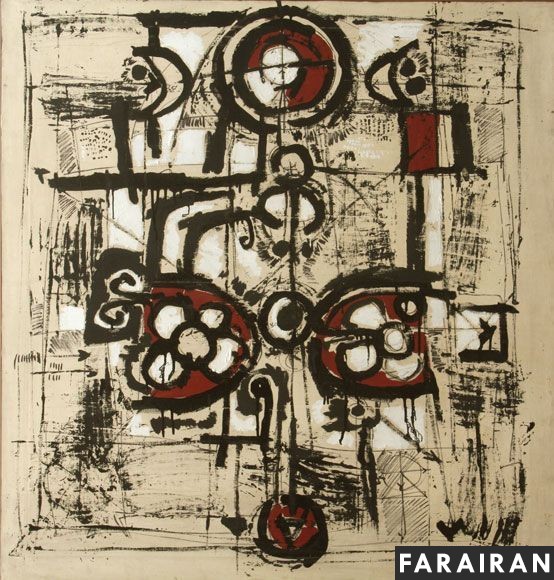
Farairan’ Choice Massoud A’rabshahi
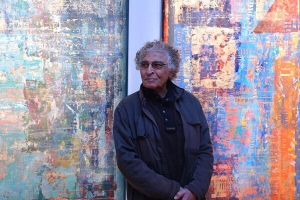
Birth: 1935, Tehran
Education:
Graduated from the Academy of Decorative Arts, Tehran
Selected Exhibitions:
1962: Iran-India Cultural Society, Tehran
Third Tehran Biennial
1964: Fourth Tehran Biennial
Group exhibition, Iran Hall, Tehran
1965: Individual exhibition of bas-reliefs, Tehran University
Paris Biennial
1967: Individual exhibition in Solstice gallery, Paris
“Sacred Arts,” Modern Arts Museum of Paris
Fifth Tehran Biennial
1968: “Iran’s Contemporary Artists,” USA
Individual exhibition, Seyhoun gallery, Tehran
1971: Individual exhibition, Negar gallery, Tehran
1972: Individual exhibition, Litho gallery, Tehran
1973: Group exhibition, Grand Palais, Paris
Group exhibition, Guilot gallery, Paris
International Exhibition, Monaco
Individual exhibition, Seyhoun gallery, Tehran
1974: International Exhibition, Tehran
1975: “Blue” group exhibition, Takht-e Jamshid gallery, Tehran
“Volume and Environment” group exhibition, Iran-America Cultural Society, Tehran
“Fifty Years of Iranian Art,” Iran-America Cultural Society, Tehran
1976: Basel Art Fair, Switzerland
“Volume and Environment II” group exhibition, Saman gallery, Tehran
1977: Individual exhibition, Saman gallery, Tehran
“Wash Art” group exhibition, Washington
“Saqqa-khaneh School” group exhibition, Tehran Museum of Contemporary Art
1978: Basel Art Fair, Switzerland
1984: Paris International Art Festival
1985: Individual exhibition, Leila Taghinia gallery, New York
1986: Art Expo, Los Angeles
1987: Art Deca, Los Angeles
1990: Individual exhibition, International gallery, Los Angeles
1991: Art Expo, Los Angeles
1992: Art Deca, Los Angeles
1993: Individual exhibition, Seyhoun gallery, Tehran
1994: Individual exhibition, Golestan gallery, Tehran
1995: Individual exhibition, Seyhoun gallery, Tehran
Individual exhibition, Keyhan gallery, Tehran
1996: Individual exhibition, Architectural Center, Costa Mesa (USA)
“Retrospective,” Barg gallery, Tehran
1998: “Contemporary Iranian Drawing” group exhibition, Barg gallery
“Tradition as Reflected in Contemporary Iranian Art,” Tehran Museum of Contemporary Art
1999: Individual exhibition, Golestan gallery, Tehran
Tehran Contemporary Drawing Exhibition, Barg gallery, Tehran
Tehran Contemporary Drawing Exhibition, Tehran Museum of Contemporary Art
Group exhibition, Ravaq Yahya gallery, Tunisia
2000: “Art of 20; One Century of Contemporary Iranian Painting,” Tehran Museum of Contemporary Art
Individual exhibition, Golestan gallery, Tehran
Group Exhibition, Rome Museum of National, Folk and Popular Art
Group exhibition, Bob Ravah, Morocco
2001: “Contemporary Iranian Art,” Barbican Centre, London
“New Art from Iran,” Meridian International Center, Washington
“Pioneers of Contemporary Iranian Art,” Tehran Museum of Contemporary Art
2001: Tehran Museum of Contemporary Art, a Retrospective
2003: Arian Gallery, Tehran
2003: Tehran Museum of Contemporary Art, A Spiritual Vision, Tehran
2006: The British Museum, Word into Art
2006: Mah Art Gallery, Tehran
2007: Mah Art Gallery, Tehran
Works in Museums:
Tehran Museum of Contemporary Art
Fine Arts Museum, Sa‘dabad Complex, Tehran
Kerman Museum of Contemporary Art
Awards:
1964: Fourth Tehran Biennial, First Prize for Iranian Fine Arts
1973: International Exhibition of Monaco, First Prize
1974: Mother’s Day Competition, First Prize
Farah-abad Park Sculpture Competition, First Prize
Publications:
Avesta from the Viewpoint of Modern Art (illustrated by Mass‘ud ‘Arabshahi), Firooz Shirvanloo (ed.), Niavaran Cultural Center, Tehran, 1978
Relief in Architecture, Tehran, 1980
Selected Commissions:
1969: Relief, Red Cross Conference Hall, Arg-e Bam Square, Tehran
1970: Relief, Ministry of Mines and Industries, Tehran
1972: Relief, Chamber of Industries, Tehran
Bronze sculpture, Farah-abad Park, Tehran
1974: Relief, entrance to Behshahr Industrial Group Conference Hall, Behshahr
Relief, Behshahr Industrial Group Conference Hall, Behshahr
1975: Relief, Ministry of Agriculture, Tehran
1977: Relief, private residence, Tehran
1985: Aluminum sculpture for the California Insurance Company, Sacramento
Relief, for the California Insurance Company, Santa Rosa
1987: Relief, private residence, Los Angeles
1989: Relief, private residence, Encino
1990: Relief, private residence, Santa Monica
1993: Relief, private residence, Hollywood
1996: Relief, Soil Mechanics Laboratory Conference Hall, Tehran
1997: Relief, Modarress expressway, Tehran
1998: Relief, entrance to the Conference Hall of the Islamic Countries Summit building, Tehran
2001: Relief, façade of the Iranian Bar Association Central Office, Tehran
Auctions:
Christie’s: 2002, 2007,2008,2009,2010
Sotheby’s: 2007, 2008
Bonham’s: 2009, 2010
Note: What you read below is a selection of articles prepared for Farairan Art Quarterly, No.10 which unfortunately was never printed.
Massoud A’rabshahi
From the Burnished Red of Bronze and the Dusty Brown of Earth to the Continuity of Ancient Icons
Manijeh Mir-Emadi
Mass‘ud Arabshahi, painter, sculptor and muralist, was born in 1935 in Tehran. He began his studies in art at the Tehran Vocational School for Boys, followed by the Tehran College of Decorative Arts, where he majored in painting and sculpture. He eventually graduated from the same college with a Master’s degree in interior design.
‘Arabshahi held his first exhibition at the Iran-India Cultural Society in 1962. He took part in the Third Tehran Biennial in the same year, and was awarded a prize at the Fourth Tehran Biennial in 1964. He achieved international recognition with the first prize of the Monaco International Exhibition in 1973.
Extensive research on the various historic periods of Asian art has been a major influence on Arabshahi’s artwork, as can be seen in his illustrations for Avesta from the Viewpoint of Modern Art (Niavaran Cultural Center, 1978).
His most notable accomplishments are the large-scale bas-relief murals which he has designed and executed in buildings both in Iran and abroad. Among these are the 500-meter designs for Tehran’s Arg Square Conference Hall, the 117-meter design for the Iranian Chamber of Industries, and the 60-meter entrance to the Conference Hall of the Islamic Countries Summit building in Tehran.
The Essence of a Culture in the Global Convergence of Cultures
Javad Mojabi
Arabshahi is born a painter. He can be regarded as an instinctive painter from the view that despite the ups and downs of his country and his own life, he never turned his back on painting (or his clay and relief work), and never entertained a moment of doubt; whether at a time when art was admired and respected, or during the days when it was condemned and denounced. He continued to make steady progress, working passionately and unselfconsciously, his work the sole aim of his life. A mental worker in love with and concentrated on his work and its continuity, who strives to depict the minute details of a world of his own creation, occasionally perceived and admired by others, after being isolated for two decades. But in both cases he is occupied with an unavoidable and uninterrupted creative endeavor, giving no thought to its advantages or drawbacks. His quick intuition has led him to continue and complete his personal efforts, and not give in to the conditions prevailing outside his studio. He never thought to take advantage of the tastes of gallery owners, curators, private collectors or public officials; he was never hampered by the thought that constant innovation has no audience, and that he should create according to the circumstances of the day. Yet the main function of his instinct, what has raised him to his peerless status, is that his particular nature is that of a painter, and nothing else.
Hearing Color, Seeing Sound and Then Silence
Mohammad Shamkhani
The artist’s most significant researches and activities until mid 1970s can be divided into three general categories: 1) His collections of designs, paintings, bas-reliefs and metal engravings (1961-1969), 2) his collection of sculptures, paintings and designs (1971-1976), 3) A collection of works, using materials and means such as ropes, metallic rings bestowing a third dimension to the works and later the same distance between thread lines and background turn into volume and his bas-reliefs. From 1986 he reaches a transitory stage thoroughly abstract in nature and outside the domain of tangible and sensual experiences. His experiences now continue without being under any direct influence and his compositions turn into the guiding light of his efforts and experimentations. He leaves the country for Paris and stays there for a year and a half, always referring to it in a peculiar way. It is in the same year 1983 when he acquires a vast supreme knowledge of Western Modern Art leading to solidification of the foundation of his paintings and purification of his personal language. His eight years long stay in America becomes the meeting point of his eastern experiences with western modern art. Being away from his birthplace brought him- in his own words – this great fruit which is enrichment of the silence and isolation chosen consciously by him from the beginning.”[1]
Signs and Symbols in the Art of ‘Arabshahi
Ruyin Pakbaz
Forty years of Mass‘ud Arabshahi’s creative activity signify the quest of a modernist in the realm of ancient cultures, particularly Iranian art. He began by exploring the artistic heritage of the Middle East, and was later attracted to the symbolic images of the ancient world, and now brings the mysterious spirit of past eras to the dynamic world of today. Signs and symbols play such a significant role in each period of Arabshahi’s work that his evolution as an artist can be studied through these symbolic elements.
The various motifs employed by Arabshahi are more often abstract, and it is only occasionally that ancient figurative elements find their way into a work. (It should be mentioned however, that for a short period between 1974 and 1975, he turned from his previous approach to depict mythical creatures in an expressionist manner.)
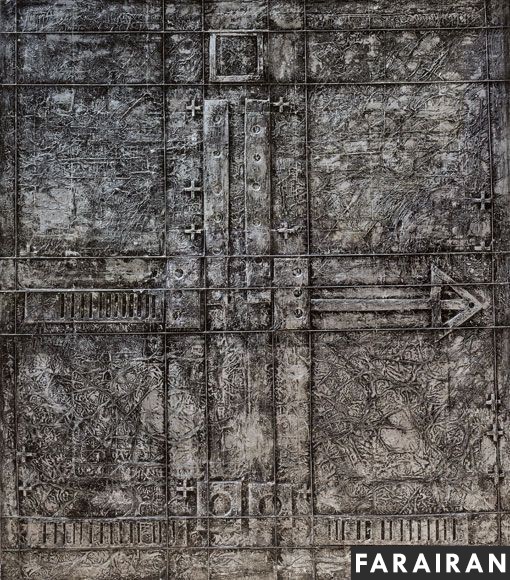
Arabshahi’s motifs fall into three major categories. The first comprises ancient symbols such as the lotus, the wheel, the shining sun, the tree of life, pseudo-cuneiform script, etc. The second consists of circles, squares, curves, spirals and grids. The third are symbols such as arrows, mathematical signs, architectural symbols, numbers and parabolic lines.
Apparently Arabshahi first employed these symbols simply as decorative elements, independent of their symbolic referents. Later works however, indicate a more deliberate and thoughtful application of motifs from the second group, resulting from careful studies of Iranian and Islamic art history. The most perceptible elements at this stage are circular and angular shapes, the cross, and balanced lines in curved, horizontal and vertical states.
By incorporating these elements into his art, Arabshahi has not only created a geometric aspect for his work, he has also moved closer to the modern vision. This is particularly true for his works created after 1976, in which he has focused on the concept of “space” (whether modern architectural or cosmic). It is at this stage that the elements of the third group gain prominence. Arrows, scales, numbers, parabolic lines, crosshatching and scribbles may appear in the work of another artist, but the presence of these symbols in Arabshahi’s art are a means to a different end: to summon the mysterious spirit of bygone eras to the dynamic world of today.
A Creative Return to Iran’s Ancient Art
Firooz Shirvanloo
Arabshahi is an artist who has made use of traditional elements in his art from the very beginning; what sets him apart from his contemporaries however is his choice of ancient Iranian elements and decorative motifs. Arabshahi has mistakenly been referred to as a member of the “Saqqa-khaneh” school, if it can be named a school at all. Such negligence, a clear sign of indifference and lack of true comprehension of art, is one of the reasons behind today’s disheveled cultural state… Utilizing elements of Islamic art and decorative motifs are among the main characteristics of the Saqqa-khaneh school. But while Arabshahi has made use of the decorative elements of Islamic art in certain periods of his work, he has not included any of its basic features. Arabshahi can be considered a seeker of Iranian forms and motifs. It is not clear how much the underlying idea bringing these forms and patterns into existence and the content of these forms have inspired him. What is known is that his passionate interest in them is so serious and unrelenting that it will either lead to a transformative synthesis in new Iranian art, or his complete abandonment of the experiment.
Arabshahi’s creative efforts have no doubt undergone a variety of transformations. The variations arouse a certain curiosity about the technique of the work and emotional concentration. The most outstanding feature of his work is a sense of peace and serenity, flexibility and flowing motion, emanating from the forms as well as the colors. During certain periods of his career, these features give way to cruelty and outcry,
ancient and Zurvanian idols, once depicted in muted tones and on a small scale, are suddenly transformed into colossal beings, which violently decry the evils of the age. This manner of unconscious symbolism has become a characteristic of the artists of the new age. They seek to use primitive symbols in order to depict the transformation of today’s material achievements into idols in their own right, just as powerful as the divine idols of the distant past.
Divine and celestial aspects of ancient Iranian art have enabled Arabshahi to create vast murals and three-dimensional works. These works benefit from a heavenly equilibrium, and can be considered among his best. In more recent works, Arabshahi has drawn upon the three-dimensional elements which conveyed movement and radiance in previous pieces. This is an experience that once again ushers in a sense of violence, further discussion of which demands the advancement of the experiment.
A Journey through Myths & Time
Sylvia Haimoff White
Mass‘ud is a master of infusion. He skillfully blends his search for meaning and direction in today’s world with art forms of the ancient and mysterious Middle East. His paintings throb with the resonance of a past laden with symbols, but his is the work of a contemporary artist reflecting his own time. By using powerful symbolism and complex visual imagery, the artist manages to weave both past and present into his intricate and finely detailed work. There is a sculptural architectural quality to his paintings that gives them great solidity. The richness of his paintings reveals his mastery of relationships between image and architecture, symbol and object. The artist’s work is full of contrasts and delightful contradictions. His image strives to disclose a variety of secrets and ambiguities as the pull of the past works in tandem with a strong contemporary influence. His web-like detail, as finely wrought as cloisonné, adorns warren-like imagery suggestive of caves and caverns, edifices and portals. He uses the actual language of a long forgotten past, cuneiform writing, to attest to the very real presence of history.
From An Echo to a Chorus
Khosrow Hassanzadeh
The geometric forms and the symmetrical compositions of his works should never be confused with decorative embellishments and handicrafts. Many have been misled into thinking an Iranian work can be created by crossing a few lines and blots of color with indigenous elements. The repetition and distortion of decorative motifs taken from ancient carvings and religious icons grace the world of three and four-cornered shapes. These shapes bear testimony to the infinite nature of the universe, which, despite its astronomical numbers, is ordered into a geometric structure and singular unity. Recurring motifs, pleasant harmonies, geometric forms and lines, and colors unique to the artist, are all signs of the musical quality of his artwork. Lines, signs and symbols begin from faint echoes and gather force to become a choral overture. Arabshahi’s paintings are enchanting music which does not need to be heard. Colors play an important role in this orchestral composition. They are not intended to deceive the viewer, but are a manifestation of the hidden meaning and mysteries of the forever unattainable secrets of the East. Shades of blue-gray on a black background, burnished silvers and golds, hints of amber and the hues of the desert spread on his canvases—what could they be speaking of, if not these hidden hopes?
The multitude of lines and spinning forms in Arabshahi’s artwork are on one hand a reference to the mystical aspirations of the East, what brings the dervish to a whirling ecstasy, propelling the viewer’s eye into constantly following these spinning and springing forms; on the other hand, they appear to be maps belonging to explorers in unknown lands, joyfully marking new discoveries on the margins of a new excavation. The handmade notations are not arbitrary; they are the vision of an artist who transforms letters and numbers into visual elements, distributing them throughout the canvas.
Handwritten notes that are intended to be indecipherable, like magical spells rolled into small paper charms, a custom among the simple people of this land. These beautiful gold- and silver-worked canvases invite us to glimpse the layout of a metaphysical terrain, whose inhabitants dance mischievously amidst the gentle, ephemeral circles and squares, set in earthy colors drawn from the desert bluffs. We are beckoned to witness the fluid spinning, the sudden halt, and the prostration before the infinite divinity of Eastern aspirations.
The Abstract Expression of an Eastern Myth
Reza Gowharzad
University experiments in line and motif led him to research the ancient designs. From the early 1960s, his research and artwork proceeded side by side: a study of the ancient relics of Kashan’s Tappeh Sialk, Hassanlu, Hessar, Shush, Tappeh Marlik, and others, in his chosen medium of clay. At the same time, he began his investigation on the jewelry, pottery and inscriptions of Elamite art, the inscriptions, scripts, metalwork and engravings of Sumerian and Assyrian art, the relief work of Achaemenid and Sasanian eras, and eventually, the art of the Islamic period. The Lorestan bronzes, relics of a glorious epoch of ancient Iranian civilization, incited Arabshahi’s curiosity about the flexibility of this extraordinary metal, and its potential to depict the world of creations. He thus achieved a deep spiritual understanding of the hidden layers of these works.
Arabshahi’s deep and ordered knowledge of ancient Iranian, Sumerian, Assyrian and Egyptian art give him a tactile understanding of traditional iconography, using this as a basis for his work, and reintroducing ancient motifs into the arena of modern art…
This guiding vision has informed Arabshahi’s art and philosophy, causing him to gravitate towards the center of Iranian cultural life. A journey to Europe, a stay in Paris (1983) where he spent most of his time in museums, the experience of modern European society, and its contrast with the Eastern way of life—these experiences provided the key to a new combination of lines and geometric forms. Prior to this visit, his passion for images from astronomy, outer space, planetary orbits and their orderly movements knew no bounds. His encounter with a new culture brought a fascination with beliefs that celebrate the planets and the galaxies, their inherent order and their influence upon our lives. Wishing to understand the unknown and draw nearer to the central force of this prolific source, he fervently explored three-dimensional geometry in his paintings, seeking to present this ideological viewpoint in the movements of lines and patterns. He accurately and skillfully translated geometric proportions into the language of abstract painting; his indisputable knowledge of the principles of dimension, volume, line, color and the contrasts resulting from their proximity allowed him to imbue his abstract works with “the essence of ancient art.” His modern art flows from the wellspring of eternal symbols and the spiritual and mystical values of Iran. The contrast of light and darkness, the basis of Mithraist and Zurvanian religious beliefs, are directly perceived in Arabshahi’s work. The approach an Iranian artist takes towards the core of existence, the manner in which he transcends Mithraist beliefs and rituals to arrive at his mature Eastern philosophy; in contrast with the approach of a Western artist in his search for the core of existence and the uniqueness of man—these are the beliefs which turned Arabshahi towards introspection and reflection. He adopted the abstract vocabulary of modern Western art to challenge and resist their cultural phenomena, especially the effects of materialistic forces in the violent and fast-paced age of Western technology…. He recounted Eastern philosophy and mysticism through his mastery of modern art and its techniques, in a manner that was characteristic of new Western painting. .. Arabshahi has full knowledge of Eastern views, and is therefore in no need of a return to the East; his paintings are a journey to the depths of his inner vision, which is rooted in his homeland. Indeed, Arabshahi has found the missing link which completes the chain stretching from centuries of Iranian art to the new art of the world, and he knows this link well. His works powerfully assert this knowledge.”
…Arabshahi is one so totally absorbed in the world of painting paying no attention to anything other than the world of his own paintings. Though among others, he is absent, immersed in his own world of paintings. He will not hear you if you speak, unless it pertains to his inner world. This immersion in this own world has led to fertile discoveries, giving Arabshahi the ability to bring the millennia of art history into the workshop of his mind and hands, condensing it, giving it a contemporary turn, and using the symbols to deliver an immortal message. These images transmit a riddle as an eternal human inheritance in the form of a personal code on behalf of a contemporary Iranian painter to the past and future.[2]
Murals and bas-reliefs are another milieu he uses for his creative expression. One of Arabshahi’s unique experiences is his creative production of relief-work upon the walls of buildings. His bas-reliefs, while being technically advanced, are also admirable with regards to forms, colors and the relevance of their medium.
Bas-reliefs influenced by the historic art of this great land have grown old with the passing of time, yet they have managed to retain their flaming vividness and loyalty to nature. They have been utilized in various ways to recreate an original and aesthetically organized space in Iranian architecture. He considers reliefwork to be an abstract projection of aspects of life upon the wall of a building. His researches provide the material for his mental creations, and they are physically embodied in metal, clay, plaster and concrete. His reliefs alter the atmosphere of a building in an unbelievable way. A building, whose inherent nature is static and inert, is thus transformed; “design and material” convey the artist’s fluid imagination and bestow an eternal spirit upon the building. And should an artist not depend upon his own creativity and originality, should he be unable to form the true image of a three-dimensional mass in his mind’s eye, he will remain an artisan whose skill lies in cutting and pasting clay or metal designs. Reflection and creativity are the central axis of Arabshahi’s art in bas-relief structures. His bas-reliefs are the realization of authenticity in design and motif, the answer to a thousand questions, sparked by the encounter between his thoughts and the artworks he has seen. Arabshahi’s reliefs are a powerful fusion of design and motif, patiently interpreting ancient art in a modern language. The authenticity of the work he has installed upon buildings signifies the preservation of designs and motifs which had been destroyed or forgotten with the passing of time.
His bas-reliefs are the contemporary symbols of the art of man, particularly that of the East. Yet, they will be able to convey the authentic essence of this country only when Arabshahi truly believes his mind to be a foundation for the development and continuance of the solid chain of Iranian art.
On the other hand, the colors of earth and the colors of hills, turquoise and dark greens, silver and gold, all covered by a floating layer, contribute to the attraction and subtlety of the patterns in his murals. The colors have a long history, rooted in the meadows, red hills and arid deserts of bronze sands which left an impression on Arabshahi early on in his life. They lead him to new combinations and interactions with constituent elements of painting, so that their harmony and structures recall the legend of Eastern color values. Shades of black, dark green and lapis lazuli which comprise the world of Arabshahi’s art have been drawn from the rainbow of color left by the blacksmith’s hammer upon metal, it’s purples and greens, the fading of that metal with time, yet containing all the richness of ancient colors. Arabshahi’s sharp intelligence identifies the colors woven in the fabric of Iranian life, bringing them to the surface of his murals, and giving his art a freshness, a vitality, and a connection with the past. These familiar dark greens, legendary deep blues and desert tones have not been arbitrarily combined. They have been restored and appreciated by a wise and sensitive individual.[3]
One of these mural bas-reliefs, decorating Haqani Highway in Tehran, disappeared in 2007. It is said it was transferred to the demolished pieces and wastage store-room of the Parliament. His other work Light and Vegetation designed 30 years ago for the building of the Parliament, suffered the same inauspicious fate. In an interview with Etemad Melli on the subject he said, triptych out of six, 9 m in length and 4m height has been transferred to the treasury of Saba Institute and its other triptych has been torn and demolished and even if the remaining triplytch is restored, it will not have much value as they are parts of a single work.”[4]
Since 2007, Arabshahi’s works had a remarkable presence in well-known international art auctions and sold at high prices, even if not breaking any records as the works of certain young Iranian artists did.
“My concern is much greater than what I have shown. For example, when I think about Mullana Rumi, I see his poetry makes a very small part of what he had in mind. This can be perceived in the poems of this great man. In the void of his works.”
Arabshahi always confesses that his work is just to open a small window to a vast marvelous sea. To a limitless past which has not been explored and reviewed as it should have been. Wisdom and foundation are among his constant mottos.[5]
Mass‘ud Arabshahi’s work is joyful, a celebration of life. He revels in the multidirectional pull of the present as it exerts its influences upon him while he finds creative satisfaction in evoking the symbolic, mysterious past.[6]
[1] Mohammad Shamkhani, Hearing Color, Seeing Sound and Then Silence,
[2] Javad Mojabi, ibid.
[3] Reza Gowharzad, ibid.
[4] Interview with Etemad Melli Newspaper, No. 413, 25/4/86 (2007), p.12.
[5] Mohammad Shamkhani, ibid.
[6] Sylvia Haimoff White, Ibid
-
- Mixed media on canvas- 180×130 cm
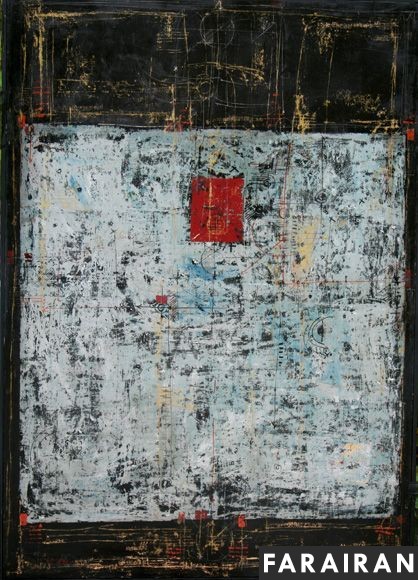
-
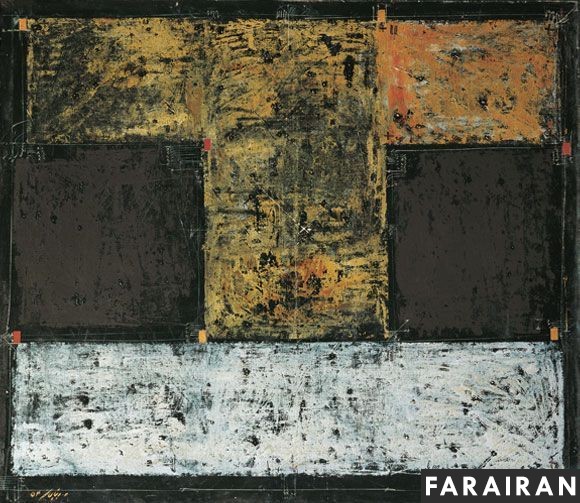
- Mixed media on canvas-149×130 cm
-
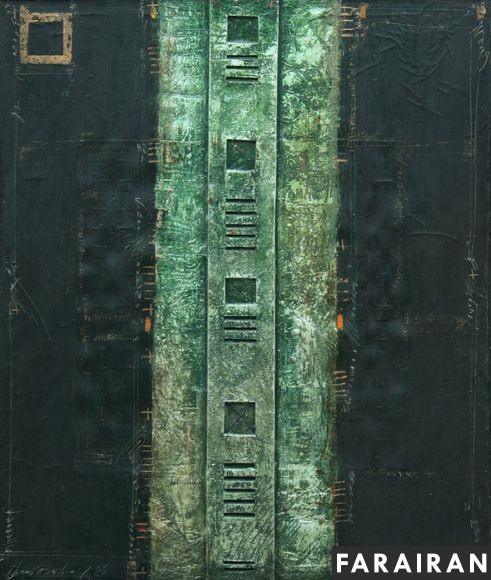
- Mixed media on canvas
-
- Mixed media on canvas-
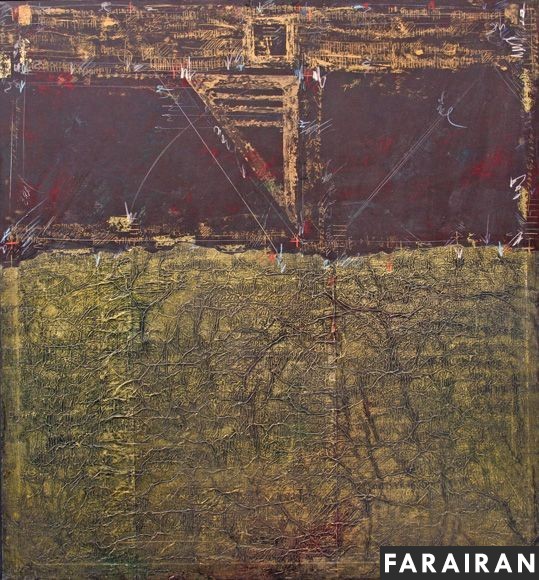
-
- Mixed media on canvas- 59×69 cm
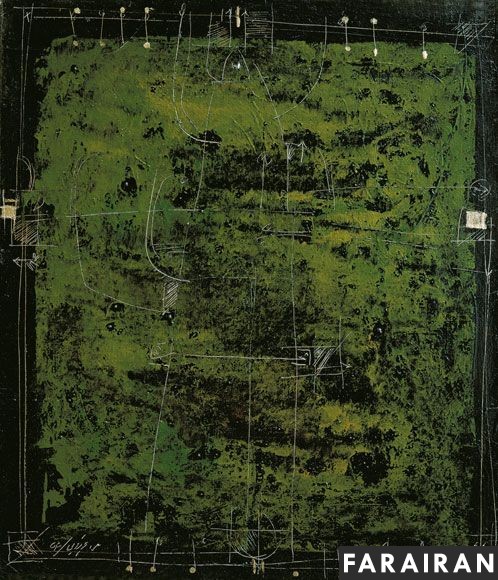
-
- Mixed media on canvas- 59.5×68.5 cm
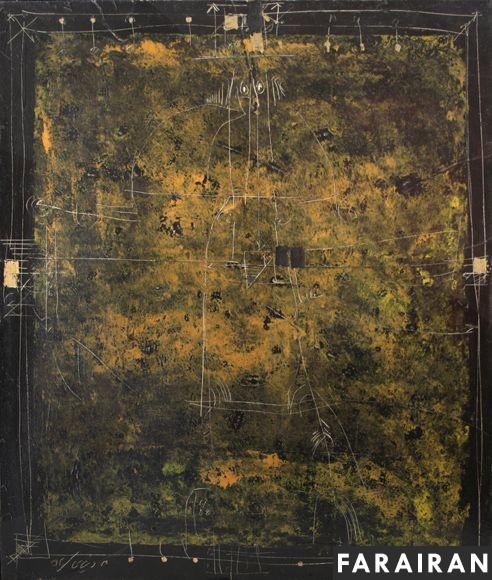
-
- Mixed media on canvas- 101×130 cm.
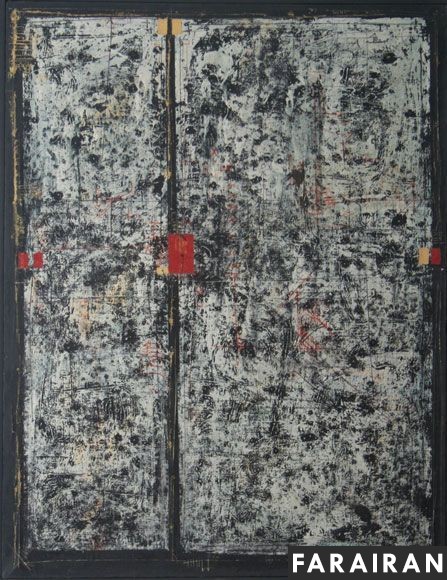
-
- Mixed media on canvas- 138×180 cm
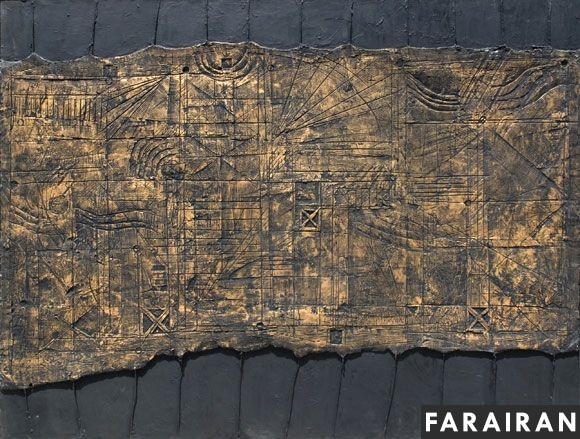
-
- Mixed media on canvas- 127×107 cm
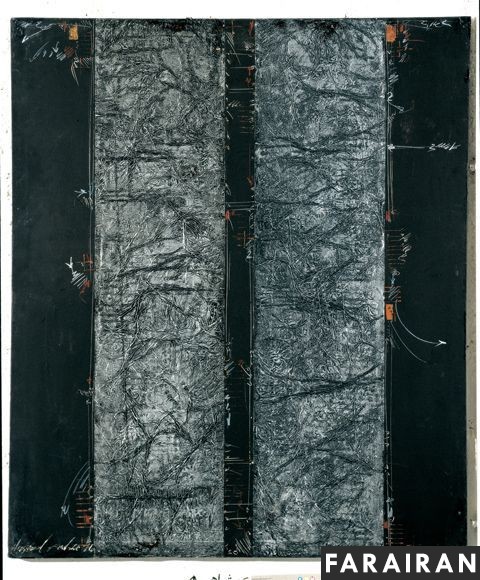
-
- Mixed media on canvas- 121×152 cm
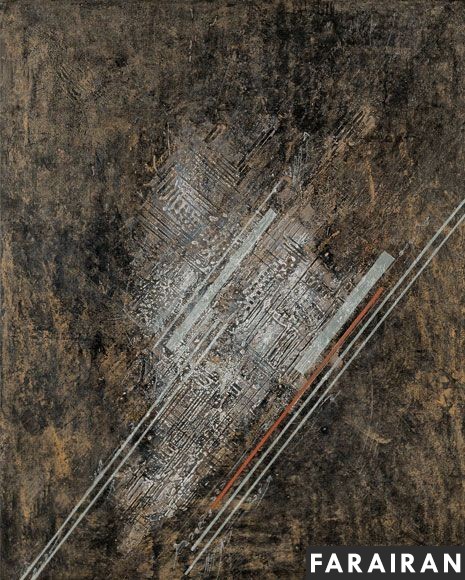
-
- Mixed media on canvas- 107×127 cm
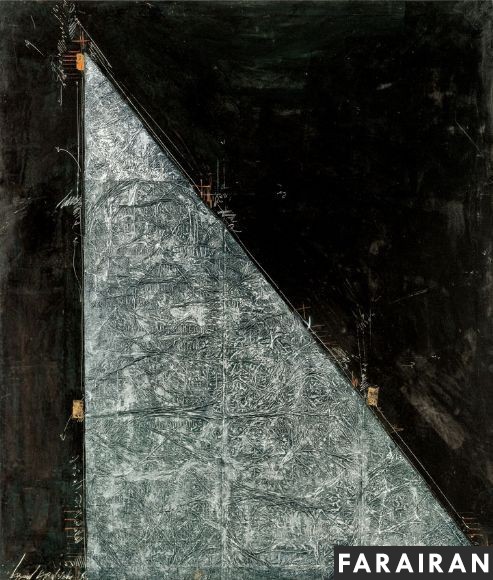
-
- Mixed media on canvas- 100×120 cm
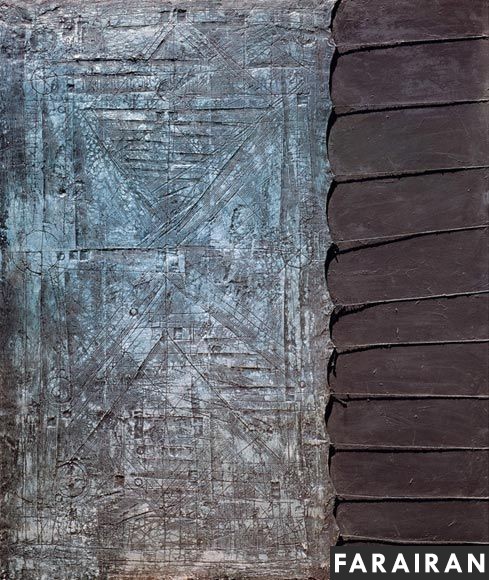
-
- 1955- Mixed media on canvas- 120×130 cm
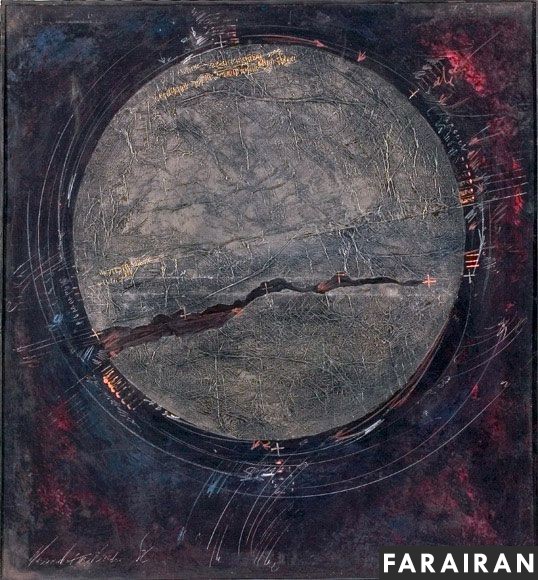
-
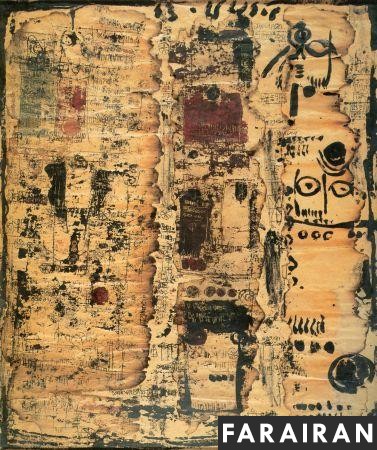
- 1964-mixed media on paper-103x89cm
-
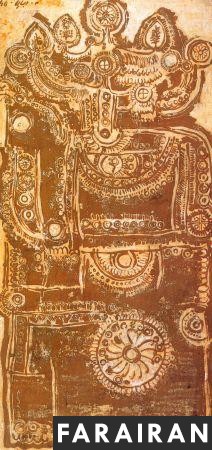
- 1967-oil on canvas-135x65cm
-
- 1975- Mixed media on canvas- 100×120 cm
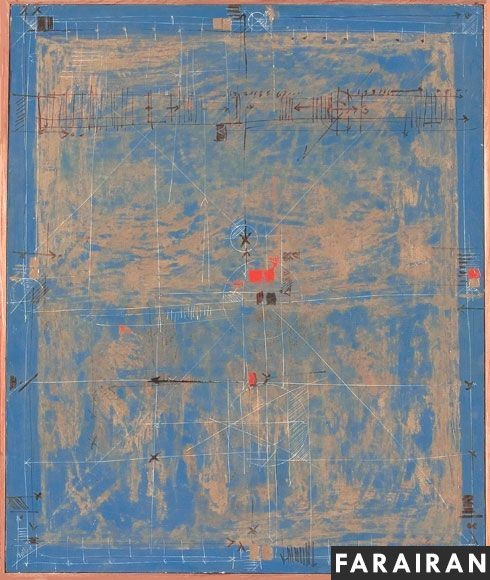
-
- 1977- Mixed media on canvas- 137×140 cm
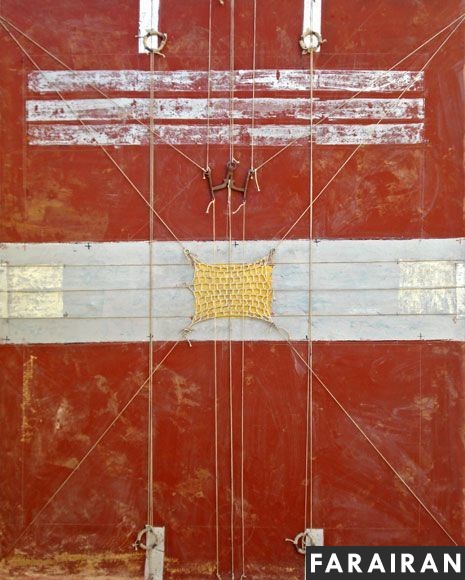
-
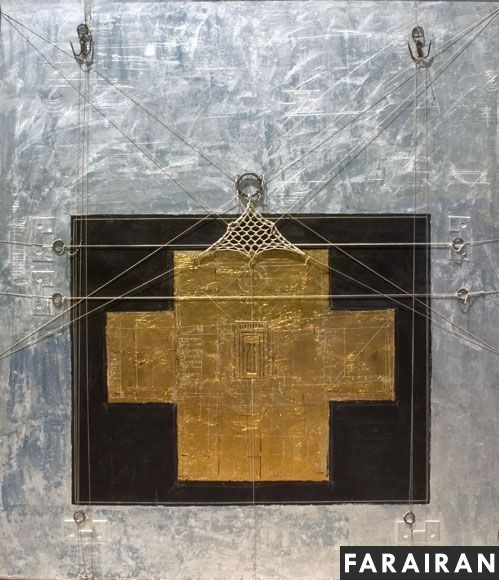
- 1977- Mixed media on canvas- 200×230 cm
-
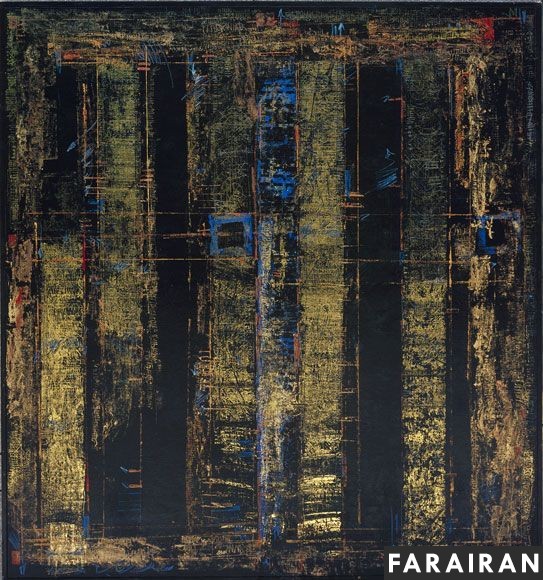
- 1978- Mixed media on canvas- 153×163 cm
-
- 1986- Mixed Median on canvas- 120×130 cm-1
-
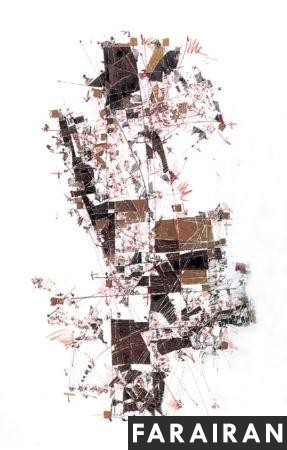
- 1981-Space on my mind I-ink. gold paint and oil on paper-100x70cm
-
- 1985- Mixed media on canvas- 104×124 cm
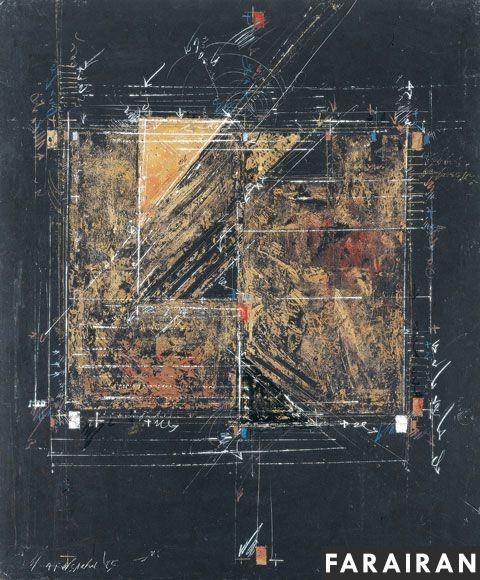
-
- 1985- Mixed media on canvas- 109×132 cm
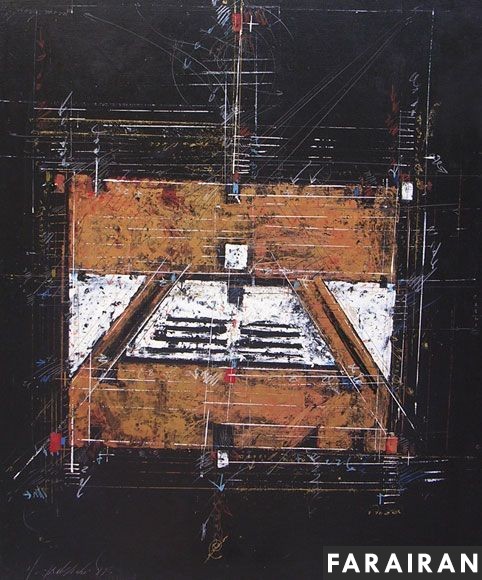
-
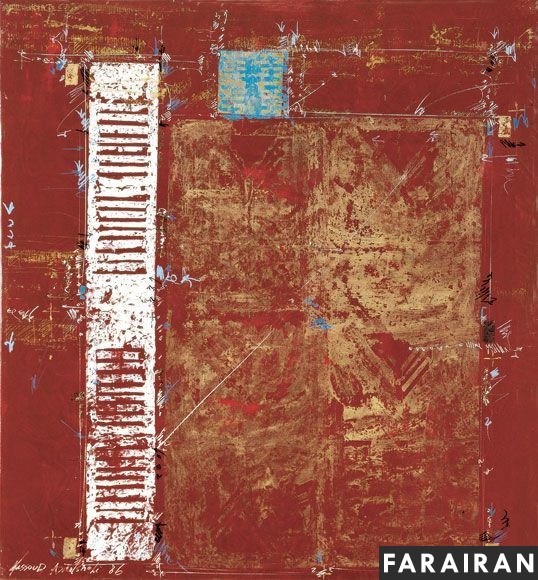
- 1986- Mixed Median on canvas- 120×130 cm
-
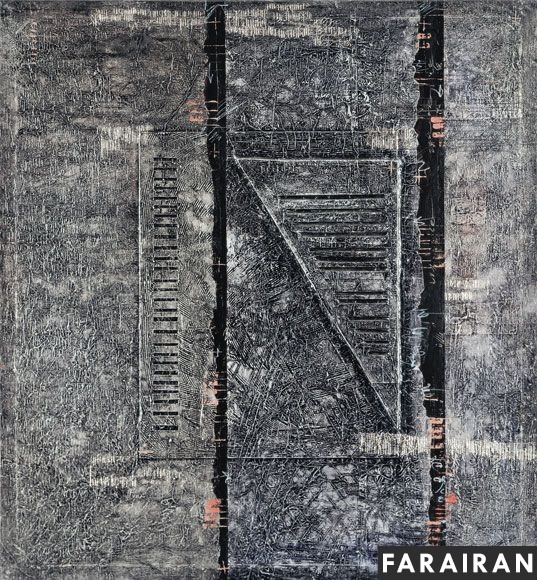
- 1986- Mixed Median on canvas- 120×130 cm-1
-
- 1986- Mixed Median on canvas- 124×124 cm
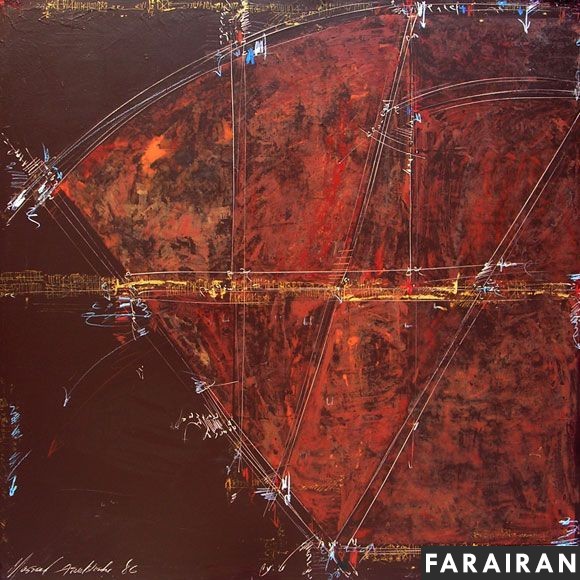
-
- 1986- Mixed Median on canvas- 125×125 cm
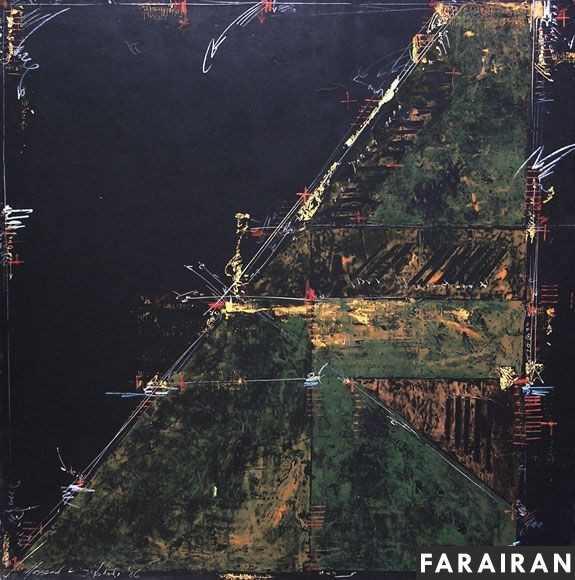
-
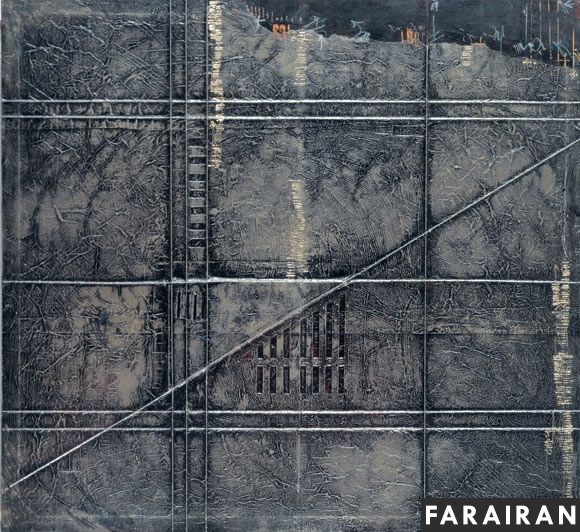
- 1986- Mixed Median on canvas- 130×120 cm
-
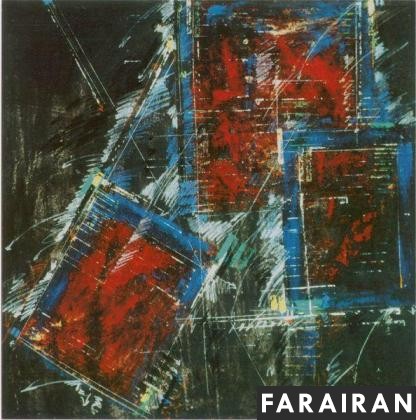
- 1996-untitled-170×150-mixed media on canvas
-
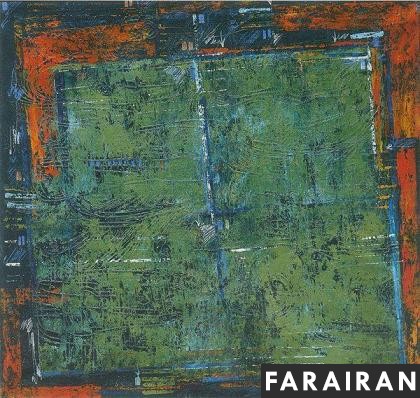
- 1997-untitled-120×140-oil on canvas
-
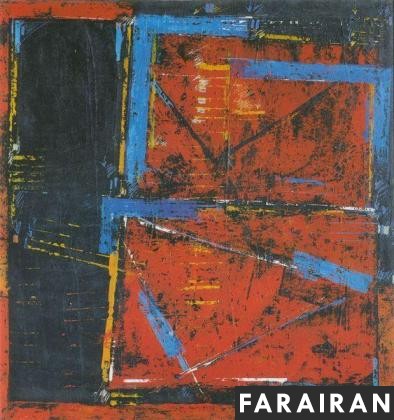
- 1997-untitled-140×120-oil on canvas
-
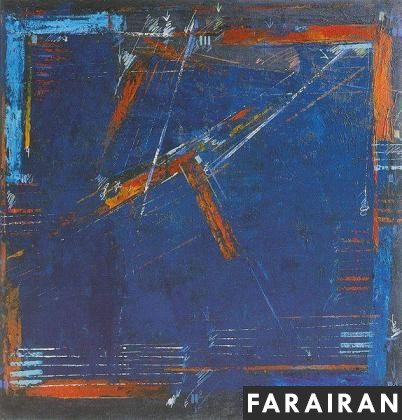
- 1997–untitled-140×120-oil on canvas
-
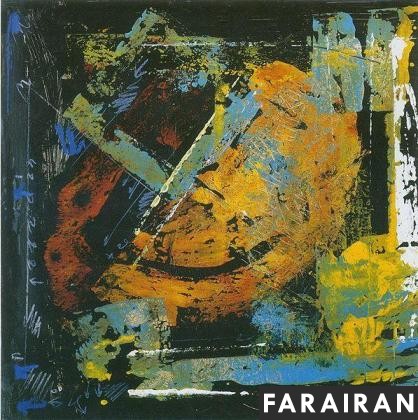
- 1999-untitled-31×31-oil on cardboard
-
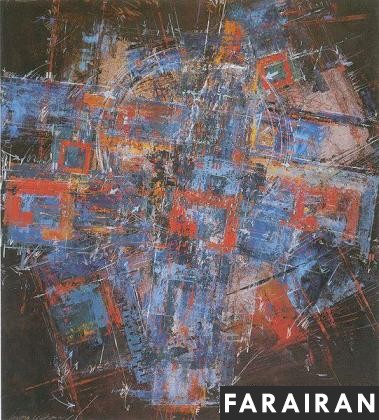
- 1999-untitled-202×182-mixed media on cardboard
-
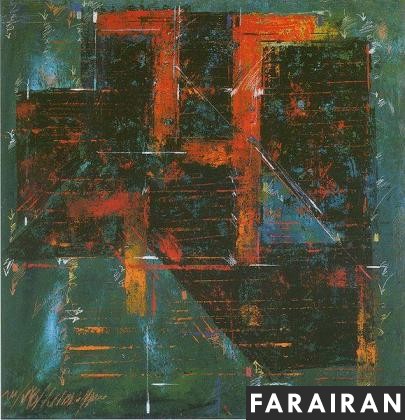
- 2000-untitled-135×135-mixed media on canvas
-
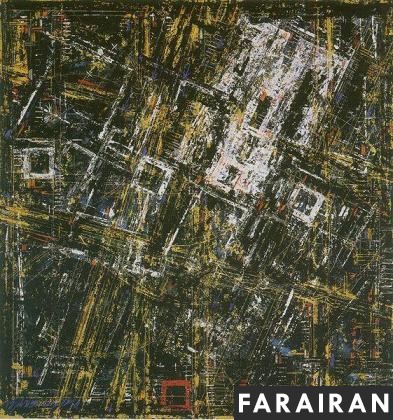
- 2000-untitled-182×172-mixed media on canvas
-
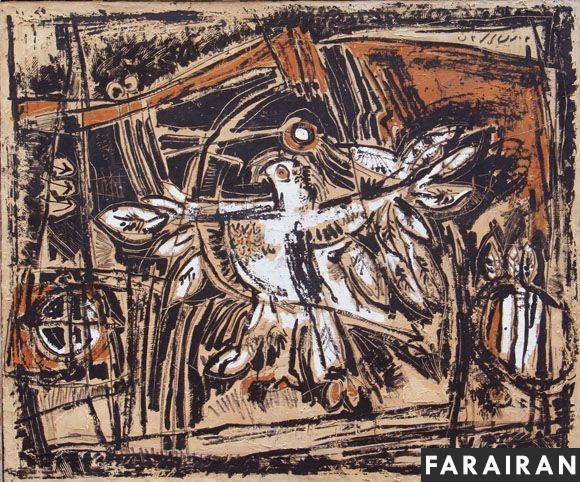
- Mixed media on canvas
-
- Mixed media on canvas- 120×110 cm
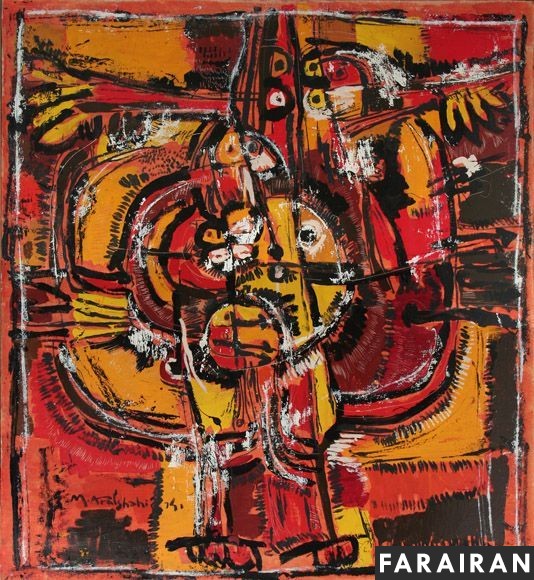
-
- Mixed media on canvas- 121×127.5cm